


This article was automatically translated from the original Turkish version.
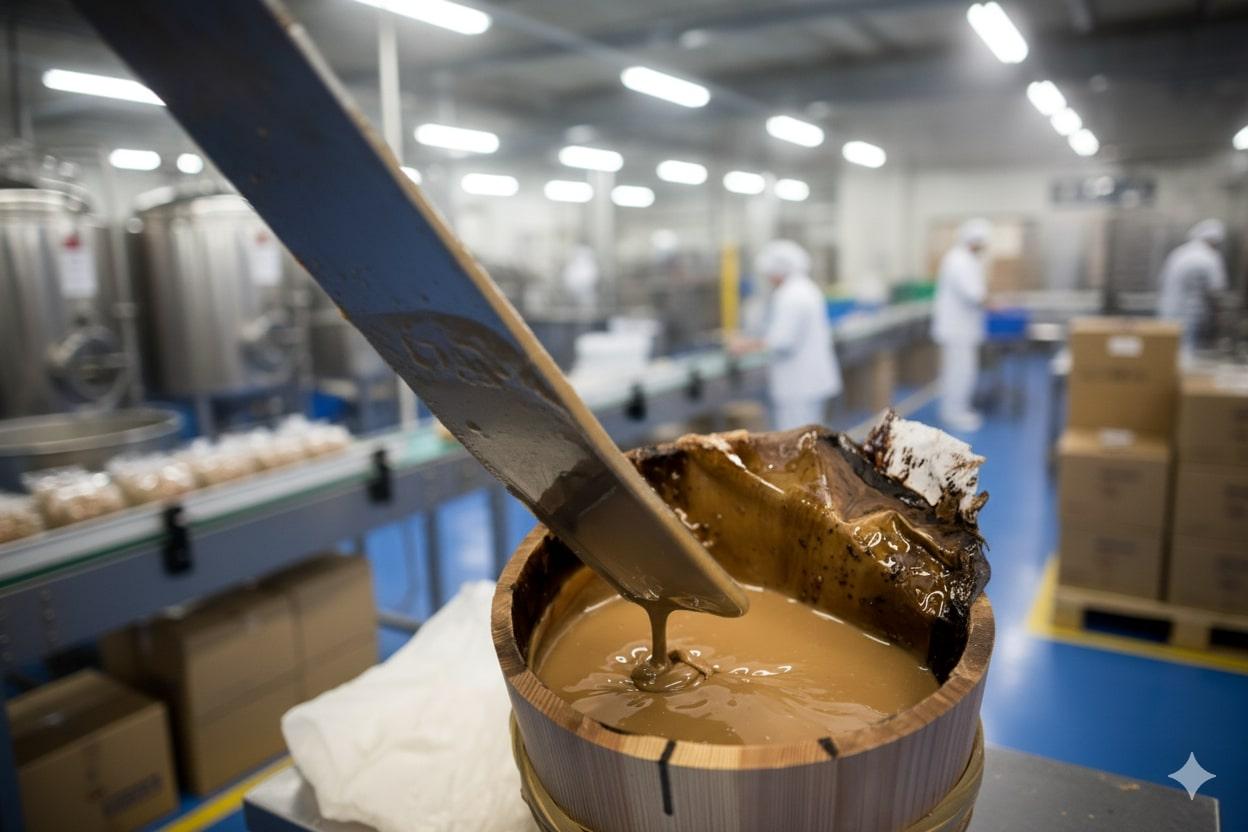
Joboji Urushi (Generated with Artificial Intelligence.)
Name(s) | Joboji Urushi | ||||||||
|---|---|---|---|---|---|---|---|---|---|
Class | Others | ||||||||
Applicant | Iwate Prefecture Joboji Urushi Production Association | ||||||||
Main Production Area | Specific regions of Iwate Prefecture, Aomori Prefecture, and Akita Prefecture | ||||||||
Joboji Urushi is a special type of lacquer, derived from the sap of the lacquer tree, which after curing achieves exceptional hardness and durability. This product, traditionally used for centuries in the restoration and conservation of Japan’s historical architecture, national treasures, and cultural assets, is a key element of Japan’s traditional and cultural heritage.
The production area of Joboji Urushi encompasses specific regions of Iwate Prefecture, Aomori Prefecture, and Akita Prefecture. These include the entirety of Iwate Prefecture; in Aomori Prefecture, the districts of Sannohe, the city of Hachinohe, and the city of Towada; and in Akita Prefecture, the town of Kosaka and the cities of Kazuno and Odate in Kazuno District. Joboji Urushi was officially registered as a geographical indication (GI) on 27 December 2018 with registration number 73. The applicant and address are listed as the Iwate Prefecture Joboji Urushi Production Association, 37-4 Shimomaeda, Joboji-machi, Ninohe City, Iwate Prefecture.
About Joboji Urushi (Geographical Indication Product Information Website)
The regions where Joboji Urushi is produced have a long history of cultivating lacquer trees, dating back to the Edo period (1603–1867), when the Morioka Domain actively encouraged lacquer tree cultivation. During the Meiji period (1868–1912), producers adopted the technique of managing sprouts after harvesting to regenerate lacquer forests. Through these methods, producers have preserved the largest lacquer resource in Japan, sustaining the lacquer forests that continue to produce Joboji Urushi to this day.
Joboji Urushi is harvested by artisans known as urushi kaki shokunin, or lacquer collectors, whose livelihood depends on collecting the raw sap of the lacquer tree. Shipping standards require that the lacquer must not be intentionally mixed with foreign substances for decorative purposes, nor blended with lacquers from outside Joboji. Lacquer meeting these standards is shipped as arami-urushi (extracted raw lacquer sap) and ki-urushi (unrefined lacquer). Artisans in the production area create a wide variety of lacquer types, reflecting their individual characteristics and techniques.
Geographical Indication Product Information Website. "73 Joboji Urushi." YouTube. Accessed October 24, 2025. https://www.youtube.com/watch?v=wwLsaKF8XJ8
Information Website on Japan Geographical Indication Products. "Joboji Urushi." Accessed October 24, 2025. https://pd.jgic.jp/en/register/entry/73.html
Ministry of Agriculture, Forestry and Fisheries (MAFF). “Joboji Urushi (Registration No. 73).” Ministry of Agriculture, Forestry and Fisheries (MAFF). Accessed October 24, 2025. https://www.maff.go.jp/e/policies/intel/gi_act/register/s73.html

Joboji Urushi (Generated with Artificial Intelligence.)
Name(s) | Joboji Urushi | ||||||||
|---|---|---|---|---|---|---|---|---|---|
Class | Others | ||||||||
Applicant | Iwate Prefecture Joboji Urushi Production Association | ||||||||
Main Production Area | Specific regions of Iwate Prefecture, Aomori Prefecture, and Akita Prefecture | ||||||||
Production Area and Geographical Indication
History and Traditional Production
Production Process and Standards