


This article was automatically translated from the original Turkish version.
+1 More
Japanese garden art is an art form shaped by aesthetic and compositional elements with a history spanning over a thousand years, reflecting the spirit and culture of various eras. Originating from Chinese gardens, Japanese gardens gradually developed their own unique character through philosophical and religious influences such as Shintoism and especially Zen Buddhism, which are indigenous to Japan.
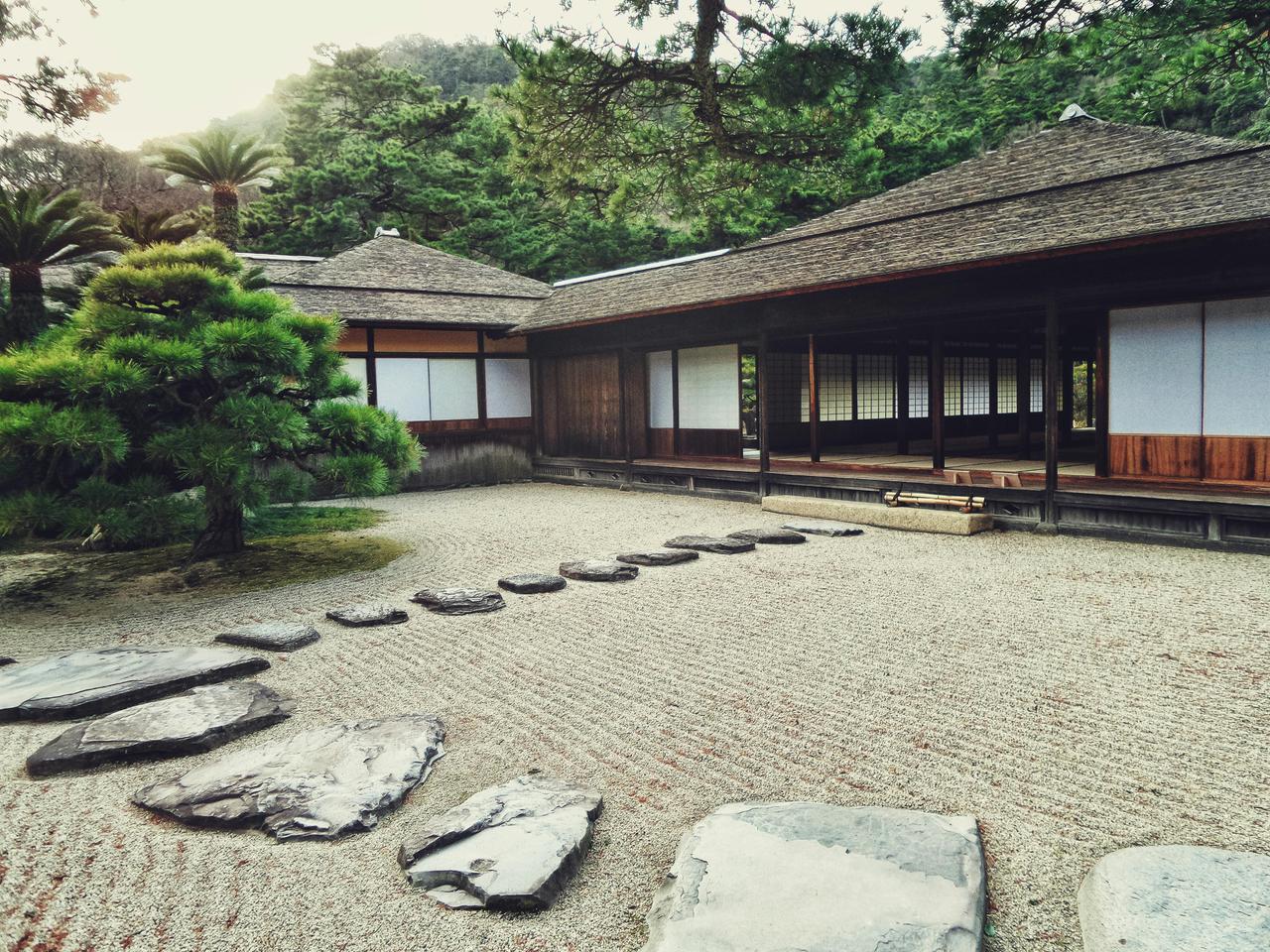
Japon Bahçe Sanatı (Pexels)
Japanese gardens aim to integrate nature and culture into limited spaces, transforming them into beautiful landscapes. Design principles emphasize theories of proportion, sequence, and the beauty of time and aging.
They are the most important design elements in a Japanese garden. They typically symbolize immortality, long life, and stability. Their use is religious and philosophical. As stated in the text Sakuteiki, the principle “follow the will of the stone” (Ishi no kowan wo shitagau) implies that one must engage in dialogue with each element to understand its character. Rocks are used in various functions such as paving, stream beds, bridges, waterfalls, islands, lighting, and ornaments. Triple rock groupings (Sanzonseki, Hinbonseki) may symbolize heaven, earth, and humanity or different distances.
It symbolizes purity and life. Real water (ponds, streams, waterfalls) or symbolic representations such as white sand or gravel (in karesansui gardens) may be used.
Plants are allowed to grow naturally but are sometimes pruned to complete the composition or create specific forms (for example, using the karikomi technique). Seasonal changes, colors, and forms are important. Plants such as pine, bamboo, and plum carry symbolic meanings.
One of the fundamental concepts of Japanese aesthetics, it emphasizes the importance of emptiness within composition. It refers to an interval that acquires meaning when filled with time and space. In architecture, painting, and garden art, it expresses the balance between fullness and emptiness.
Seven characteristics unique to Zen art are also present in Japanese garden aesthetics: asymmetry (fukinsei), simplicity (kanso), austere beauty (kokō), naturalness (shizen), subtle depth and hidden meaning (yūgen), liberation from worldly attachments (datsuzoku), and tranquility (seijaku).
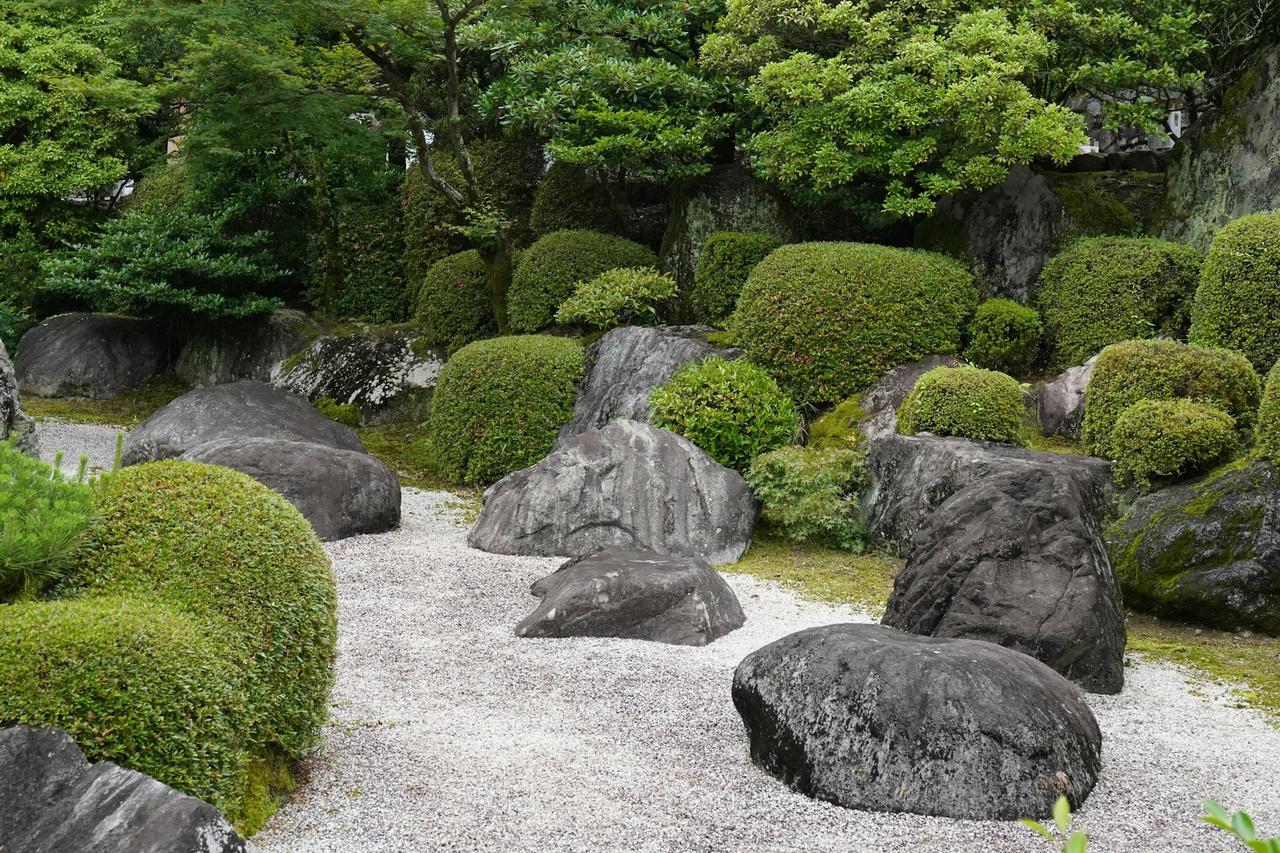
İçinde Kayalar ve Ağaçlar Bulunan Bahçe (Unsplash)
The historical development of Japanese garden art has given rise to various garden styles in parallel with social, political, and religious changes across different eras.
The origins of Japanese gardens extend back to the Asuka period. During this time, under Chinese cultural influence, the earliest garden practices emerged. In the Nara period, the first authentic Japanese garden was constructed in Nara Province, featuring a meandering stream bordered by coastal cliffs, inspired by traditional Chinese poetic activities. During this era, Buddhist influences reached Japan via China, leading to techniques such as using rocks without altering their natural features. In ancient times, wooded burial grounds surrounded by water moats were used for state officials. The earliest Japanese gardens were paved with gravel courtyards for Shinto priests’ rituals, later incorporating rocks, water, and plants to create hills, islands, and bridges.
With the capital’s relocation from Nara to Kyoto (Heian-kyo), garden design experienced rapid development. One major factor was the diversion of water from Lake Biwa, near Kyoto, to supply gardens. During this period, the Shinden-tsukuri residential garden style emerged as the early prototype of traditional Japanese gardens. The first book on gardening techniques, Sakuteiki, was written in this era. Heian period pond gardens featured expansive areas with artificial hills and ponds. The Byodo-in Temple Garden (1052) was constructed to recreate Amida Buddha’s Western Paradise.
During the Kamakura period, the samurai class gained influence and embraced Zen Buddhism. Garden aesthetics adopted a stern and symbolic style influenced by samurai spirit and Zen teachings. The Shinden-tsukuri and Shoinzukuri styles laid the foundations for samurai residential garden design. In the Muromachi period, Zen culture reached its peak, and with the Chanoyu (Tea Ceremony), the Roji (Tea Gardens) emerged. Zen gardens designed for deep meditation anddry landscape gardens(Karesansui) became widespread. TheRyoan-jiTemple Garden (1499), constructed in the dry landscape style, is a world-famous example created by the artist and gardener Soami. Daisen-in (1513) is another Zen garden built by the monk Soho and artist Soami.
During this period, internal conflicts arose among daimyo nobles. Garden materials and rocks were regarded as priceless objects, and themes of wealth and ornamentation dominated. The Sambo-in Temple exemplifies the dominant gardens of this era. Kodai-ji Temple is another famous garden of the period, divided into sections of dry landscape, pond, and strolling garden.
During this period, the capital moved to Edo (modern Tokyo), and the country closed itself to foreign influences. Strolling garden (Kaiyū-shiki-teien) styles gained popularity. The Katsura Imperial Villa (construction began in 1620), Sento Gosho, and Shugaku-in Imperial Villa (completed in 1659) represent the aesthetic principles of this era. Elements such as stone lanterns (toro) and water basins (tsukubai) were incorporated into gardens. The Nijo-jo Castle Garden also belongs to this period.
During the Meiji period, Japan reopened to foreign countries and initiated a modernization process that introduced new garden design techniques. Many former residential gardens were converted into public parks. Japan participated in World Expositions to introduce its traditional culture and gardens to the world. From the Showa period to the present, Japanese gardens have incorporated a wider variety of forms, shapes, and plant species. In non-religious gardens, greater attention was paid to aesthetics, with increased use of the borrowed landscape (shakkei) technique and the karikomi pruning method to shape plants. Due to limited space, gardens gradually became smaller. Mirei Shigemori introduced new materials, lines, and geometric forms to modern Japanese garden design.
Today, Japanese garden architects continue traditional garden practices while also creating new garden and park designs inspired by historical models.
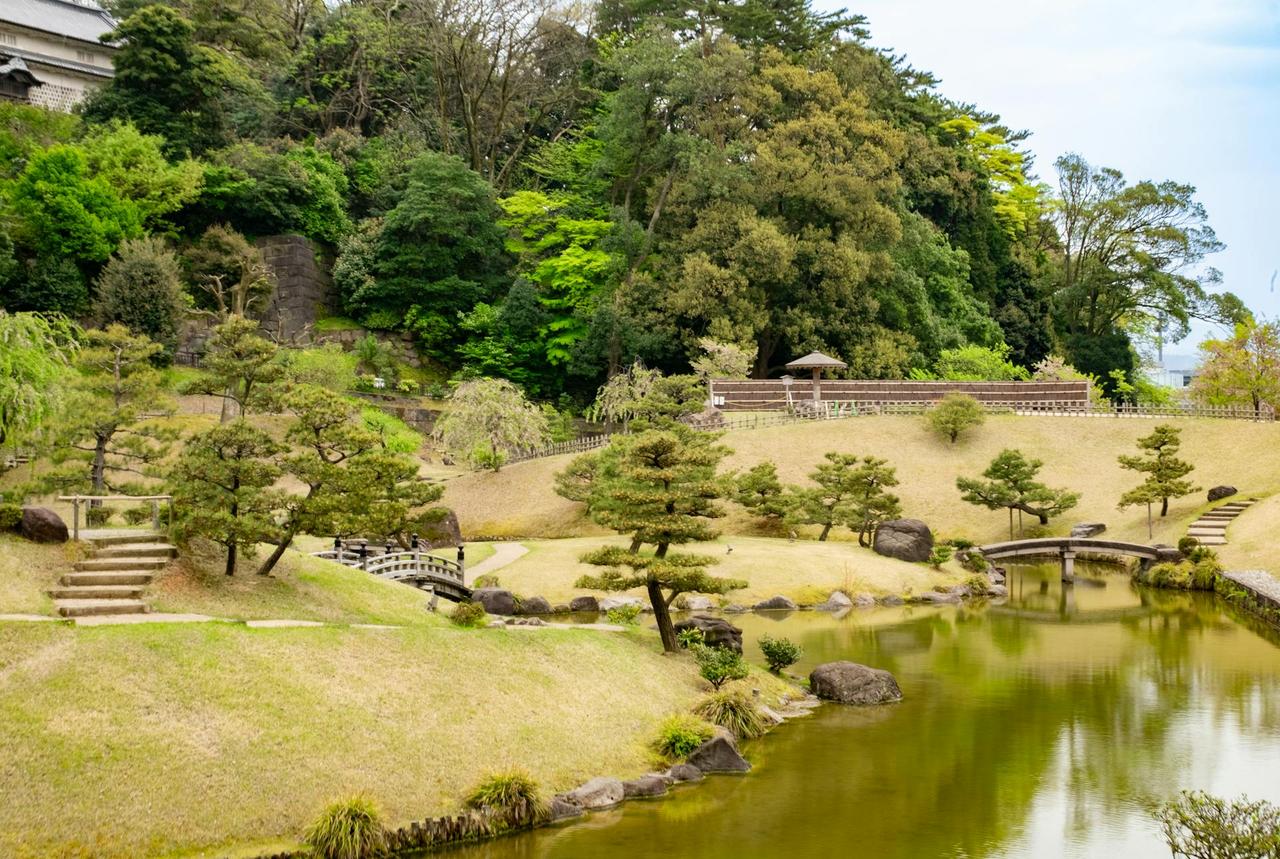
The Japanese Garden in Kanazawa (Pexels)
Japanese gardens can be classified into various styles:
Gardens that create miniature models of natural landscapes using ponds, artificial hills, rocks, trees, and bridges. Considered the oldest garden type in Japan.
Gardens that do not use water, instead using raked white sand or gravel to represent water surfaces and rocks to symbolize mountains or islands. Closely associated with Zen Buddhism and designed for meditation. Ryoan-ji is the most famous example.
Gardens that include the path (roji) leading to the tea house (chashitsu). They aim to cleanse visitors of daily distractions and prepare them for spiritual tranquility. Stone lanterns, tsukubai, and stepping stones (tobi-ishi) are typical elements of these gardens.
Usually large-scale gardens explored via winding paths around a pond. They offer changing views from different angles as one walks. They became popular during the Edo period.
Small-scale gardens located within the courtyards of homes or temples. They typically reflect a fragment of nature within limited space.
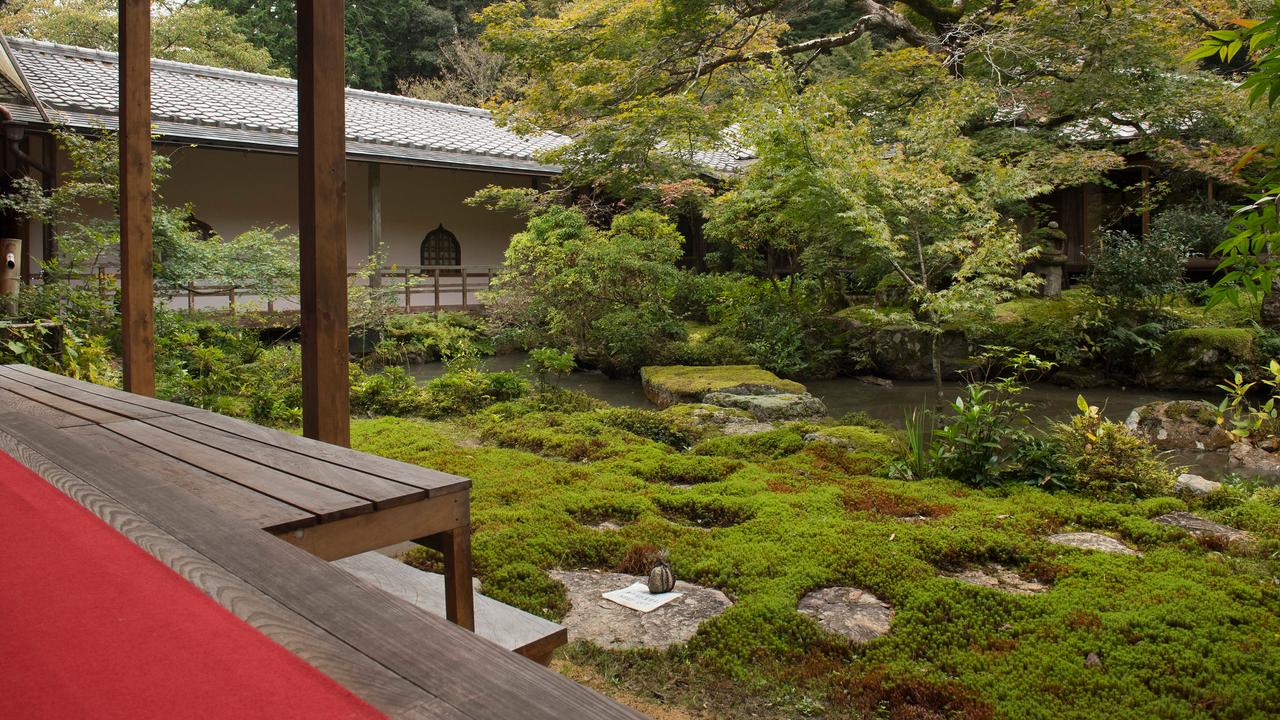
Japon Bahçe Sanatı (Flickr)
Japanese garden art is a complex and delicate art form that carefully selects and places natural materials, conveying profound philosophical and religious meanings while offering an aesthetic and spiritual experience. Evolving from antiquity to the present, it has preserved its traditional values while remaining open to contemporary interpretations.
Altuntaş, Mert, and Koray Sazlı. “Japon Bahçe Sanatında Yer Alan Estetik ve Kompozisyonal Unsurların Tarihsel Süreç Bağlamında Gelişimi.” Accessed May 26, 2025.https://www.ulakbilge.com/makale/pdf/1632742378.pdf
Flickr. "Kenroku-en Garden, Kanazawa, Japan." Photograph: pv9007. Accessed May 26, 2025.https://www.flickr.com/photos/pv9007/23834406618
Karaçizmeli, Enise Burcu. “Gelenekselden Küresele Bahçe Tasarımı: Çin ve Japonya'dan Örnekler.” 2011.https://polen.itu.edu.tr/items/6041b6c8-4c0b-430a-b8c5-4a96bac96b57.
Pexels. "Serene Japanese Garden Landscape in Winter." Accessed May 26, 2025.https://www.pexels.com/photo/serene-japanese-garden-landscape-in-winter-30989564/.
Pexels. "Tranquil Japanese Garden in Kanazawa." Accessed May 26, 2025.https://www.pexels.com/photo/tranquil-japanese-garden-in-kanazawa-30990125/.
Pexels. "View of Building Exterior." Accessed May 26, 2025.https://www.pexels.com/photo/view-of-building-exterior-327483/.
Unsplash. “A Garden with Rocks and Trees in It.” Photograph: G4cT8TYPNoM. Accessed May 26, 2025.
Özgen, Yalçın. “Japon Bahçe Sanatında Kaya ve Taş Kullanımı.” *İstanbul Üniversitesi Orman Fakültesi Dergisi* 38, no. 2 (1988): 81–93.https://dergipark.org.tr/en/download/article-file/175195
Özgen, Yalçın. “Japon Bahçelerinin Tarihsel Gelişimi.” *İstanbul Üniversitesi Orman Fakültesi Dergisi* 38, no. 4 (1988): 90–97.https://dergipark.org.tr/en/download/article-file/175175

No Discussion Added Yet
Start discussion for "Japanese Garden Art" article
Core Elements and Composition Principles
Rocks and Stones (Ishi)
Water (Mizu)
Plants (Shokubutsu)
Architectural Elements
Ma (Meaningful Void)
Zen Buddhist Influence
Historical Development
Asuka (538–710) and Nara (710–794) Periods
Heian Period (794–1185)
Kamakura (1185–1392) and Muromachi (1392–1573) Periods
Momoyama Period (1573–1615)
Edo Period (1603–1867)
Meiji (1868–1912), Taisho (1912–1926), and Showa (1926–1989) Periods (Modern Era)
Contemporary Era
Garden Types
Tsukiyama (Artificial Hill Gardens)
Karesansui (Dry Landscape Gardens)
Chaniwa (Tea Gardens) or Roji
Kaiyū-shiki-teien (Strolling Gardens)
Tsuboniwa (Courtyard Gardens)