


This article was automatically translated from the original Turkish version.
+1 More
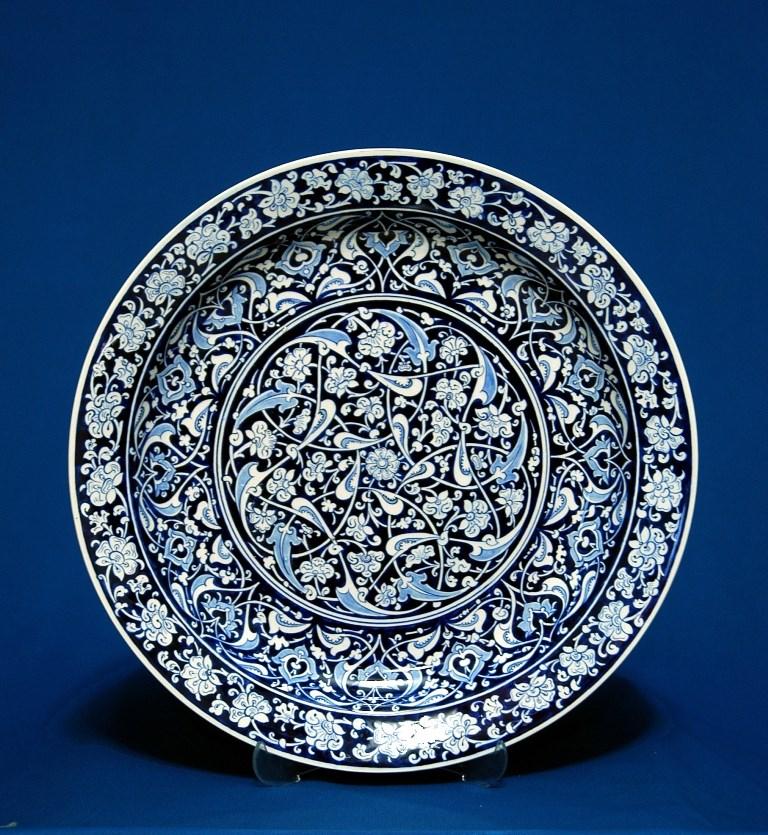
Iznik Ceramics
Geographical Indication Type | Place of Origin | ||||||||
|---|---|---|---|---|---|---|---|---|---|
File Number | C2004/026 | ||||||||
Application Date | 27.12.2004 | ||||||||
Registration Number | 137 | ||||||||
Registration Date | 30.12.2009 | ||||||||
Product / Product Group | Rugs Handcraft Products Excluding Carpets and Weavings | ||||||||
Province | Bursa | ||||||||
Applicant / Registrant | İznik Municipality | ||||||||
Status | Registered | ||||||||
Address | Beyler Mahallesi Kılıcaslan Cad. No:97 İznik/ Bursa TÜRKİYE | ||||||||
İznik Çinisi is a traditional ceramic type produced in the İznik district of Bursa province in Türkiye, distinguished by its high quartz content, white slip layer, and glossy transparent glaze. İznik tiles, widely used in Ottoman architecture between the 15th and 17th centuries, attract attention for both their aesthetic and technical qualities. Thanks to the original raw materials and underglaze decoration techniques employed, vibrant colors and intricate motifs are preserved beneath a brilliant surface. İznik Çinisi, produced by the controlled firing of natural raw materials—illitic clay, quartz, and frit—holds a place among the world’s most significant ceramic products due to its historical and artistic heritage.
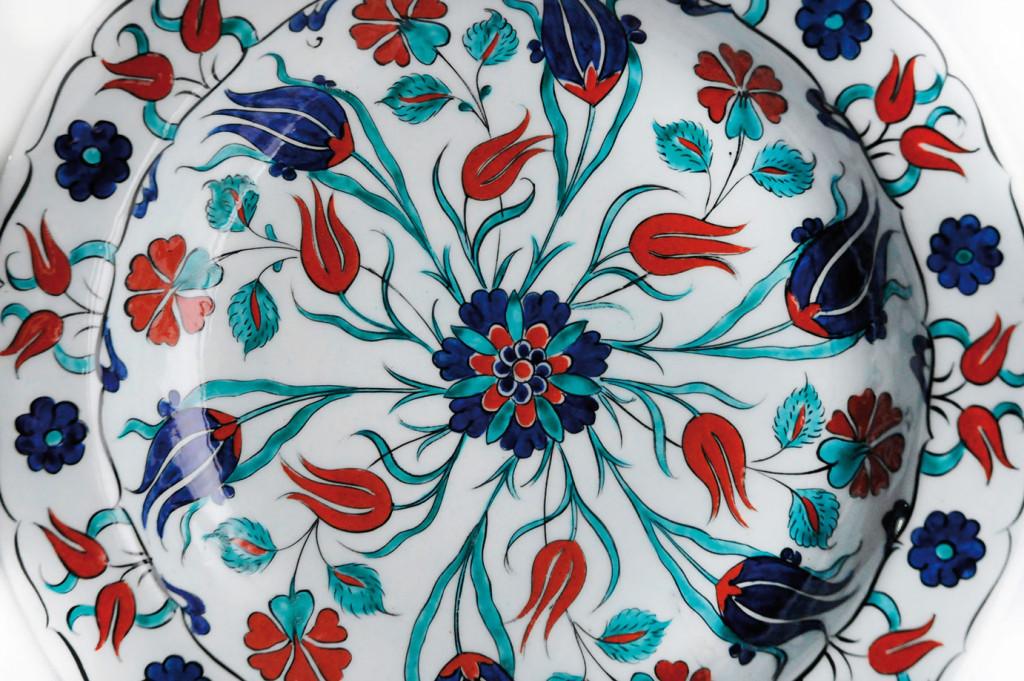
İznik Çinisi (İznik Belediyesi)
İznik Çinisi is the name given to ceramics and tiles produced in the İznik district of northwestern Türkiye, within Bursa province. These tiles gained significant prominence in Ottoman architecture between the 15th and 17th centuries, where they were used extensively for large surface coverings in mosques, palaces, and public buildings. Named after the geographical region of its production, İznik Çinisi is defined as a unique local product based on its material composition, manufacturing method, and technological characteristics.
İznik Çinisi consists of three layers: the ceramic body, the slip, and the glaze. The body contains 75–85 percent quartz (SiO₂), giving it the properties of a semi-precious stone. Primary raw materials for the body include illitic clays, quartz, and frit or glass powder used as a flux. The slip layer is pure white and enhances the brightness and vibrancy of the colors beneath the glaze. The glaze layer is transparent, colorless, and glassy, providing both aesthetic gloss and an impermeable surface.
Raw materials for the body and glaze are derived either directly from natural minerals (natural raw materials) or from processed substances (non-natural raw materials). Major oxides used include iron, cobalt, chromium, manganese, copper, zirconium, tin, and titanium oxides. Additionally, glass powder, soda, and litharge (lead oxide) play important roles in the glaze composition.
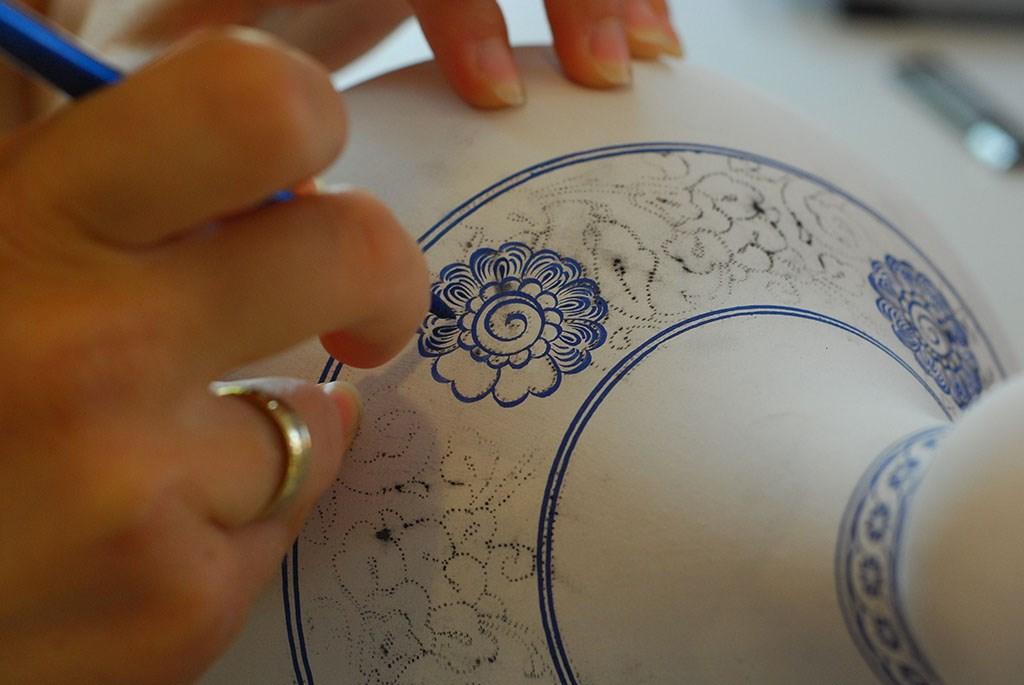
İznik Çinisi (İznik Belediyesi)
The production of İznik Çinisi is a multi-stage and technically demanding process. It begins with the preparation of raw materials, which include silica, lead, soda, and tin oxide. These materials are mixed according to a precise recipe after being ground to controlled particle sizes. After fritting, the glaze is ground, sieved, and then thickened using a binder such as gum arabic or flour paste. Glazing is typically performed by dipping or pouring. This is followed by retouching and firing at temperatures between 900 and 940 °C.
Today, firing is carried out in electric kilns at temperatures between 850 and 950 °C. During the firing cycle, the kiln temperature is gradually increased. When the temperature reaches approximately 600 °C, the upper flue is closed to ensure controlled release of gases. The entire process lasts 8 to 10 hours until the final temperature is reached and maintained.
The body of İznik Çinisi is porous and light in color. The slip layer imparts a porcelain-like effect with a tone resembling pearl white. The glaze layer is transparent, colorless, and glassy. Chemical analyses reveal that the material contains 85–95 percent silica. The raw illitic clays used are filtered and washed, forming a suspension containing 25–33 percent illite.
İznik Çinisi is resistant to climate variations and frost. The glossy, impermeable glaze prevents water retention on the surface, thereby inhibiting bacterial and mold growth. The glaze ensures the brilliance of underlying colors and correct light reflection. İznik Çinisi products are suitable for both interior and exterior architectural applications.
Designs on İznik Çinisi frequently incorporate local flora and fauna alongside allegorical and symbolic elements. Geometric patterns symbolize the sky, cosmic order, and celestial relationships. Inscriptions are typically short texts reflecting Islamic thought and philosophy, avoiding boastful or glorifying statements. Traditional and modern patterns are combined to serve decorative purposes on both panels and architectural surfaces.
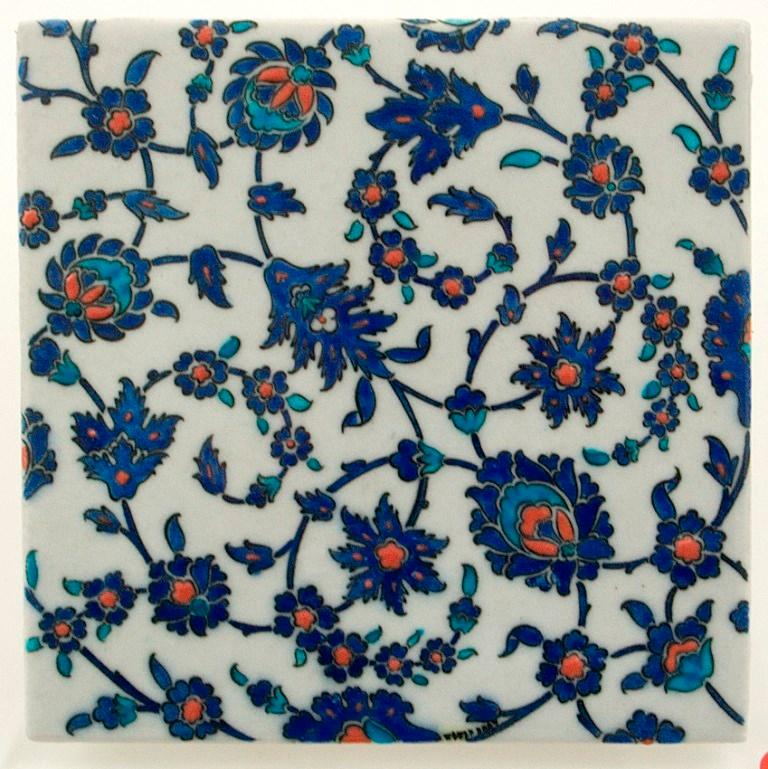
İznik Çinisi (İznik Belediyesi)
Production of İznik Çinisi is confined within the boundaries of İznik district. Archaeological excavations in the area, such as those of historic İznik tile kilns, have demonstrated the historical continuity of this tradition. The primary raw material, illitic clay, is sourced from deposits located between the villages of Kutluca Kırıntı and Hacıosman near Elbeyli. In the 16th century, İznik reached the pinnacle of global ceramic production, yet this art declined for approximately 400 years. Today, the tradition has been revived through the efforts of the Çini Vakfı, small-scale artisan workshops, and institutions such as Uludağ University.
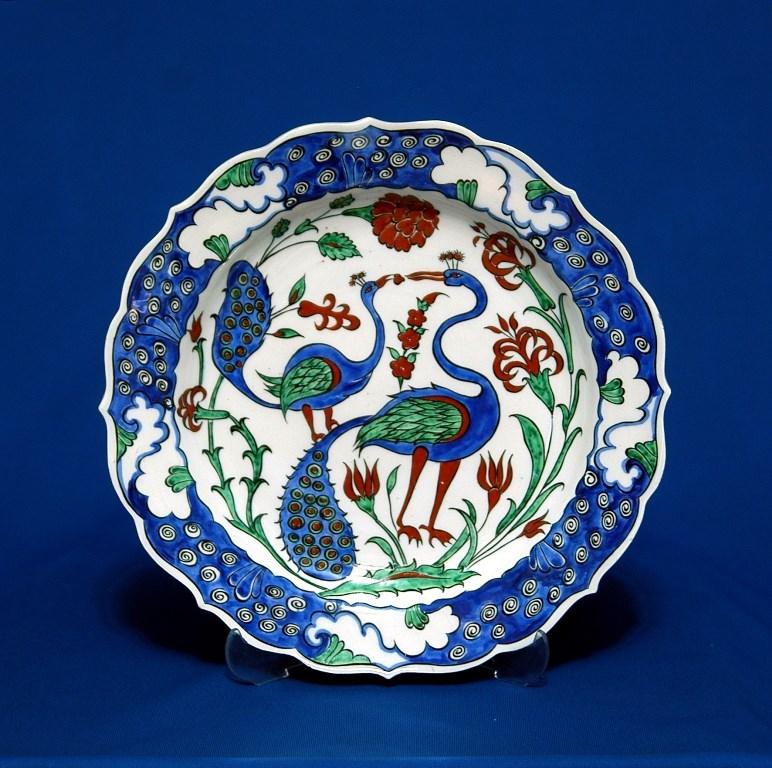
İznik Çinisi (İznik Belediyesi)
İznik Çinisi is officially registered as a geographical indication. Oversight is conducted by a commission composed of representatives from İznik Multi-Program High School and the İznik Chamber of Commerce and Industry. Inspections are carried out monthly within the district and quarterly across Türkiye. In cases of imitation or improper use, samples are collected and analyzed.
Today, İznik Çinisi is recognized as a distinct category in antiquities and museums. Notable institutions housing collections of İznik tiles include the Sadberk Hanım Museum, the Museum of Islamic Arts, the Gulbenkian Collection, the British Museum, and the Victoria and Albert Museum.
Bursa İznik Çinisi (Bursa Ulu Şehir)
Bursa Ulu Şehir. “Bursa İznik Çinisi.” YouTube. Accessed May 31, 2025.https://www.youtube.com/watch?v=i7hVKSuPNSw
Bursa Valiliği. “İznik Çinisi.” Bursa Valiliği Resmî Web Sitesi. Accessed May 31, 2025.http://www.bursa.gov.tr/iznik-cinisi.
Turk Patent and Trademark Office. "Coğrafi İşaretler Detay - İznik Çinisi." Turk Patent and Trademark Office. Accessed May 31, 2025.https://ci.turkpatent.gov.tr/cografi-isaretler/detay/37949.
Turk Patent and Trademark Office. "İznik Çinisi Coğrafi İşaret Belgesi (PDF)." Turk Patent and Trademark Office. Accessed May 31, 2025.https://ci.turkpatent.gov.tr/Files/GeographicalSigns/37b0c4ca-7805-46b1-b212-5d9a166df063.pdf.
İznik Belediyesi. "İznik Çinisi." İznik Belediyesi Resmî Web Sitesi. Accessed May 31, 2025.https://iznik.bel.tr/tr/sayfa/iznik-cinisi-44.

Iznik Ceramics
Geographical Indication Type | Place of Origin | ||||||||
|---|---|---|---|---|---|---|---|---|---|
File Number | C2004/026 | ||||||||
Application Date | 27.12.2004 | ||||||||
Registration Number | 137 | ||||||||
Registration Date | 30.12.2009 | ||||||||
Product / Product Group | Rugs Handcraft Products Excluding Carpets and Weavings | ||||||||
Province | Bursa | ||||||||
Applicant / Registrant | İznik Municipality | ||||||||
Status | Registered | ||||||||
Address | Beyler Mahallesi Kılıcaslan Cad. No:97 İznik/ Bursa TÜRKİYE | ||||||||
History
Definitional Features and Composition
Production Process
Material Properties
Physical and Technical Characteristics
Motifs and Decoration
Geographical and Historical Context
Regulation and Geographical Indication
Museums and Collections