


This article was automatically translated from the original Turkish version.
Italian cuisine is regarded as one of the oldest culinary traditions in Europe. Its origins extend back to ancient Greek and Etruscan civilizations. The agricultural knowledge and dietary habits of these early cultures left a distinct imprint on the cuisine. Over time, with the rise of the Roman Empire, many elements such as food preservation methods, cooking techniques, and table settings also developed.
Italy, due to its geographical position, has been exposed to interactions among numerous civilizations; influences from Romans, Phoenicians, Goths, Normans, Saracens, French, Spaniards, and Austrians are evident in its culinary culture. Additionally, it is noted that chefs and cooking techniques brought from China by Marco Polo in the 13th century played a role in the development of pasta and pasta varieties.
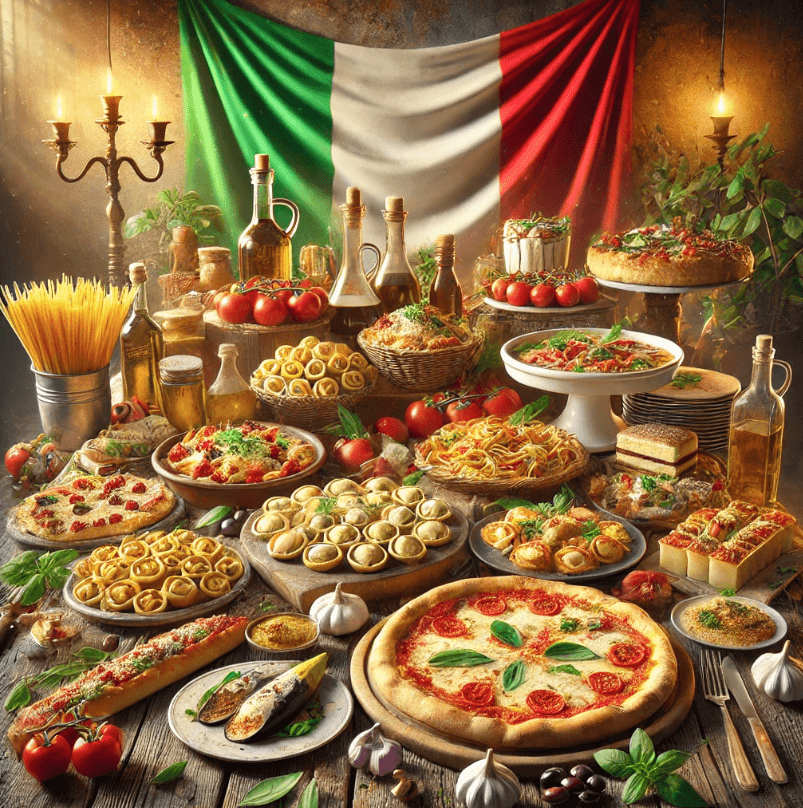
İtalyan Mutfağı (Yapay zekâ tarafından oluşturulmuştur)
Throughout Italian history, there have been clear dietary differences between wealthy and impoverished classes. The term “cucina ricca” refers to the affluent cuisine of the upper class, while “cucina povera” describes the simple cuisine developed by low-income communities. Cucina ricca incorporates expensive and hard-to-obtain ingredients, whereas cucina povera emphasizes local, seasonal, and durable products. This binary structure reflects the direct influence of Italy’s social structure on its cuisine. However, beginning with the Renaissance in the 15th century, this distinction weakened and culinary practices became more integrated.
Italy’s political and cultural structure, composed of twenty distinct regions, has led to significant variation in its culinary culture across the country. This diversity is evident not only in the ingredients used but also in cooking techniques and food presentation. In northern Italy, sauces made with butter, rice, and fresh green vegetables predominate, while in southern Italy, olive oil, dried tomato paste, and spices are more commonly used. The geographical structure is one of the primary causes of these differences; northern regions surrounded by the Alps produce different agricultural products than southern regions influenced by the Mediterranean climate.
In Italian cuisine, wheat, olives, grapes, tomatoes, rice, corn, and various vegetables hold central importance. These ingredients form the basis of pasta, pizza, risotto, olive oil-based dishes, and various soups. Olive oil is traditionally used both as a cooking fat and as a flavoring agent. Cheese (such as mozzarella, parmesan, ricotta), coffee (especially espresso), and desserts (such as tiramisu and ice cream) are also essential components of the cuisine.
In the Italian meal structure, the first course, known as “primo piatto,” typically consists of dishes such as risotto or pasta. This practice aims to prevent the consumption of two heavy dishes in succession.
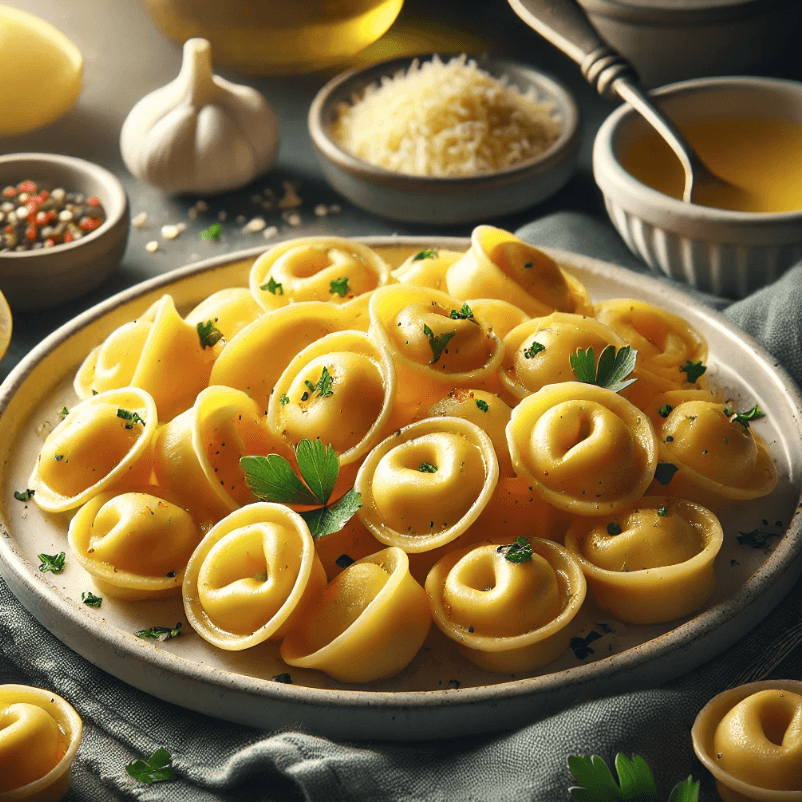
Tortellini (Yapay zekâ tarafından oluşturulmuştur)
Tortellini, a dish native to the Emilia-Romagna region, is a ring-shaped pasta typically filled with a mixture of mortadella, prosciutto, pork, and parmesan cheese. Traditionally served “in brodo,” or in meat broth, the origins of tortellini have been the subject of ongoing debate, particularly between the cities of Bologna and Modena for many years. However, many contemporary chefs and researchers argue that the dish actually originated in the small town of Castelfranco Emilia.
According to the most famous legend, the navel of the goddess Venus inspired the shape of this pasta. Literary texts written in the 17th century by Alessandro Tassoni and later expanded by Giuseppe Ceri in the following century associate this legend with an event that took place in Castelfranco Emilia. Today, a statue commemorating this legend stands in the town.
Regional differences also exist in the preparation and presentation of tortellini. In Bologna, smaller tortellini with raw filling are preferred, while in Modena, larger tortellini with pre-cooked filling are used. In some modern restaurants, tortellini are served with innovative sauces such as parmesan cream instead of the traditional meat broth. Such variations are criticized by some traditional producers, who maintain that tortellini should only be served in broth.
Tortellini is closely associated with family traditions in Emilia-Romagna culture. Traditionally handmade by women, these pasta shapes are commonly consumed during festive occasions—particularly Christmas and Saint Stephen’s Day. The annual Sagra del Tortellino festival held in Castelfranco Emilia demonstrates that this tradition continues to thrive today.
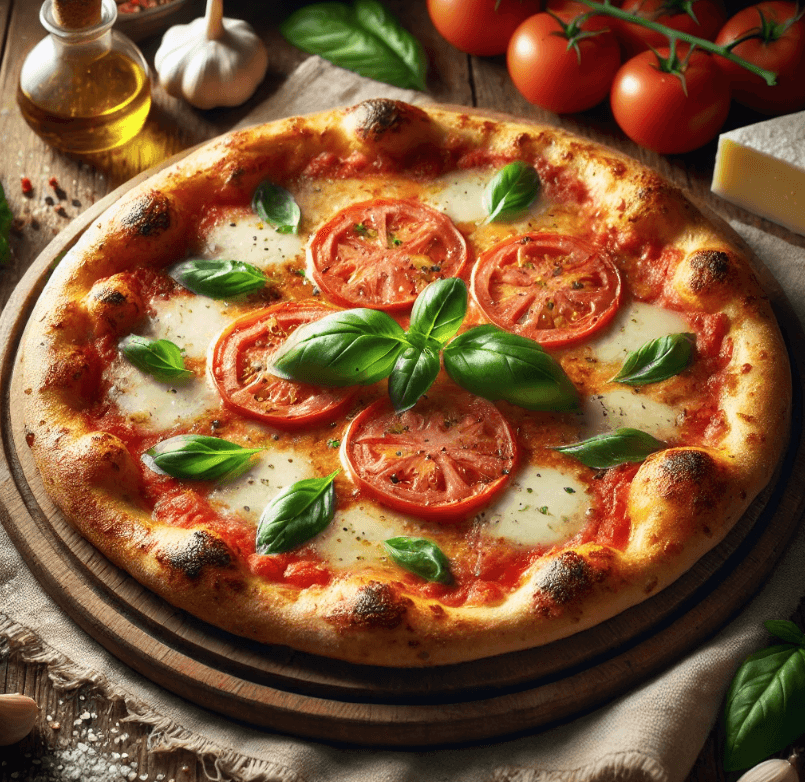
Pizza (Yapay zekâ tarafından oluşturulmuştur)
Italian cuisine possesses a layered structure shaped by historical continuity, regional diversity, and cultural interactions. Both the culinary distinctions shaped by material resources and the agricultural products determined by geographical conditions have left deep imprints on the cuisine. While items such as pizza, pasta, and cheese are recognized worldwide, they are rooted in local production knowledge and historical processes. As exemplified by tortellini, even debates over the origins of a single dish reveal the socio-cultural richness of this culinary tradition.
BBC Food. "Italian Cuisine Recipes A–Z." Accessed May 9, 2025.Link
Rosati, Kaitlyn. “The Mystery of One of Italy’s Most Iconic Pastas.” BBC Travel, October 25, 2024. Accessed May 9, 2025.Link
Sert, Ayşe Nevin. Italian Cuisine: Characteristics and Effects. Journal of Business Management and Economic Research, Vol. 1, Issue 1 (2017): 49–57. Accessed May 9, 2025.
Türkiye Turizm Ansiklopedisi. "İtalyan Mutfağı." turkiyeturizmansiklopedisi.com. Accessed May 9, 2025.Link

Socioeconomic Distinctions: Cucina Ricca and Cucina Povera
Geographical and Regional Diversity
Core Food Products and Culinary Practices
Cultural and Historical Origins of Tortellini
Contemporary Perspectives and Production Variations of Tortellini