


This article was automatically translated from the original Turkish version.
Istanbul Medeniyet University Logo
Founding Year | 2010 | ||||||||
|---|---|---|---|---|---|---|---|---|---|
Istanbul Medeniyet University (IMÜ) was established in 2010 as one of Türkiye’s innovative and research-oriented universities. Located on the Anatolian side of Istanbul, the university stands out through its educational and research activities at both regional and international levels.
In 2014, IMÜ ranked 40th among Türkiye’s 50 universities in the TÜBİTAK Entrepreneurial and Innovative University Index, demonstrating its commitment to entrepreneurship and innovation. Despite its young age, IMÜ has gained recognition nationally and internationally and continues to pursue its goal of becoming a global center for education and research by ranking among the world’s top 1000 universities.
Istanbul Medeniyet University aims to provide its students with a rich scientific, cultural and social environment through its interdisciplinary educational approach, strong academic staff and modern campus infrastructure.
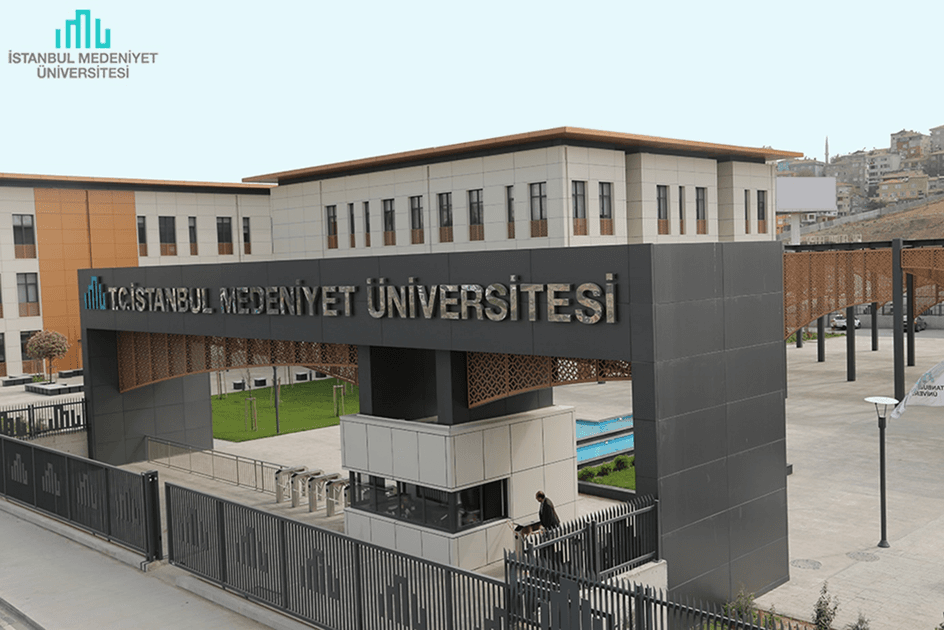
Istanbul Medeniyet University (Source: Istanbul Medeniyet University Website)
The university conducts its educational activities through 11 faculties, 3 institutes and 1 college. It offers undergraduate, graduate and doctoral programs across a wide range of disciplines including medicine, engineering, law, literature, social sciences and health sciences. IMÜ’s educational philosophy embraces an innovative and interdisciplinary approach. As a research-focused university, IMÜ prioritizes scientific studies capable of competing at national and international levels.
The faculties, institutes and college of Istanbul Medeniyet University are as follows:
These faculties offer undergraduate and postgraduate programs across a broad academic spectrum, providing opportunities for specialization in various disciplines.
The research and application centers operating at Istanbul Medeniyet University are as follows:
The campuses of Istanbul Medeniyet University are located in different areas on the Anatolian side of Istanbul, providing students with modern and contemporary educational environments. Each campus is designed to meet the academic and social needs of students and faculty members.
Libraries, modern classrooms, advanced technology laboratories, social activity areas, sports facilities and spaces dedicated to student clubs at the campuses support not only the academic life of students and faculty but also contribute to their social and cultural development. The university’s campuses can be listed as follows:
Göztepe South Campus:
One of the university’s main campuses, it hosts most faculties and administrative units. It attracts attention with its modern buildings, spacious social areas and environmentally friendly design.
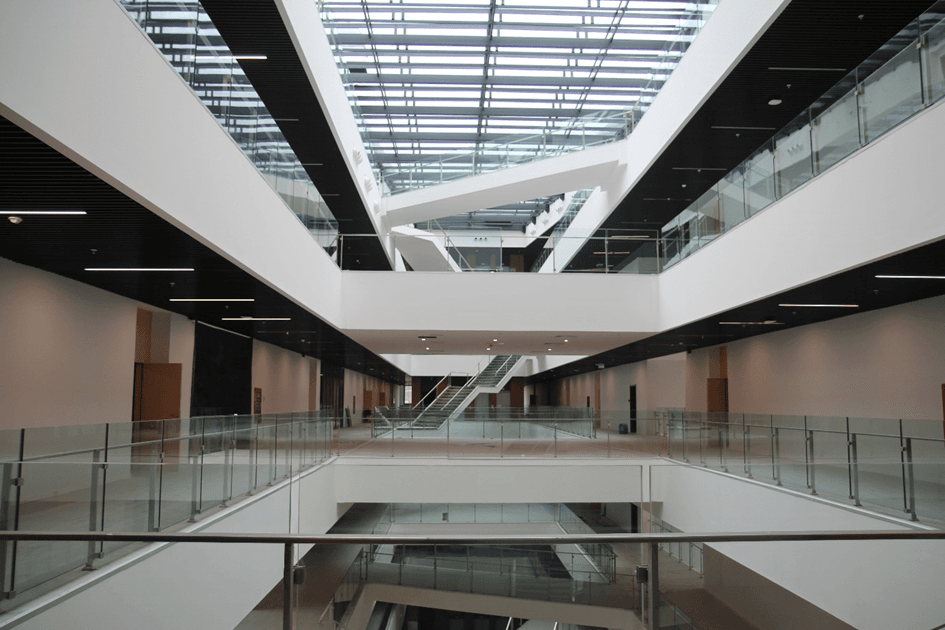
IMÜ South Campus (Source: IMÜ Website)
Göztepe North Campus:
Located opposite the Göztepe South Campus, this campus primarily houses scientific units such as research centers and laboratories.
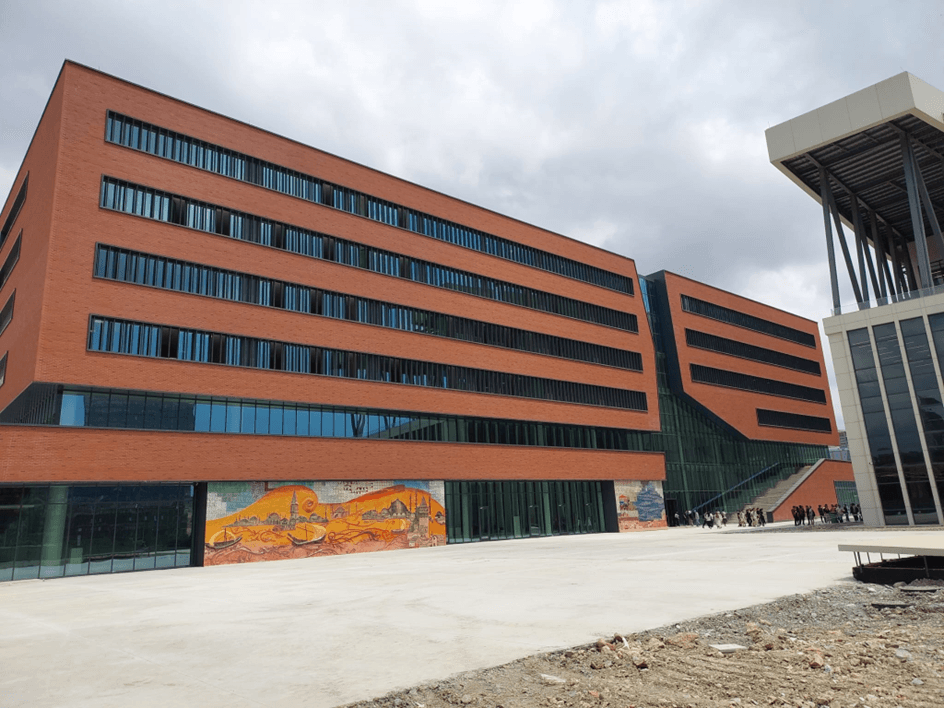
IMÜ North Campus (Source: IMÜ Website)
Kartal Cevizli Campus:
Part of the Faculty of Health Sciences and part of the Faculty of Medicine are located here. Its proximity to hospitals and clinical facilities provides advantages for students receiving education in the health field.
Pendik Campus:
This campus hosts units focused primarily on health services and applied education. It is home to the Istanbul Medeniyet University Hospital.
Maltepe Campus:
This campus is used for certain research projects and specialized educational programs. It is planned to expand its academic units with growing facilities.
Bağlarbaşı Campus:
This campus is used for the university’s social and cultural activities. It is situated in a historic and central location.
IMÜ is located in the Kadıköy district of Istanbul, a historic and strategic region. Its campus stands out with its modern architecture and environmentally friendly design, offering students extensive space for social, cultural and sporting activities. With facilities such as libraries, laboratories, research centers and health services, an ideal working environment is created for students and faculty.
The Ziraat Bankası Library of Istanbul Medeniyet University, as Türkiye’s largest university library, serves as the center of academic and cultural activities. With a covered area of 30,000 square meters and modern equipment, the library establishes a new standard for access to information and learning processes.
Officially opened on 11 November 2022 by President Recep Tayyip Erdoğan, the library goes beyond being merely a learning center; it reflects the university’s vision and Türkiye’s determination in education and research. At the opening ceremony, President Erdoğan emphasized the library’s goal of becoming Istanbul’s center of knowledge and culture.
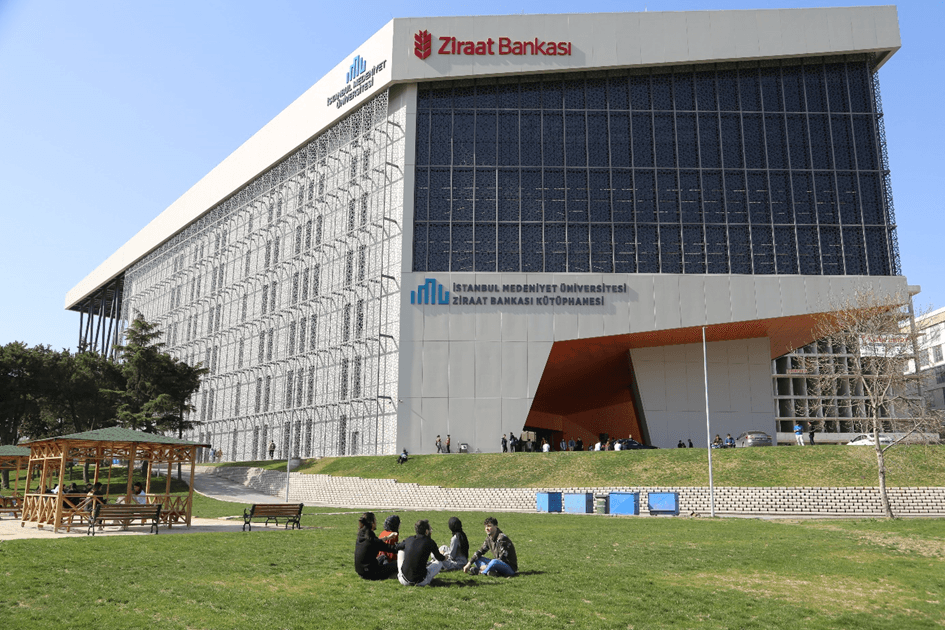
IMÜ Ziraat Bankası Library (Source: IMÜ Website)
The university aims to be a pioneer not only in education but also in research and innovation. Research centers that integrate multiple disciplines are supported through local and international collaborations. Projects conducted in fields such as health, biotechnology, artificial intelligence and social innovation have established IMÜ as one of Türkiye’s leading research universities.
Istanbul Medeniyet University has an international vision and develops academic collaborations with universities around the world. Through Erasmus+ and Mevlâna exchange programs, students and faculty are provided with opportunities for education and research in different cultures.
Istanbul Medeniyet University aims to cultivate future leaders by combining the legacy of the past with a modern vision. Grounded in principles of knowledge production, innovation and sustainability, it aspires to be recognized among the world’s respected universities, not only in Türkiye but globally.
2014 Entrepreneurial and Innovative University Index. TÜBİTAK. Accessed January 7, 2025.
Campus Access. İstanbul Medeniyet Üniversitesi. Accessed January 7, 2025.https://www.medeniyet.edu.tr/tr/iletisim/kampuslerimize-ulasim
Istanbul Medeniyet University. "Istanbul’s Academic and Cultural Meeting Point: Ziraat Bankası Library." Accessed January 7, 2025.https://www.medeniyet.edu.tr/tr/haberler/istanbulun-akademik-ve-kulturel-bulusma-noktasi-ziraat-bankasi-kutuphanemiz
Istanbul Medeniyet University. "Our University Again Among the World's Top 1000 Universities." Accessed January 7, 2025.https://medeniyet.edu.tr/tr/haberler/universitemiz-dunyanin-en-iyi-universiteleri-arasinda-yine-ilk-1000de
Istanbul’s Academic and Cultural Meeting Point: Ziraat Bankası Library. Istanbul Medeniyet University. Accessed January 7, 2025.https://www.medeniyet.edu.tr/tr/haberler/istanbulun-akademik-ve-kulturel-bulusma-noktasi-ziraat-bankasi-kutuphanemiz
President Erdoğan: We Will Surpass Them in 5–10 Years. Milliyet. Accessed January 7, 2025.
President Recep Tayyip Erdoğan inaugurated our Library and Central Classroom Building. İstanbul Medeniyet Üniversitesi. Accessed January 7, 2025.
İstanbul Medeniyet Üniversitesi Yapı İşleri ve Teknik Daire Başkanlığı. Accessed January 7, 2025.https://yapiisleri.medeniyet.edu.tr/tr
İstanbul Medeniyet Üniversitesi. "3 Bin Kişilik Modern Kütüphanesine Kavuştu." Anadolu Ajansı. Accessed January 7, 2025.https://www.aa.com.tr/tr/kultur/istanbul-medeniyet-universitesi-3-bin-kisilik-modern-kutuphanesine-kavustu/2659168
İstanbul Medeniyet Üniversitesi. "İstanbul Medeniyet Üniversitesi Logomuz." Accessed January 7, 2025.https://www.medeniyet.edu.tr/tr/universitemiz/genel/imu-logomuz.

Istanbul Medeniyet University Logo
Founding Year | 2010 | ||||||||
|---|---|---|---|---|---|---|---|---|---|
No Discussion Added Yet
Start discussion for "Istanbul Medeniyet University" article
Academic Structure and Educational Approach
Faculties, Institutes and College
Faculties
Institutes
College
Laboratories, Application and Research Centers
Istanbul Medeniyet University Campuses
Location and Campus Facilities
IMÜ Ziraat Bankası Library
Library Features
Türkiye’s Largest University Library
24-Hour Open Study Environment
Modern and Technological Infrastructure
Social and Cultural Spaces
Academic and Cultural Contributions
The Library of the Future
Research and Innovation
Internationalization and Collaborations
Future Vision