


This article was automatically translated from the original Turkish version.
+1 More
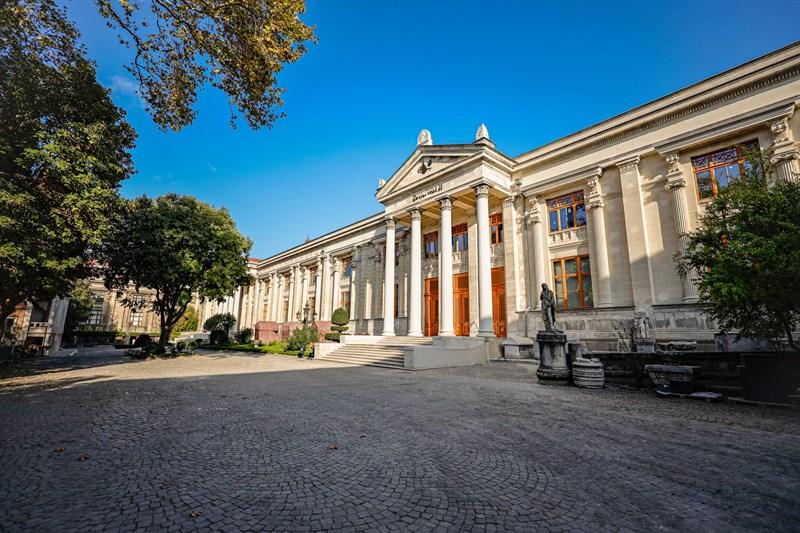
Istanbul Archaeological Museums
Year of Establishment | 1869 (as Müze-i Hümayun) | ||||||||
|---|---|---|---|---|---|---|---|---|---|
Location | Fatih - Istanbul / Türkiye | ||||||||
Affiliated Institution | Ministry of Culture and Tourism of the Republic of Türkiye, General Directorate of Cultural Heritage and Museums | ||||||||
Units | Archaeology Museum Museum of Ancient Oriental Art Çinili Köşk Museum | ||||||||
International Award | 1993 - Council of Europe Museum of the Year Award | ||||||||
Type | Archaeology Museum | ||||||||
Number of Collections | Approximately 1,000,000 artifacts | ||||||||
Architectural Feature | Museum of Ancient Oriental Art: Neoclassical style Çinili Köşk: Ottoman civil architecture Archaeology Museum: Neoclassical style | ||||||||
Notable Works | Alexander Sarcophagus Lamenting Women Sarcophagus Love Poem Tablet (Sumerian) Iznik and Kütahya ceramics Treaty of Kadesh Sidamara Sarcophagus | ||||||||
Istanbul Archaeology Museums are the first institutional museum complex established during the Ottoman Empire and laid the foundations of modern museology in Türkiye. Founded in 1869 as the “Müze-i Hümayun” (Imperial Museum), it now consists of three main units: the Archaeology Museum, the Museum of the Ancient Orient, and the Çinili Köşk Museum. The museum collections include approximately one million artifacts from Anatolia, Mesopotamia, Egypt, Greece, and Rome, encompassing a significant portion of the cultural heritage unearthed through archaeological excavations on Ottoman territories.
Osman Hamdi Bey’s appointment as museum director in 1881 marked a turning point in the development of the Istanbul Archaeology Museums; during this period, the museum gained international recognition through notable artifacts such as the Sayda Sarcophagus. The Istanbul Archaeology Museums hold a central position in cultural heritage preservation not only for their collections but also for their building, a magnificent example of Neo-Classical architecture, and their pioneering role in Turkish museology.
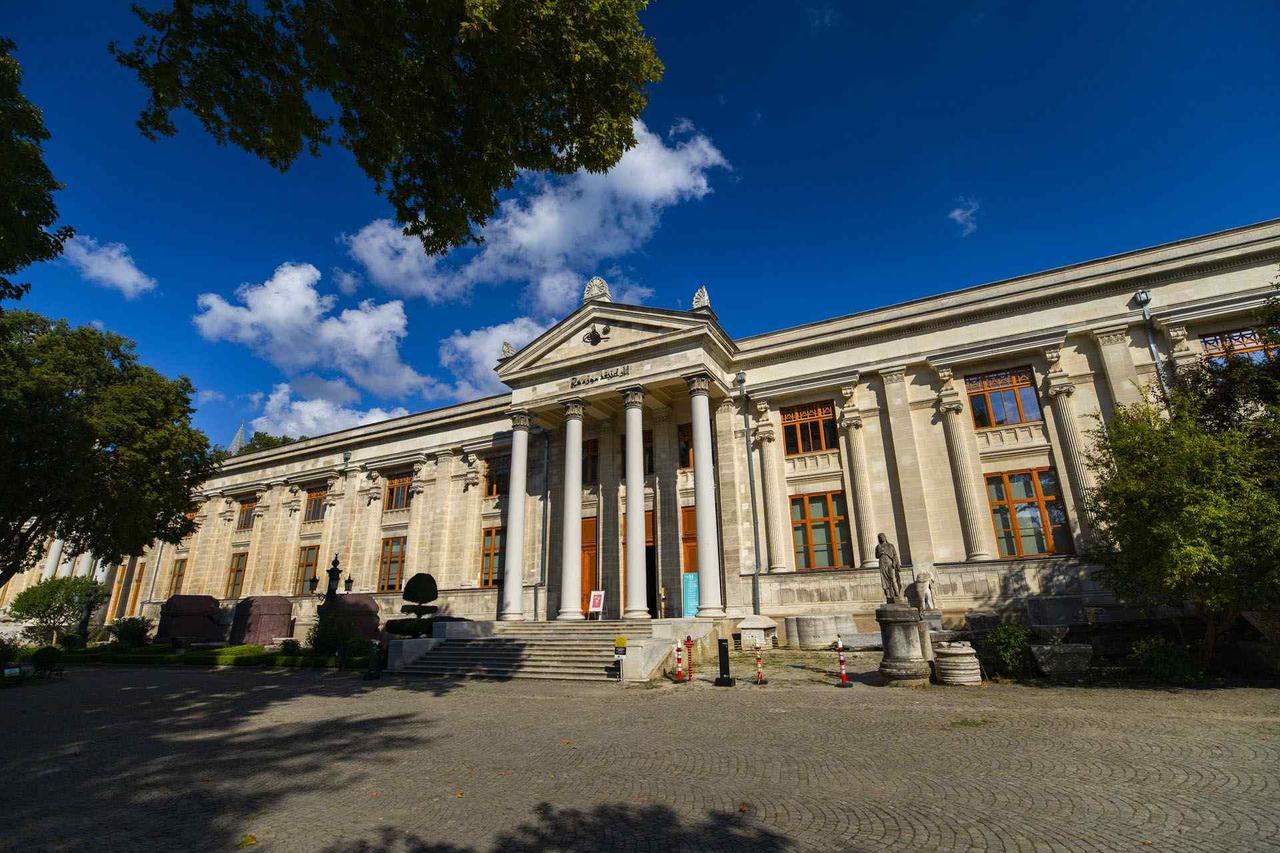
Istanbul Archaeology Museum (Turkish Museums)
The Istanbul Archaeology Museums are regarded as the starting point of modern museology in the Ottoman Empire. Museological activities first took concrete form in 1846 with collections established by Ahmet Fethi Paşa at the Hagia Irene Church: the Mecma-i Âsâr-ı Atîka and Mecma-i Esliha-i Atîka. This initiative, shaped by developments in Europe, emerged as part of Ottoman modernization. The archaeological artifacts gathered at Hagia Irene soon necessitated a new museum due to increasing collection size and inadequate space.
The Müze-i Hümayun (Imperial Museum), founded in 1869, established the institutional foundation of the Istanbul Archaeology Museums. Its first director, Edward Goold, expanded the collection through his work at the ancient city of Cyzicus on the Kapıdağı Peninsula. Dr. Philipp Anton Dethier, who assumed the directorship in 1872, made significant contributions to the museum’s institutionalization, increased the collection, and oversaw the conversion of the Köşk into a museum, opening it to the public in 1880.
The appointment of Osman Hamdi Bey as director in 1881 initiated a new era in Turkish museology. As founder of the Sanayi-i Nefise Mektebi, Osman Hamdi Bey enriched the Müze-i Hümayun with artifacts from archaeological excavations, enhancing its quality and international reputation. Excavations he conducted between 1887 and 1888 at the Sayda Necropolis in Lebanon yielded masterpieces such as the Alexander Sarcophagus, the Satrap Sarcophagus, the Lycian Sarcophagus, and the Lamenting Women Sarcophagus, which became among the museum’s most valuable pieces. The Archaeology Museum building, designed by Alexandre Vallaury to display these artifacts, opened on 13 June 1891.
After Osman Hamdi Bey’s death in 1910, his brother Halil Edhem Bey (1861–1938) succeeded him. Despite the First World War and subsequent occupation years, Halil Edhem Bey’s tenure witnessed continued reforms in museology. Following the relocation of the Sanayi-i Nefise Mektebi to Cağaloğlu in 1917, Halil Edhem Bey initiated its reorganization as the Museum of the Ancient Orient, aligning its layout with the concept of separating artifacts from Eastern civilizations from those of Western cultures.
After the proclamation of the Republic, the Istanbul Archaeology Museums became a key institution in Türkiye’s cultural heritage policies. Following the 1930s Antiquities Law, artifacts from various regions of Anatolia continued to be centrally housed here. From the 1950s onward, the museum administration undertook restructuring efforts to accommodate the growing number of artifacts and improve preservation conditions. During this period, storage, conservation, and exhibition infrastructure were upgraded; the collections were cataloged, and scientific publications increased. International visibility was also enhanced through participation in overseas exhibitions.
In 1983, the Istanbul Archaeology Museums were restructured under the Ministry of Culture and Tourism and placed directly under the General Directorate of Cultural Heritage and Museums. In 1993, the museum was awarded the title of “Museum of the Year in Europe” by the Council of Europe, demonstrating international recognition of its scientific, cultural, and institutional achievements. During this period, new initiatives were introduced, including digitization of inventory systems, development of educational programs, and the launch of museum activities for children.
Beginning in the 2000s, a comprehensive restoration process led to reinforcement and modernization of the museum buildings. Particularly during the 2020s, new thematic exhibition areas were created and sections such as the Troy Gallery were reorganized. Digital reconstructions and interactive presentation techniques were introduced in these areas. Today, the Istanbul Archaeology Museums hold a pioneering institutional identity not only through the scale of their collections but also through their activities in education, scientific research, cultural diplomacy, and digital archiving.
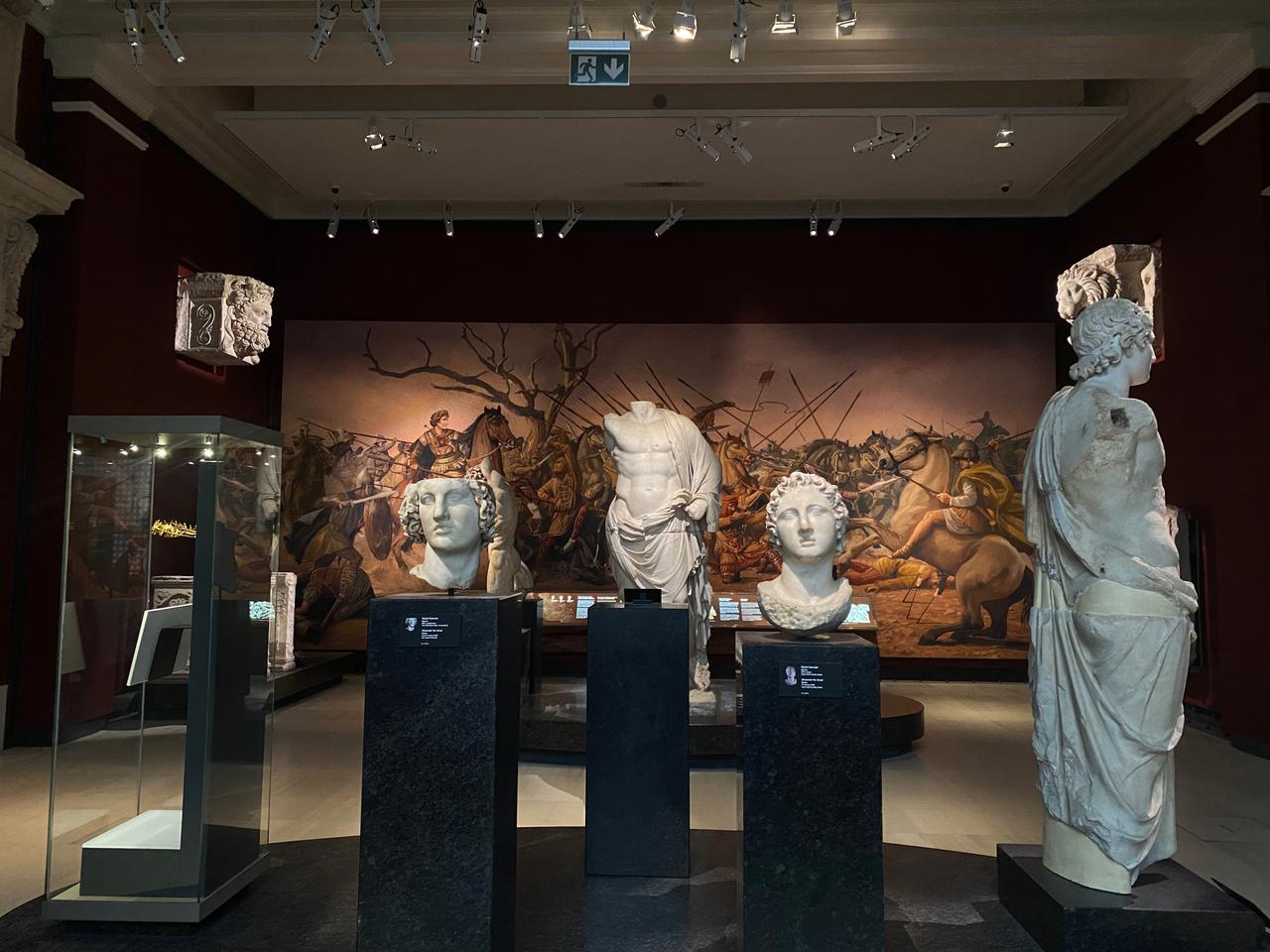
Interior of the Archaeology Museum (Nazlı Kemerkaya)
The decision to construct the museum building arose from the need to display the large-scale sarcophagi discovered during Osman Hamdi Bey’s archaeological excavations in Sayda, Lebanon, between 1887 and 1888. The building, designed by the renowned architect of the era, Alexandre Vallaury, forms the main structure of the Istanbul Archaeology Museums complex.
The Archaeology Museum building is one of Istanbul’s finest examples of Neo-Classical architecture. Opened to the public on 13 June 1891, it was purpose-built for museum functions, in line with the museological standards of its time. As such, it is recognized as one of the few early structures worldwide designed and constructed specifically as a museum.
The building’s façade is symmetrically designed with wide staircases leading to the entrance. The four columns and triangular pediment at the entrance evoke the aesthetics of ancient temples. Above the entrance, the inscription “Asar-ı Atîka Müzesi” (Museum of Antiquities) is written in Ottoman Kufic script; above this, the tuğra of II. Abdülhamid is displayed. These elements clearly reflect the building’s symbolic value and its connection to imperial identity. The interior consists of spacious galleries suited for displaying large statues and sarcophagi. The spatial arrangement meets the museum standards of the period regarding lighting and visitor circulation. Durable and aesthetically refined materials were used throughout; high-quality stone craftsmanship was chosen for flooring and wall finishes.
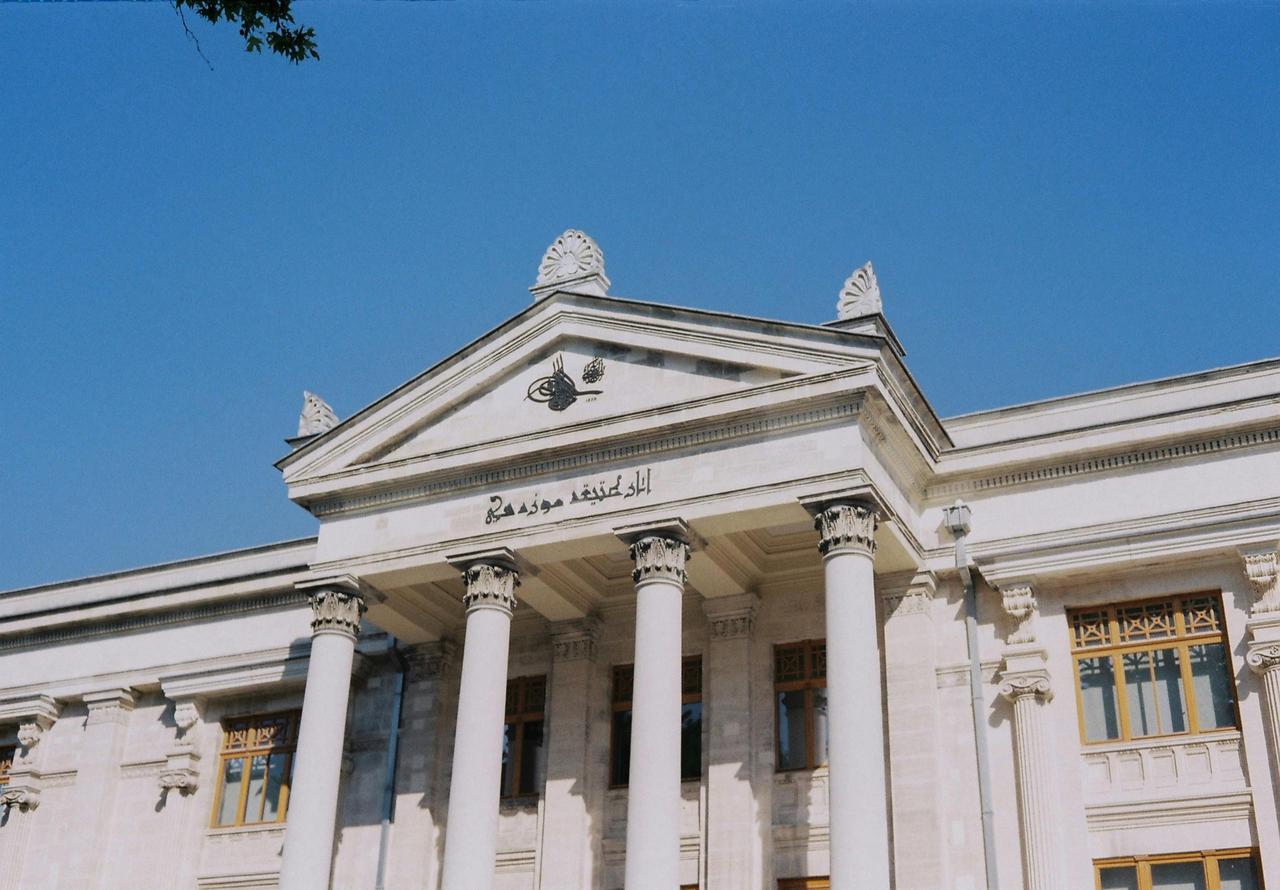
Tuğra of II. Abdülhamid (Zeynep N. Tiryaki)
The Archaeology Museum building is an original structure representing the institutionalization of museology from the Ottoman period to the Republic, in terms of its functional architecture, symbolic details, and construction purpose. Since its opening, it has served not only as an exhibition space but also as a center for the production and dissemination of archaeological knowledge.
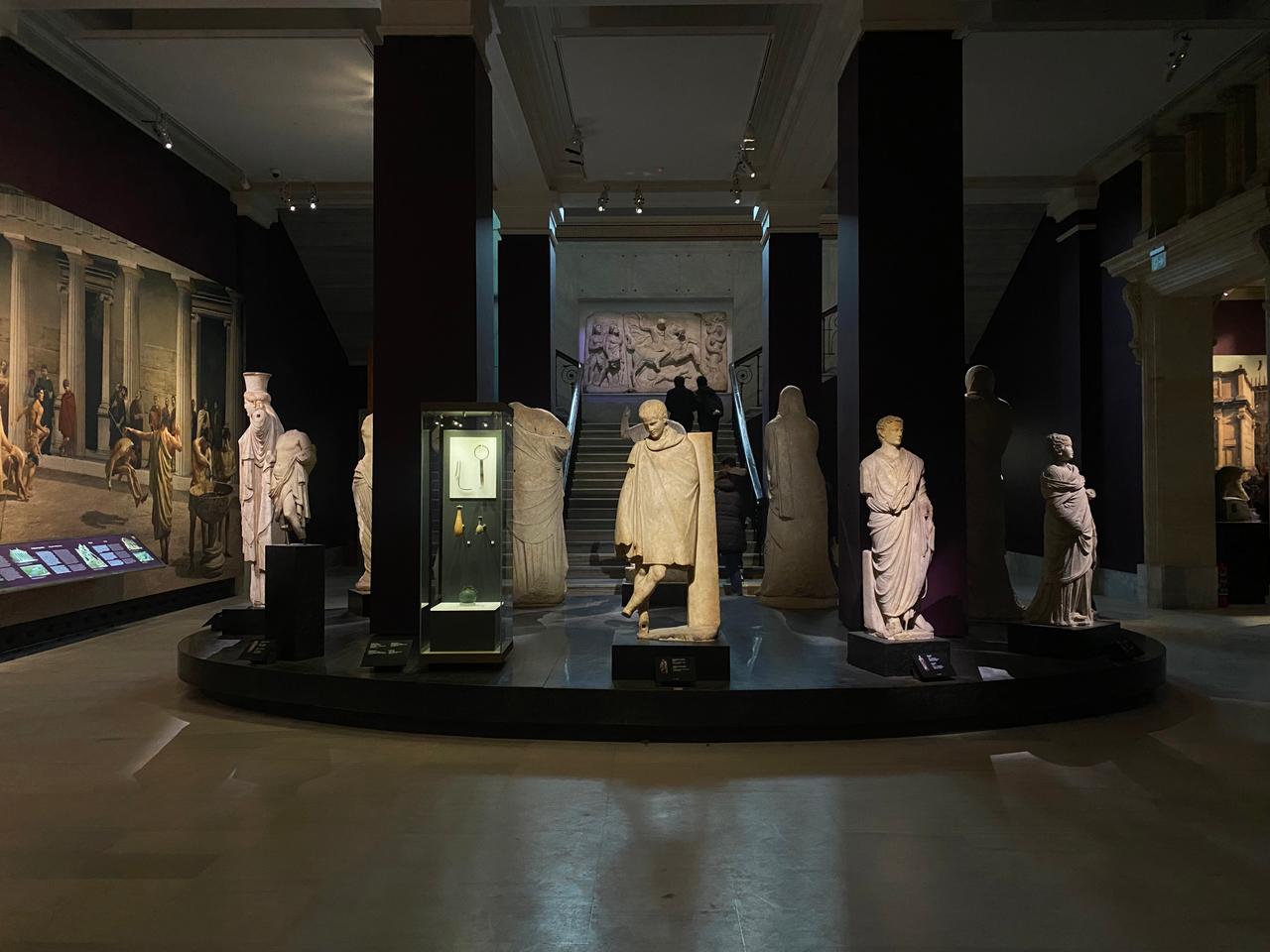
Interior of the Archaeology Museum (Nazlı Kemerkaya)
The building housing the Orient Museum constitutes the second fundamental component of the Istanbul Archaeology Museums complex. It was constructed in 1883 by Osman Hamdi Bey as the Sanayi-i Nefise Mektebi (Academy of Fine Arts), the first institution in the Ottoman Empire to provide modern art education. Its architectural design was also created by Alexandre Vallaury, the architect of the Archaeology Museum.
The building exhibits typical characteristics of 19th-century educational structures in its plan and massing. Wide corridors, high-ceilinged classrooms, and large window openings designed to maximize natural light confirm its original educational function. The symmetrical and simple façade reflects an approach prioritizing functionality over aesthetics. An eclectic attitude is evident in the façade elements, blending Western-influenced classical motifs with Ottoman civil architectural traditions of the period.
After the Sanayi-i Nefise Mektebi relocated to Cağaloğlu, the building was converted into a museum in 1917. The then-director, Halil Edhem Bey, advocated for the separate display of artifacts from Near Eastern civilizations from those of Greek, Roman, and Byzantine cultures, leading to its reorganization as the Museum of the Ancient Orient. Thus, the building became one of the earliest examples in Ottoman museology of spatial separation based on cultural content.
Interior spaces were later modified to create exhibition halls, with display cases installed along the corridors. The spatial organization was restructured to facilitate visitor flow, with controlled entry and exit points. Today, the museum houses a significant collection of cuneiform tablets, statues, reliefs, and inscriptions from Mesopotamia, Egypt, Anatolia, and the Levant. The building, repurposed from its original function, has become an important example of early adaptive reuse in Istanbul’s architectural history.
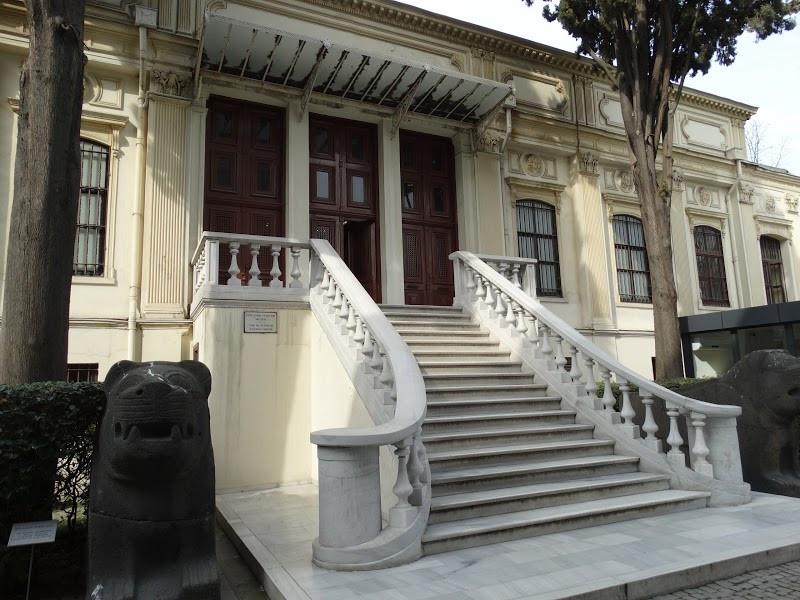
Museum of the Ancient Orient (Muzeler.org)
The oldest structure in the Istanbul Archaeology Museums complex, the Çinili Köşk, was commissioned by Fatih Sultan Mehmed in 1472. This structure stands out as one of the earliest surviving examples of Ottoman civil architecture in Istanbul. The köşk, reflecting early classical Ottoman architecture, was built within the palace gardens and serves both functional and symbolic purposes.
The building follows the traditional Ottoman kiosk plan. The 14-columned marble portico at the entrance creates a symmetrical open space. Behind this portico, the main structure features a rectangular layout consisting of a central hall and six adjacent rooms. While the front façade appears single-story, the rear section is two-story, adapting to the slope of the terrain.
The façade is constructed of stone and brick, with the entrance door adorned with rich mosaic tile decorations. In this regard, the Çinili Köşk holds great importance not only architecturally but also as an early example of Ottoman tile and ceramic art. The façade design and ornamentation clearly reflect influences from Iranian and Central Asia architecture. Due to these features, the architect is believed to have been of Iranian origin.
In the 19th century, as Hagia Irene could no longer accommodate the growing collection, the Ministry of Education restored the köşk and converted it into a museum in 1880 under the Müze-i Hümayun. Thus, it became one of the first examples of Ottoman civil architecture repurposed as a museum. After the opening of the Archaeology Museum in 1891, the Çinili Köşk was dedicated to displaying Ottoman and Seljuk tile and ceramic artifacts.
Today, the Çinili Köşk Museum displays numerous artifacts including Seljuk and Ottoman tile panels, ceramic plates, mihrabs, and inscription panels. Its preservation of architectural integrity and decorative repertoire makes it significant in both architectural and art history.
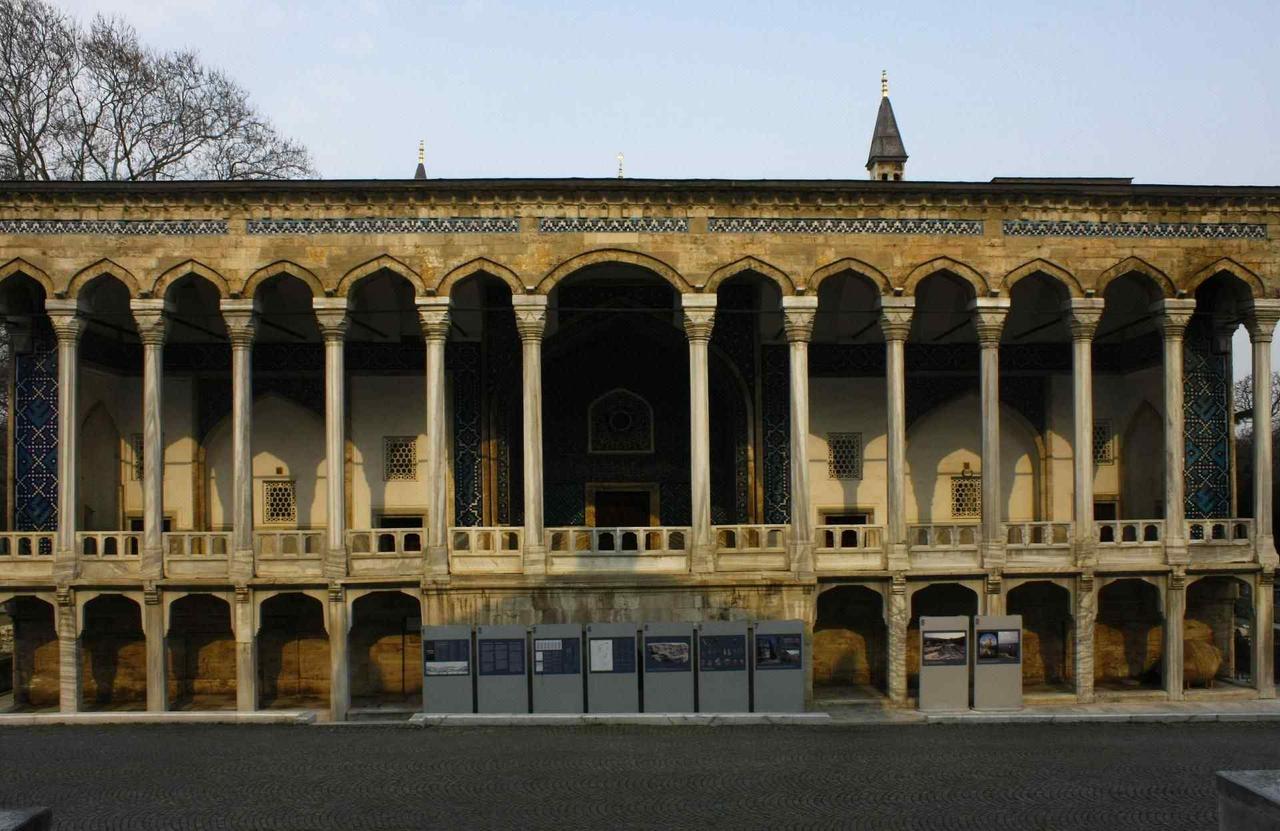
Çinili Köşk Museum (Turkish Museums)
From the second half of the 20th century, the need for improvements in the museum buildings arose due to physical deterioration, earthquake risk, and technological limitations. Initial interventions in the 1950s and 1970s were limited to structural reinforcement and exhibition reorganization. However, these efforts became inadequate as the collection expanded. Beginning in the 1990s, comprehensive restoration policies led to detailed assessments of the museum buildings, with modernization of climate control, lighting, and security systems in exhibition halls. Particularly in the Archaeology Museum building, both façade and interior repairs were undertaken to prevent moisture, temperature fluctuations, and physical deformation.
In the 2000s, restoration efforts began to follow more institutional and interdisciplinary approaches. Under the coordination of the General Directorate of Cultural Heritage and Museums, conservation laboratories were established, and the restoration of movable artifacts was systematized. Digital inventory systems were also introduced during this period, ensuring not only the preservation but also the traceability of artifacts.
The most recent comprehensive restoration initiative, launched in the 2020s, aims for a multidimensional transformation encompassing not only physical structures but also exhibition design. The Troy Gallery, for example, was reorganized with digital reconstructions and interactive presentation techniques enriching the visitor experience. Archaeological stratification, excavation methodologies, and educational storytelling are now highlighted in these areas.
Current conservation efforts at the Istanbul Archaeology Museums focus not only on preserving existing artifacts but also on scientifically documenting, restoring, and exhibiting new discoveries. Through these efforts, the museum continues to function as one of Türkiye’s most comprehensive conservation policy centers.
The Archaeology Museum is renowned for its stone artifacts, sarcophagi, statues, architectural fragments, and inscriptions from the Greek, Roman, and Byzantine periods. The most important pieces forming the core of the collection are the royal sarcophagi unearthed during Osman Hamdi Bey’s excavations in Sayda (Sidon), Lebanon, between 1887 and 1888. These artifacts are recognized among the most significant discoveries in archaeological history.
The most striking artifact in this collection is the Alexander Sarcophagus, notable for its high-relief technique and narrative power. Made of Pentelic marble, it is adorned with detailed battle scenes depicting Alexander the Great’s victories over the Persians. It is considered the pinnacle of ancient sarcophagus art in terms of iconographic richness and technical craftsmanship.
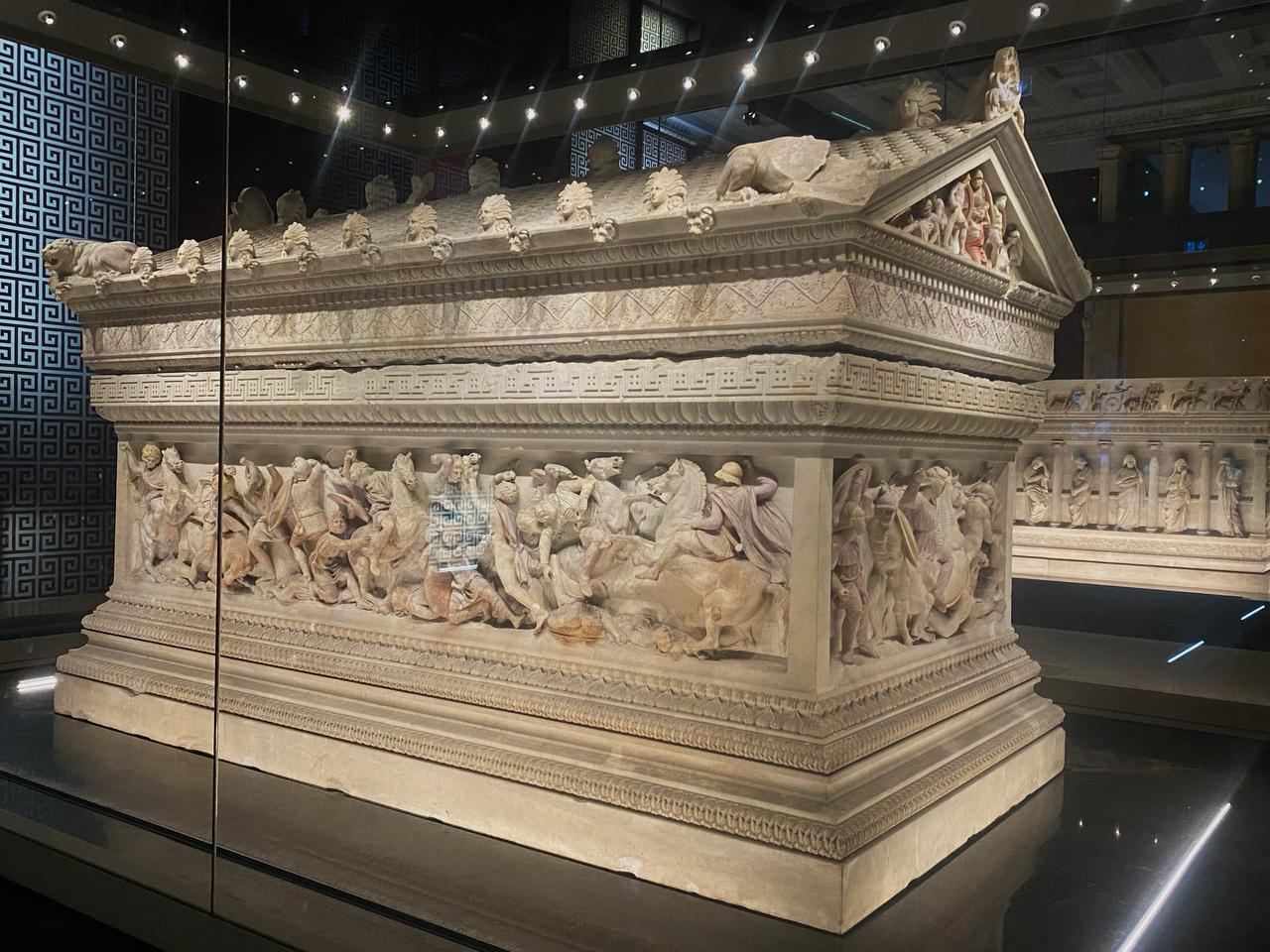
Alexander Sarcophagus (Nazlı Kemerkaya)
Another extraordinary artifact from the Sayda excavations is the Lamenting Women Sarcophagus, known for its figurative composition and dramatic narrative. The side panels depict mourning female figures symbolizing death and mourning. Other notable pieces from the same excavations include the Satrap Sarcophagus, the Lycian Sarcophagus, and the Tabnit Sarcophagus, which form part of the museum’s visual memory.
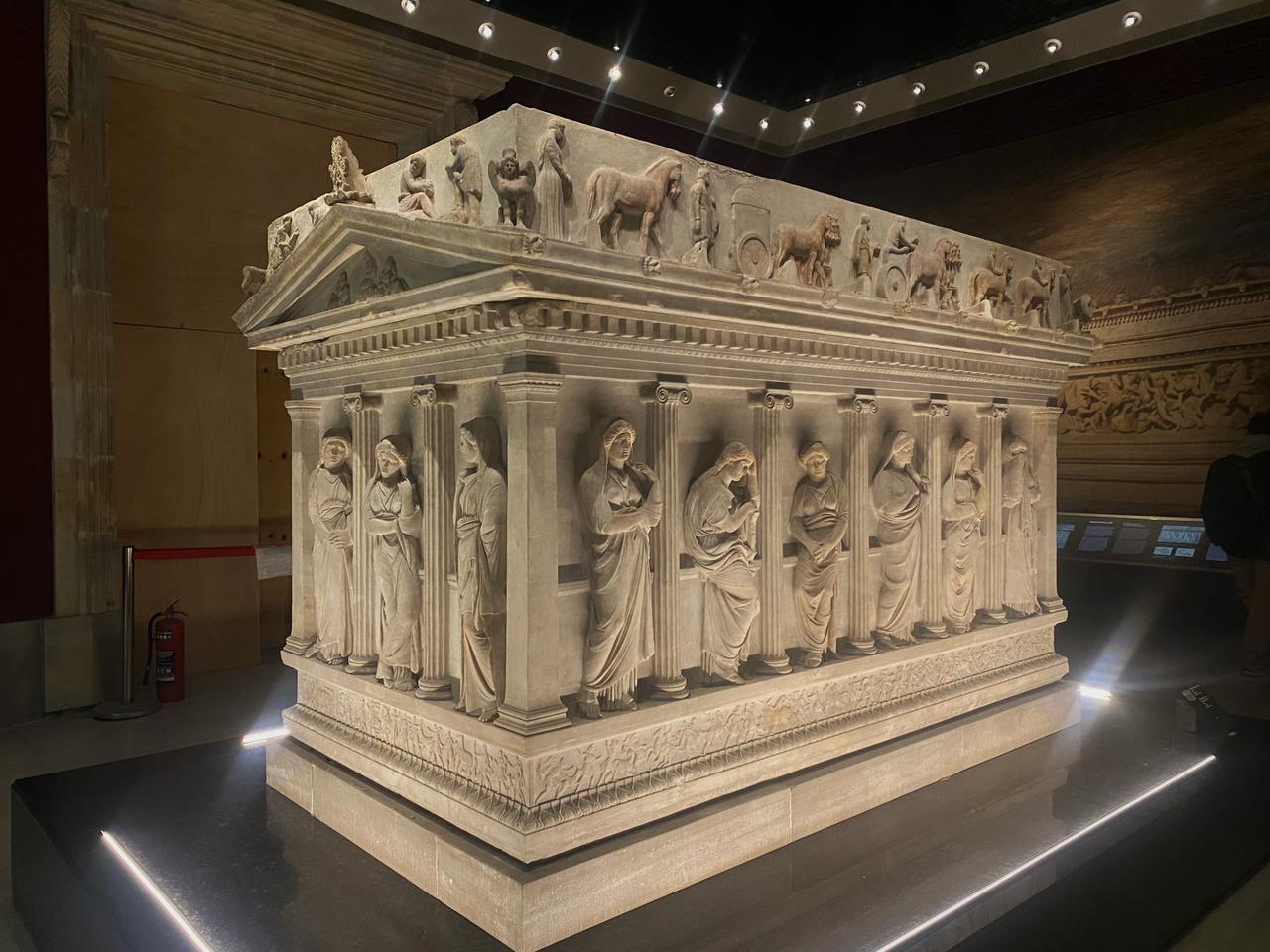
Lamenting Women Sarcophagus (Nazlı Kemerkaya)
Additionally, the Bust of Alexander the Great, brought from the ancient city of Pergamon, stands out in the collection as a prime example of Hellenistic portrait art. The bust draws attention with its idealized facial features reflecting Alexander’s divine image.
Also notable is the Sidamara Sarcophagus, discovered in 1901 during excavations at the Konya-Ambar Höyük site. Weighing 32 tons and adorned with mythological scenes, it is among the most monumental stone artifacts in the museum. Dating to the 3rd century CE, this sarcophagus is a monumental example of early Roman sarcophagi produced in Anatolia.
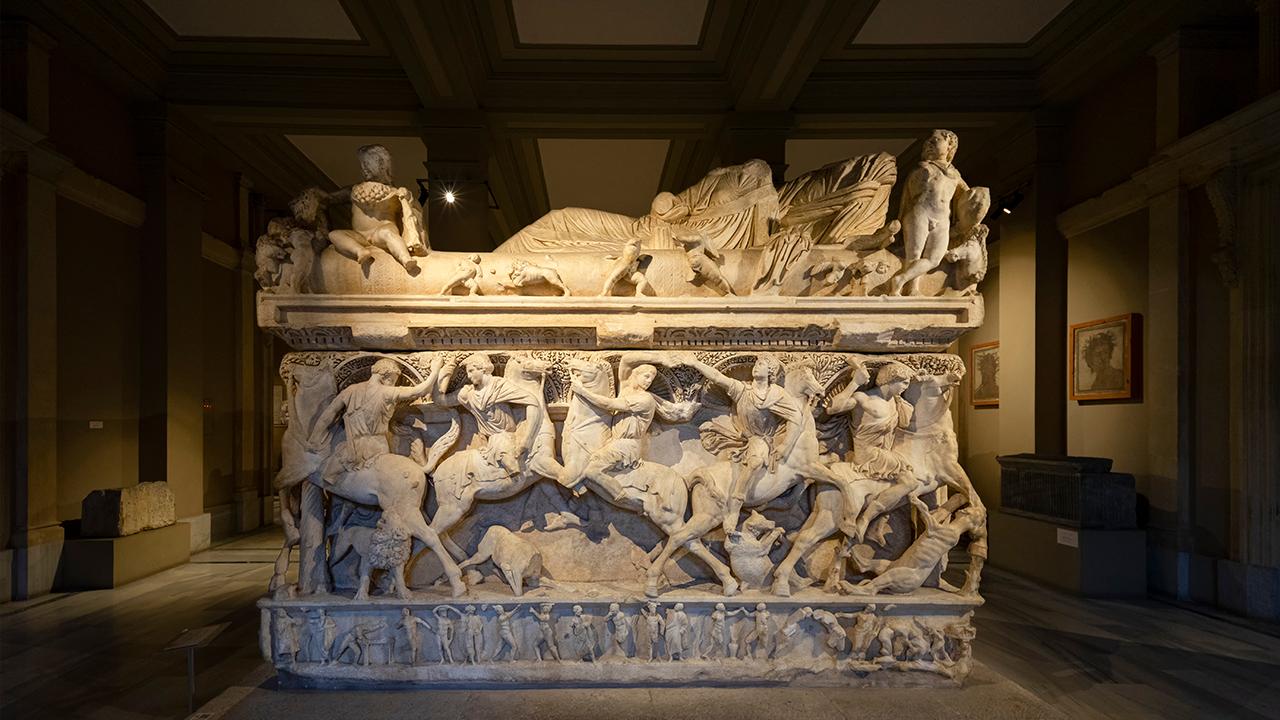
Sidamara Sarcophagus (Turkish Museums)
The Museum of the Ancient Orient possesses a specialized collection focused on Near Eastern civilizations. It covers a broad chronological range from prehistory to the Persian period, displaying artifacts from Mesopotamia, Egypt, Anatolia, and the Levant. The museum illuminates the political, religious, and cultural history of this region through early examples of written culture, including cuneiform documents, tablets, statues, stelae, reliefs, and royal inscriptions.
One of the museum’s most striking artifacts is the Love Poem Tablet, dated to the 20th century BCE and containing the oldest known love poem in the world. Found at the ancient city of Nippur, this Sumerian tablet contains a love text written by a priestess for King Shu-Sin. The cuneiform script on the tablet is notable not only for its literary value but also for its cultural and religious references.
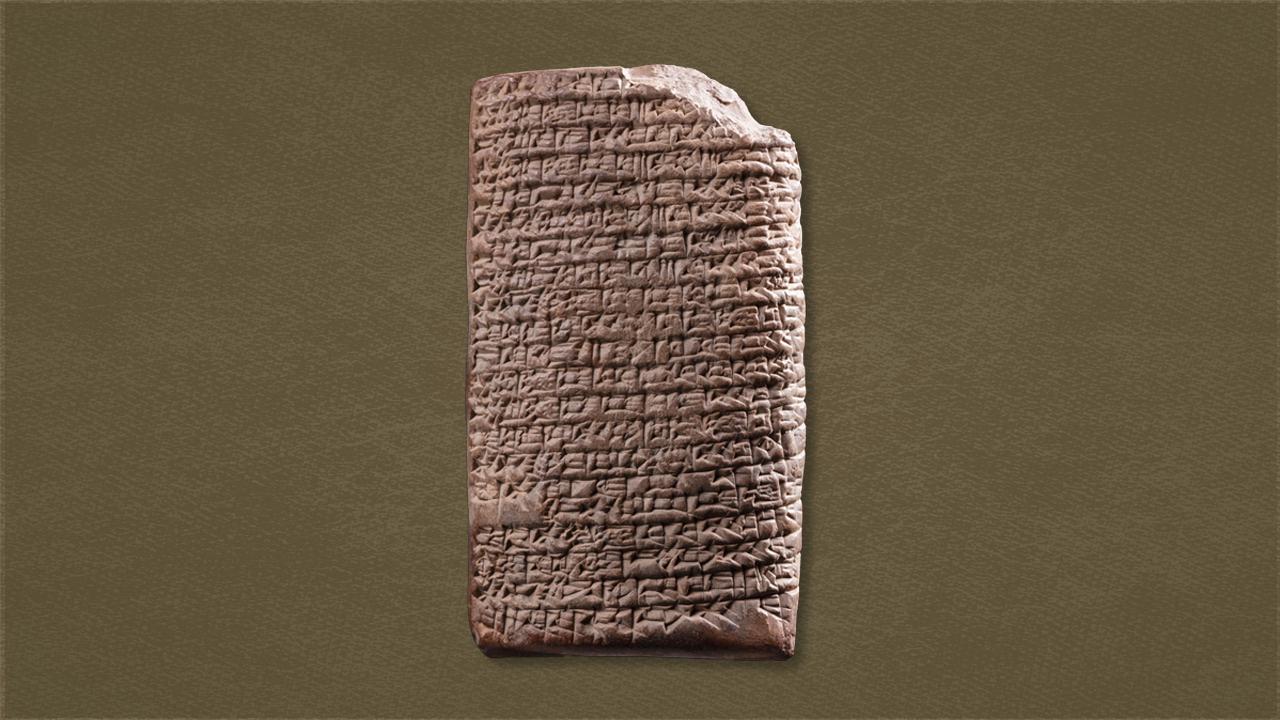
Love Poem Tablet (Turkish Museums)
Also in this collection is the Treaty of Kadesh, signed in the 13th century BCE between the Hittites and Egyptians and recognized as the world’s first written peace treaty. As one of the earliest diplomatic documents, its copy underscores the political historical value of the collection. Assyrian reliefs, winged bull statues, Egyptian sarcophagi and mummies, and Babylonian inscriptions further enrich the collection’s diversity. This collection holds primary source value for Near Eastern archaeology and philology.
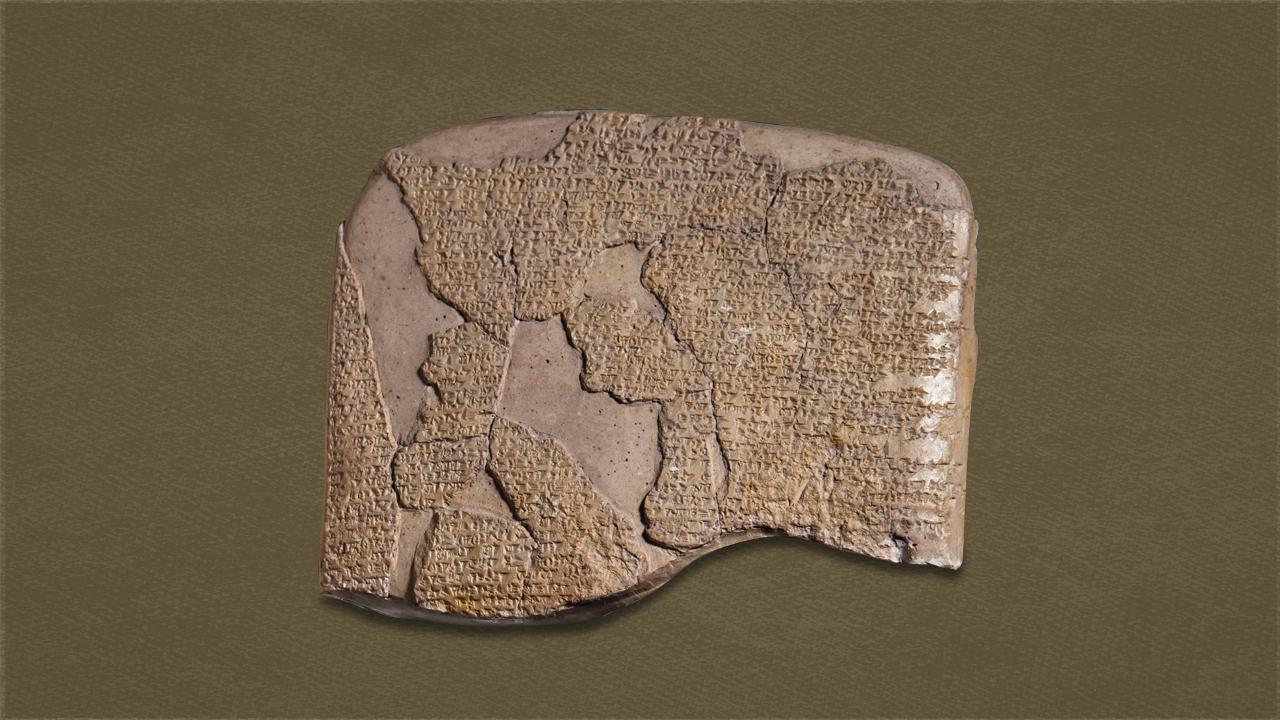
Treaty of Kadesh (Turkish Museums)
The Çinili Köşk Museum houses the finest examples of tile and ceramic art from the Seljuk and Ottoman periods. This collection, intrinsically linked to the building’s architecture, consists of decorative objects produced between the 15th and 18th centuries.
The Iznik and Kütahya ceramics on display offer a traceable chronology in terms of art history and technical development. Plates, bowls, lamps, tile panels, and architectural decorations were produced for both daily use and structural ornamentation. Additionally, architectural elements such as mihrab panels, inscriptions, and border texts hold significant places in the collection. These artifacts are rare examples documenting the technical capacity and aesthetic understanding of classical Ottoman tilework.
Thanks to its rich collections, the museum sheds light on the histories of numerous civilizations including Anatolia, Mesopotamia, Egypt, the Levant, Greece, and Rome. These collections serve as primary sources for both local and international researchers, enabling the museum to function as an academic production center. The majority of the artifacts originate from excavations and thus possess documentary value; accordingly, the museum contributes to the preservation of Türkiye’s archaeological inventory and continuously provides data to international scholarly literature.
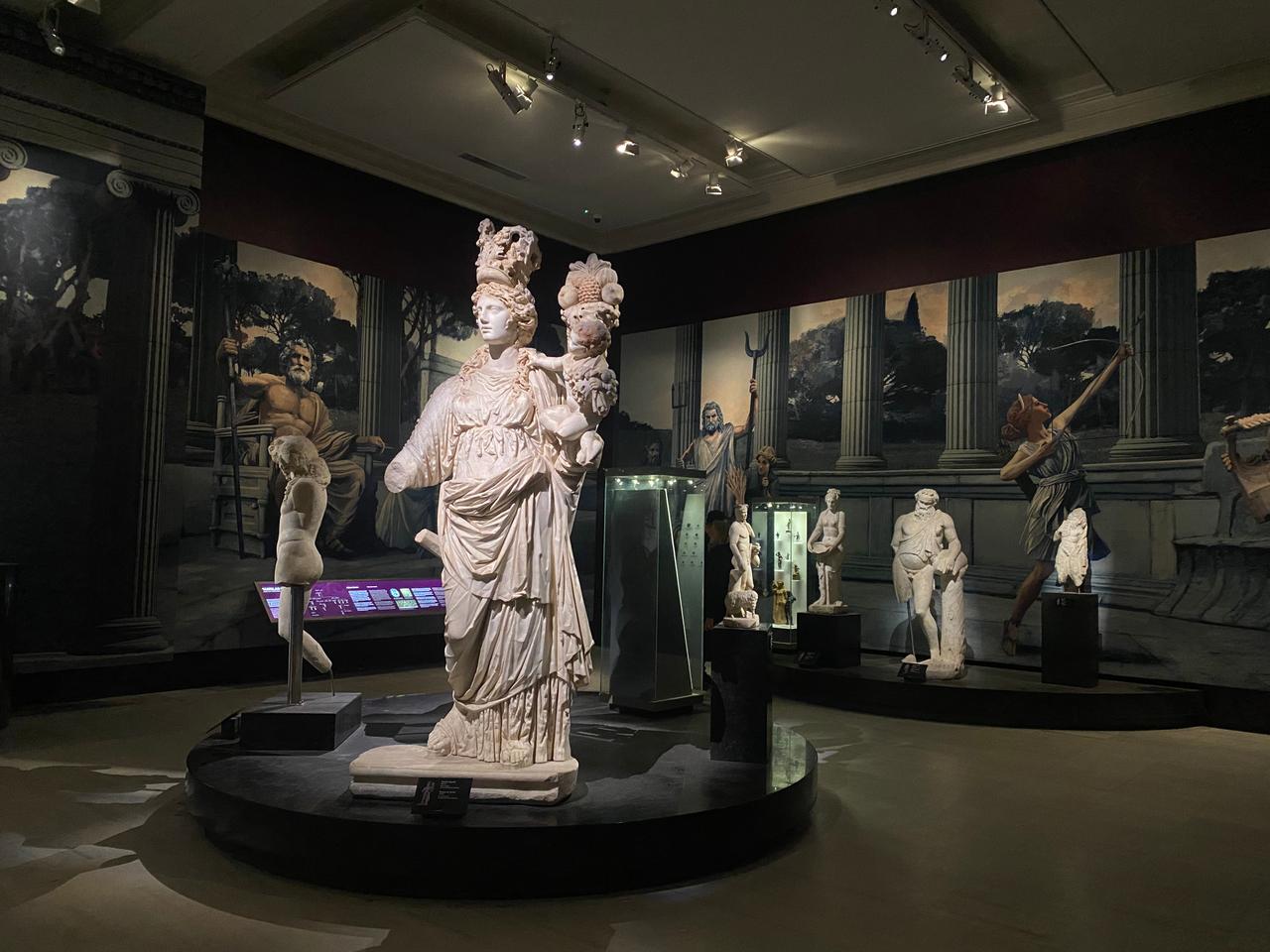
Archaeology Museum Artifacts (Nazlı Kemerkaya)
In terms of education, the museum organizes various programs for student groups, researchers, and the general public to foster public awareness of cultural heritage. Digitalization initiatives have expanded the museum’s accessibility and reach by making the collections available online. Furthermore, new presentation techniques, digital reconstructions, and interactive panels in exhibition halls have elevated the visitor experience to contemporary museological standards.
The 1993 designation as “Museum of the Year in Europe” by the Council of Europe is a significant indicator of the Istanbul Archaeology Museums’ international recognition and institutional competence. This award demonstrates that the museum has become a model in collection management, conservation policies, and public presentation.
The Istanbul Archaeology Museums are located on Istanbul’s historic peninsula, between Gülhane Park and Topkapı Palace. The museum is open seven days a week. Visiting hours vary by season as follows:
Ticket offices and museum card access points are located at the entrance. Entry is free for Turkish citizens holding a Museum Card or Museum Card+. The museum offers audio guide services, a museum shop, a cafeteria, restrooms, and wheelchair access. Additionally, digital navigation panels and multilingual interactive information screens are available in certain sections.
Cengiz, Hayrullah. “İstanbul Müzeleri Literatürü.” Türkiye Araştırmaları Literatür Dergisi, no. 16 (September 2010): 277-332.https://dergipark.org.tr/tr/pub/talid/issue/43423/529342
Cephanecigil, Gül. “Osmanlı Dönemi İstanbul Müzeleri.” Büyük İstanbul Tarihi. Accessed April 16, 2025.https://istanbultarihi.ist/281-osmanli-donemi-istanbul-muzeleri
Koç Üniversitesi Anadolu Medeniyetleri Araştırma Merkezi. “Eski Şark Eserleri Müzesi.” Anamed. Accessed April 16, 2025.Accessed adresi.
Ministry of Culture and Tourism. "Eski Şark Eserleri Müzesi." Muzeler.org. Accessed April 16, 2025.https://muzeler.org/eski-sark-eserleri-muzesi--930178
Ministry of Culture and Tourism. "Istanbul Archaeology Museums." *Türkiye Kültür Portalı*. Accessed April 13, 2025.https://www.kulturportali.gov.tr/turkiye/istanbul/gezilecekyer/stanbul-arkeoloji-muzeleri
Muze.gen. "Eski Şark Eserleri Müzesi." Accessed April 16, 2025.https://muze.gen.tr/muze-detay/arkeoloji
Muze.gov. "Eski Şark Eserleri Müzesi." Muze.gov. Accessed April 16, 2025.https://muze.gov.tr/muze-detay?SectionId=IAR01&DistId=IAR
T.C. Ministry of Culture and Tourism. "Istanbul Archaeology Museums Directorate." *General Directorate of Cultural Heritage and Museums*. Accessed April 13, 2025.https://kvmgm.ktb.gov.tr/TR-44095/istanbul-arkeoloji-muzeleri-mudurlugu.html
Zeynep N. Tiryaki. *İstanbul Arkeoloji Müzeleri İstanbul JPG.* Accessed April 16, 2025.https://www.pexels.com/tr-tr/fotograf/istanbul-arkeoloji-muzeleri-istanbul-14635285/
Şahin, Mehmet. “OSMANLI’DAN CUMHURİYET’E MÜZECİLİK.” Master's thesis, Hacettepe Üniversitesi, 2019.https://nek.istanbul.edu.tr/ekos/TEZ/aiiteket0003.pdf

Istanbul Archaeological Museums
Year of Establishment | 1869 (as Müze-i Hümayun) | ||||||||
|---|---|---|---|---|---|---|---|---|---|
Location | Fatih - Istanbul / Türkiye | ||||||||
Affiliated Institution | Ministry of Culture and Tourism of the Republic of Türkiye, General Directorate of Cultural Heritage and Museums | ||||||||
Units | Archaeology Museum Museum of Ancient Oriental Art Çinili Köşk Museum | ||||||||
International Award | 1993 - Council of Europe Museum of the Year Award | ||||||||
Type | Archaeology Museum | ||||||||
Number of Collections | Approximately 1,000,000 artifacts | ||||||||
Architectural Feature | Museum of Ancient Oriental Art: Neoclassical style Çinili Köşk: Ottoman civil architecture Archaeology Museum: Neoclassical style | ||||||||
Notable Works | Alexander Sarcophagus Lamenting Women Sarcophagus Love Poem Tablet (Sumerian) Iznik and Kütahya ceramics Treaty of Kadesh Sidamara Sarcophagus | ||||||||
No Discussion Added Yet
Start discussion for "Istanbul Archaeology Museums" article
History
Museum Complex
Archaeology Museum
Museum of the Ancient Orient
Çinili Köşk Museum
Restoration and Conservation Efforts
Collections and Key Artifacts
Archaeology Museum Collection
Museum of the Ancient Orient Collection
Çinili Köşk Museum Collection
Contemporary Significance
Visit Information
1 April – 1 October (Summer Season)
1 October – 1 April (Winter Season)