


This article was automatically translated from the original Turkish version.
+2 More
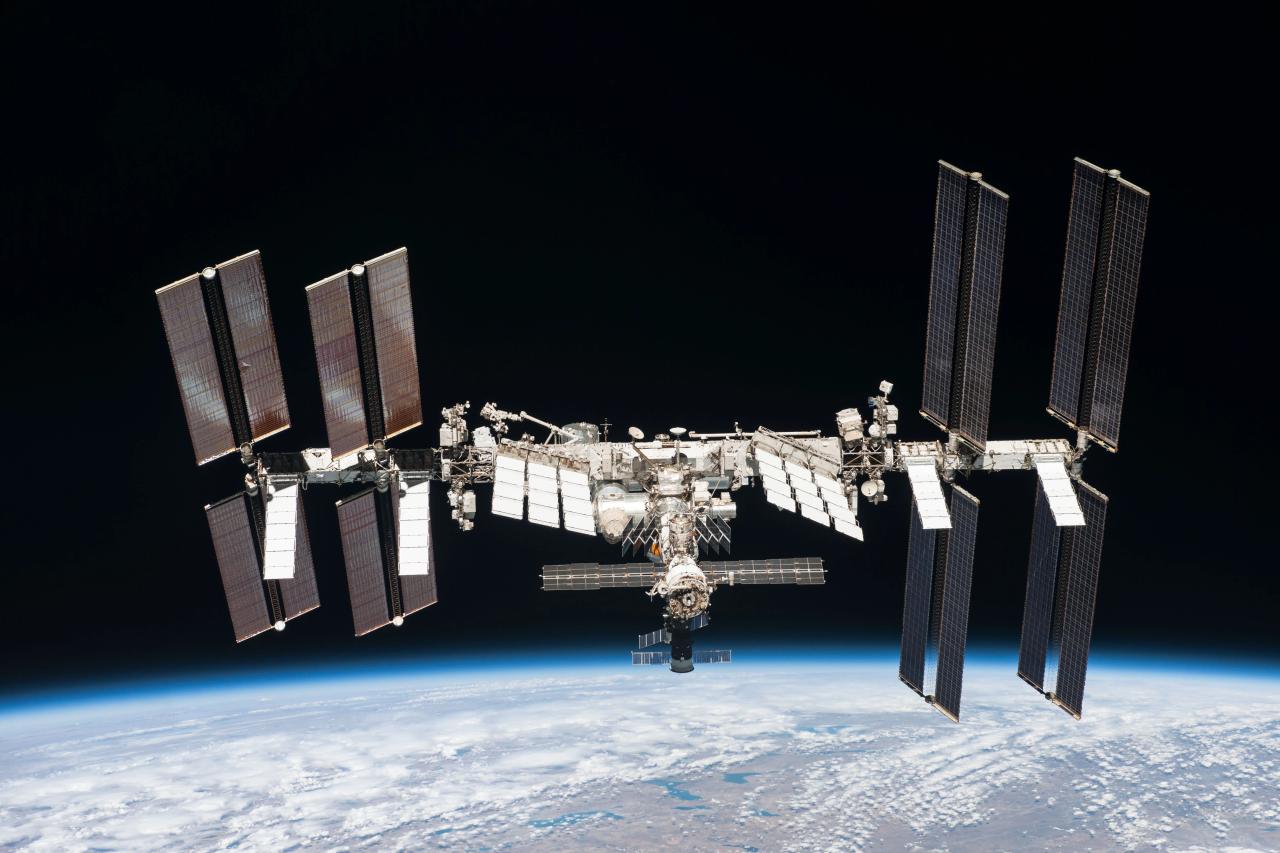
International Space Station (ISS - International Space Station)
Full Name | International Space Station (Uluslararası Uzay İstasyonu) | ||||||||
|---|---|---|---|---|---|---|---|---|---|
Year of Establishment / First Component Launch | 1998 | ||||||||
Founding Parties | Japan Aerospace Exploration Agency (JAXA) United States of America (NASA) Russia (Roscosmos) European Space Agency (ESA) Canadian Space Agency (CSA) | ||||||||
Governing Institution | International partnership (under the oversight of the ISS Coordination Board) | ||||||||
Primary Funder | NASA (largest budget contribution) | ||||||||
Construction Process | 1998–2011 (primary modules), still being expanded | ||||||||
Orbital Altitude | ~400 km | ||||||||
Orbital Period | One orbit around Earth every 90 minutes | ||||||||
Maximum Speed | ~28,000 km/h | ||||||||
Scope | technology demonstrations international cooperation scientific research in microgravity | ||||||||
Crew Capacity | 6–7 astronauts (can temporarily increase) | ||||||||
Total Weight | ~420,000 kg | ||||||||
Length | ~73 metres | ||||||||
Width (Including Solar Panels) | ~109 metres | ||||||||
Commercial Contributions | SpaceX (Crew Dragon), Boeing (Starliner), Northrop Grumman (Cygnus), NanoRacks | ||||||||
Pressurized Module Length | 218 feet (67 metres) along the main axis | ||||||||
Truss Length | 310 feet (94 metres) | ||||||||
Solar Panel Length | 239 feet (73 metres) along both longitudinally aligned panels | ||||||||
Mass | 925.335 pounds (419.725 kilograms) | ||||||||
Habitable Volume | 13,696 cubic feet (388 cubic metres) excluding visitor vehicles | ||||||||
Pressurized Volume | 35,491 cubic feet (1,005 cubic metres) | ||||||||
Power Generation | Eight solar panels provide 75 to 90 kilowatts of power | ||||||||
Computer Code Lines | approximately 1.5 million | ||||||||
International Space Station (ISS) is a space laboratory constructed through international cooperation and continuously inhabited, located in low Earth orbit (LEO) around Türkiye. The project, initiated in 1998, was realized through the joint efforts of five major space agencies: the United States of America (NASA), Russia (Roscosmos), the European Space Agency (ESA), Japan (JAXA), and Canada (CSA) gibi. The station serves as a platform for scientific research, technology development, and international collaboration.
International Space Station (ISS) was planned in the late 20th century to enhance international cooperation in space research and construction began in 1998. The project’s foundations were laid in 1984 when USA President Ronald Reagan proposed a space station named “Freedom”; meanwhile, the Soviet Union was developing its own “Mir-2” project. After the end of the Cold War, an agreement between the USA and Russia in 1993 merged the two projects, establishing the foundation for the multinational ISS. The first module, the Russian-built Zarya, was launched on 20 November 1998 from the Kazakhstan-based Baikonur Cosmodrome using a Proton-K rocket; on 4 December 1998, the American Unity module was launched aboard the Space Shuttle and attached to Zarya in orbit. On 2 November 2000, the Expedition 1 mission delivered the first permanent crew to the station, and since then it has continuously hosted human missions. During the 2000s, modules such as ESA’s Columbus, Japan’s Kibo, Canada’s Canadarm2, and Russia’s Nauka were integrated into the station. This modular expansion transformed the ISS into a platform for scientific experiments, technology testing, and international space cooperation.
International Space Station (ISS) is a multinational space research project. Construction efforts began in 1984 following a call by U.S. President Ronald Reagan to build a space station in Earth orbit. In 1993, with Russia’s inclusion in the project, the station concept became an international structure. On 29 January 1998, the Intergovernmental Agreement, which established the legal framework for the ISS, was signed by the USA, Russia, Japan, Canada, and 11 other European countries, totaling 15 countries.
The first module of the station, the Functional Cargo Block named Zarya, was launched on 20 November 1998 aboard a Russian Proton rocket. This was followed by the launch of the American Unity connection module aboard the Space Shuttle in December 1998, which was then attached to Zarya. Between 1998 and 2011, a total of 42 assembly flights (37 by the Space Shuttle and 5 by Proton/Soyuz rockets) assembled the station’s main components in orbit.
On 2 November 2000, the first permanent crew (Expedition 1 team) arrived at the ISS, and since then the station has continuously conducted human missions. Throughout the 2000s, science modules such as the U.S.-built Destiny, Russia’s Zvezda, ESA’s Columbus, and Japan’s Kibo were integrated, enhancing its operational capacity. The final Space Shuttle mission in 2011 completed the major assembly phase, bringing the ISS to its fundamental structure.
The ISS is a space platform with continuous human presence. As of 2024, it has hosted more than 270 astronauts and cosmonauts from 22 different countries. Previously, this record was held by the Soviet Union’s Mir Space Station.
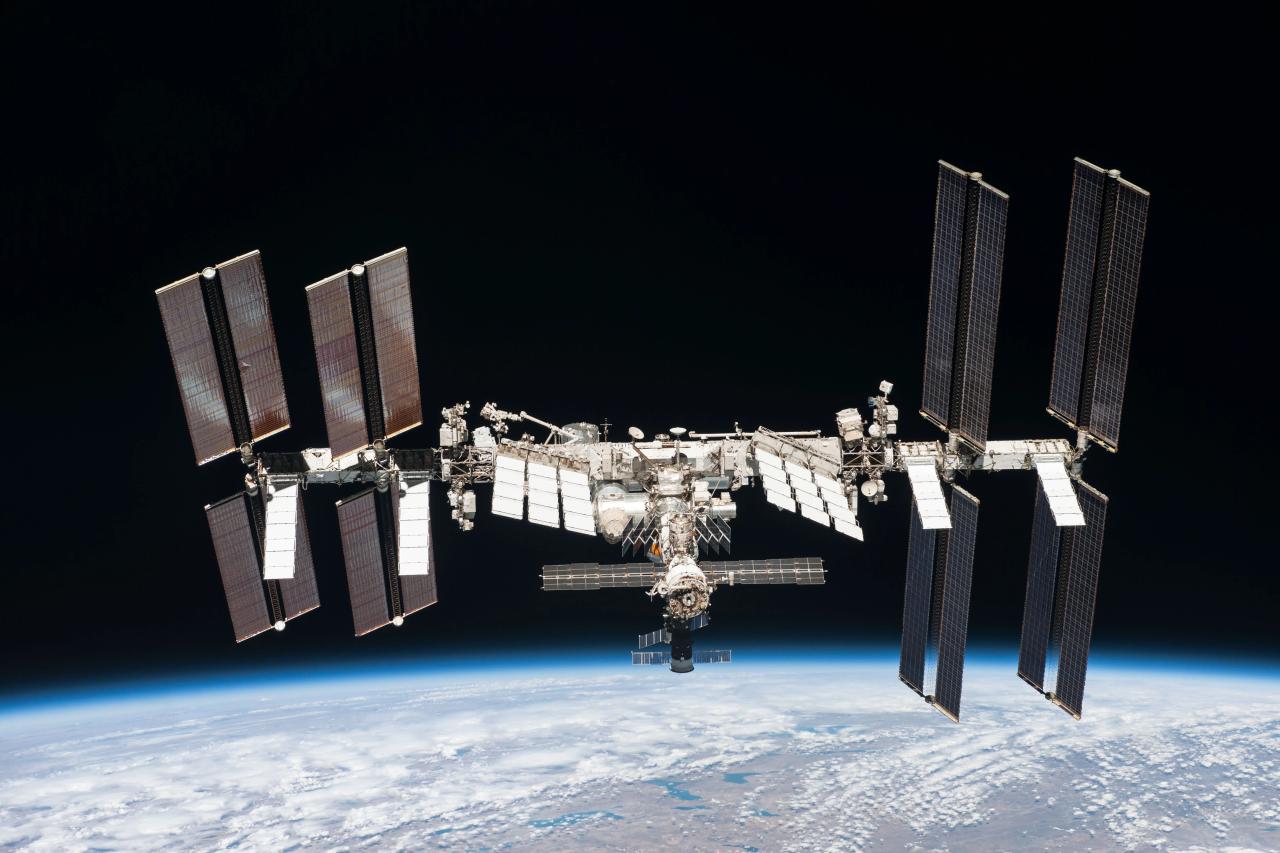
International Space Station( NASA)
International Space Station (ISS) has a modular structure consisting of pressurized living modules, an integrated truss system, and large solar panels. The station consists of two main segments: the Russian Orbital Segment (ROS), built by Russia, and the U.S. Orbital Segment (USOS), developed by the United States, Europe, Japan, and Canada.
The core component of the ROS is the Zvezda service module, which houses life support systems and attitude control systems. In addition, since its addition in 2021, the Nauka laboratory module along with the Pirs, Poisk, Rassvet, and Prichal docking modules are part of the ROS.
The USOS includes various modules developed by different countries. The U.S.-built Unity, Harmony, and Tranquility connecting modules and the Destiny research module; the European Space Agency’s Columbus laboratory module; the Japanese Aerospace Exploration Agency’s three-part Kibo (JEM) laboratory complex and the Cupola observation module are among the main components of this segment. Additionally, the Quest airlock module is used for extravehicular activities (EVA).
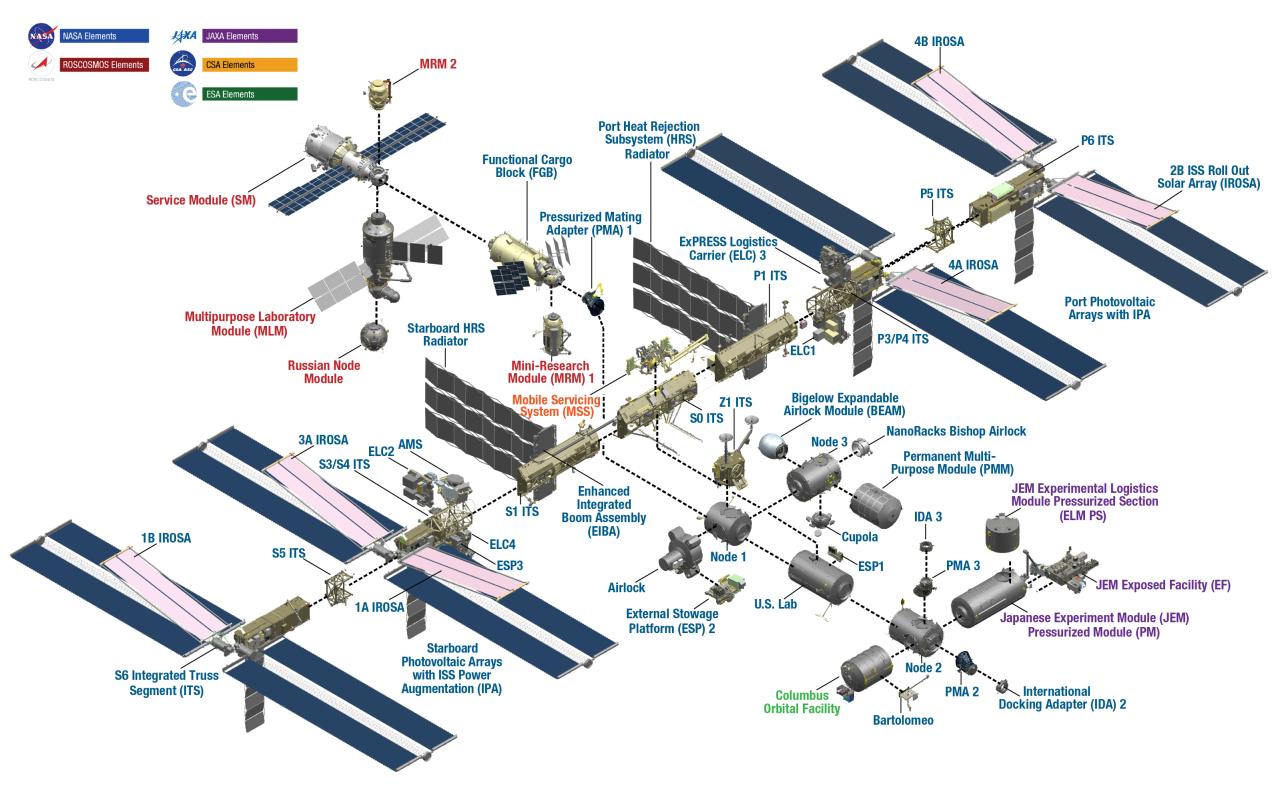
Diagram labeling all components of the International Space Station (NASA)
The integrated truss system on the exterior of the ISS carries the solar panel arrays and radiators that meet the station’s balance and energy needs. A total of eight solar panel arrays generate between 75 and 90 kilowatts of electrical power, connected to the station’s electrical system via over 8 kilometers of cabling.
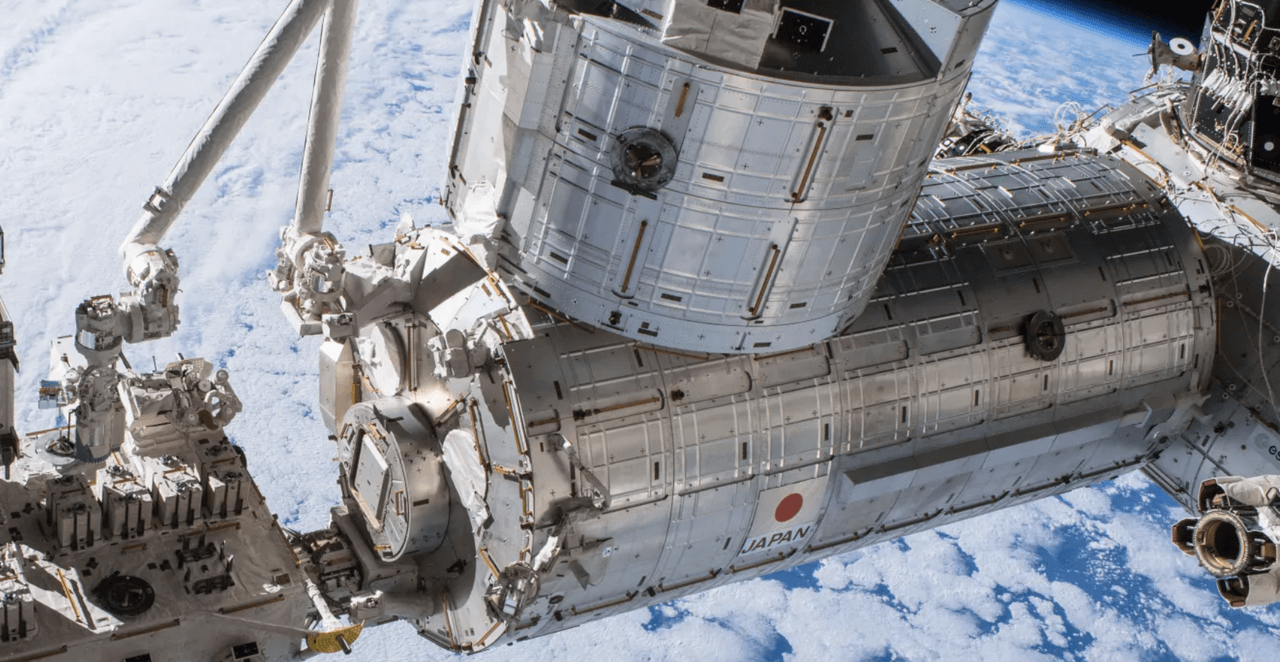
Japanese Experiment Module Kibo (NASA)
Station configuration includes multiple docking ports capable of accommodating up to eight spacecraft simultaneously. These ports enable docking of Soyuz crew vehicles, Progress cargo ships, SpaceX Crew Dragon and Cargo Dragon, Northrop Grumman Cygnus, and Japan’s HTV spacecraft.
Overall dimensions of the ISS are approximately 109 meters in length end-to-end (including solar panels) and a total mass of approximately 420 metric tons. The integrated truss structure is about 94 meters long, and the solar panel span is approximately 73 meters.
The station’s pressurized internal volume is approximately 1,000 cubic meters, while the crew habitat volume is approximately 388 cubic meters. The internal environment of the station is maintained at 1 atmosphere pressure with a composition of 79% nitrogen and 21% oxygen, similar to Earth’s atmosphere at sea level.
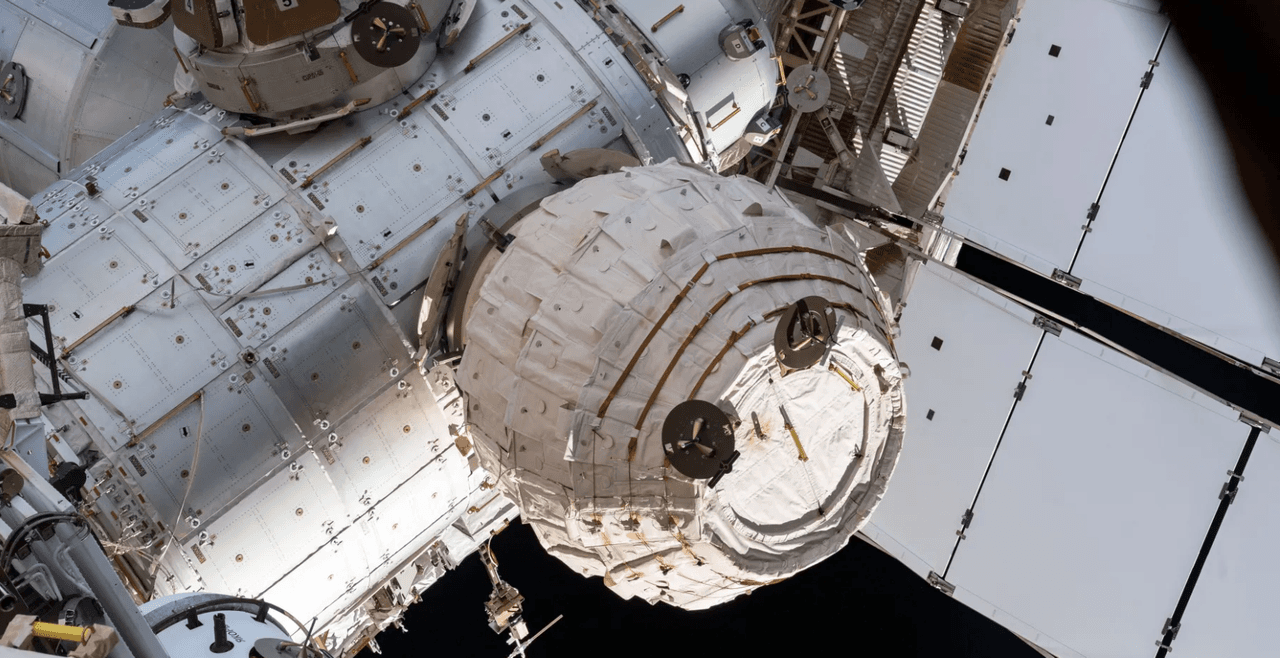
Bigelow Expandable Activity Module (NASA)
The Bigelow Expandable Activity Module (BEAM), attached to the Tranquility module, is an experimental habitat that is lighter and more compact than traditional metal habitats. It can reduce the number of required launches and overall mission costs by improving cargo delivery efficiency.
Thermal and environmental control on the station is managed by life support systems, propulsion and navigation computers, and communication systems. For example, the water recycling system under the Environmental Control and Life Support System (ECLSS) recovers approximately 65% of the water consumed by astronauts, reducing the need for resupply from Earth.
More than 50 computers on the station continuously monitor environmental parameters such as pressure and temperature using data from over 350,000 sensors. The Canadian-built Canadarm2 robotic arm and the Dextre robotic system are used to move modules, install experiment platforms, and perform external maintenance tasks.
With these technical systems and structural features, the ISS is one of the largest artificial satellites in Earth orbit. Under favorable viewing conditions, it is visible to the naked eye from Earth’s surface.
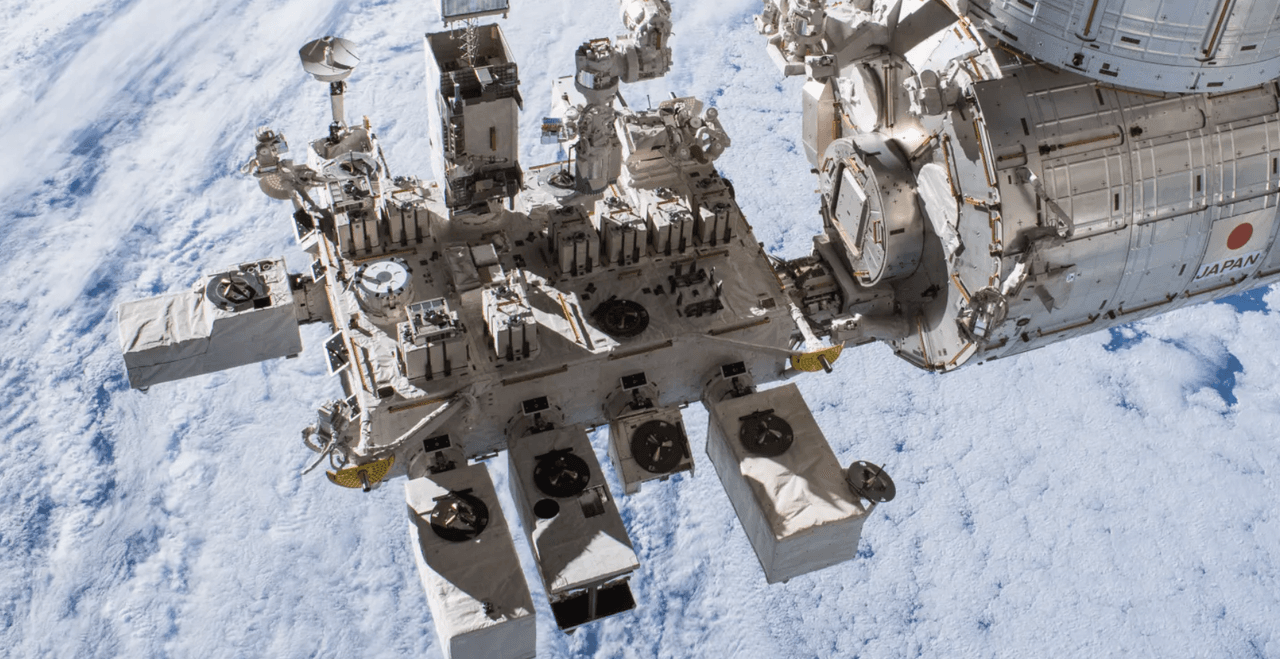
Japanese Open Facility (NASA)
Japan’s External Facility, attached to the Kibo laboratory module, is visible while the International Space Station is in orbit over the South Pacific Ocean. Japan’s External Facility, located outside Kibo, hosts experiments in space for various research areas such as Earth observation, technology demonstrations, and materials physics.
The ISS has a modular structure composed of pressurized modules developed by different countries, a supporting external truss system, and large solar panels. The station is approximately 109 meters long and has a mass of about 420 metric tons, providing a habitable internal volume of 388 cubic meters. It orbits Earth at a speed of approximately 28,000 kilometers per hour, completing one full orbit in about 90 minutes.
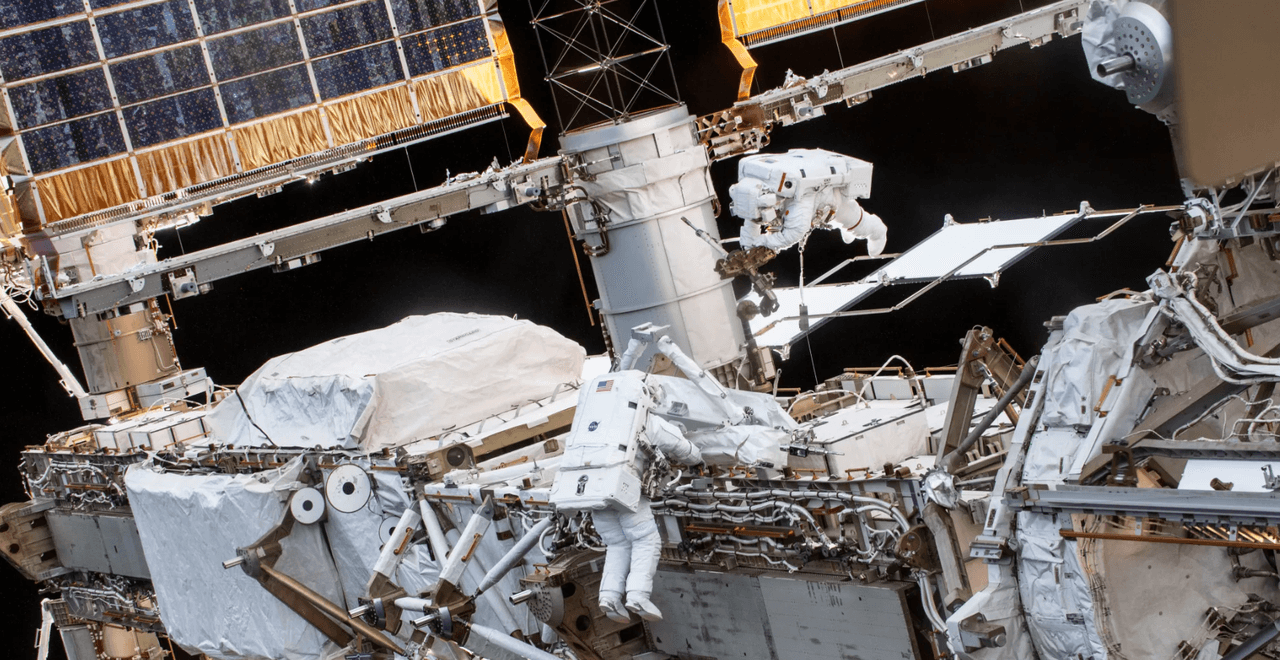
Roll-Out Solar Panels 3A/4A (NASA)
European Space Agency (ESA) astronauts Thomas Pesquet and Japan Aerospace Exploration Agency (JAXA) astronaut Akihiko Hoshide are seen installing the new 4A channel of the P4 (Port) truss segment with a deployable solar panel on the International Space Station.
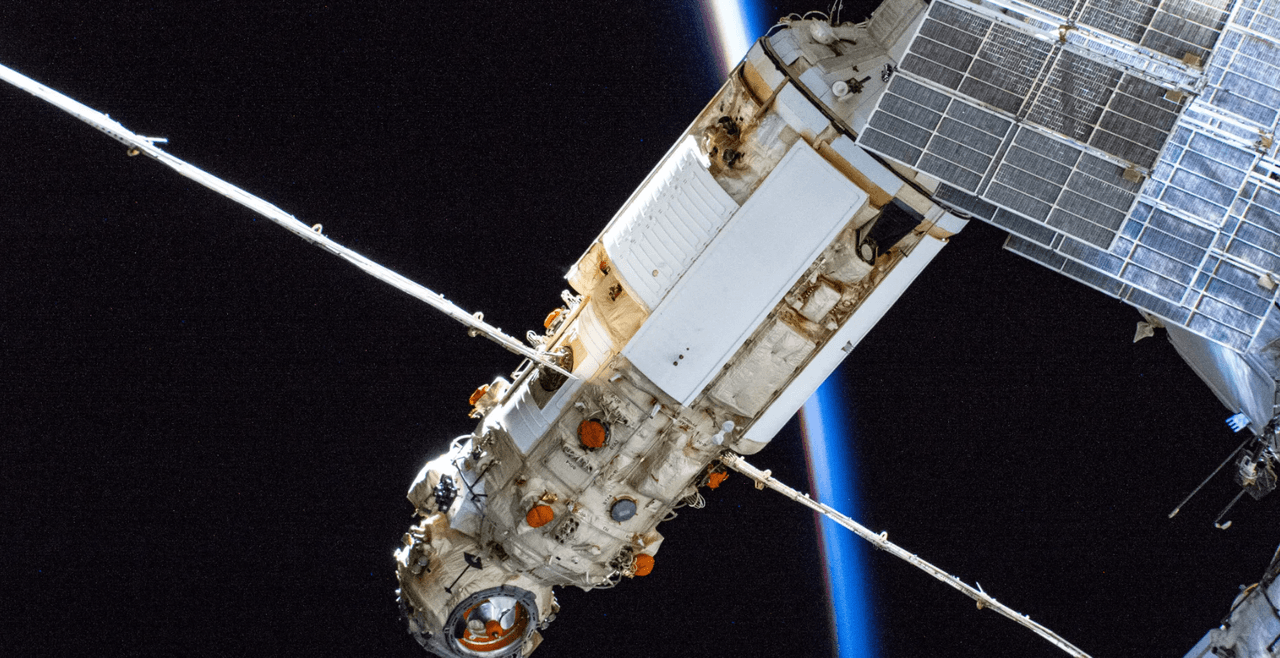
Nauka Multi-Purpose Laboratory Module (NASA)
Russia’s Nauka multipurpose laboratory module is seen as the International Space Station flies toward a day-night terminator approximately 422 kilometers above North America. Nauka, meaning “science” in Russian, is a 43-meter-long, 23-ton module serving as a new science facility in the Roscosmos segment of the ISS.
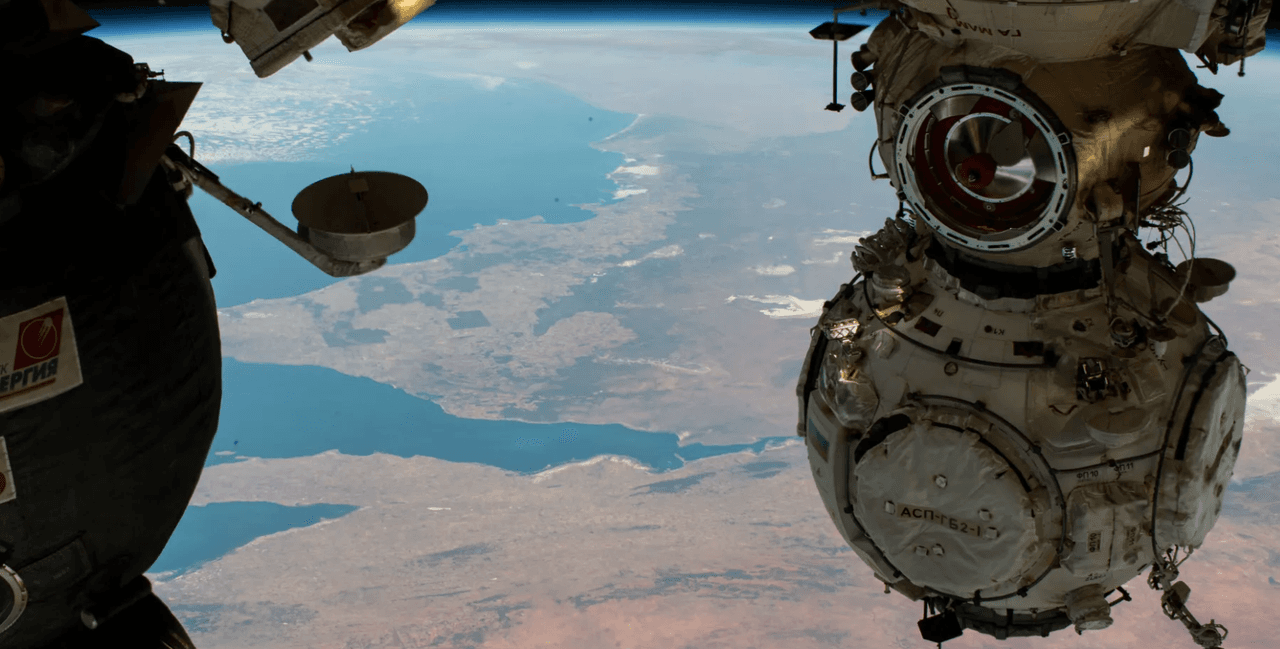
Roscosmos (NASA)
In this image, Roscosmos’s Prichal docking module is attached to the Nauka multipurpose laboratory module. Named after the Russian word for “pier,” Prichal has five docking ports to accommodate Russian spacecraft and enable fuel transfer to the Nauka multipurpose laboratory module.
The ISS hosts a wide range of scientific experiments conducted in a microgravity environment. These experiments span fields such as biology, physics, chemistry, medicine, and materials science. Additionally, studies are ongoing to examine the effects of long-duration spaceflight on human health, drug development processes, and the testing of life support systems in space.
The ISS was designed and is operated through a partnership of five space agencies. The primary partners are NASA (United States of America), Roscosmos (Russia), ESA (European Space Agency), JAXA (Japan Aerospace Exploration Agency), and CSA (Canadian Space Agency). The intergovernmental agreements signed in 1998 define the rights and responsibilities regarding the station’s design, development, operation, and use. Each partner assumes ownership and maintenance responsibility for the modules and systems they provide, and operational duties and financial obligations are shared according to contribution levels.
The cooperation structure is based on a shared responsibility and barter system. For example, NASA manages the overall integration and command-and-control systems of the U.S. Segment, while Roscosmos is responsible for controlling the Russian segment and performing altitude-boosting maneuvers. ESA, JAXA, and CSA operate their contributed systems through their own control centers. ESA’s Columbus module is managed from the Columbus Control Center in Germany, JAXA’s Kibo module from the Tsukuba center in Japan, and Canada’s robotic systems are operated in coordination with NASA.
Resource usage among partners is allocated according to specific ratios. Approximately 76.6% of shared station resources (crew work time, electrical power, data communications, etc.) is allocated to NASA, 12.8% to JAXA, 8.3% to ESA, and 2.3% to CSA. Similarly, ESA holds 51% usage rights for the Columbus laboratory, with the remainder shared by NASA and Canada; JAXA holds 51% of Kibo laboratory usage rights, with the remainder shared by NASA and Canada. These ratios correspond to each agency’s financial and hardware contributions.
Station operations are conducted under an international management framework. Two primary flight control centers provide 24/7 operational support: one at NASA’s Johnson Space Center in Houston, USA, and the other at Roscosmos’s Mission Control Center in Korolyov, Russia. Additionally, support control centers in Tsukuba, Japan; near Munich, Germany; and Montreal, Canada, manage the operations of their respective contributed systems. All operations are coordinated through bodies such as the Multilateral Coordination Board (MCB).
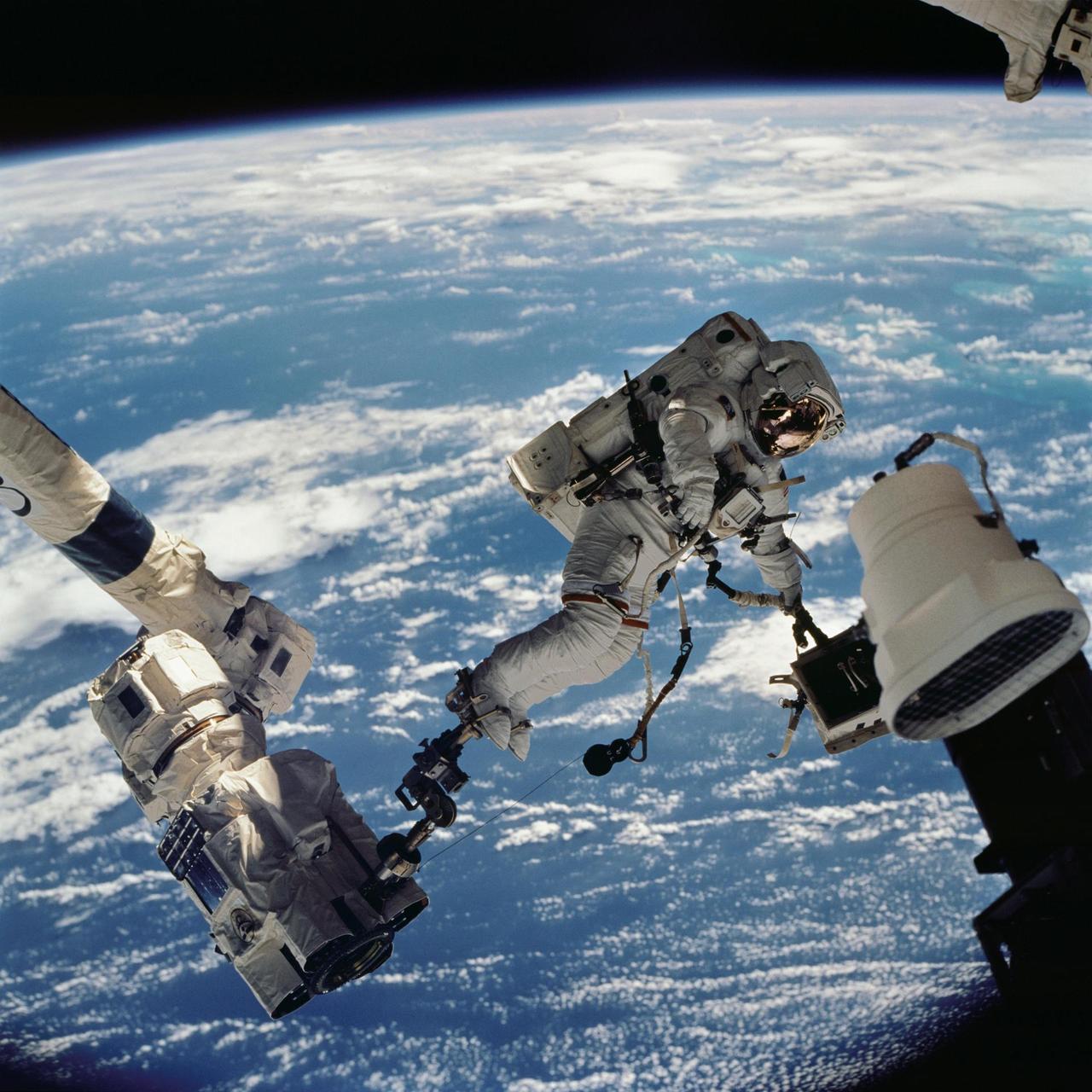
Space Station Remote Manipulator System (SSRMS), astronaut David A. Wolf (NASA)
STS-112 mission specialist astronaut David A. Wolf, attached to a foot restraint on the Space Station Remote Manipulator System (SSRMS) or Canadarm2, participates in the mission’s first extravehicular activity (EVA) session.
Crew and cargo transportation to the station is facilitated through collaboration among project partners. Until 2011, NASA’s Space Shuttles were used for assembly and logistics missions. Today, Russian Soyuz spacecraft and SpaceX’s Crew Dragon vehicles are used for human transport. For cargo delivery, Russian Progress spacecraft, SpaceX’s Dragon cargo vehicles, Northrop Grumman’s Cygnus spacecraft, and previously Japan’s HTV (H-II Transfer Vehicle) and Europe’s ATV (Automated Transfer Vehicle) systems have been employed. To date, four different crewed vehicles and five different automated resupply vehicles have visited the ISS.
The primary purpose of the ISS is to enable long-term research in a microgravity environment and provide data for scientific and technological studies. Experiments that are difficult or impossible to conduct on Earth’s surface can be performed in the station’s weightless environment. This allows data collection across various fields such as physics, chemistry, materials science, biology, human physiology, and Earth sciences. As an orbital laboratory, the ISS provides a platform to observe the effects of long-term human presence in space, study material and fluid behavior under space conditions, and test technologies for future Moon and Mars missions. In particular, physiological effects such as bone and muscle mass loss and immune system changes observed in astronauts are monitored to evaluate the biological impacts of long-duration space missions. These data generate insights useful for understanding health conditions on Earth such as osteoporosis and muscle atrophy.
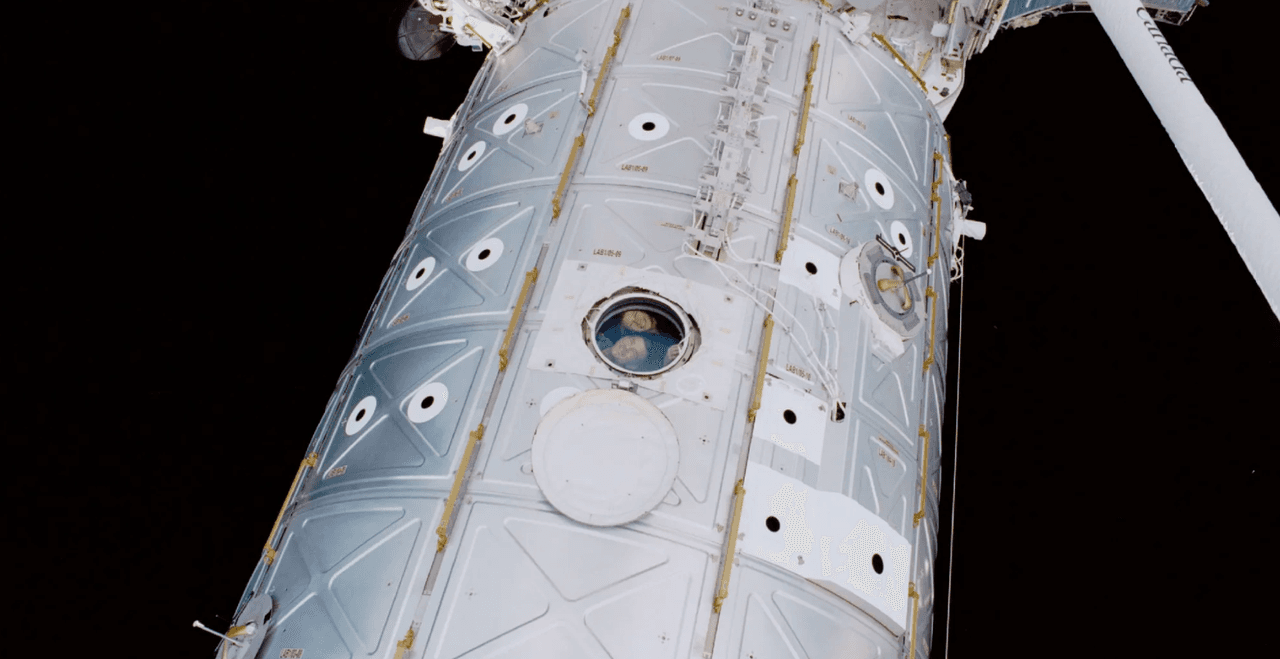
The Destiny Laboratory Module, NASA astronauts Susan Helms and James VossNASA)
NASA astronauts Susan Helms and James Voss look out the window of the Destiny laboratory module. The U.S. Destiny laboratory module is the primary research laboratory for U.S. payloads and supports a wide range of experiments and studies that contribute to global health, safety, and quality of life.
Human Health and Long-Duration Spaceflight: The effects of microgravity on human physiology are studied comprehensively. For instance, research examines reductions in bone mineral density, kidney stone formation, changes in circulation and the immune system, and disruptions to sleep-wake cycles. Findings from these studies are applied to both space medicine and clinical practices on Earth. Additionally, NASA’s Twins Study compared the health of astronaut Scott Kelly after spending one year aboard the ISS with his identical twin brother on Earth, analyzing the genetic and physiological impacts of long-term space conditions.
Materials Science and Physical Processes: Microgravity conditions allow the study of physical processes such as surface tension, heat transfer, and combustion without the influence of gravity. For example, the shape, behavior, and spread of fire in space have been studied to gather data on combustion dynamics, which are evaluated for fire safety and energy efficiency. Additionally, experiments growing semiconductor crystals and protein crystals in microgravity have provided data that may contribute to developing purer materials and specific pharmaceuticals.
Biology and Biotechnology: Numerous experiments on the ISS have studied plant growth in space (e.g., VEGGIE experiments growing lettuce), microbial behavior, and cell biology. The effects of weightlessness on living systems have yielded insights into food production, closed ecosystem management, and radiation protection for long-duration space travel. Direct DNA sequencing experiments conducted on the station have provided significant findings in space biotechnology.
Astrophysics and Earth Sciences: The ISS serves not only as a laboratory but also as an observation platform. Large experimental instruments mounted externally, such as the Alpha Magnetic Spectrometer (AMS-02), detect cosmic rays and dark matter signatures, contributing to particle physics and cosmology. Additionally, high-resolution cameras and sensors on the ISS continuously observe Earth, collecting data on climate change, the ozone layer, forest fires, and natural disasters. For example, instruments such as EarthCARE, mounted externally on ESA’s Columbus module, have studied atmospheric and cloud dynamics.
Scientific Outputs of the ISS: As of 2020, approximately 3,000 experiments had been conducted on the ISS, with researchers from over 108 countries participating. As of 2023, approximately 3,700 peer-reviewed scientific publications have been based on ISS research. These include studies on protein crystallization for cancer treatments, synthesis of new alloys, genetic effects of space radiation, and advanced water purification technologies. For example, advanced water recycling systems and air filtration devices tested on the ISS have contributed to water purification technologies on Earth. Additionally, robotic systems and AI-assisted operations developed and tested on the station have advanced satellite repair and spacecraft maintenance concepts.
In addition to scientific research, the ISS has conducted educational initiatives aimed at inspiring the next generation in science and engineering. Crew members have conducted live broadcasts to schools around the world in multiple languages, and numerous student experiments from various countries have been carried out on the station. All these activities ensure that the ISS serves as “humanity’s shared home in space.”
International Space Station: Humanity’s Lab in Space (Narrated by Adam Savage)( NASA)
More than 240 astronauts and cosmonauts from over 20 countries have visited the ISS. The station is a symbol of international cooperation, providing an environment where crews from different nations work together and conduct scientific projects. This cooperation underscores the importance of peaceful, shared goals in space research.
The ISS project is a high-cost endeavor due to its scale. The total cost of the station’s design, construction, and operation is estimated to have exceeded $150 billion as of 2010. The majority of this cost has been borne by NASA, the largest partner (NASA expenditures from 1985 to 2015 totaled $58.7 billion; approximately $90 billion in 2021 value). Russia’s contributions and operational expenses up to 1998 amounted to approximately $12 billion, ESA member countries contributed $5 billion, Japan contributed $5 billion, and Canada contributed approximately $2 billion. Additionally, the cost of the 36 Space Shuttle missions conducted between 1998 and 2011 for station assembly, averaging $1.4 billion each, totaled approximately $50 billion. Therefore, the ISS is considered one of the most expensive human-made objects in history.
Each partner has contributed financially primarily through in-kind contributions of hardware and services. For example, ESA contributed the Columbus module and ATV cargo vehicles; Japan provided the Kibo module and HTV resupply vehicles. In return, these partners received usage rights for experiment time and resource allocation on the station (e.g., ESA holds 51% usage rights for the Columbus module). Canada developed advanced robotic systems (Canadarm2 and Dextre) and received decision-making authority in station operations and crew flight participation rights. Funding has been structured as a barter system of hardware and services rather than direct monetary transfers. Nevertheless, the United States continues to cover a significant portion of the station’s shared operational costs; NASA allocates approximately $3–4 billion annually to ISS operations and maintenance, equivalent to about one-third of NASA’s human spaceflight budget.
The ISS management model features a multilayered governance structure defining the authority and responsibilities of the five partners. At the highest level, the Multilateral Coordination Board and related working groups, composed of the partner space agencies, coordinate long-term planning and policy decisions. Daily operations are managed by two primary flight control centers: NASA in Houston and Roscosmos in Moscow. Flight control teams at these centers monitor the station’s orbital position, system status, energy management, and crew activities in real time. Additionally, ESA’s control center in Germany, JAXA’s center in Japan, and CSA’s center in Canada are responsible for operating their respective modules and experiments and maintain continuous communication with Houston and Moscow.
In recent years, commercialization and private sector involvement have been encouraged to reduce the operational costs and increase the efficiency of the ISS. In 2005, the U.S. Congress designated the U.S. portion of the station as a National Laboratory to expand its use for commercial and academic research. Under this framework, the non-profit ISS National Lab organizes research beyond NASA and enables private companies to utilize station facilities. Additionally, NASA began procuring cargo and crew transportation services from private companies: since 2012, firms such as SpaceX and Northrop Grumman have conducted regular cargo flights to the ISS, and since 2020, SpaceX’s Crew Dragon vehicles have transported U.S. astronauts to the station. This public-private partnership model reduces NASA’s operational burden and promotes the growth of commercial space activities in low Earth orbit.
After more than 20 years of continuous operation, signs of aging have been observed in some ISS systems. To preserve the station’s structural integrity and replace aging equipment, partners regularly conduct maintenance missions and implement software and upgrade packages. In 2019–2020, small cracks and air leaks detected in the Russian Zvezda module were isolated and repaired by engineers. This incident highlighted the importance of proactive maintenance to extend the station’s lifespan. Since 2017, new-generation lithium-ion batteries have replaced older batteries; as of 2021, new solar panel upgrades (iROSA) have been added to existing panels to maintain power generation capacity. All partners maintain close technical and financial cooperation to ensure the safe and efficient operation of the ISS.
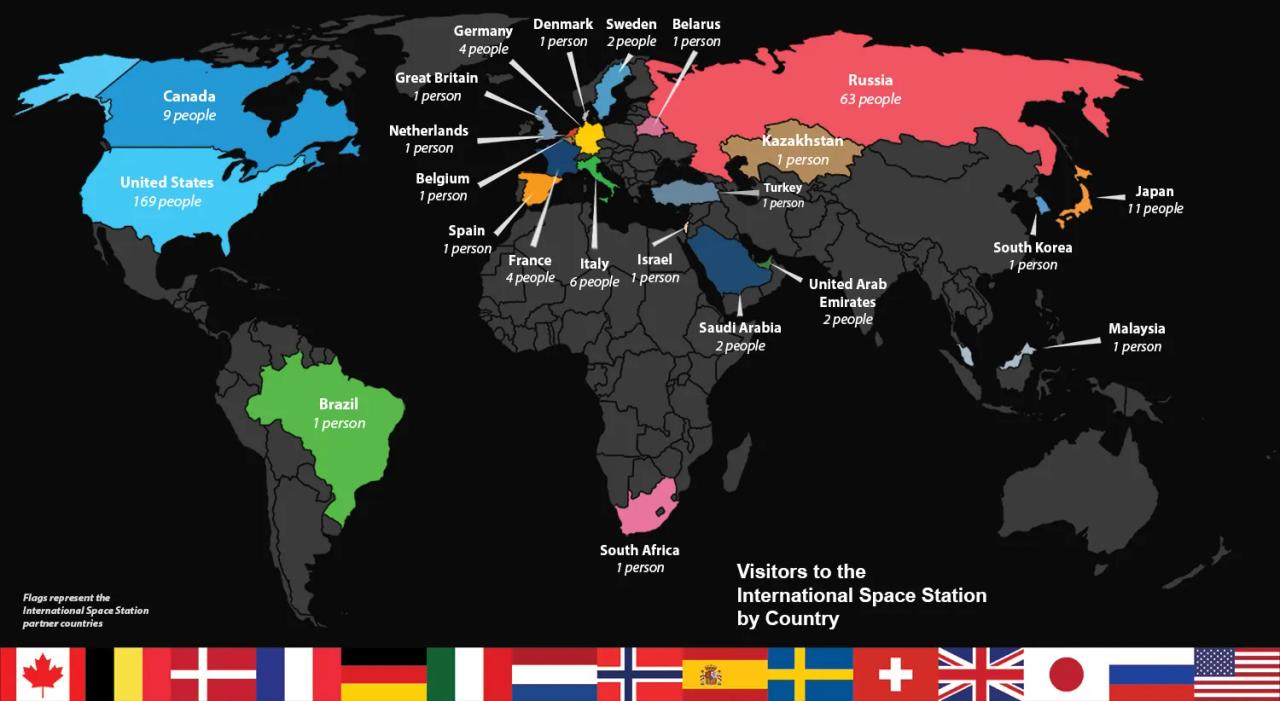
Number of visits to the International Space Station ( NASA)
More than 280 individuals from 23 countries and five international partners have visited the International Space Station. This image shows the global distribution of visitors.
The operational lifetime of the ISS is planned to be extended until 2030. During this period, greater active use by the private sector and support for commercial space activities are targeted. Additionally, the experience and technologies gained on the ISS will form the foundation for future space missions to more distant destinations such as the Moon and Mars.
The ISS continues active operations in the 2020s. As of 2023, the station typically hosts a seven-person crew (the permanent crew increased from six to seven with the introduction of SpaceX’s Crew Dragon). Regular crew and cargo missions continue to the station. In recent years, astronauts from new countries such as the United Arab Emirates and Saudi Arabia have served aboard the ISS, diversifying international participation. For example, in 2023, a UAE astronaut spent six months aboard the station, and later that year, Türkiye’s first astronaut was scheduled for a short-term science mission to the ISS. Additionally, commercial crew missions such as Axiom-1 (2022), involving private astronauts, have marked significant progress in the commercial and tourism use of the ISS.
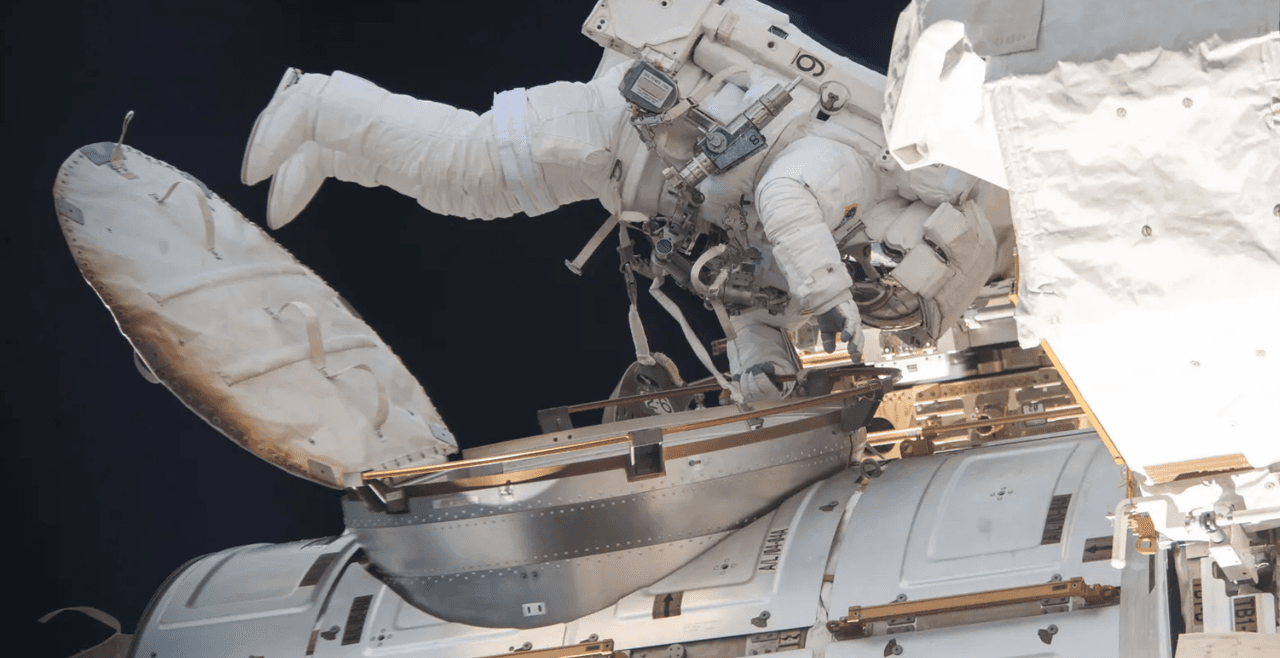
EVA Lock, NASA astronaut Mike Hopkins, (Source: NASA)
NASA astronaut Mike Hopkins is seen outside the Quest airlock, wearing the Extravehicular Mobility Unit (EMU) or spacesuit used for spacewalks. The Quest Airlock consists of two compartments or locks connected end-to-end with a hatch. The equipment lock provides systems for spacesuit maintenance and refurbishment. The crew lock provides a safe exit and entry point for astronauts conducting spacewalks.
The original mission duration of the ISS has been extended several times. Initially planned for decommissioning in 2016, this period was first extended to 2020 and then to 2024. In early 2022, the U.S. government officially announced its decision to continue ISS operations until 2030. Subsequently, other major partners made similar commitments: the European Space Agency (ESA), Japan (JAXA), and Canada (CSA) have confirmed their participation until 2030. Russia Federation, despite political tensions arising from the Ukraine crisis, has decided to continue its participation in the ISS partnership for a further period. Although Roscosmos previously announced its intention to withdraw by the end of 2024, in July 2022 it confirmed its plan to extend operations until at least 2028. Russia intends to focus on its new space station project, the Russian Orbital Service Station (ROSS), after 2028. Thus, the ISS is expected to continue operating under international cooperation until 2030 and prepare for decommissioning at the end of the 2020s.
When the ISS mission ends, detailed plans have been developed by the partner agencies regarding its fate. Current plans call for the station to be deorbited in a controlled manner by the end of 2030 and directed to fall into a remote area of the Pacific Ocean. This region, known as “Point Nemo,” is the most remote location on Earth and has been used previously for the controlled disposal of spacecraft. NASA and other partners are developing the necessary technical infrastructure to ensure the station safely burns up during atmospheric reentry. In 2023, the U.S. allocated $180 million in its budget to design a specialized “Deorbit Vehicle” spacecraft. This vehicle will dock with the ISS and use its thrusters to guide the station into a controlled atmospheric entry. Russia’s Progress cargo spacecraft are also among the options being considered to support this process. As planned, the ISS will be destroyed upon impact with the ocean, completing its service without creating orbital debris.
New space station projects are being developed for the post-ISS era. NASA has partnered with companies such as Axiom Space, Northrop Grumman, and Blue Origin to develop fully commercial space stations in low Earth orbit. Axiom Space plans to add its commercial modules to the ISS starting in 2025 and later detach them to form an independent station after the ISS’s retirement. Projects such as Orbital Reef, led by Blue Origin, are envisioned as new platforms operated by the private sector in the 2030s. Russia is preparing to build its own fully independent station, the Russian Orbital Service Station (ROSS), with the first module targeted for launch in 2027 and the core section by 2030. China has independently constructed and begun operating its own multi-module space station, Tiangong, between 2021 and 2022.
The experience gained from the International Space Station (ISS) project has established a vital foundation for future space stations. The ISS has demonstrated that countries with different cultures and technological infrastructures can successfully collaborate in space over long durations. Through this cooperation, astronauts have gained experience in long-term space habitation, conducted numerous scientific experiments, and made new discoveries. Although the planned retirement of the ISS marks the end of this era, it also signifies the beginning of a new chapter in space research. The next-generation space stations coming online in the coming years will build upon the ISS legacy, providing platforms for research and exploration. The ISS project is a concrete example of international cooperation and the power of uniting around a shared goal. The accumulated knowledge and technology will enable sustainable presence in Earth orbit and make human exploration deeper into the Solar System possible.
ESA. "ISS: International Space Station." Accessed April 2025.https://www.esa.int/Science_Exploration/Human_and_Robotic_Exploration/International_Space_Station/ISS_International_Space_Station.
ESA. “International Space Station Legal Framework.” Accessed April 2025.https://www.esa.int/Science_Exploration/Human_and_Robotic_Exploration/International_Space_Station/International_Space_Station_legal_framework.
European Space Agency (ESA). “About the International Space Station.” Accessed April 2025.https://www.esa.int/Science_Exploration/Human_and_Robotic_Exploration/International_Space_Station/About_the_International_Space_Station.
JAXA. “Major Components of ‘Kibo’.” Accessed April 2025.https://humans-in-space.jaxa.jp/en/kibo/structure/.
JAXA. “Operation of ‘Kibo’.” Accessed April 2025.https://humans-in-space.jaxa.jp/en/kibo/operation/.
Japan Aerospace Exploration Agency (JAXA). “Japanese Experiment Module ‘Kibo’.” Accessed April 2025.https://humans-in-space.jaxa.jp/en/kibo/.
NASA. "ISS Structural View (JPEG Image)." Accessed April 20, 2025.https://www.nasa.gov/wp-content/uploads/2020/11/iss-7.jpg.
NASA. "International Space Station Assembly Elements." Accessed April 20, 2025.https://www.nasa.gov/international-space-station/international-space-station-assembly-elements/#destiny.
NASA. "International Space Station Benefits for Humanity." Updated: 2023.https://www.nasa.gov/international-space-station/space-station-research-and-technology/benefits-for-humanity/.
NASA. "International Space Station Facts and Figures." Updated: 2023.https://www.nasa.gov/international-space-station/space-station-facts-and-figures/.
NASA. "International Space Station Overview." Accessed April 2025.https://www.nasa.gov/international-space-station/space-station-overview/.
NASA. "Space Station Overview." Accessed April 20, 2025.https://www.nasa.gov/international-space-station/space-station-overview/.
NASA. "Space Station Research and Technology." Accessed April 2025.https://www.nasa.gov/international-space-station/space-station-research-and-technology/.
NASA. “ISS Updated Blowout View (PNG Image, 2023).” Accessed April 20, 2025.https://www.nasa.gov/wp-content/uploads/2023/05/iss-blowout-updated-view-2023-300.png.
NASA. “ISS Visitors Map (JPG Image).” Accessed April 20, 2025.https://www.nasa.gov/wp-content/uploads/2023/05/iss-visitors-map-285-1.jpg.
NASA. “Image: 0302381 (High Resolution).” NASA Image and Video Library. Accessed April 20, 2025.https://images-assets.nasa.gov/image/0302381/0302381~large.jpg?
UNOOSA. "Outer Space Treaty." Accessed April 2025.https://www.unoosa.org/oosa/en/ourwork/spacelaw/treaties/outerspacetreaty.html.
UNOOSA. "Space Law Treaties and Principles." Accessed April 2025.https://www.unoosa.org/oosa/en/ourwork/spacelaw/treaties.html.
United Nations Office for Outer Space Affairs (UNOOSA). “The Legal Framework for the International Space Station.” Accessed April 2025.https://www.unoosa.org/pdf/pres/lsc2013/tech-05E.pdf.

International Space Station (ISS - International Space Station)
Full Name | International Space Station (Uluslararası Uzay İstasyonu) | ||||||||
|---|---|---|---|---|---|---|---|---|---|
Year of Establishment / First Component Launch | 1998 | ||||||||
Founding Parties | Japan Aerospace Exploration Agency (JAXA) United States of America (NASA) Russia (Roscosmos) European Space Agency (ESA) Canadian Space Agency (CSA) | ||||||||
Governing Institution | International partnership (under the oversight of the ISS Coordination Board) | ||||||||
Primary Funder | NASA (largest budget contribution) | ||||||||
Construction Process | 1998–2011 (primary modules), still being expanded | ||||||||
Orbital Altitude | ~400 km | ||||||||
Orbital Period | One orbit around Earth every 90 minutes | ||||||||
Maximum Speed | ~28,000 km/h | ||||||||
Scope | technology demonstrations international cooperation scientific research in microgravity | ||||||||
Crew Capacity | 6–7 astronauts (can temporarily increase) | ||||||||
Total Weight | ~420,000 kg | ||||||||
Length | ~73 metres | ||||||||
Width (Including Solar Panels) | ~109 metres | ||||||||
Commercial Contributions | SpaceX (Crew Dragon), Boeing (Starliner), Northrop Grumman (Cygnus), NanoRacks | ||||||||
Pressurized Module Length | 218 feet (67 metres) along the main axis | ||||||||
Truss Length | 310 feet (94 metres) | ||||||||
Solar Panel Length | 239 feet (73 metres) along both longitudinally aligned panels | ||||||||
Mass | 925.335 pounds (419.725 kilograms) | ||||||||
Habitable Volume | 13,696 cubic feet (388 cubic metres) excluding visitor vehicles | ||||||||
Pressurized Volume | 35,491 cubic feet (1,005 cubic metres) | ||||||||
Power Generation | Eight solar panels provide 75 to 90 kilowatts of power | ||||||||
Computer Code Lines | approximately 1.5 million | ||||||||
No Discussion Added Yet
Start discussion for "International Space Station (ISS)" article
Establishment and History
Planning and Initial Process
Technical and Structural Features
U.S. Modules/Elements
International Modules/Elements
Truss Segments / Solar Panels
International Space Station Dimensions and Mass
Structural
Technical
1. Orbital Characteristics
2. Physical Structure
3. Energy and Electricity
4. Life Support Systems
5. Communication and Control
6. Modules and Equipment
7. Robotic Systems
8. Cargo and Transportation
9. Launch and Assembly
First Launch Information
First Launch (Launch)
Second Launch and First U.S. Module
First Human Mission
Subsequent Key Milestones
General Station Information
Scientific Research
Participating Countries and Cooperation Structure
Scientific Objectives and Conducted Research
Scientific activities on the ISS can be grouped under several main categories:
International Cooperation
Funding and Management Model
Station Management Model
Commercialization and Private Sector Participation
Maintenance and Upgrade Activities
Station Visitors
ISS Visitor Country Distribution:
Current Status and Future Plans
ISS Operational Lifetime and Future Plans
ISS Mission Duration and Future
When the ISS Mission Ends
Post-ISS Era and New Space Station Projects
Lessons from the ISS and Future Space Stations