This article was automatically translated from the original Turkish version.
+1 More
History | 2 December | ||||||||
|---|---|---|---|---|---|---|---|---|---|
Accepting Institution | United Nations General Assembly | ||||||||
Basis/Origin | 2 December 1949, Convention for the Suppression of the Traffic in Persons and of the Exploitation of the Prostitution of Others, United Nations General Assembly Resolution 317 (IV) | ||||||||
International Regulations | 2003 Additional Protocol to the International Labour Organization (ILO) Forced Labour Convention 2006 Protocol to Prevent, Suppress and Punish Trafficking in Persons, Especially Women and Children | ||||||||
Modern Forms of Slavery | Forced labour Human trafficking Child labour and forced recruitment Forced marriage and sale of spouses Debt bondage and serfdom | ||||||||
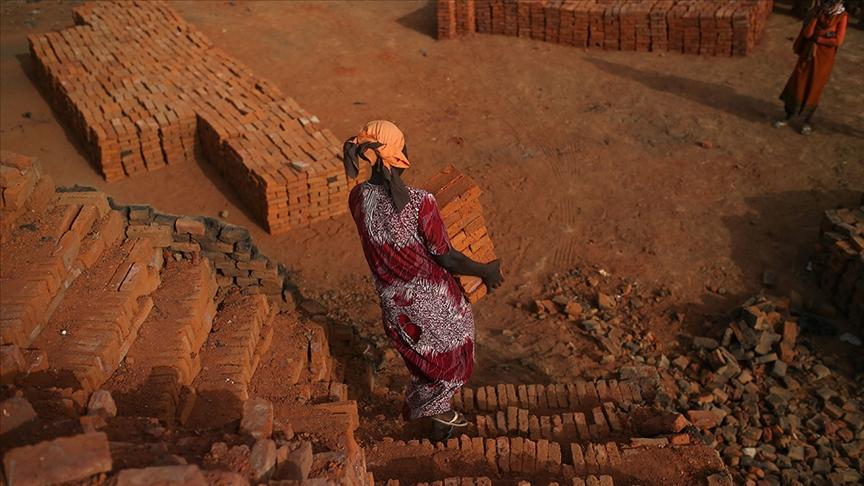
International Day for the Abolition of Slavery is observed annually on 2 December to raise awareness of the historical and modern forms of slavery, protect victims, and strengthen global efforts to eliminate slavery. Modern slavery, though lacking a legal definition, encompasses all forms of exploitation in which individuals are unable to resist due to threats, violence, deception, or the use of power, including forced labor, debt bondage, forced marriage, human trafficking, sexual exploitation, and the forced use of children in armed conflict. Modern slavery disproportionately affects women and children and persists as a problem transcending ethnic, cultural, and religious boundaries in nearly all countries.
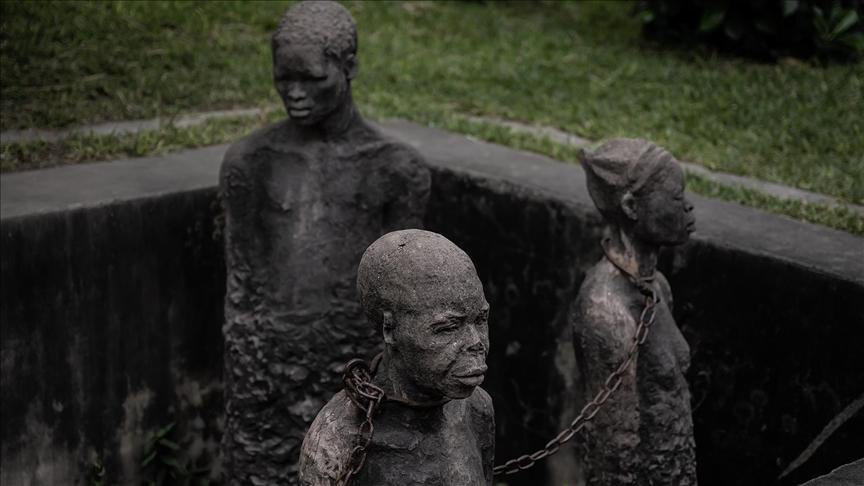
Artistic Work Representing Slavery (AA)
The International Day for the Abolition of Slavery was established to commemorate the adoption by the United Nations General Assembly on 2 December 1949 of the Convention for the Suppression of the Traffic in Persons and of the Exploitation of the Prostitution of Others. 【1】 This convention consolidated earlier agreements adopted in 1904, 1910, 1921, and 1933, as well as a draft convention prepared by the League of Nations in 1937. Its primary aim was to prevent human trafficking and the exploitation of prostitution, safeguard human dignity, ensure family welfare, and promote social stability. The date of its adoption is also symbolically used to raise international awareness of the various forms of modern slavery.
The International Day for the Abolition of Slavery is observed to honor historical victims of slavery and raise awareness of modern forms of slavery. Approximately 15 million people forcibly taken and enslaved from Africa are remembered within this context. Today, governments, civil society, trade unions, and businesses are called upon to collaborate to ensure justice, compensation, rehabilitation, and preventive measures against the recurrence of victimization.
The year 2026 is recognized as a symbolic milestone for the international community, marking the 100th anniversary of the Slavery Convention. The eradication of modern slavery is acknowledged as a goal requiring global cooperation and shared responsibility.
Modern slavery is linked to extreme poverty, discrimination, environmental degradation, and the vulnerability of individuals fleeing armed conflict or seeking safe living conditions. Criminal networks and human smugglers exploit these conditions. Modern slavery violates fundamental human rights and freedoms and perpetuates structural inequalities and systemic injustices within societies.

Modern Slavery (Anadolu Ajansı)
The following forms of modern slavery are highlighted on the International Day for the Abolition of Slavery:
According to the International Labour Organization (ILO), an estimated 50 million people were subjected to modern slavery in 2021, representing an increase of 10 million since 2016. During the same period, the number of people in forced labor reached 27.6 million, an increase of 2.7 million between 2016 and 2021. Regionally, Asia and the Pacific had the highest number at 15.1 million, followed by Europe and Central Asia at 4.1 million, Africa at 3.8 million, the Americas at 3.6 million, and Arab States at 0.9 million. Arab States recorded the highest prevalence rate of forced labor at 5.3 per 1,000 people, followed by Europe and Central Asia at 4.4 per 1,000, the Americas and Asia-Pacific at 3.5 per 1,000, and Africa at 2.9 per 1,000. The annual global profit generated from modern slavery is estimated at approximately $236 billion. This figure results in serious consequences including the theft of victims’ rights, state tax losses, the strengthening of organized crime, and the weakening of the rule of law.【3】
Among the key international instruments combating modern slavery is the Protocol to Prevent, Suppress and Punish Trafficking in Persons, Especially Women and Children, adopted by the United Nations General Assembly under Resolution 55/25 and entered into force on 25 December 2003. 【4】 This protocol provides a universal definition of human trafficking and mandates the protection of victims, prosecution of offenders, and international cooperation.【5】
In addition, the Additional Protocol to the International Labour Organization’s Forced Labour Convention, which entered into force in 2016, is recognized as a binding instrument strengthening the global fight against forced labor.【6】 These instruments reinforce the international community’s collective efforts to prevent modern slavery, protect victims’ rights, and ensure that perpetrators are brought to justice.
Alaca, Mehmet. "Dünyada 40,3 Milyon Kişi Modern Köle Olarak Tanımlanıyor." Anadolu Ajansı. Accessed November 28, 2025.https://www.aa.com.tr/tr/dunya/dunyada-40-3-milyon-kisi-modern-kole-olarak-tanimlaniyor/2545479
Aydın, Nuri. "Köleliğin Kaldırılması İçin İlk Ayaklanmanın Üzerinden 234 Yıl Geçti." Anadolu Ajansı. Accessed November 28, 2025.https://www.aa.com.tr/tr/dunya/koleligin-kaldirilmasi-icin-ilk-ayaklanmanin-uzerinden-234-yil-gecti/3666974
Güvendik, Murat Özgür. "Dünyada Her Bin Kişiden 5,4'ü 'Modern Köleliğe' Maruz Kalıyor." Anadolu Ajansı. Accessed November 28, 2025.https://www.aa.com.tr/tr/dunya/dunyada-her-bin-kisiden-5-4u-modern-kolelige-maruz-kaliyor/2062685
International Labour Organization. "P029 - Protocol of 2014 to The Forced Labour Convention, 1930." Accessed November 28, 2025.https://normlex.ilo.org/dyn/nrmlx_en/f?p=NORMLEXPUB:12100:0::NO::P12100_ILO_CODE:P029
United Nations Information Service Vienna. "The Secretary-General Message on the International Day for the Abolition of Slavery." Accessed November 28, 2025.https://unis.unvienna.org/unis/en/pressrels/2025/unissgsm1552.html
United Nations Office on Drugs and Crime. "International Day for the Abolition of Slavery 2 December." Accessed November 28, 2025.https://www.unodc.org/unodc/en/human-trafficking/2011/international-day-for-the-abolition-of-slavery.html
United Nations Office on Drugs and Crime. "Status of Ratification." Accessed November 28, 2025.https://www.unodc.org/unodc/en/organized-crime/intro/UNTOC.html
United Nations. "International Day for the Abolition of Slavery, 2 December Modern Slavery is on The Rise." Accessed November 28, 2025.https://www.un.org/en/observances/slavery-abolition-day
United Nations. "International Day for the Abolition of Slavery, 2 December Secretary-General's Message - 2025." Accessed November 28, 2025.https://www.un.org/en/observances/slavery-abolition-day/messages
United Nations. "United Nations Convention for the Suppression of the Traffic in Persons and of the Exploitation of the Prostitution of Others." Accessed November 28, 2025.https://docs.un.org/en/A/RES/317(IV)
United Nations. “Resolution Adopted by The General Assembly A/RES/55/25.” Accessed November 28, 2025.https://www.un.org/en/development/desa/population/migration/generalassembly/docs/globalcompact/A_RES_55_25.pdf
[1]
United Nations. "United Nations Convention for the Suppression of the Traffic in Persons and of the Exploitation of the Prostitution of Others." Erişim 28 Kasım 2025. https://docs.un.org/en/A/RES/317(IV)
[2]
United Nations. "International Day for the Abolition of Slavery, 2 December Modern Slavery is on The Rise." Erişim 28 Kasım 2025. https://www.un.org/en/observances/slavery-abolition-day
[3]
United Nations. "International Day for the Abolition of Slavery, 2 December Modern Slavery is on The Rise." Erişim 28 Kasım 2025. https://www.un.org/en/observances/slavery-abolition-day
[4]
United Nations. “Resolution Adopted by The General Assembly A/RES/55/25.” Erişim 28 Kasım 2025. https://www.un.org/en/development/desa/population/migration/generalassembly/docs/globalcompact/A_RES_55_25.pdf
[5]
United Nations Office on Drugs and Crime. "Status of Ratification." Erişim 28 Kasım 2025. https://www.unodc.org/unodc/en/organized-crime/intro/UNTOC.html
[6]
International Labour Organization. "P029 - Protocol of 2014 to the Forced Labour Convention, 1930." Erişim 28 Kasım 2025. https://normlex.ilo.org/dyn/nrmlx_en/f?p=NORMLEXPUB:12100:0::NO::P12100_ILO_CODE:P029

History | 2 December | ||||||||
|---|---|---|---|---|---|---|---|---|---|
Accepting Institution | United Nations General Assembly | ||||||||
Basis/Origin | 2 December 1949, Convention for the Suppression of the Traffic in Persons and of the Exploitation of the Prostitution of Others, United Nations General Assembly Resolution 317 (IV) | ||||||||
International Regulations | 2003 Additional Protocol to the International Labour Organization (ILO) Forced Labour Convention 2006 Protocol to Prevent, Suppress and Punish Trafficking in Persons, Especially Women and Children | ||||||||
Modern Forms of Slavery | Forced labour Human trafficking Child labour and forced recruitment Forced marriage and sale of spouses Debt bondage and serfdom | ||||||||
No Discussion Added Yet
Start discussion for "International Day for the Abolition of Slavery" article
History
Global Significance
Modern Slavery and Its Forms
Global Situation
International Regulations