


This article was automatically translated from the original Turkish version.
Indian Duck (Striped-headed Duck)
Realm | Animals | ||||||||
|---|---|---|---|---|---|---|---|---|---|
Branch | Chordates | ||||||||
Class | Birds | ||||||||
Team | Geese | ||||||||
Family | Ducks | ||||||||
Subfamily | Anserinae | ||||||||
Clan | Anserini | ||||||||
Genus | Anser | ||||||||
Species | A. indicus | ||||||||
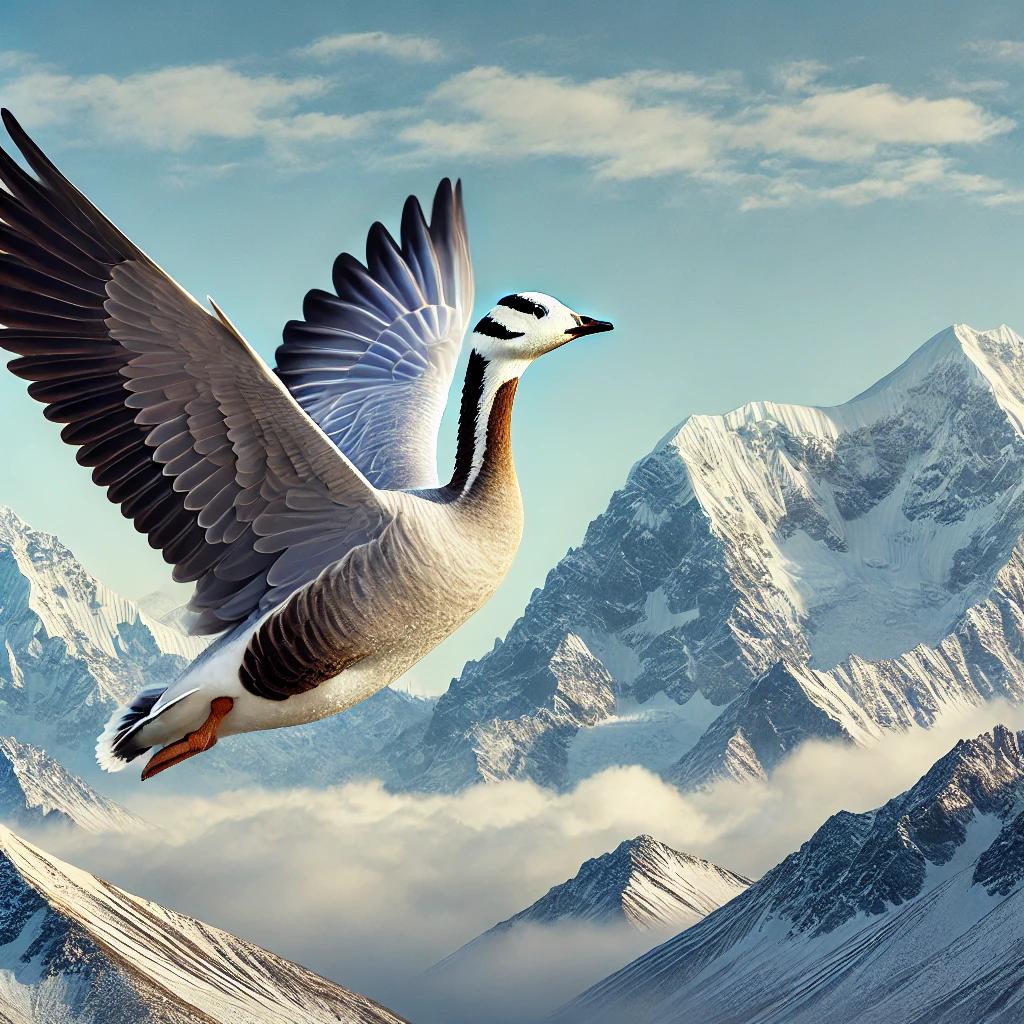
The bar-headed goose (Anser indicus) is a water bird known for its ability to migrate at high altitudes. This species, commonly found in the Himalayan region, can fly up to 8,000 meters during migration. This characteristic makes it one of the highest-flying birds in the world. The bar-headed goose attracts significant interest in the scientific community due to its physical traits, migration routes, and ecological role.
The bar-headed goose is a medium-sized goose species, averaging 75 to 85 cm in length with a wingspan of 150 to 170 cm. Its plumage is predominantly light gray, with two distinct black stripes on the top of the head, which are key identifying features. Thanks to their light yet robust body structure, they are capable of covering long distances. Their flight in flocks and aerodynamic formations provide high resistance against wind.
The bar-headed goose possesses an advanced respiratory system that enables it to withstand low oxygen levels at high altitudes. Its large lungs and high capacity for hemoglobin allow it to survive in oxygen-poor environments. Additionally, its blood circulation has adapted to deliver more oxygen to tissues.
Bar-headed geese spend the summer months in freshwater lakes and wetlands across Central Asia. During the winter, they migrate to India, Myanmar, and other parts of Southeast Asia. Their migration routes are typically aligned to cross the peaks of the Himalayas. During these flights, bar-headed geese rely on specialized physiological adaptations to survive in low-oxygen zones.
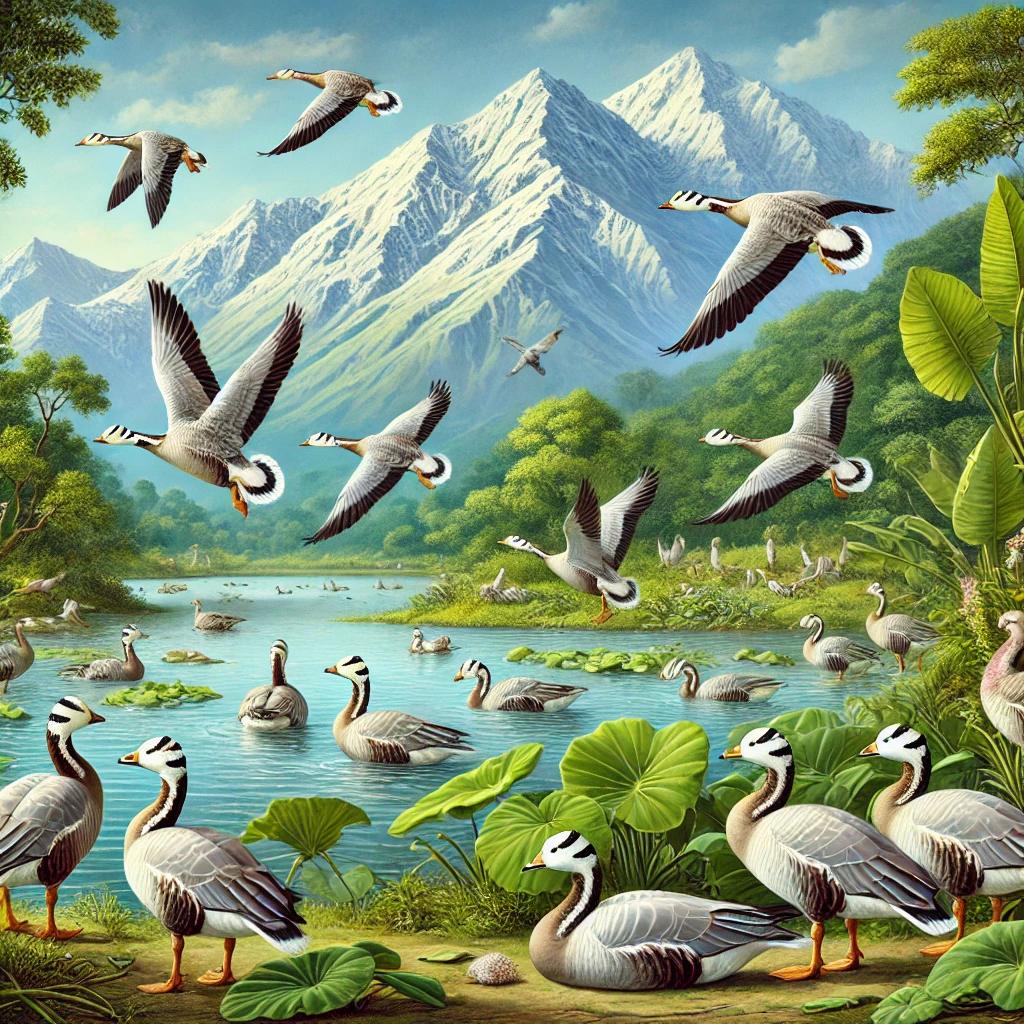
Designed with the aid of artificial intelligence.
Bar-headed geese have a herbivorous diet, primarily feeding on aquatic plants, grasses, and cereal grains. During migration, they may also forage in agricultural fields, a situation that can occasionally cause problems for local farmers. By consuming plant material in aquatic ecosystems, they play an important role in the food chain.
Breeding occurs during the summer months, typically along the shores of lakes or riverbanks. Females lay four to six eggs, with an incubation period of approximately 28 to 30 days. Goslings begin swimming shortly after hatching and are protected by their parents.
Bar-headed geese are social birds that typically move in large flocks. Flying in formations during migration enhances their safety during travel. They also maintain constant contact with each other through loud vocalizations.
According to assessments by the International Union for Conservation of Nature (IUCN), the bar-headed goose is classified as “Least Concern.” However, threats such as habitat destruction, climate change, and hunting are causing population declines in certain regions. The drying up of wetlands and expansion of agricultural activities are negatively impacting the species’ habitats.
In recent years, conservation initiatives have focused on protecting the habitats of bar-headed geese and securing their migration routes. National parks and wetland reserves have been established in countries such as India, China, and Mongolia to safeguard this species.
Ali, Salim, and S. Dillon Ripley. Handbook of the Birds of India and Pakistan. Oxford: Oxford University Press, 1983.
BirdLife International. "Anser indicus." *The IUCN Red List of Threatened Species*, 2021. Accessed March 19, 2025.https://www.iucnredlist.org
Scott, D. A. A Review of the Status of the Anatidae in the Indo-Gangetic Plains. Gland, Switzerland: IUCN Wetlands Programme, 1995.
Takekawa, John Y., Sharon H. Newman, David J. Prosser, and Xiangming Xiao. "Migration of Bar-headed Geese Across the Himalayas." Proceedings of the National Academy of Sciences 106, no. 21 (2009): 8367-8372.

Indian Duck (Striped-headed Duck)
Realm | Animals | ||||||||
|---|---|---|---|---|---|---|---|---|---|
Branch | Chordates | ||||||||
Class | Birds | ||||||||
Team | Geese | ||||||||
Family | Ducks | ||||||||
Subfamily | Anserinae | ||||||||
Clan | Anserini | ||||||||
Genus | Anser | ||||||||
Species | A. indicus | ||||||||
No Discussion Added Yet
Start discussion for "Indian Duck (Striped-headed Duck)" article
Physical Characteristics
Respiratory System Adaptations
Habitats and Migration
Feeding Habits
Reproduction and Behavior
Conservation Status