

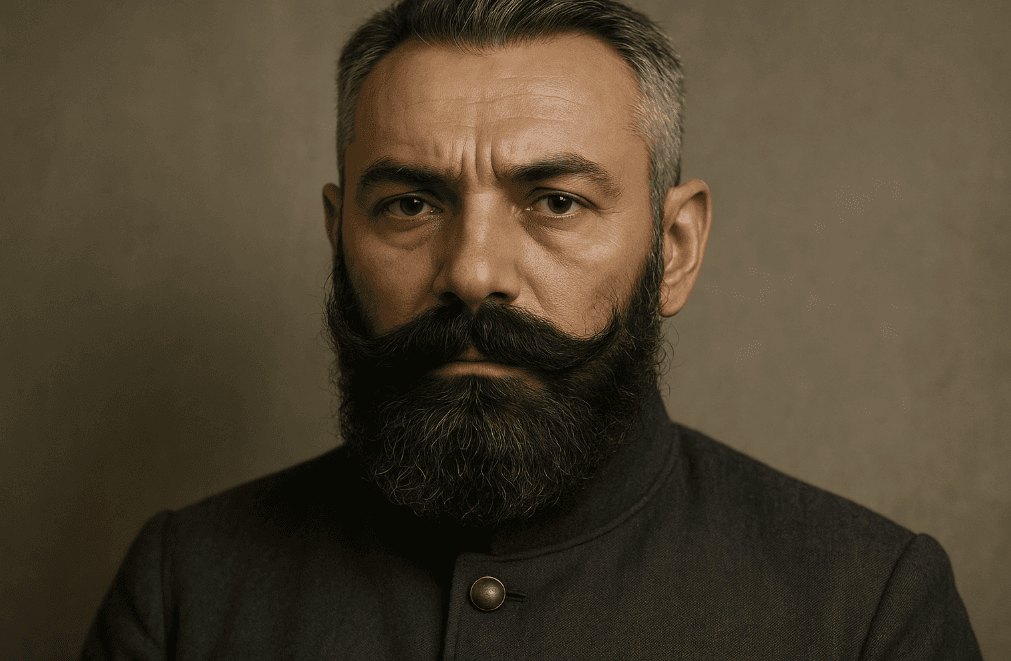

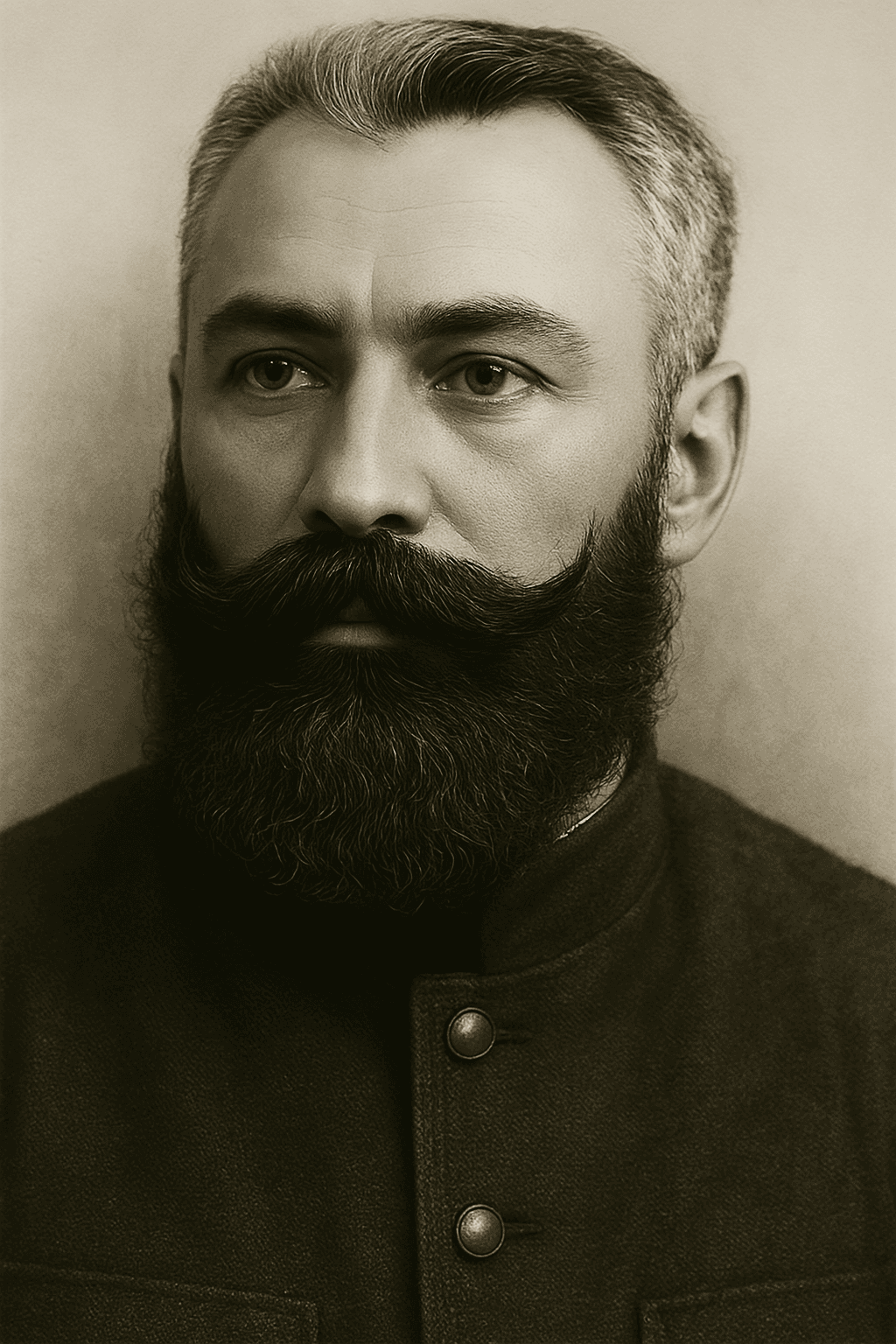
Ibrahim Ethem Akıncı
Birth Year | 1889 | ||||||||
|---|---|---|---|---|---|---|---|---|---|
Birth Place | Menlik Thessaloniki Ottoman Empire | ||||||||
Date of Death | 1950-05-11 | ||||||||
Place of Death | Sındırgı, Balıkesir, Türkiye | ||||||||
Education | Serres Preparatory School Thessaloniki Law School Thessaloniki Preparatory School | ||||||||
Foreign Languages | Persian Bulgarian Greek French Arabic | ||||||||
Book | Demirci Akıncıları in the War of Independence | ||||||||
Retirement Date | 15 July 1949 | ||||||||
Millî Mücadele period’s notable figures, İbrahim Ethem Akıncı is known both as a civil administrator and as the founder and commander of a military organization. His life spans the final years of the Ottoman Empire through the early years of the Republic of Türkiye.
İbrahim Ethem Akıncı was born in 1889 in the village of Biliçe, within the Serez Sanjak of the Salonica Vilayet. He belonged to the “Tüfekçizadeler” family. He graduated first in his class from the Serez İdadisi in 1906 and completed his studies at the Salonica İdadisi in 1908. Having attended two idadis, Akıncı graduated from the Salonica Law School in 1912.
During his student years, he worked as a clerk in the Vilayet Tahrirat Kalemi and gained experience as a journalist for the Rumili Gazetesi, which emerged in Salonica after the Second Constitutional Era. He participated in the Balkan Wars as a journalist and, after his native village of Biliçe fell into Bulgarian hands, carried out the destruction of his own village. He also actively engaged in guerrilla operations during the Balkan Wars.
After the Balkan Wars, İbrahim Ethem Bey moved to Istanbul and was appointed subdistrict chief of Sındırgı in 1915. He held this position until his transfer to the post of subdistrict chief of Şamlı in 1918. After the Armistice, he resigned from his administrative post and practiced law in Balıkesir until the beginning of the National Struggle.
Following the Greek occupation of Balıkesir in 1920, İbrahim Ethem Bey traveled to Ankara and worked for two months in the Special Cipher Office of the Ministry of Interior. During a critical phase of the National Struggle, on 28 November 1920, he was appointed to the subdistrict of Demirci, a strategically vital post surrounded by Greek-occupied territories. This appointment was linked to Mustafa Kemal Paşa’s order to implement guerrilla warfare tactics and to Demirci’s mountainous terrain, which was well suited to impede the enemy. Due to his valuable services during the Çerkez Ethem incidents, he was also assigned the acting subdistrict governorship of Gördes.
After his appointment to Demirci, İbrahim Ethem Bey, despite having no formal military or civil administrative training, established a military organization known as the Demirci Akıncıları. This organization, composed of volunteer patriots, operated between 24 January and 15 March 1921 in the regions of Sındırgı, Demirci, and Gördes. The Akıncılar operated in small detachments (müfrezeler), conducting intelligence operations behind enemy lines and along the front, raiding police stations, cutting telegraph lines, blowing up bridges, and employing guerrilla tactics to slow down enemy advances. Their primary mission was to disrupt Greek occupation forces’ supply and communication lines.
İbrahim Ethem Akıncı published a forty-article document known as the “Akıncı Constitution.” This document defined the discipline, duties, relations with the public, attitudes toward the enemy, and even moral values of the Akıncılar. It included specific provisions such as treating non-Muslims with kindness, prohibiting theft and looting, emphasizing cleanliness, and avoiding extravagance at weddings.
İbrahim Ethem Bey’s efforts earned the admiration of Mustafa Kemal Paşa, who personally granted him the surname “Akıncı”.
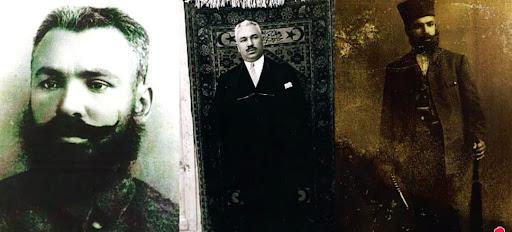
İbrahim Ethem Akıncı (Demirci Kaymakamlığı)
With the commencement of the Great Offensive, the Demirci Akıncıları played a significant role in the pursuit of Greek forces. After the Victory of 30 August 1922, Demirci, Simav, Sındırgı, and numerous other settlements were liberated from enemy occupation by the Akıncılar.
İbrahim Ethem Bey organized his detachments into three columns and advanced toward Balıkesir, playing a decisive role in the liberation of districts and villages including Bigadiç, Balıkesir, Balya, İvrindi, Havran, Burhaniye, and Edremit. Through his reports to the Western Front Command and his public declarations, he ensured military coordination and established the authority of the Grand National Assembly of Türkiye in the liberated areas.
On 30 September 1922, having announced the end of his mission, he issued a ten-article final proclamation to all Akıncılar and disbanded the detachments. This proclamation was a key document, declaring the successful completion of the National Struggle and regulating the transition of the Akıncılar to civilian life.
Owing to his successes during the National Struggle, İbrahim Ethem Bey was promoted on 11 September 1922 from third-class subdistrict chief of Demirci to first-class subdistrict chief of Ayvalık. He became widely known as the “Bearded Subdistrict Chief” because he vowed not to shave his beard until the Greeks had been driven into the sea. His duties in Ayvalık included meticulously conducting inventories of property and assets in a region with a dense Greek population and overseeing the resettlement of refugees.
Throughout his career, İbrahim Ethem Akıncı held numerous administrative positions:
İbrahim Ethem Akıncı retired from the Muğla Governorship on 15 July 1949. His family claims his retirement was forced, as İnönü did not wish him to remain in office. Although he contested the decision and won his case in court, he did not return to his post; instead, he donated his compensation to the Turkish Red Crescent and declined a parliamentary candidacy offered by the Democratic Party. His desire to locate the graves of National Struggle martyrs and erect memorial tombs was never realized. He died on 11 May 1950 in Sındırgı.
İbrahim Ethem Akıncı was fluent in French, Bulgarian, Romanian, Arabic, and Persian, and had a strong interest in mathematics, algebra, history, and literature.
Demirci Belediyesi. “Mücahit İbrahim Ethem Bey ve Demirci Akıncıları Anma Programı.” Accessed June 8, 2025.https://www.demirci-bld.gov.tr/detaylar/1/haberler/6323/mucahit_ibrahim_etem_bey_ve_demirci_akincilari_anma_programi.aspx
Demirci Kaymakamlığı. “Millî Mücadele Kahramanımız Kaymakam İbrahim Ethem Akıncı’yı Rahmet ve Minnetle Anıyoruz.” May 11, 2016. Accessed June 8, 2025.http://www.demirci.gov.tr/milli-mucadele-kahramanimiz-kaymakam-ibrahim-ethem-akinciyi-rahmet-ve-minnetle-aniyoruz
Oğuz, İsmail, and Nurettin Gülmez. “Demirci Kaymakamı İbrahim Ethem Bey ve Demirci Akıncıları.” *Celal Bayar Üniversitesi Sosyal Bilimler Dergisi* 14, no. 1 (2016): 428–441. Accessed June 8, 2025.https://dergipark.org.tr/tr/download/article-file/229315
Oğuz, İsmail. “Kuva-yı Milliyecilikten Valiliğe İbrahim Ethem Akıncı.” Tarih Kritik Dergisi. 2017. Accessed June 8, 2025.https://dergipark.org.tr/tr/download/article-file/829905
Topuz, Süleyman, and Yurdanur Ural Uslan. “Ege Bölgesi’nde Millî Mücadele’yi Örgütleyen Mülki İdare Amirleri.” *Çanakkale Onsekiz Mart Üniversitesi Language and Journal of Academic Research (ÇOMÜ LJAR)* 5, no. 10 (2024): 41–51. Accessed June 8, 2025.https://dergipark.org.tr/en/download/article-file/4423329

Ibrahim Ethem Akıncı
Birth Year | 1889 | ||||||||
|---|---|---|---|---|---|---|---|---|---|
Birth Place | Menlik Thessaloniki Ottoman Empire | ||||||||
Date of Death | 1950-05-11 | ||||||||
Place of Death | Sındırgı, Balıkesir, Türkiye | ||||||||
Education | Serres Preparatory School Thessaloniki Law School Thessaloniki Preparatory School | ||||||||
Foreign Languages | Persian Bulgarian Greek French Arabic | ||||||||
Book | Demirci Akıncıları in the War of Independence | ||||||||
Retirement Date | 15 July 1949 | ||||||||
No Discussion Added Yet
Start discussion for "Ibrahim Ethem Akıncı" article
Early Life and Education
Before the National Struggle
The National Struggle Period and the Demirci Akıncıları
The Great Offensive and Pursuit Operations
The Republic Era and Governorships
Retirement and Final Years
Personal Characteristics