


This article was automatically translated from the original Turkish version.
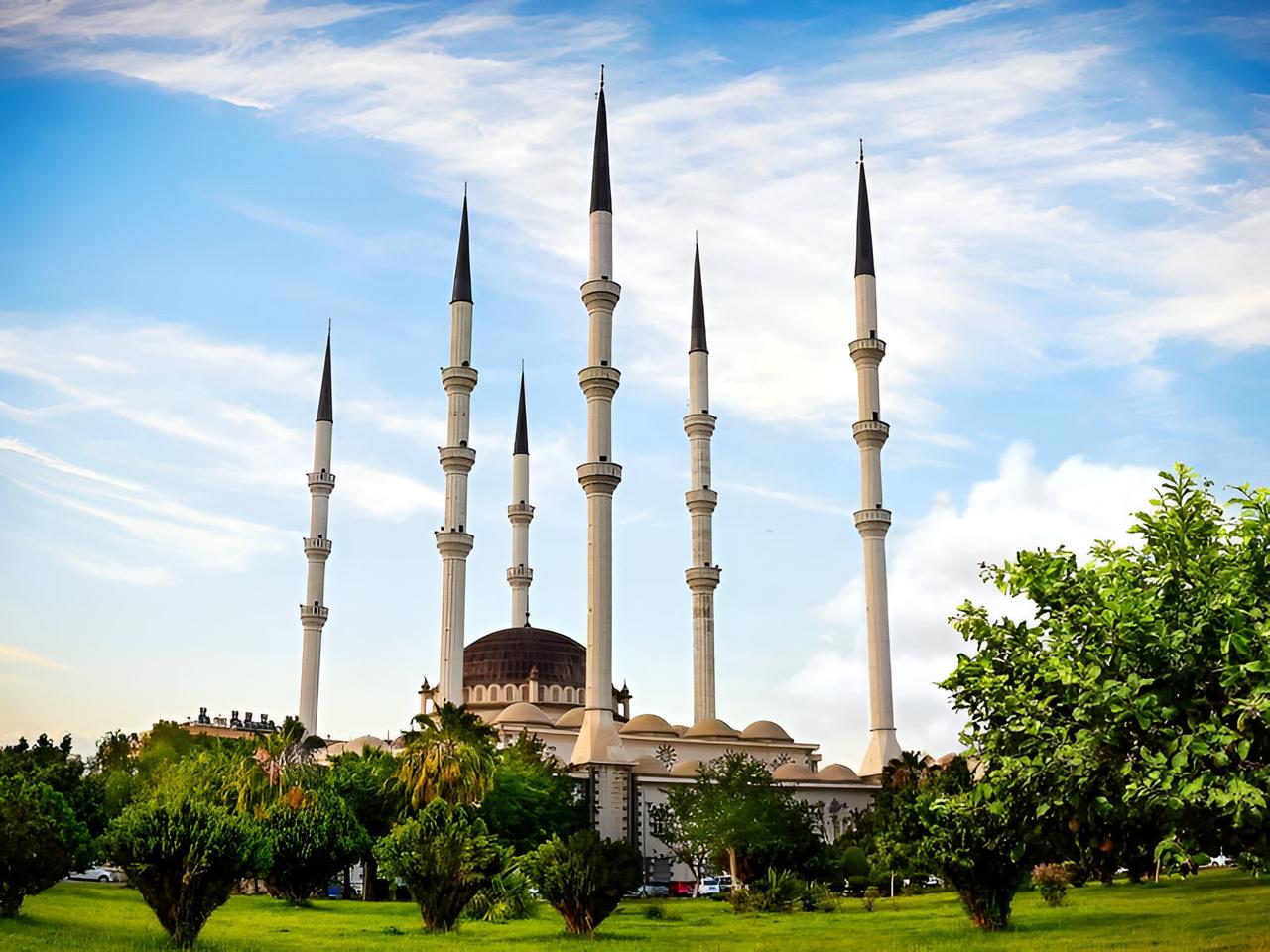
Hz. Miktad Mosque
Location | Mersin Yenişehir District Muğdat Neighborhood | ||||||||
|---|---|---|---|---|---|---|---|---|---|
Significance | Mersin's largest mosque; the second largest mosque of the Republican Era (after Kocatepe) | ||||||||
Architectural Style | Classical Ottoman Architecture | ||||||||
Construction Start | 1987 | ||||||||
Opening for Worship | 1992 | ||||||||
Number of Minarets | 6 (each 91 meters, with three balconies) | ||||||||
Capacity | Interior: 6,000 people; with external areas: 10,000 people | ||||||||
Külliye Features | Conference hall, library, soup kitchen, guesthouse, health center, mourning house | ||||||||
Tomb | Tomb of Hz. Mikdâd bin Amr (in the garden, regarded as a mausoleum) | ||||||||
Origin of the Name | Mikdâd bin Amr, one of the first companions of Islam | ||||||||
Historical Figure | Hz. Mikdâd: Participated in battles such as Badr, Uhud and the Trench; was the prophet's archer and standard-bearer | ||||||||
Cultural Role | Religious, social and cultural center | ||||||||
Hz. Miktad Camii, also known as Muğdat Camii, is located in the Muğdat Neighborhood of Yenişehir District in Türkiye’s Mersin Province. It is a significant place of worship and cultural structure, constructed during the Republican Era and recognized as the second largest mosque in Türkiye after the Kocatepe Camii in Ankara. This structure, the largest mosque in Mersin, derives its name from Mikdâd ibn Amr, one of the earliest companions of Islam. Built in the classical Ottoman architectural style, the mosque stands out as a multifunctional complex with külliye characteristics.
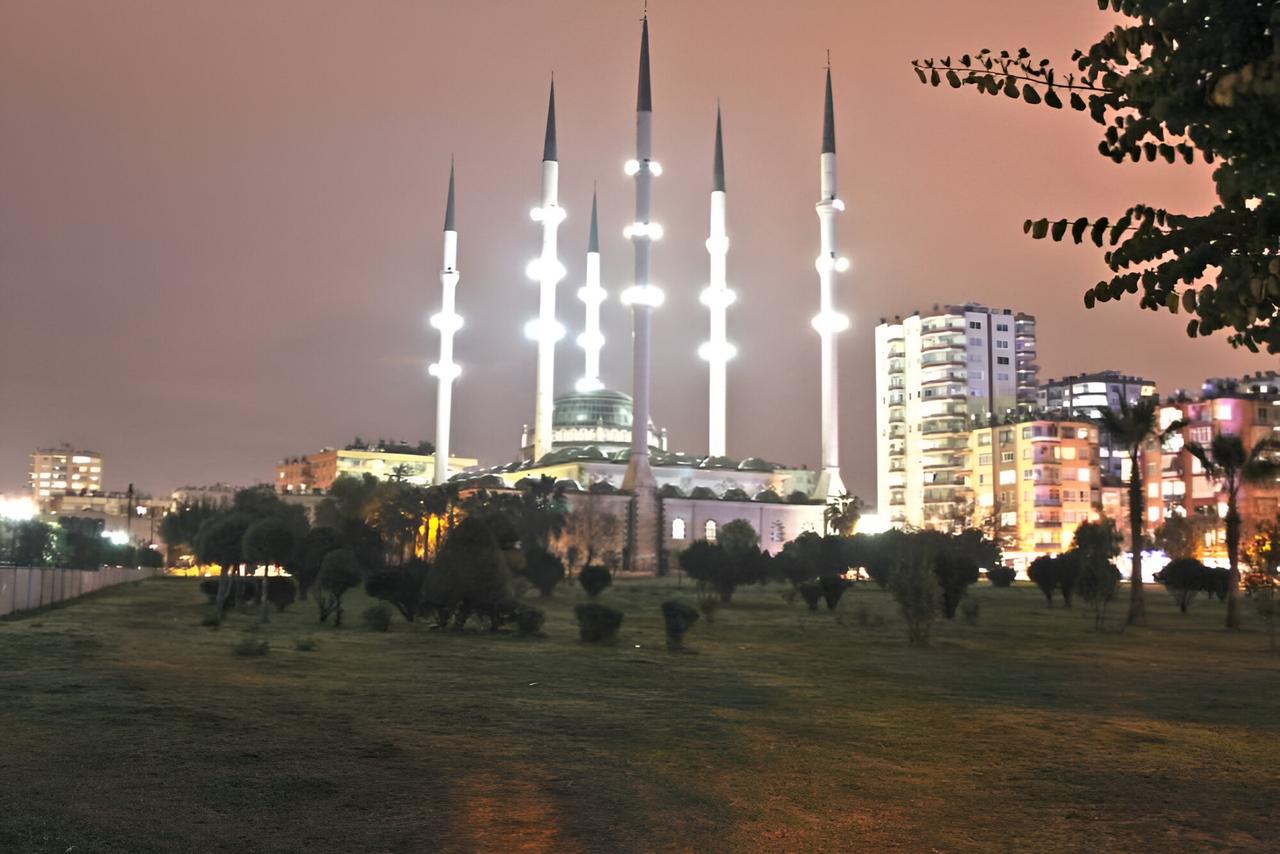
Hz. Miktad Camii (Kültür Portalı)
Hz. Miktad Camii is a complex structure comprising a two-story prayer hall, main dome, rear congregation area, and a mahfil gallery. The interior prayer space accommodates 6,000 worshippers, and when combined with the western and rear courtyards, the entire complex can serve up to 10,000 people. One of the most striking architectural features of the mosque is its six minarets, each reaching a height of 91 meters and featuring three balconies. This architectural feature imparts a silhouette reminiscent of the Sultanahmet Camii and enhances the overall grandeur of the structure. Clear traces of the Ottoman architectural style are evident in both the interior and exterior spatial design.
Beyond its function as a place of worship, Hz. Miktad Camii was planned as a külliye and includes various social units such as a conference hall, library, soup kitchen, guesthouse, health center, and mourning house. Through these features, the mosque transcends its religious role and fulfills an important social and cultural function.
Construction of Hz. Miktad Camii began in 1987 and was completed after a five-year process, opening for worship in 1992. Located in Yenişehir District, the mosque retained its significance following the district’s official establishment by Law No. 5747, published in the Official Gazette on 22 March 2008 with number 26824. Situated at the center of Yenişehir, Hz. Miktad Camii holds a prominent position in the district’s religious and cultural fabric due to both its location and functionality.
In the mosque’s courtyard stands a türbe attributed to Hz. Mikdâd ibn Amr, one of the earliest companions who embraced Islam. This companion, sometimes referred to in sources as Mikdâd b. Esved due to an adoptive relationship, was among the first to accept Islam during the Mecca period. He participated in major battles alongside the Prophet Muhammed, including Badr, Uhud, the Trench, and Khaybar, and served among his standard-bearers and elite archers. Although tradition holds that he was martyred in a battle beyond the sea, there is a strong popular belief in the region that his grave lies here. Although the türbe is regarded as a makam, the local community firmly believes that Hz. Mikdâd was martyred in this area and that his tomb was constructed within the mosque courtyard.
Hz. Miktad Camii is situated in the Muğdat Neighborhood of Yenişehir District, one of Mersin’s four central districts. Yenişehir is bordered by Mezitli to the west, the Mediterranean Sea to the east, and Toroslar District to the northeast. It is the smallest of the central districts by area. Nevertheless, Yenişehir stands out for its cultural, sports, and educational infrastructure and is home to a young population with higher income levels. As of 2023, the district’s population is 277,445 (female: 144,641; male: 132,804). The district includes a total of 54 mosques, 24 Qur’an courses, and 2 cem houses, with no non-Muslim places of worship present. Among these religious structures, Hz. Miktad Camii stands out in terms of size and functionality.
Hz. Miktad Camii is not merely a place of worship but a multifunctional center contributing to the social and cultural life of Yenişehir District. It hosts educational activities through its conference hall and library, social assistance services via its soup kitchen and guesthouse, and public health initiatives through its health center. In addition to religious institutions, public bodies such as the Mersin Governorship, Mersin Provincial Directorate of Security, Mersin University, and Toros University, as well as social spaces like Forum Shopping Center and Kültür Park, are located within Yenişehir’s boundaries, further enhancing the strategic importance of the district and, by extension, the mosque.
Hz. Miktad Camii holds a prominent place among Türkiye’s significant religious structures. Constructed between 1987 and 1992, it draws attention through its aesthetic rooted in Ottoman architecture, the türbe honoring Hz. Mikdâd, and its külliye layout. With its architectural, religious, social, and cultural functions, it has become one of the symbolic structures of Yenişehir District.
Kültür Portalı. "Hz. Miktad (Muğdat) Camii | Kültür Portalı." Accessed April 5, 2025.https://www.kulturportali.gov.tr/turkiye/mersin/gezilecekyer/hz-miktad-mugdat-camii.
Mersin Yenişehir Kaymakamlığı. "Yenişehir Sahil." Accessed April 5, 2025.http://www.mersinyenisehir.gov.tr/yenisehir-sahil.
Mersin İl Müftülüğü. “Müftülüğümüz.” Accessed April 5, 2025.https://mersin.diyanet.gov.tr/yenisehir/Sayfalar/contentdetail.aspx?MenuCategory=Kurumsal2&ContentId=muftulugumuz.
Türkiye’s Historical Monuments. "Hz. Miktad (Muğdat) Mosque." Accessed April 5, 2025.https://www.turkiyenintarihieserleri.com/?oku=1144

Hz. Miktad Mosque
Location | Mersin Yenişehir District Muğdat Neighborhood | ||||||||
|---|---|---|---|---|---|---|---|---|---|
Significance | Mersin's largest mosque; the second largest mosque of the Republican Era (after Kocatepe) | ||||||||
Architectural Style | Classical Ottoman Architecture | ||||||||
Construction Start | 1987 | ||||||||
Opening for Worship | 1992 | ||||||||
Number of Minarets | 6 (each 91 meters, with three balconies) | ||||||||
Capacity | Interior: 6,000 people; with external areas: 10,000 people | ||||||||
Külliye Features | Conference hall, library, soup kitchen, guesthouse, health center, mourning house | ||||||||
Tomb | Tomb of Hz. Mikdâd bin Amr (in the garden, regarded as a mausoleum) | ||||||||
Origin of the Name | Mikdâd bin Amr, one of the first companions of Islam | ||||||||
Historical Figure | Hz. Mikdâd: Participated in battles such as Badr, Uhud and the Trench; was the prophet's archer and standard-bearer | ||||||||
Cultural Role | Religious, social and cultural center | ||||||||
No Discussion Added Yet
Start discussion for "Hz. Miktad (Muğdat) Camii" article
Architectural Features
History
Hz. Miktad Türbesi
Location and Environmental Features
Cultural and Social Significance