+1 More

Hüseyin Avni Lifij
Year of Birth | 1886 | ||||||||
|---|---|---|---|---|---|---|---|---|---|
Place of Birth | Samsun | ||||||||
Ölüm tarihi | 1927-06-02 | ||||||||
Place of Death | İstanbul | ||||||||
Nationality | Ottoman Empire / Türkiye | ||||||||
Education | Sanayi-i Nefise Mektebi (short-term education) École des Beaux-Arts (Paris) | ||||||||
Art Workshops Attended | Jean-Jules-Antoine Lecomte du Nouÿ Atölyesi Octave Denis Victor Guillonnet Atölyesi Fernand-Anne Piestre Cormon Atölyesi | ||||||||
Art Field | Painting | ||||||||
Association with Art Movements | Symbolism, Impressionism, Expressionism, Romanticism | ||||||||
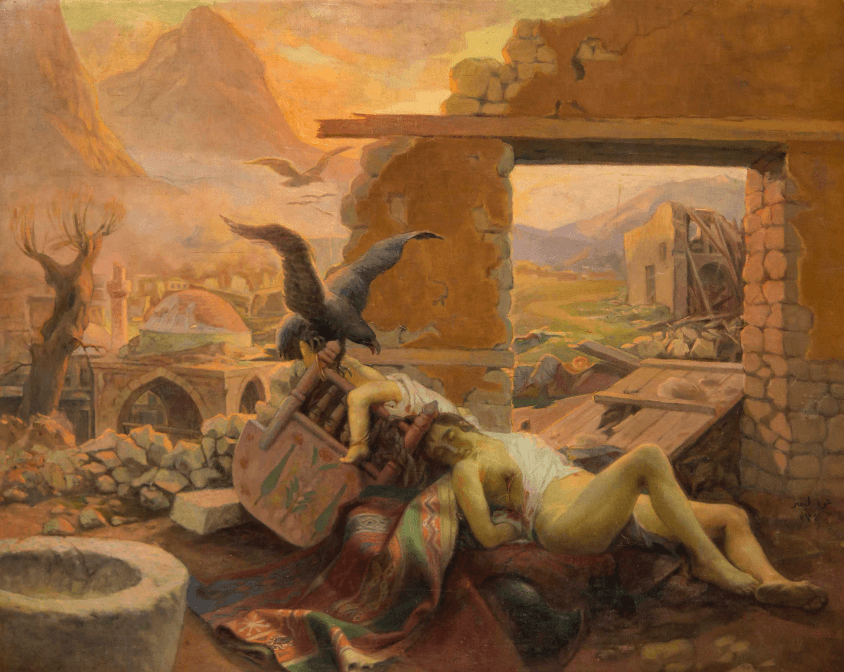
Major Works | War and Allegory Akgün Karagün | ||||||||
Institutions Worked at | Sanayi-i Nefise Mektebi (Teacher) Kandilli İnas Sultanisi (French Teacher) İstanbul Sultanisi (Teacher) | ||||||||
Artistic Activities | Participant in Şişli Atölyesi and Vienna Exhibition Participant in Galatasaray Exhibitions Member of the Ottoman Painters Society | ||||||||
Prominent Characteristics | Influenced by the art circles of Paris and İstanbul. A poetic atmosphere and melancholy prevail in his works. He depicted the drama of the civilian population in war-themed paintings. | ||||||||
Collections Where Works are Held | İstanbul Painting and Sculpture Museum, Ankara Painting and Sculpture Museum, Various private collections | ||||||||
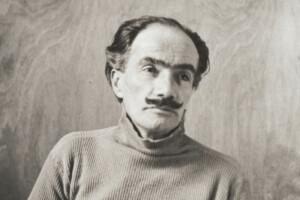
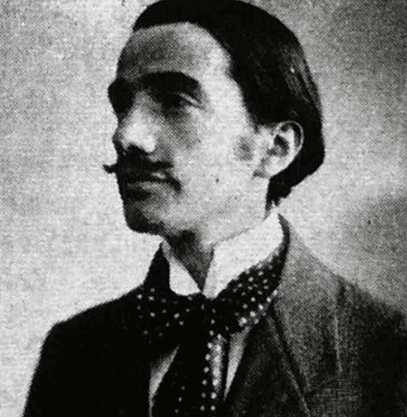
Hüseyin Avni Lifij, born in 1886 in Samsun, was a Turkish painter and art educator. He continued his education in Istanbul and pursued studies at various institutions to develop his artistic skills, eventually traveling to Paris in 1909 to study painting at the École des Beaux-Arts. During his years in Paris, he was influenced by different artistic movements and, upon returning to Istanbul, continued his activities as both a teacher and an artist. Known for his figurative and decorative works, Lifij addressed social events and the impacts of war in his art. His works are exhibited in various museums and collections; he passed away in Istanbul in 1927.
Hüseyin Avni Lifij was born in 1886 in Samsun into a Circassian family.
He completed his secondary education in the Fatih district of Istanbul. To improve his French language skills, he attended the Alliance Israélite School and received private lessons from İskender Ferid Bey. He briefly enrolled at the Sanayi-i Nefise Mektebi for art education. Additionally, as a non-degree student, he attended physics and chemistry classes at the Mekteb-i Tıbbiyye-i Mülkiyye to gain anatomical knowledge and at the Eczacı Mektebi to learn painting techniques.
In 1909, with the support of Osman Hamdi Bey and the patronage of Şehzade Abdülmecid Efendi, he was sent to Paris. There, he studied painting in the atelier of Fernand-Anne Piestre Cormon at the École des Beaux-Arts. He also worked in the ateliers of Octave Denis Victor Guillonnet and Jean-Jules-Antoine Lecomte du Nouÿ.
During his time in Paris, in addition to academic art training, he developed an interest in artistic movements such as Symbolism and Impressionism. The influence of the French art environment became evident in his artistic approach.
He returned to Istanbul in 1912 and served as a painting teacher at the İstanbul Sultanisi. From 1915 onward, he taught French at the Kandilli İnas Sultanisi.
Throughout his artistic career, he actively participated in various art events including the Galatasaraylılar Yurdu Exhibitions, Şişli Atölyesi, and the Ottoman Painters Society.
Lifij was known for his figurative and decorative works. He reflected the Symbolist and Impressionist influences he encountered in Paris in his paintings. His works created a poetic atmosphere, characterized by melancholic and dreamlike effects in the use of color, light, and shadow. Although he belonged to the 1914 Generation, his Symbolist stance and literary connections distinguished him from other artists.
Common themes and affinities in mood have been drawn between his works and the artistic philosophies of the Edebiyat-ı Cedîde and Fecr-i Âti literary groups.
The artist also engaged with photography, depicting nature and village life across different periods. Alongside rapid works executed in the pochade technique, he produced large-scale allegorical compositions.
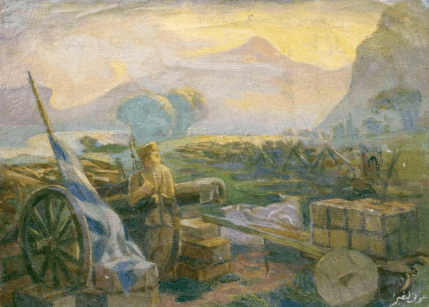
Akgün
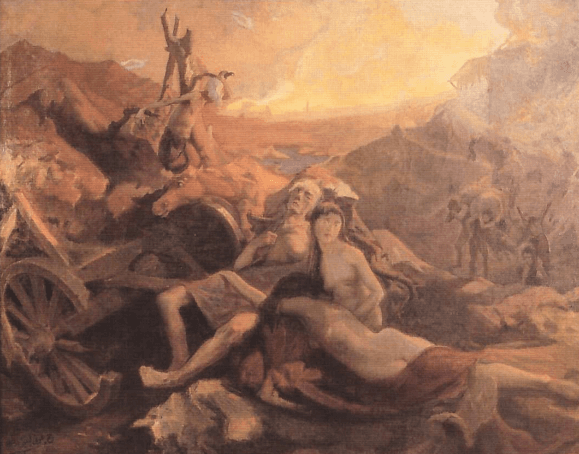
Savaş ve Alegori (War and Allegory)
In these works, he portrayed war and social destruction not through heroic scenes but through the suffering of civilian populations.
During his time in Paris, he contributed articles to the Osmanlı Ressamlar Cemiyeti Gazetesi. He wrote art criticism for periodicals of the time and published his views on art education and the artistic environment.
In 1924, he contributed to the establishment of the Decorative Arts Department at Sanayi-i Nefise Mektebi and taught there. He emphasized decorative arts in art education.
He was invited to Ankara by Mustafa Kemal Atatürk and served for four months at the General Staff Headquarters. During this period, he observed the conditions of war and Anatolia. These observations led him to create two major works: “Karagün” and “Akgün”.
Hüseyin Avni Lifij died in Istanbul on 2 June 1927.
His works are held in the Istanbul Museum of Painting and Sculpture, the Ankara Museum of Painting and Sculpture, and various private collections.
"Hüseyin Avni Lifij." *Ankara Resim ve Heykel Müzesi (ARHM)*, Ministry of Culture and Tourism. Accessed May 13, 2025. https://arhm.ktb.gov.tr/artists/detail/2018/huseyin-avni-lifij-1886-1927.
"Hüseyin Avni Lifij." *Sakıp Sabancı Müzesi*. Accessed May 13, 2025. https://www.sakipsabancimuzesi.org/sanatci/265.
"Karagün." Ankara Resim ve Heykel Müzesi (ARHM), Ministry of Culture and Tourism. Accessed May 13, 2025. https://arhm.ktb.gov.tr/artworks/detail/89/karagun.
Alkan, Ufuk, and Mehmet Emin Kahraman. "Hüseyin Avni Lifij’in Kurtuluş Savaşı Temalı Resimlerinin İkonolojik ve İkonografik İncelenmesi." *Uluslararası Sosyal Araştırmalar Dergisi (The Journal of International Social Research)*, Volume 10, Issue 48, February 2017. Accessed May 13, 2025. https://www.sosyalarastirmalar.com.
Hüseyin Avni Lifij. "Kültür Portalı." T.C. Kültür ve Turizm Bakanlığı. Accessed May 13, 2025. https://www.kulturportali.gov.tr/portal/huseyin-avni-lifij.
Ocak, Eda. *Hüseyin Avni Lifij’in Yapıtlarında Paris ve İstanbul Sanat Çevrelerinin Etkisi*. Master's thesis, Mimar Sinan Güzel Sanatlar Üniversitesi, Sosyal Bilimler Enstitüsü, Sanat Tarihi Anabilim Dalı, Batı Sanatı ve Çağdaş Sanat Programı, 2011. Accessed May 13, 2025. https://acikerisim.msgsu.edu.tr/xmlui/handle/20.500.14124/3476.
Hüseyin Avni Lifij
Year of Birth | 1886 | ||||||||
|---|---|---|---|---|---|---|---|---|---|
Place of Birth | Samsun | ||||||||
Ölüm tarihi | 1927-06-02 | ||||||||
Place of Death | İstanbul | ||||||||
Nationality | Ottoman Empire / Türkiye | ||||||||
Education | Sanayi-i Nefise Mektebi (short-term education) École des Beaux-Arts (Paris) | ||||||||
Art Workshops Attended | Jean-Jules-Antoine Lecomte du Nouÿ Atölyesi Octave Denis Victor Guillonnet Atölyesi Fernand-Anne Piestre Cormon Atölyesi | ||||||||
Art Field | Painting | ||||||||
Association with Art Movements | Symbolism, Impressionism, Expressionism, Romanticism | ||||||||
Major Works | War and Allegory Akgün Karagün | ||||||||
Institutions Worked at | Sanayi-i Nefise Mektebi (Teacher) Kandilli İnas Sultanisi (French Teacher) İstanbul Sultanisi (Teacher) | ||||||||
Artistic Activities | Participant in Şişli Atölyesi and Vienna Exhibition Participant in Galatasaray Exhibitions Member of the Ottoman Painters Society | ||||||||
Prominent Characteristics | Influenced by the art circles of Paris and İstanbul. A poetic atmosphere and melancholy prevail in his works. He depicted the drama of the civilian population in war-themed paintings. | ||||||||
Collections Where Works are Held | İstanbul Painting and Sculpture Museum, Ankara Painting and Sculpture Museum, Various private collections | ||||||||
Birth and Family
Education
Paris Years and Artistic Influences
Return to Istanbul and Teaching Career
Artistic Philosophy and Style
Important Works
Art Writing
Sanayi-i Nefise Mektebi and Teaching Activities
Ankara Period and Impressions from the War of Independence
Death
Locations of His Works