


This article was automatically translated from the original Turkish version.
My mother called out to the bus driver: Could you please let us off at the roadside?
The intercity bus hissed to a stop beside the highway. When the door opened, dust filled the steps. My mother waited a moment for the dust to settle before stepping down. My sibling and I followed. They unloaded two suitcases—brown and green, made of faux leather with buckles. My mother loaded them onto her shoulders and gestured for us to follow. We turned onto a narrow path slightly below the main road, flanked on either side by gardens. These were not ornamental gardens but cultivated plots: beans, tomatoes, cucumbers, and large-leaved plants. Two tire tracks marked the dirt path—clearly, cars passed along this narrow route. Further ahead stood tall apartment buildings. After walking a short distance, we reached those buildings, which faced the shore.
My mother told the attendant at the door her sister’s name. The man pointed with his hand: “The ground floor entrance of that block.”
My aunt had bought this summer house in Yalova on the recommendation of a friend. One bedroom, one living room, one balcony, a tiny bathroom where you had to stand and splash water everywhere to shower, and a miniature kitchen. But when you stepped onto the balcony, the vast blue Marmara Sea stretched before you. The sound of waves reached inside the house; in front lay a sandy beach and a pier. If you are from Ankara, living by the sea is a great gift.
The house was in Çiftlikköy, right next to Yalova—five or six kilometers away. At the time, Yalova was the favorite destination for people from Ankara. Çınarcık may have welcomed even more Ankaralı residents than Istanbul residents did. Çiftlikköy was no different. This holiday complex was among the first buildings constructed in the area. Its name proved the interest from Ankara: Başkent-1. Later, a larger complex, Başkent-3, was built a little farther east. But this first site had one unusual feature rarely encountered in such places: within the complex stood a ruin.
I was a child then and could not fully comprehend the situation. The structure standing in ruins within the complex was clearly old. Built of red brick, part of it still stood, supported by thick side walls and a dome. The interior was open, and children played underneath it at the time. It was nearly the same height as the five-story building behind it. Clearly, it had once been taller, with its dome and outer cladding adding even more height. It was not enormous, but there it was…
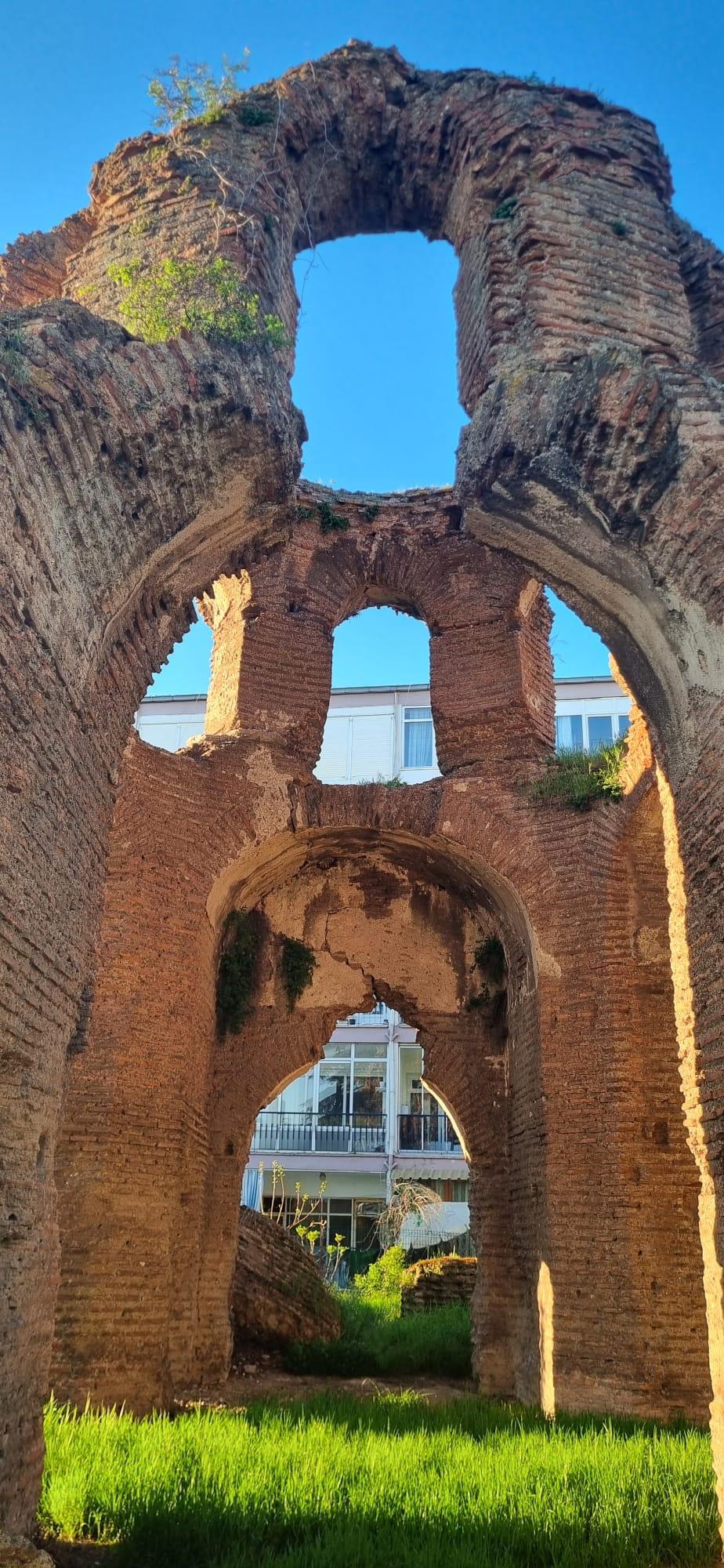
Kara Kilise (Photo: S. Bora Yıldırım)
Why hadn’t they demolished it? Wasn’t this ruin dangerous? What purpose could such an ambiguous structure possibly serve, right in the middle of the complex? I was still a child, and I had no answers to these questions. Neither I nor my mother could have guessed that the building was 1,300 years old.
Türkiye rests on lands rich in history, where ancient civilizations flourished, spread, took center stage on the historical stage, and then faded into obscurity. The United States of America is entering its 250th year this year. Imagine 250 years… for them, that is a monumental number. Go further back: Columbus discovered America in 1492. (I can hear you saying, “How can a continent already inhabited by millions be said to be discovered?” You are right. Let us frame it from the colonial perspective of the West.) That event occurred 534 years ago. We Turks officially arrived in Anatolia in 1071. We had been present here before, but this is the date we claim as our formal entry, through conquest and military occupation. Yet here, in the garden of a holiday complex in Çiftlikköy, Yalova, stands this structure—exactly 1,300 years old. That means it was built more than 300 years before we arrived.
The building’s known name is Kara Kilise. That is what the locals call it, though no one knows why. Perhaps it is the only standing structure remaining from that era, but it is known that there were once many more. Evidence lies along the stretch toward the sea: ruins of buildings and walls. There was likely a pier as well. Those who witnessed the site’s construction reported seeing skeletons during foundation excavations. Thus, beside the church stood a cemetery. Where there is a cemetery, there must have been inhabited areas. Moreover, a church standing alone makes little sense. When you turn your back to the church and face the sea, you can still see traces of another structure on the left. Wall fragments lie exposed among the trees. These remains clearly emerged during a recent excavation and halted construction.
I saw all these ruins much later. After some research, I realized that this region once held an ancient city: Pylai. Very little remains of Pylai today. Pylai, meaning “gateway,” was once an important port city. Ships loaded with provisions likely departed from here for Istanbul. It was a crucial transit point between Nicaea and Istanbul. It is highly probable that everyone traveling from Istanbul toward Bursa used this harbor. When the Byzantines lost Çiftlikköy, this port likely lost its significance. What followed is well known…
The 1,300-year-old structure in Çiftlikköy still stands in place. Legally, the area has been declared a protected site and is under conservation. A fence has been erected around it, and now it is left to its fate within those boundaries. Those who wish to see it can enter through the gate of the Başkent-1 seaside complex and walk up to it. You can examine the structure from its surroundings. If your path ever leads you here, make sure to visit. An American who has never seen a structure a thousand years old may not understand, but as someone from this land shaped and marked by thousands of years of history, you can feel the lived experience embedded here.
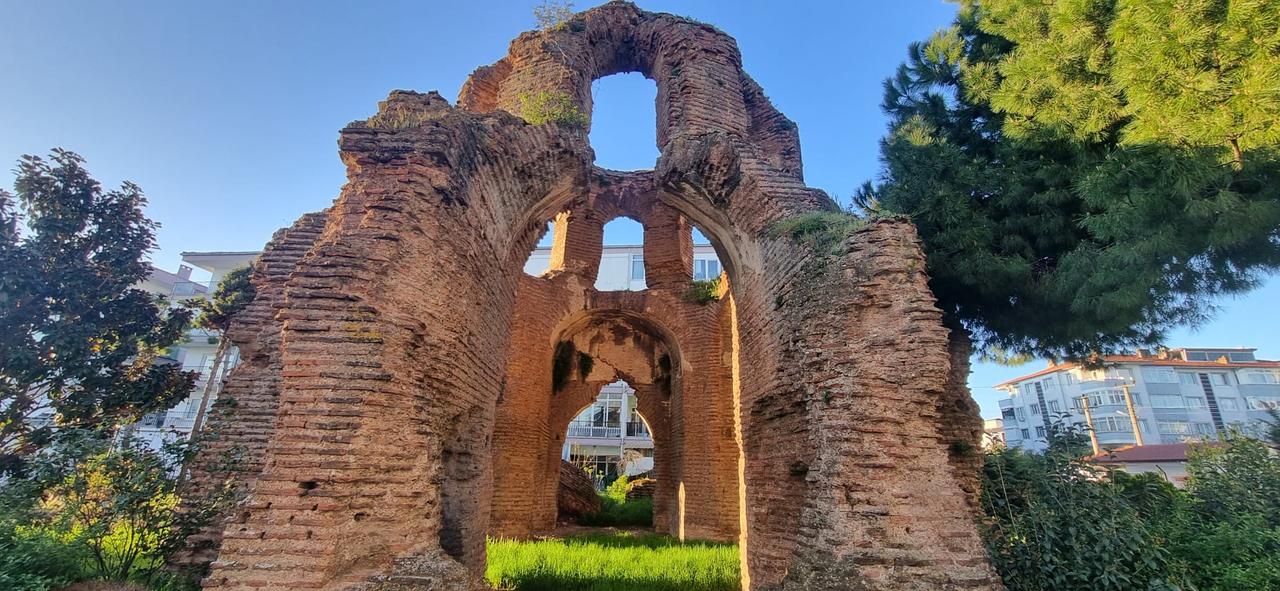
Kara Kilise (Photo: S. Bora Yıldırım)
Although memories from my childhood remain vivid in my mind, life continues. My aunt has passed away, the pier is gone, and now a walking path runs between the shore and the complex. Almost no one enters the sea anymore; Çiftlikköy is no longer a holiday town, and the gardens have disappeared. The area has become a residential zone filled with luxury apartments.
Pylai has vanished, Çiftlikköy has transformed and changed, yet people continue to live, be born, grow up, and accumulate memories on this land. And no matter what happens, civilization will continue to take root and develop here. How do I know? The proof is right there—in the garden of the Başkent-1 complex.
Kılıç, Şahin, and Raif Kaplanoğlu. "Osmanlı Kuruluş Devrinde; Doğu Marmara Kıyılarında Türk İskânı." *Çanakkale Araştırmaları Türk Yıllığı* 14, no. 21 (2016): 27–45. Accessed May 6, 2026. https://dergipark.org.tr/en/download/article-file/713679
T.C.Çiftlikköy Kaymakamlığı Governorship. "Çiftlikköy Tarihi." *ciftlikkoy.gov.tr.* Accessed May 6, 2026. https://ciftlikkoy.gov.tr/tarihi