This article was automatically translated from the original Turkish version.
Origin(s) | Central Asian Turkic Culture | ||||||||
|---|---|---|---|---|---|---|---|---|---|
Economic Basis | Animal Husbandry | ||||||||
Cultural Elements | Yörük Tents Traditional Clothing Alpine Festival | ||||||||
Migration Time | Spring-Summer (alpine pasture) Autumn-Winter (winter quarters) | ||||||||
Regions Where It Is Prevalent | Central Asia Türkiye | ||||||||
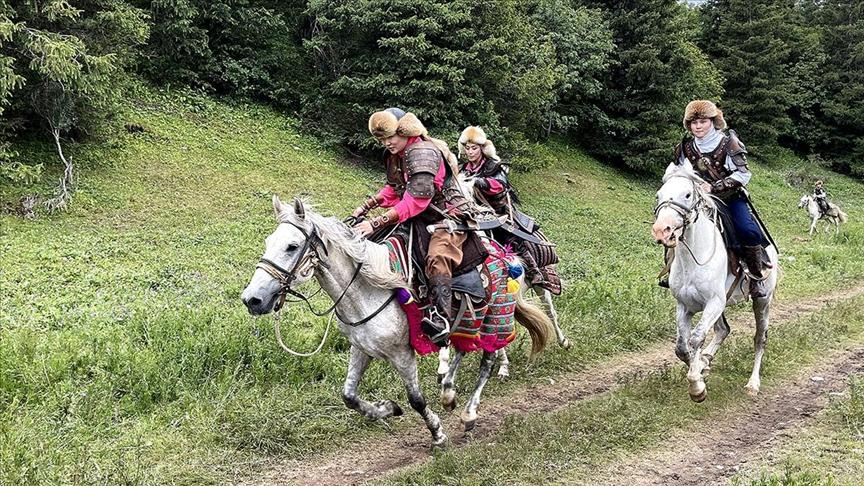
Highland Culture is a traditional way of life shaped by geographical conditions, centered on pastoral activities and based on seasonal migration between highland pastures (yayla) and winter quarters (kışlak). Recognized as a living subculture of Anatolian nomadic tradition, this phenomenon is deeply interwoven with the economic, social, and cultural fabric of society.
In the Anatolian landscape, highland pastoralism represents one of the most significant living subcultural traditions of nomadic culture. The concept of nomadism does not refer to aimless or directionless movement but rather to a highly structured system of seasonal migration with clearly defined routes, rules, and stopping points. Nomadic communities, organized around an economy based on animal husbandry, have persisted for centuries in various forms classified as semi-nomadic or fully nomadic.
The communities known as Turkmens in Eastern Anatolia and Yörüks in Western and Southern Anatolia have been the primary carriers and sustainers of this nomadic lifestyle. Their primary dwellings were portable structures adapted to natural conditions, such as black tents (karaçadır), alayçık, derim houses, or felt houses (ak ev).
The architecture of shelter was entirely designed around mobility and adaptation to nature. This subculture also developed its own rich culinary tradition. The diet emphasized meat, preserved for long periods through roasting and drying, with dairy products—cheese, çökelek, and butter—serving as staple foods. This nutritional system is a concrete manifestation of adaptation to the harsh conditions of highland life.
The origins of nomadism and highland pastoralism extend back to the earliest periods of human history, as confirmed by contemporary archaeological findings. Data from Eastern Anatolian archaeology indicate that nomadic and highland pastoralist cultures existed in this region even before the Common Era.
From antiquity to the present, social stratification and hierarchy have been far less pronounced in this culture compared to settled societies. A more egalitarian social system emerged, based primarily on kinship ties rather than formal institutions. Constant spatial mobility physically prevented the accumulation of large, permanent wealth; instead, social status was pragmatically determined by the number of animals owned by a group.
By the very nature of nomadism, the absence of permanent cemeteries and the performance of religious rituals within nature, without reliance on fixed or enclosed sacred spaces, are among the most characteristic features of this era and its way of life.
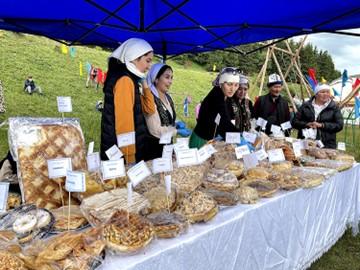
Kırgız Yaylası (AA)
The highland pastures (yaylak) and winter quarters (kışlak), which form the foundational elements of traditional highland pastoralism, serve as the two primary destinations in a cyclical migration pattern. Winter quarters are low-lying, sheltered settlements located within wooded or protected valleys, designed to safeguard livestock from harsh climatic conditions, severe frosts, and destructive winds. In contrast, highland pastures are expansive, cool areas typically situated around lakes or river sources, chosen to escape the scorching summer heat and diseases, and above all, to access lush, productive grazing lands.
The careful selection of highland pastures is directly linked not only to the needs of animal production but also to the imperative of protecting both people and livestock from harmful insects and heat stress. This dual, seasonal system inherited from ancient nomadic cultures of Central Asia gradually evolved into an integrated structure alongside semi-nomadic or settled lifestyles. Especially in past centuries, many winter quarters originally established temporarily for pastoral purposes grew over time into permanent villages, towns, and even cities, while highland pastures retained their original function for longer periods.
The phenomenon of migration and highland life, as the most fundamental and prominent element of traditional existence, profoundly influenced the inner world, collective memory, and aesthetic sensibility of local populations, directly shaping regional literary expressions. In folk literature and oral traditions, the abundance and joy brought by highland life are balanced by the hardships, separations, and melancholy generated by the journey itself.
Âşık tales, an indispensable aesthetic expression of Turkish folk culture, serve as important literary mirrors reflecting the socio-cultural realities of the regions where they are performed. In the Âşık tales of the Çukurova region, passed down through generations, the motifs of highland pastures and migration are frequently employed. Particularly in the tales narrated by Âşık Feymânî, highland culture is not merely a simple spatial description but functions as a structural framework that conveys the spiritual essence of the heroes, the seasonal migration patterns of the local people, and the organic relationship between humans and nature. The arduous highland migrations of the Yörüks and Turkmen clans form the essential backdrop for the blossoming of love, friendship, reunions, and separations in these tales.
Folk songs sung across diverse topographies of Anatolia, particularly in Malatya and its surroundings, are musical expressions rich with emotion, reflecting the experience of migration and highland life. The hardships of migration—struggles against unpredictable natural conditions and poverty—have directly permeated highland folk songs, especially laments. In regional songs, the collective enthusiasm and hope felt when departing from winter quarters for the highlands in spring are matched by the profound sorrow evoked by abandoned,无人问津, desolate, and “ruined highlands.”
Traditional practices performed by caravans during migration have also seeped into literature. Local cultural elements, such as the custom of harvesting “çavşır otu,” a herb believed to possess healing properties and highly valued in the region, have been embedded within the verses of these songs, ensuring the preservation and transmission of intangible cultural heritage.
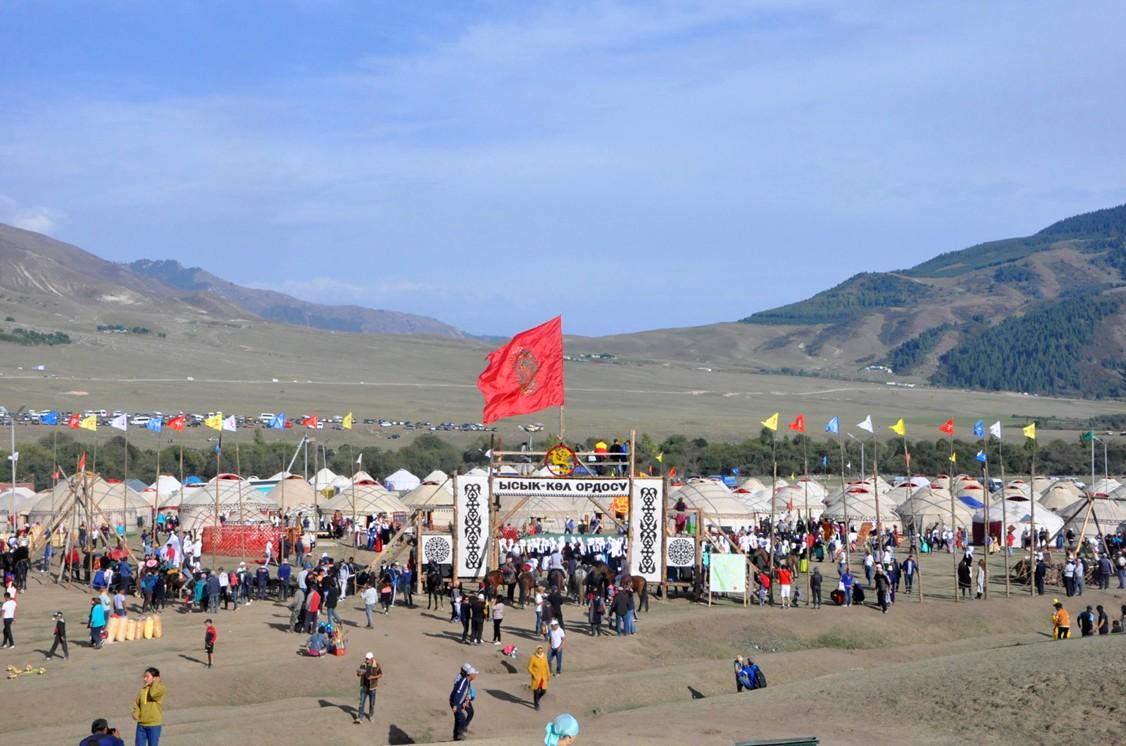
III. World Nomad Games (AA)
Historical economic revolutions, social disruptions, and technological advancements have profoundly affected traditional highland culture and laid the groundwork for fundamental structural transformations. Although in many regions, especially the Black Sea region, a unique highland culture emerged from the synthesis of nomadic traditions brought from Central Asia centuries ago with the region’s extremely steep and challenging physical geography, this original culture is now rapidly transforming.
The declining appeal of traditional small and large livestock farming, combined with intense migration waves from rural to urban areas, have altered the socio-economic function of highland pastures. Once vital centers of economic production and daily life, highlands are increasingly becoming sites of consumption, leisure, festivals, and summer retreats.
The months-long foot migrations, once driven solely by the need to graze animals and confront nature, are being replaced by brief journeys undertaken by motor vehicles. Traditional black tents and alayçık dwellings are gradually being replaced by concrete or modern wooden structures. Despite all these transformations, highland culture continues to strive to preserve its identity and function as a powerful subcultural tradition linked to the community’s ancient past, adapting into new forms.
Accessed November 26, 2025. https://www.aa.com.tr/tr/kultur/ahlatta-acilan-kurslarla-geleneksel-tas-isciligi-yasatiliyor/3116279.
Accessed November 26, 2025. https://www.aa.com.tr/tr/kultur/ahlatta-acilan-kurslarla-geleneksel-tas-isciligi-yasatiliyor/3116279.
Ataman, Hüseyin. "Değişen Yayla Kültürü ve Unutulmaya Yüz Tutmuş Yaylacılık". Çaykara Gazetesi. Accessed April 18, 2026.
Baysal, Adnan. "Doğu Anadolu Arkeolojisinde Göçebelik ve Yaylacılık Kültürü (M.Ö. II. Bin)". U.Ü. Sosyal Bilimler Dergisi (2012). Accessed April 18, 2026.
Burkay, Anıl Oğuz. "Âşık Feymânî’nin Anlattığı Çukurova Âşık Hikâyelerinde Yayla". Çukurova Araştırmaları (2019). Accessed April 18, 2026.
Gümüşçü, Osman. "Yaylak ve Kışlak". TDV İslâm Ansiklopedisi, 2019. Accessed April 18, 2026.
Karcı, Hüsnü. "Yayla Kültürü ve Geleneği". Tirşik Dergisi (2020). April 18, 2026.
Kurt, Begüm. "Malatya Yöresi Türkülerinde Geleneksel Göç Olgusunun Yansımaları: Yayla Türküleri". MİKAD (2020). April 18, 2026.
Kutlu, M. Muhtar. "Yaşayan Bir Alt-Kültür Geleneği: Anadolu Göçer Kültürü". IV. Milletlerarası Türk Halk Kültürü Kongresi Bildirileri içinde, 1992. April 18, 2026.
https://cukar.org/?mod=tammetin&makaleadi=&makaleurl=745665114_138-149-anıl-oğuz-berkay-02.12.-2019%20(1).pdf&key=43131
https://dergipark.org.tr/tr/pub/sosbilder/article/246446
https://ekitap.ktb.gov.tr/Eklenti/13814,63pdf.pdf?0&_tag1=87A19204F7FC58A079184631E3341218FA8E9AFA&crefer=7DB33580DB09DDC5EDF1CD1BFF7F8E7A0E35EAF50DF5B4820C7BD342939BDEBE
https://www.academia.edu/113170583/Prof_Dr_Muhtar_Kutlu_Hayati_Ve_Eserleri_
https://www.caykaragazetesi.com/caykara-haberleri/degisen-yayla-kulturu-ve-unutulmaya-yuz-tutmus-yaylacilik-75082/


Origin(s) | Central Asian Turkic Culture | ||||||||
|---|---|---|---|---|---|---|---|---|---|
Economic Basis | Animal Husbandry | ||||||||
Cultural Elements | Yörük Tents Traditional Clothing Alpine Festival | ||||||||
Migration Time | Spring-Summer (alpine pasture) Autumn-Winter (winter quarters) | ||||||||
Regions Where It Is Prevalent | Central Asia Türkiye | ||||||||
Nomadic Lifestyle, Highland Culture and Highland Pastoralism in Anatolia
Archaeological and Historical Origins
Highland and Winter Quarters System
Reflections in Oral Culture and Literature
Âşık Tales
Highland Folk Songs and Laments
Evolving Highland Culture and Its Transformation Today