


This article was automatically translated from the original Turkish version.
+2 More
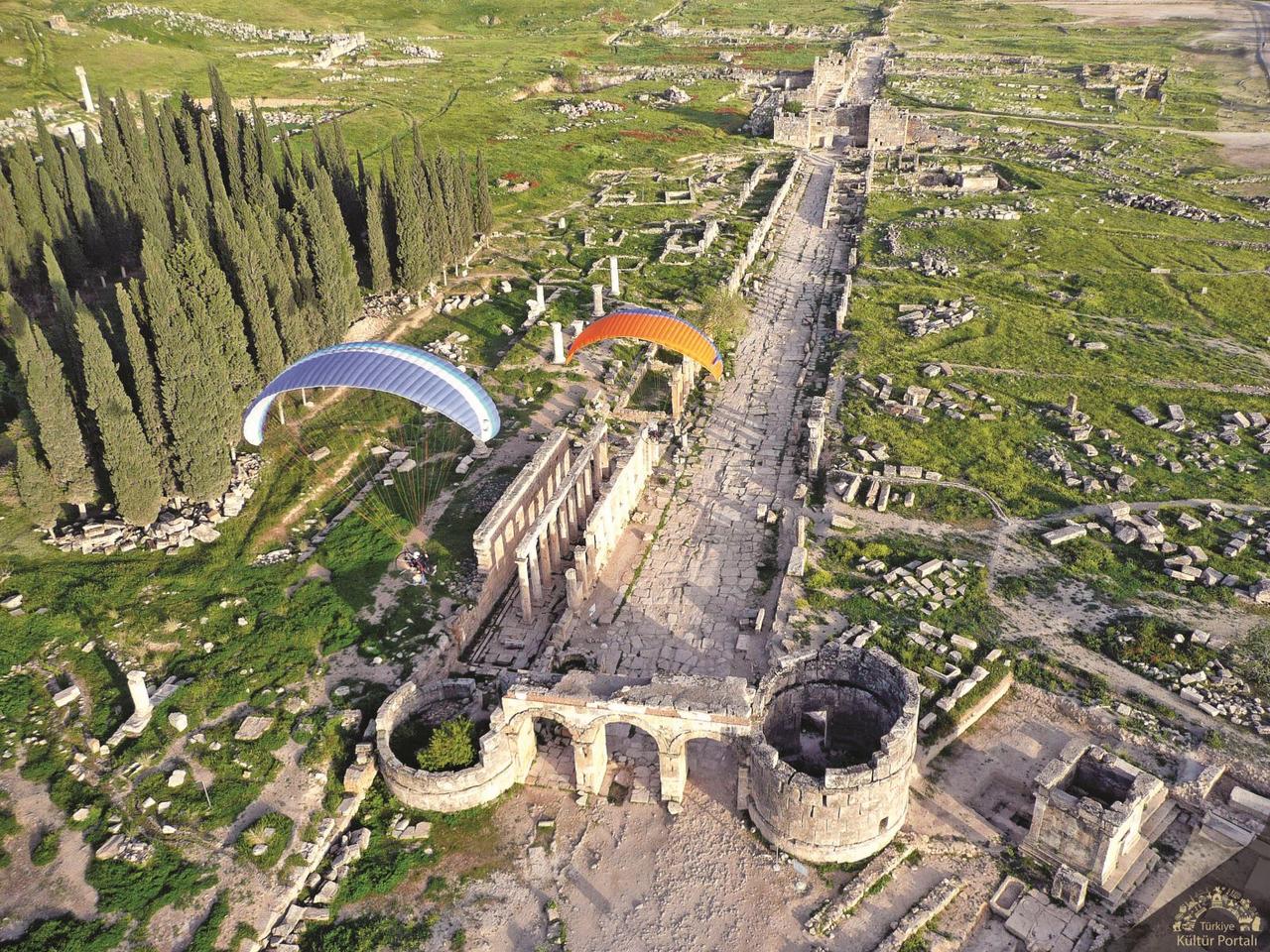
Hierapolis Ancient City
Location | Pamukkale Denizli Türkiye | ||||||||
|---|---|---|---|---|---|---|---|---|---|
Name in Ancient Literature | Hierapolis (Holy City) | ||||||||
Foundation | early 2nd century BCE (by King Eumenes II of Pergamon) | ||||||||
UNESCO Status | on the UNESCO World Heritage List since 1988 | ||||||||
Religious Significance | sacred city during both pagan and Christian periods | ||||||||
Prominent Structure | Ancient Theatre Temple of Apollo Plutonium Great Bath (Museum) Martyrium of Saint Philip | ||||||||
Hierapolis is a historic city located within the boundaries of Denizli, Türkiye, renowned for its archaeological and cultural heritage dating back to the Roman and Byzantine periods. This ancient city holds significant religious importance, particularly as the site of the tomb of Saint Philip, a Christian martyr. Hierapolis attracts attention not only through its ancient structures uncovered by archaeological excavations but also through its religious beliefs and practices. The white travertines of Pamukkale and its healing thermal waters, combined with the ruins of the ancient city and its surroundings, have been inscribed on the UNESCO World Heritage List for Cultural and Natural Heritage.
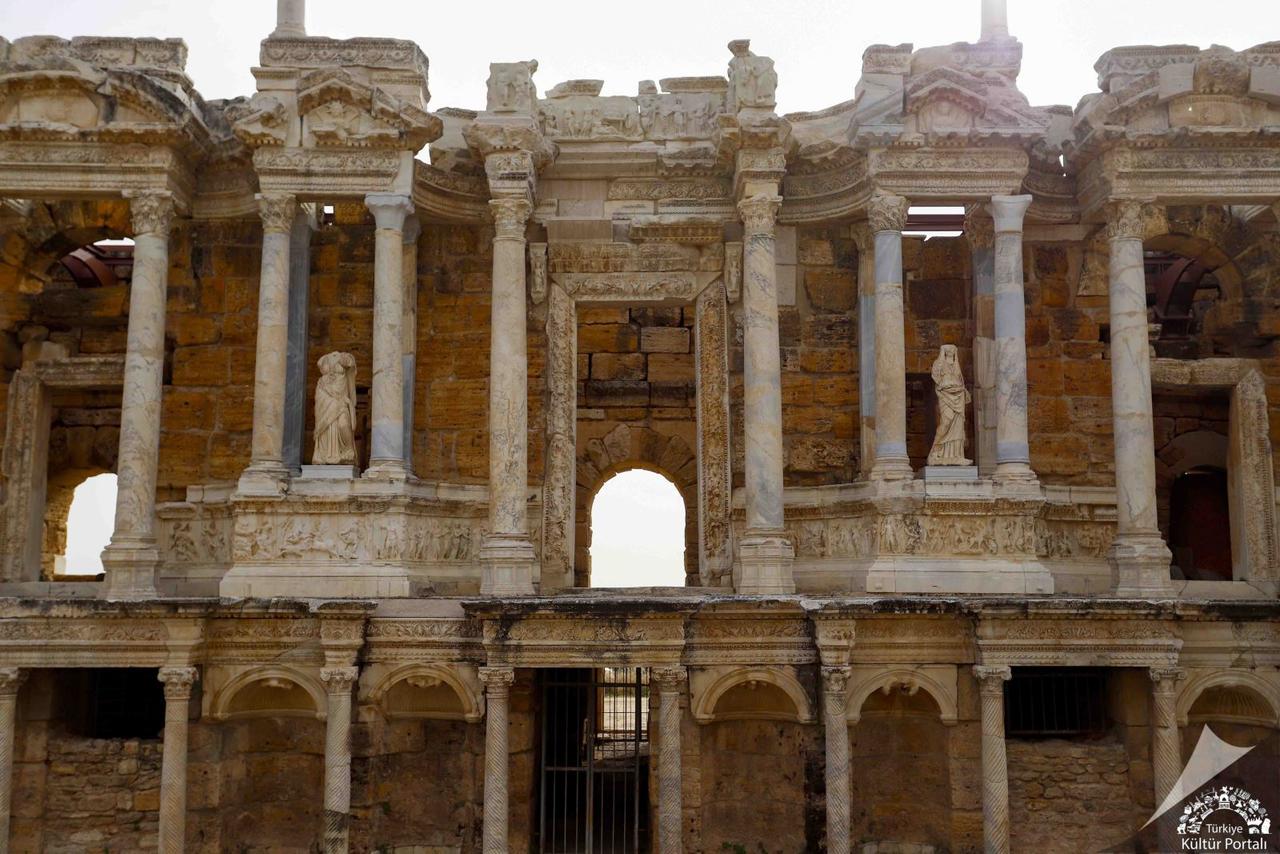
Hierapolis Antik Kenti (
Pamukkale draws attention with its history extending back to the Roman period. In antiquity, the founders of Hierapolis were under the Kingdom of Pergamon, and the city established around the thermal springs gradually became an important health center. During the Roman period, it gained great popularity as a thermal health resort and hosted various civilizations for thousands of years. Today, these water sources are known for their healing properties and are visited by both local and international tourists.
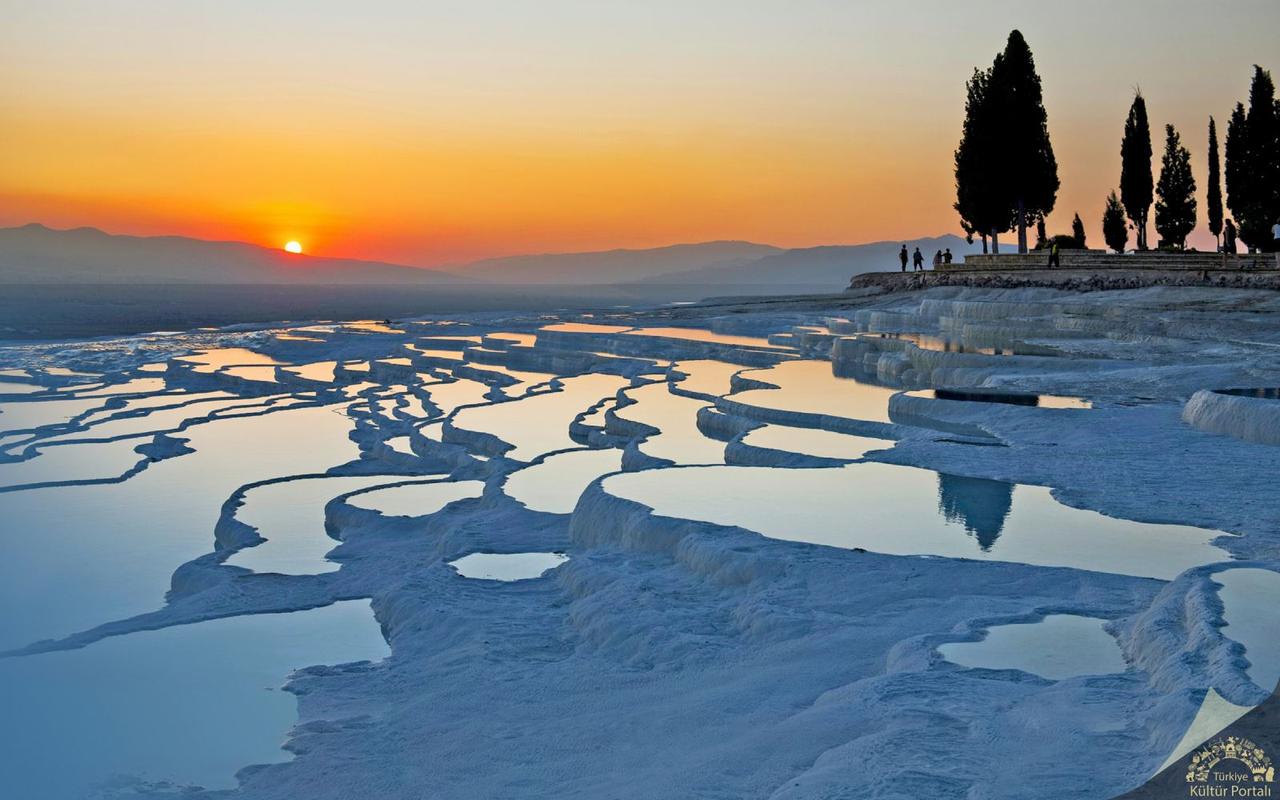
Pamukkale (Kültür Portalı)
The Ancient City of Hierapolis, situated immediately beside Pamukkale, features magnificent ruins that have survived to the present day. The majority of the ancient city dates to the Roman period, and the structures from this era are exceptionally well preserved. Among these remains are the ruins of the Roman Bath with its healing thermal water, the Ancient Theatre, temples, tombs, and the agora. The Roman-era structures provide significant insights into the luxury and sophistication of urban life in the city.
The natural beauty of Pamukkale and the historical remains of Hierapolis combine to give visitors a sense of traveling through time. Among the ruins of Hierapolis are the Roman Bath, the Ancient Theatre, the Ploutonium (Gate of Hell), and temples.
Hierapolis is not only significant for its Roman-era traces but also holds major importance in Christian history. The martyrdom and burial of Saint Philip, one of the twelve apostles of Jesus, transformed the city into a sacred site. With the official adoption of Christianity as the state religion in the 4th century AD, Hierapolis became a major center for Christians. This sanctity was reinforced by numerous churches and martyria built in honor of Saint Philip. The Martyrium, where Saint Philip’s tomb is located, remains an important pilgrimage destination in Christian tradition.
A large structure from the Roman period, built during the reign of Emperor Septimius Severus. The ancient theatre provides important information about the social life and cultural activities of the city.
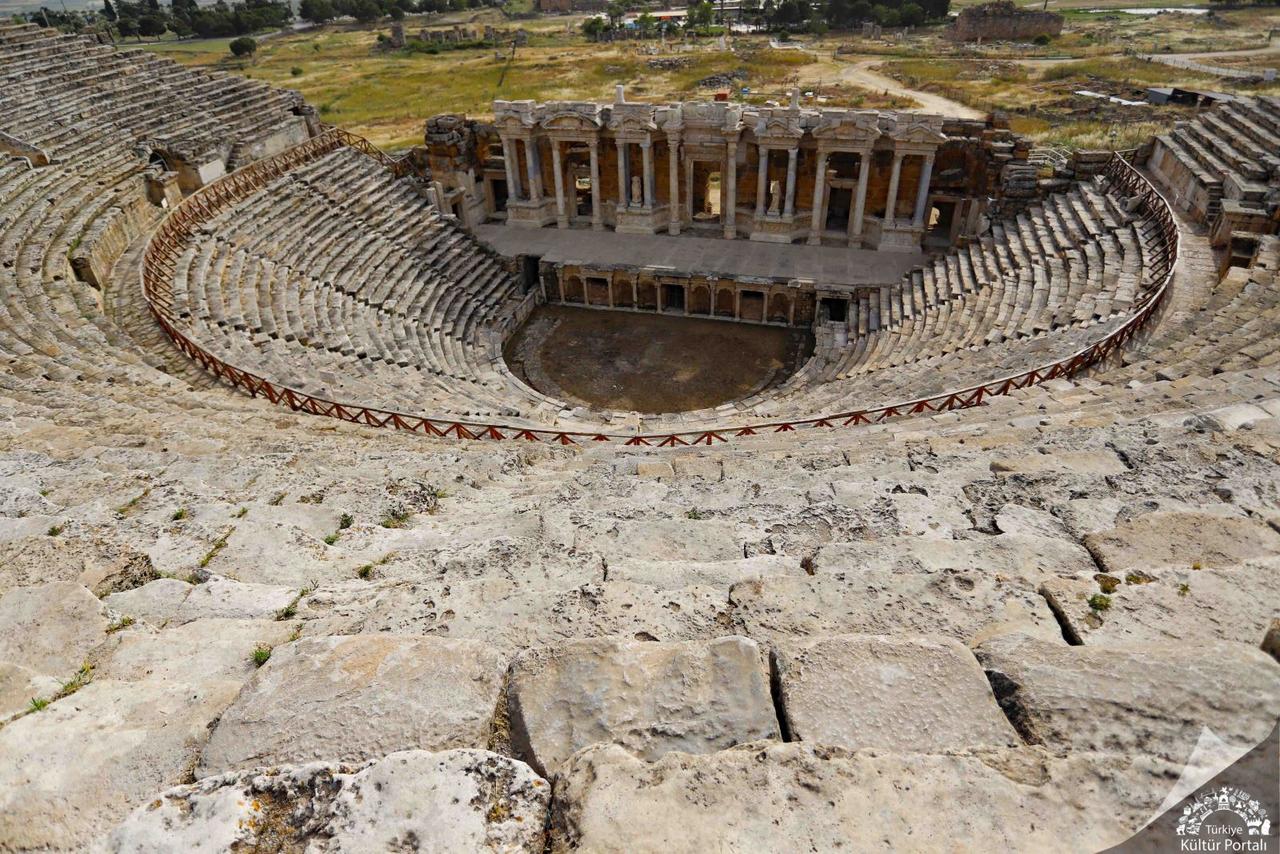
Hierapolis Tiyatrosu (
One of the most important structures in Hierapolis, the Great Bath was constructed according to the standard Roman bath plan. It is among the most significant public spaces reflecting the social life of the period. The vaulted ceilings and hot water pools demonstrate the grandeur of the building, while the marble slabs on the floor and the frescoes on the walls reveal the artistic and engineering knowledge of the Roman era. The bath held an important role in rituals and health services.
Located at the northern entrance of Hierapolis, the Domitian Gate is dedicated to the Roman Emperor Domitian. Dating to 82–83 AD, this structure served as a key point for regulating entry and exit to the city. The Latin and Greek inscriptions on the gate reflect the atmosphere of the period. This monumental entrance also reveals the architectural style and cultural interactions of the time.
This area, the commercial center of the city, was uncovered during Roman-era excavations.
The gates of the Byzantine-era defensive walls are located within the city’s surrounding fortifications.
This temple, one of the largest monumental structures in Hierapolis, is dedicated to Apollo.
According to Roman-era popular beliefs, this area was thought to be the entrance to the underworld. A temple was located here.
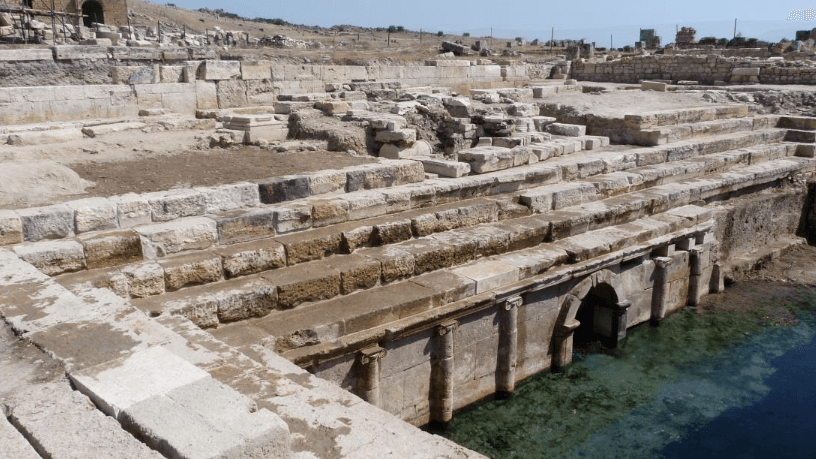
Ploutonium (
The cathedral in the Ancient City of Hierapolis is among the most important places of worship from the Christian period. The main entrance of the building opens onto the city’s main street, the plateia, and contains a narthex (entrance hall) and an atrium (courtyard). Entering through a door on the right leads to the baptistery. This structure is quadrangular in plan with an apse (semicircular sanctuary). The interior is divided into three naves by columns.
In the apse, a baptismal font is located. This font is decorated with marble panels and has staircases on both sides. The upper section designated for women is separated by a cornice supported by a second row of columns. The interior of the apse is circular while its exterior is polygonal. Within the main apse is the synthronon, a stepped seating arrangement where priests and the bishop sat during liturgical services. The architectural features and renovations of the building indicate that it dates to the first half of the 6th century AD, during the Byzantine period.
Hierapolis holds a special place in Christian history because it is believed to be the burial site of Saint Philip’s tomb. Saint Philip, one of the twelve apostles of Jesus, was martyred in Hierapolis in the 1st century AD. Excavations in the city have confirmed that this tomb indeed belongs to Saint Philip and that the site was used as an important pilgrimage center.
The tomb of Saint Philip is constructed from travertine blocks and consists of a burial chamber measuring 3.50 meters in length and 4 meters in width. On three sides of the tomb are stone beds for the deceased. On the right side of the central nave, two individual-use pools and two additional pools covered with marble slabs are found. These pools date to the 4th–5th centuries and are believed to have been used for healing purposes, as in other Byzantine sacred sites in the region.
The tomb is surrounded by a church and other religious structures. This church was built with three naves, and a platform was constructed above the tomb. At the rear of the church is the altar and a synthronon (semicircular liturgical bench) for the clergy. This arrangement was designed in accordance with Christian liturgical practices.
According to Christian sources, after Saint Philip’s martyrdom, he was buried here. His tomb was visited by numerous pilgrims who came to this sacred site seeking healing and divine intercession, hoping to cure their illnesses and receive prophetic insights about the future.
Another important structure in the sacred areas of Hierapolis is the holy spring or sacred fountain. This fountain was used by pilgrims for purification rituals. Built in a columnar form, the opening through which water flows is adorned with a marble block shaped like a seashell. The holy spring served as a place for ritual ablutions. Water was brought to the site via an aqueduct from a plateau in the northeast.
Built in the early 5th century, the Octagonal Church was constructed to accommodate pilgrims visiting the important pilgrimage site following the martyrdom of Saint Philip. The church consists of a central octagonal space with eight surrounding rectangular structures, each opening into the central area through three arches. The wooden dome covering the structure is one of its architectural features. This design alludes to the number eight, symbolizing eternity. Additionally, as in other Byzantine healing sanctuaries, incubation rituals were performed here. During these rites, pilgrims slept in the hope of receiving healing and prophetic visions.
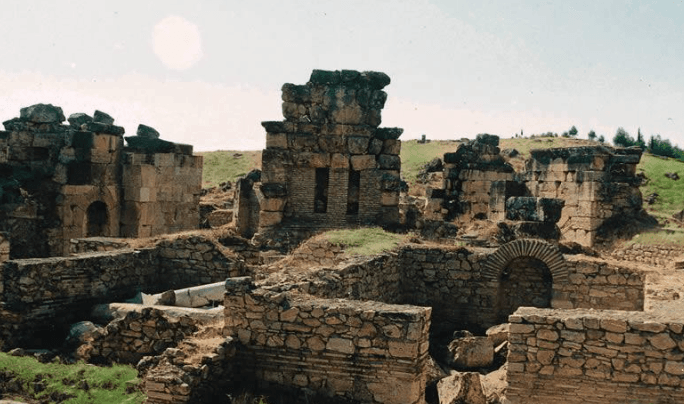
Martyrion (
The life and martyrdom of Saint Philip have been frequently depicted in Byzantine and medieval art. The earliest representations of Saint Philip are found on round panels on the altar of Hagia Sophia in Constantinople. Additionally, frescoes in the Basilica of Saint Anthony in Padua from the 13th century provide detailed narratives of his life and martyrdom. In the 14th century, frescoes by the renowned painter Filippino Lippi in the Church of Santa Maria Novella in Florence depict scenes from his life and death.
Spanish painter Jusepe de Ribera, in his 1639 painting, realistically portrays the moment of Saint Philip’s crucifixion. This artwork helps us understand the artistic perspective of the era and the significance of Saint Philip’s martyrdom.
Archaeological excavations in Hierapolis have revealed the architectural characteristics of the city’s religious structures. After the major earthquake of the 7th century, many buildings in Hierapolis were destroyed. However, the walls uncovered in these excavations, constructed from marble and travertine blocks, were rebuilt using fragments from earlier Byzantine structures. The wide walls (approximately one meter thick) and marble cladding provide important information about the construction techniques of the period.
The sacred areas of Hierapolis were places where pilgrims could perform religious rituals and seek healing. The Sacred Area Fountain, known as the Ayazma, was a sacred space where pilgrims carried out ritual cleansing to achieve spiritual purification.
T.C. Denizli Valiliği. "Hierapolis." Accessed May 2, 2025.http://www.denizli.gov.tr/hierapolis
T.C. Kültür ve Turizm Bakanlığı. "Pamukkale-Hierapolis Antik Kenti." Kültür Portalı. Accessed May 2, 2025.https://www.kulturportali.gov.tr/turkiye/denizli/gezilecekyer/pamukkale-hierapolis-antik-kenti
T.C.Denizli İl Directorate of Culture and Tourism. "Pamukkale-Hierapolis." Accessed May 2, 2025.https://denizli.ktb.gov.tr/TR-211745/pamukkale-hierapolis.html

Hierapolis Ancient City
Location | Pamukkale Denizli Türkiye | ||||||||
|---|---|---|---|---|---|---|---|---|---|
Name in Ancient Literature | Hierapolis (Holy City) | ||||||||
Foundation | early 2nd century BCE (by King Eumenes II of Pergamon) | ||||||||
UNESCO Status | on the UNESCO World Heritage List since 1988 | ||||||||
Religious Significance | sacred city during both pagan and Christian periods | ||||||||
Prominent Structure | Ancient Theatre Temple of Apollo Plutonium Great Bath (Museum) Martyrium of Saint Philip | ||||||||
No Discussion Added Yet
Start discussion for "Hierapolis Ancient City" article
The Discovery and History of Pamukkale
Remains of the Ancient City of Hierapolis
The Sacred Significance of Hierapolis in Christianity
Important Structures and Sacred Areas of Hierapolis
Hierapolis Theatre
Great Bath (Roman Bath)
Domitian Gate (Frontinus Gate)
Agora
North and South Byzantine Gates
Temple of Apollo and Fountain of Triton
Ploutonium (Gate of Hell)
Cathedral
The Tomb and Sacred Area of Saint Philip
Structure of the Tomb
Martyrdom and Legends Associated with Saint Philip’s Tomb
Sacred Areas and Places of Worship
Holy Spring and Sacred Area Fountain
Octagonal Church (Martyrium)
The Image of Saint Philip and His Place in Art
Architectural Features and Excavations of the Structures