


This article was automatically translated from the original Turkish version.
+2 More
Hasan Paşa Han is a two-story caravanserai located on Gazi Street, opposite the eastern entrance of Ulu Camii, in Diyarbakır’s historic commercial center. Inscriptions on the building indicate that construction began between 1572 and 1575 under the direction of Vezirzade Hasan Paşa, then governor of Diyarbakır and son of Sokollu Mehmet Paşa. However, due to Hasan Paşa’s transfer to another post, the construction was not completed and was finished during the governorship of his successor, Özdemiroğlu Osman Paşa. Inscriptions at three points on the structure—the east, south, and main entrance—provide information on who commissioned the building and when it was constructed.
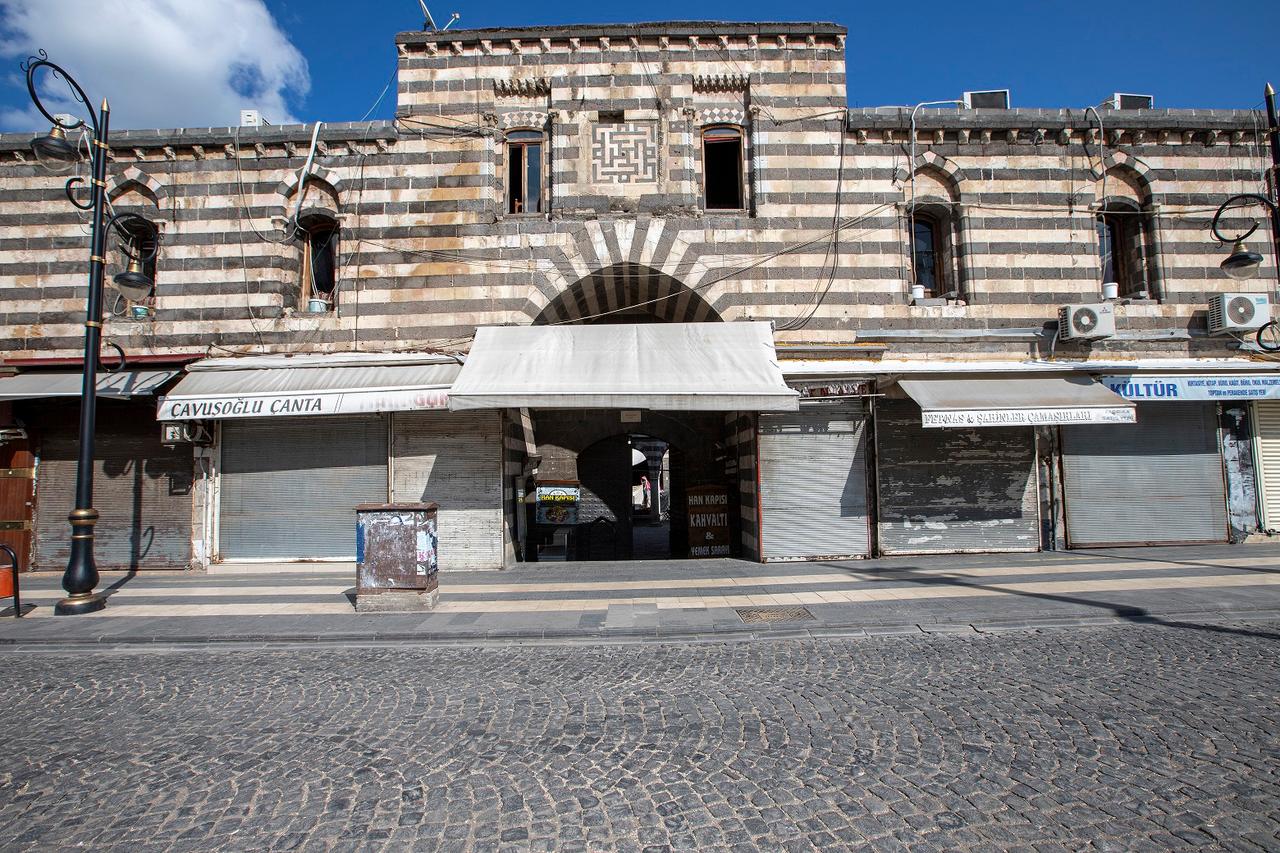
Hasan Paşa Hanı (Diyarbakır Valiliği)
Hasan Paşa Han has stood for centuries as one of Diyarbakır’s most important historical structures. In 1612, the Polish traveler Simeon mentioned in his travelogue that the caravanserai contained “a large number of rooms and two underground stables capable of housing five hundred horses.” The 17th-century Ottoman traveler Evliya Çelebi described it as “a structure as solid and robust as a fortress.” In the first half of the 19th century, the English traveler Buckingham noted in his 1815 records that grain markets were held within the han, confirming its continued commercial significance at the time.
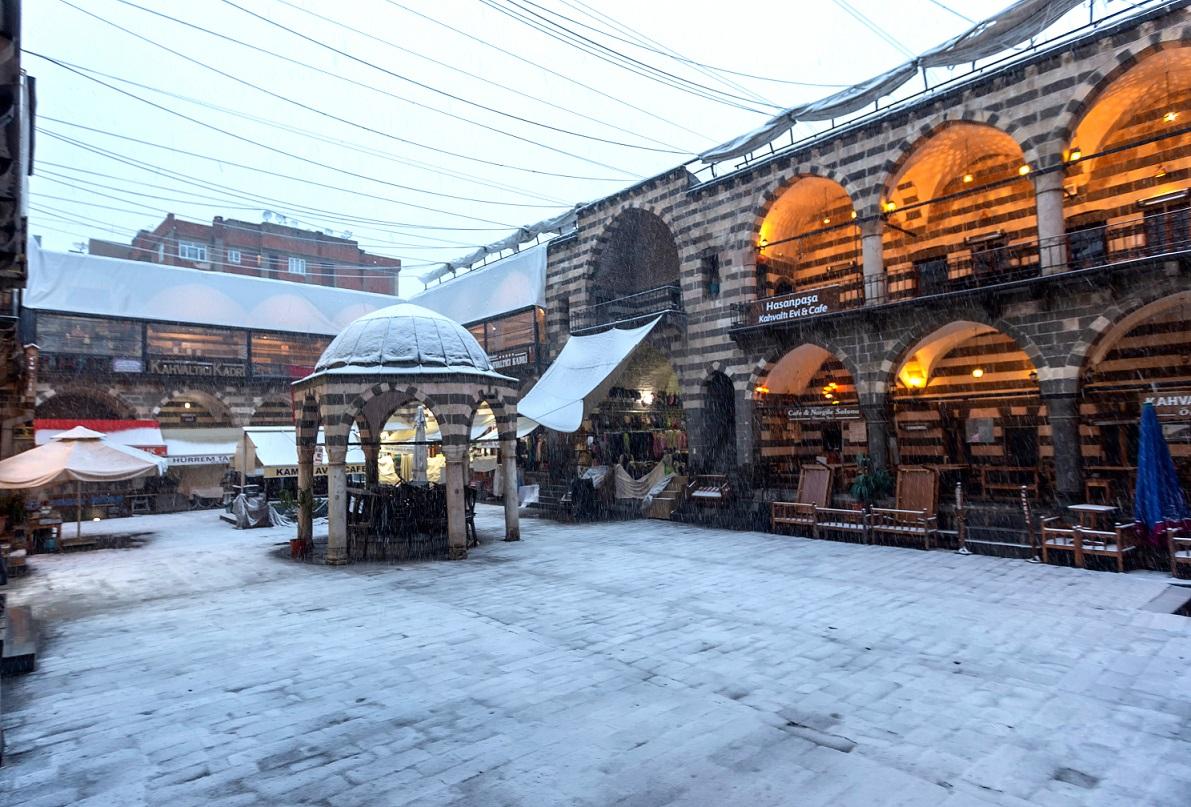
Hasan Paşa Hanı (Diyarbakır Valiliği)
Rectangular in plan, Hasan Paşa Han consists of three levels: a basement, an open courtyard, and an upper floor. The courtyard is also rectangular and occupies a spacious area. At its center stands a simple, unadorned fountain of the baldachin type, supported by six columns and arched vaults, and covered by a dome. This fountain adds a subtle yet elegant element of movement to the courtyard. Staircases leading to the upper floor are located to the right and left of the western and eastern eyvans opening onto the courtyard. The upper floors feature arcades, behind which rooms are arranged. The basement contains stables for the caravans’ animals; doors on either side of the vaulted entrance accessed by stairs provide access to these stables.
The façades of the han use black and white stones laid in horizontal courses, emphasizing the building’s rectangular form and making it appear longer than it actually is. The façades terminate in a cornice resting on stone corbels. There is one entrance on each of the west, south, and east sides: the western entrance opens onto Gazi Street, while the others open into adjacent enclosed bazaars. Beneath the western façade are shops with barrel-vaulted ceilings. Hasan Paşa Han, the second largest caravanserai in Diyarbakır after Deliller Han, stands out for its courtyard layout and two-story architecture.
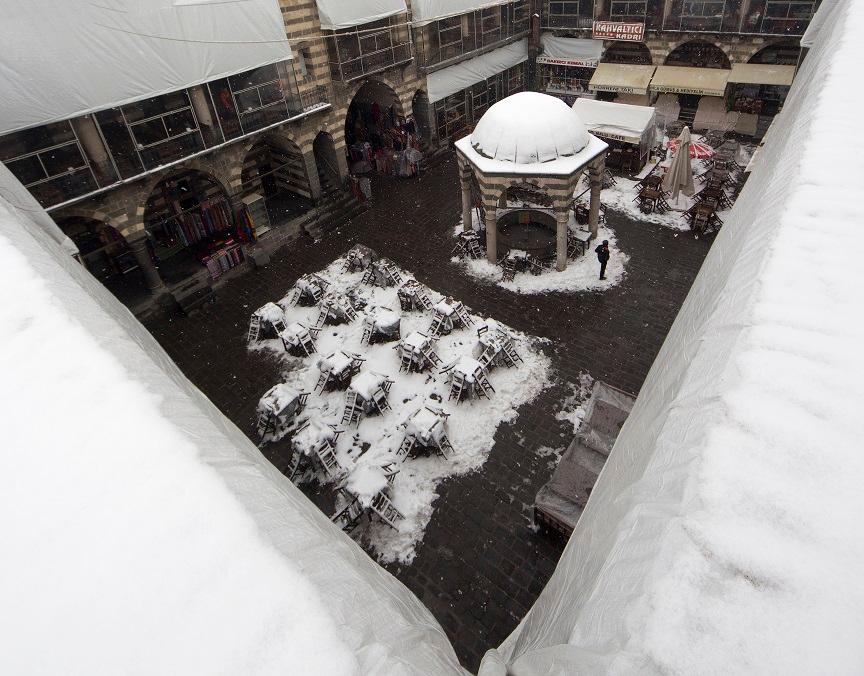
Hasan Paşa Hanı (Diyarbakır Valiliği)
Today, Hasan Paşa Han serves as a tourist destination and has been restored in recent years for public use. The shops and rooms on the ground floor operate as commercial and retail spaces, while the courtyard functions as a café and relaxation area. Part of the former stables, once used by camels and horses, have been converted into enclosed restaurants, while others now serve as bookstores. This transformation has enabled the han to meet modern needs while preserving its historical fabric.
Hasan Paşa Han has held an important place in Diyarbakır’s commercial and cultural life and continues to exist as a structure notable for its functional continuity from the past to the present and its architectural elegance.
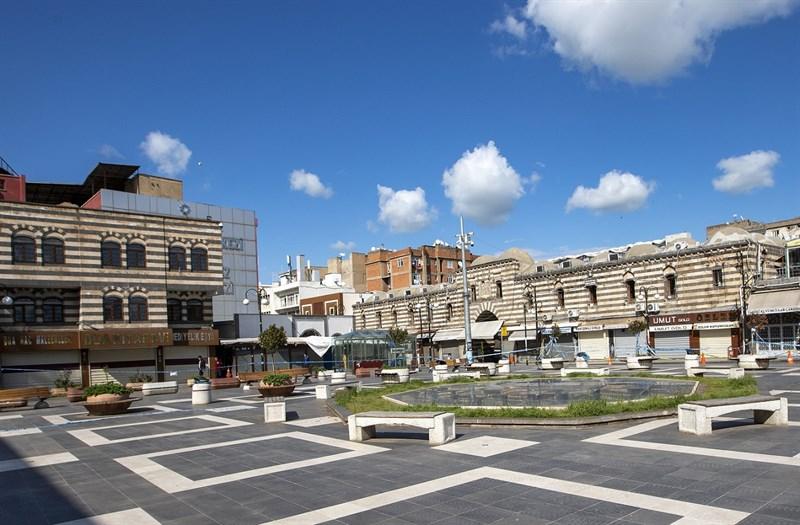
Hasan Paşa Hanı (Diyarbakır Valiliği)
Diyarbakır Kültür Turizm. "Hasan Paşa Hanı." Diyarbakır Kültür ve Turizm Portalı. Accessed April 1, 2025.https://diyarbakirkulturturizm.org/Yapit/Details/HANLAR/19/Hasan-Pasa-Hani/188
Diyarbakır Valiliği. "Hasan Paşa Hanı." Diyarbakır Valiliği Resmi Web Sitesi. Accessed April 1, 2025.http://diyarbakir.gov.tr/hasan-pasa-hani
Polat, Filiz. “Diyarbakır Hasan Paşa Hanı Üzerine Bir Değerlendirme.” *Uluslararası Sosyal Araştırmalar Dergisi* 11, no. 59 (2018): 203178. chrome-extension://efaidnbmnnnibpcajpcglclefindmkaj/https://dergipark.org.tr/tr/download/article-file/203178

History and Testimonies
Architectural Features
Current Condition