This article was automatically translated from the original Turkish version.
Type(s) | Traditional regional dessert | ||||||||
|---|---|---|---|---|---|---|---|---|---|
Region(s) | Kahramanmaraş and Kilis cuisine | ||||||||
Basic Ingredients | water starch Pekmez | ||||||||
Preparation Method | Pekmez, starch and water are mixed and cooked; then poured into a tray and left to rest | ||||||||
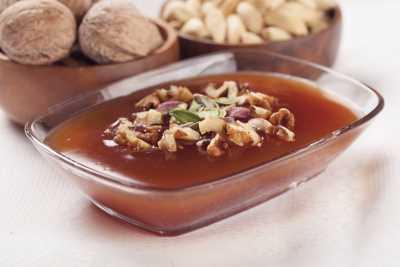
Hapısa is a traditional dessert prepared in the southern regions of Türkiye, particularly associated with Kahramanmaraş cuisine, and based on pekmez and starch.【1】 This dessert is made by boiling a mixture of pekmez, starch and water, and is known for its thick, dense consistency. The prepared mixture is typically poured onto a tray, allowed to rest, and then served; in some variations, walnuts are added on top. Hapısa is traditionally consumed during the winter months as part of local culinary customs.【2】
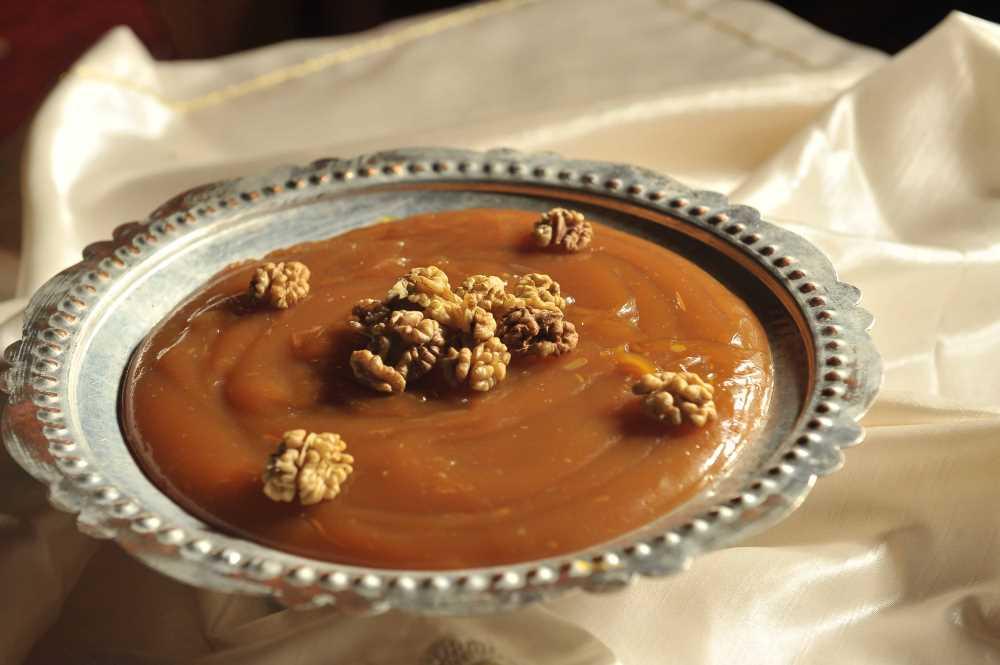
Hapısa (Culture Portal)
Hapısa is one of the traditional desserts prepared within the regional culinary culture of southern Türkiye. Its base of pekmez and starch places it among the characteristic sweets of the region’s cuisine. Within local food traditions, hapısa is recognized as a dessert prepared using traditional methods.
In Kahramanmaraş cuisine, hapısa is prepared and consumed during the winter months and is thus linked to seasonal eating habits. Moreover, hapısa is not limited to Kahramanmaraş alone but is also known in other local cuisines across southern Türkiye.
The existence of a variant known as “pekmezli hapısa” in Kilis cuisine demonstrates the dessert’s regional diversity.【3】 This highlights that hapısa is prepared in various forms across different local culinary traditions.
The ingredients used in preparing hapısa constitute the fundamental components of the dessert. When combined, these ingredients form a mixture that thickens during cooking to achieve its distinctive texture.
The main ingredients used in making hapısa are as follows:
The mixture, prepared in specific proportions, thickens during the cooking process to achieve a dense consistency.
Hapısa is prepared by mixing pekmez, starch and water in a pot. The mixture is continuously stirred during cooking to ensure homogeneity and proper thickening. Once cooked, the mixture is typically poured onto a tray, spread evenly, and left to rest for a specified period. After resting, it is served. In some preparations, walnuts are added on top as a garnish, representing one of the dessert’s variations in presentation.
Hürriyet. "Hapısa Tarifi." January 13, 2020. Accessed March 9, 2026. https://www.hurriyet.com.tr/lezizz/hapisa-tarifi-41418681
Maraş Manşet. "Kahramanmaraş'ta Kış Mevsiminin Vazgeçilmezi; Hapısa." November 20, 2024. Accessed March 9, 2026. https://www.marasmanset.com/kahramanmarasta-kis-mevsiminin-vazgecilmezi-hapisa
T.C. Ministry of Culture and Tourism. "Hapısa - Kahramanmaraş." Kültür Portalı. Accessed March 9, 2026. https://www.kulturportali.gov.tr/turkiye/kahramanmaras/neyenir/hapisa
T.C. Ministry of Culture and Tourism. "Pekmezli Hapısa - Kilis." Kültür Portalı. Accessed March 9, 2026. https://www.kulturportali.gov.tr/turkiye/kilis/neyenir/pekmezli-hapisa-1
[1]
T.C. Ministry of Culture and Tourism. "Hapısa - Kahramanmaraş." Culture Portal. Access date: 9 March 2026. https://www.kulturportali.gov.tr/turkiye/kahramanmaras/neyenir/hapisa
[2]
Maraş Manşet. "The Indispensable Winter Delicacy of Kahramanmaraş; Hapısa." 20 November 2024. Access date: 9 March 2026. https://www.marasmanset.com/kahramanmarasta-kis-mevsiminin-vazgecilmezi-hapisa
[3]
T.C. Ministry of Culture and Tourism. "Pekmezli Hapısa - Kilis." Culture Portal. Access date: 9 March 2026. https://www.kulturportali.gov.tr/turkiye/kilis/neyenir/pekmezli-hapisa-1

Type(s) | Traditional regional dessert | ||||||||
|---|---|---|---|---|---|---|---|---|---|
Region(s) | Kahramanmaraş and Kilis cuisine | ||||||||
Basic Ingredients | water starch Pekmez | ||||||||
Preparation Method | Pekmez, starch and water are mixed and cooked; then poured into a tray and left to rest | ||||||||
Historical and Cultural Context
Ingredients
Preparation and Presentation