


This article was automatically translated from the original Turkish version.
+1 More
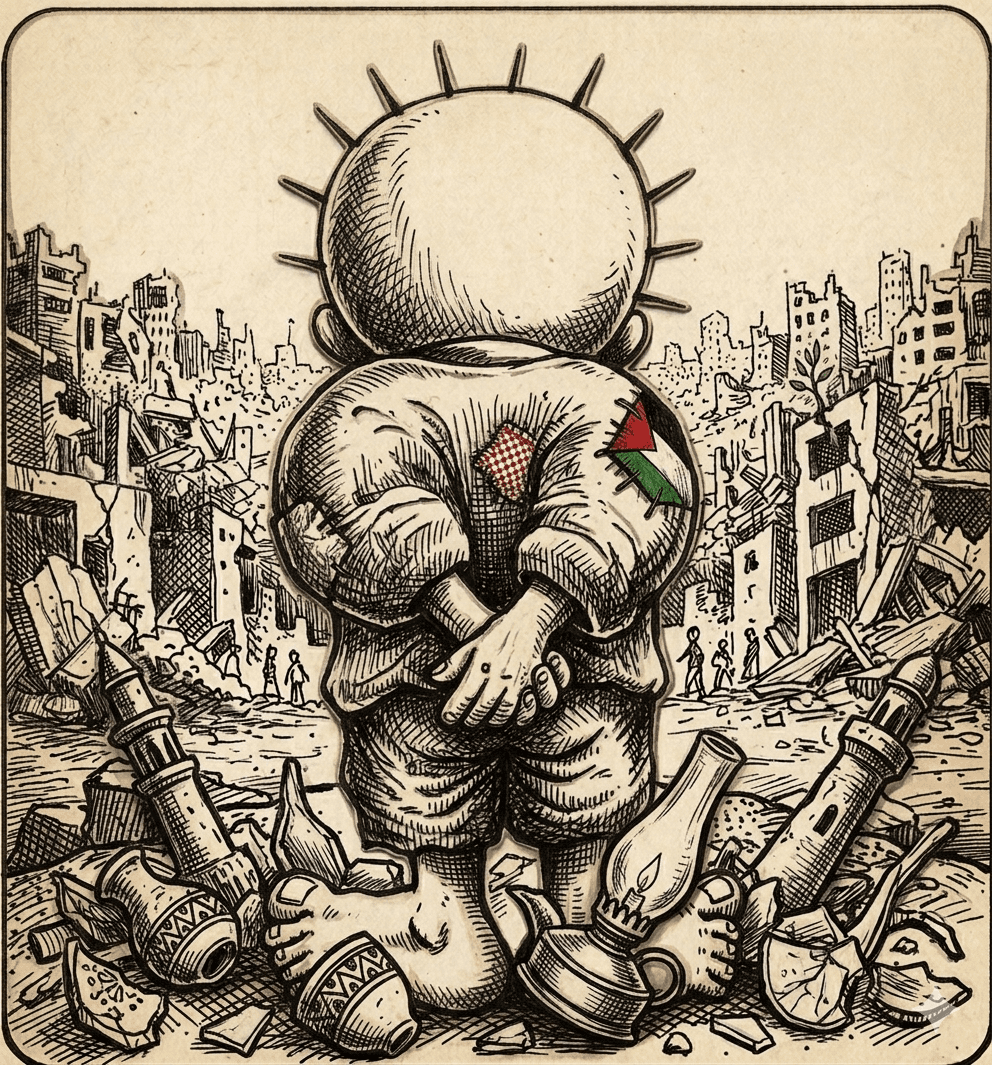
Hanzala (Generated with Artificial Intelligence)
Age | 10 (fixed) | ||||||||
|---|---|---|---|---|---|---|---|---|---|
First Appearance | 1969, Kuwait | ||||||||
Type(s) | Cartoon character | ||||||||
Creator | Naci el-Ali | ||||||||
Hanzala is a symbolic cartoon character created by Palestinian cartoonist Naci el-Ali, depicted as a ten-year-old child with his back turned, representing the realities of occupation, oppression, and exile in Palestine. The character is envisioned as one who will never grow up or turn his face until Palestinian freedom is achieved.
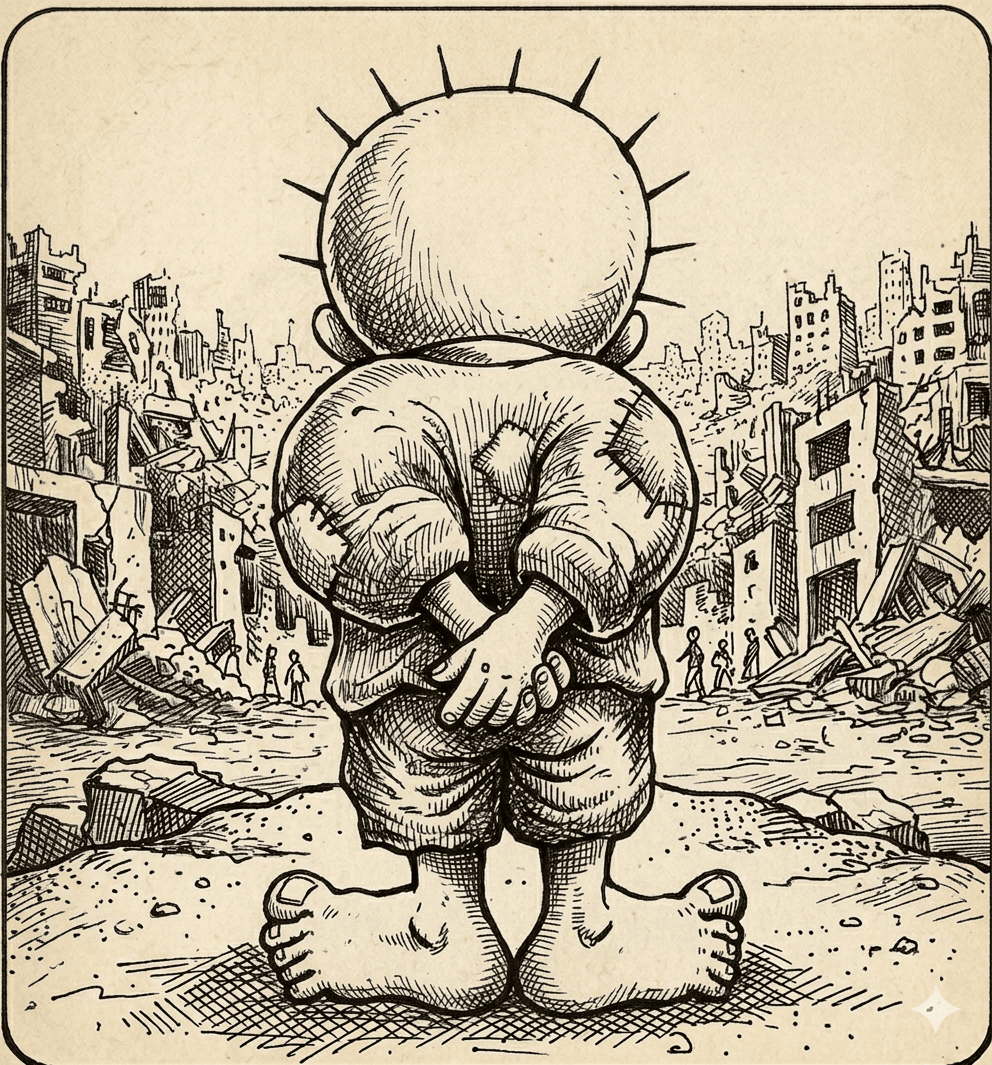
Hanzala (Generated by Artificial Intelligence)
Hanzala was first drawn in 1969 in a newspaper published in Kuwait. The character is designed as a barefoot child wearing patched clothing with his hands tied behind his back. These visual elements symbolically convey the concepts of poverty, deprivation, and resistance.
The character’s age is fixed at ten, representing the age at which the cartoonist was forcibly displaced from Palestine. Hanzala’s refusal to grow up reflects the interrupted historical trajectory of the Palestinian people due to exile.
Hanzala’s most distinctive feature is his turned-back posture, which is conceived as an act of rejection and protest against occupation, injustice, and international political attitudes.
The depiction of his hands tied behind his back signifies not passivity but a deliberate stance. This posture symbolizes the refusal to accept the existing order and the persistence of resistance.
The absence of Hanzala’s face points to a collective representation beyond individual identity. The character has become a figure representing not just one person but all Palestinian children and, more broadly, all oppressed communities.
Hanzala is directly connected to the life experiences of the cartoonist Naci el-Ali. During the 1948 event known among Palestinians as the Nakba, el-Ali was displaced from his home along with his family and grew up in refugee camps.
This experience was decisive in shaping the Hanzala character. The figure is regarded as a symbolic reflection of the cartoonist’s childhood and his experience of exile.
El-Ali’s cartoons address not only the Palestinian issue but also critique regional and international political structures. In this context, Hanzala has become the primary visual instrument through which the cartoonist expresses his ideas.
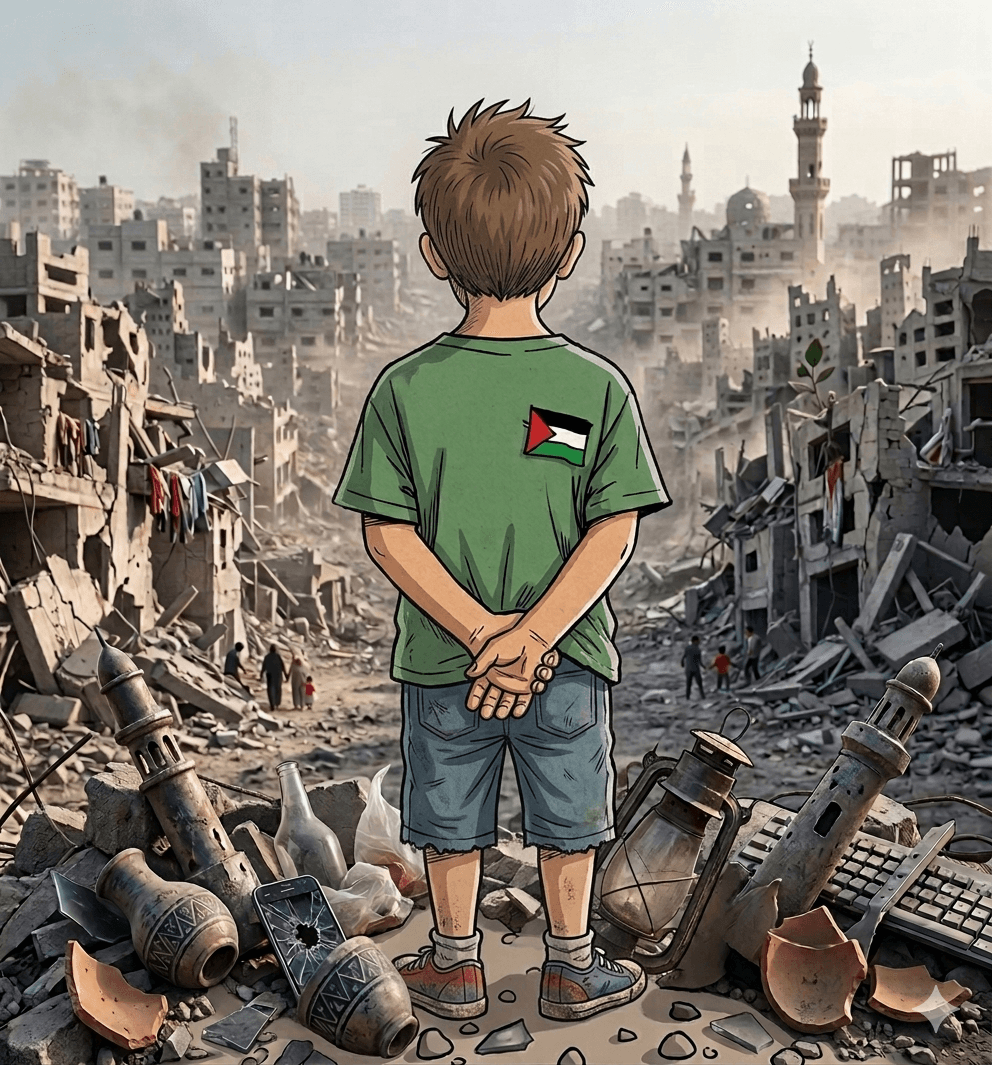
Hanzala (Generated by Artificial Intelligence)
Hanzala is recognized as one of the symbols of the Palestinian struggle for freedom. The character embodies the experiences of occupation, exile, and displacement.
As long as Palestinian liberation has not been achieved, the belief that Hanzala will not grow up or turn his face forms the core meaning of the character. In this sense, Hanzala stands as a fixed symbol representing the continuity of a historical process and the unresolved nature of the Palestinian cause.
Over time, Hanzala has transcended being merely a Palestinian figure and has acquired a broader meaning. The character is now used as a symbolic representation of war, poverty, and injustice experienced in various regions around the world.
In this context, Hanzala has become a universal symbol representing the concepts of victimhood and resistance beyond any specific national identity.
Anadolu Ajansı. “Hanzala Karakterini Çizen Naci el-Ali’nin Oğlu Halid Babasını Anlattı: Babam Hayatını Filistin’e Adamıştı.” Accessed April 2, 2026. https://www.aa.com.tr/tr/kultur-sanat/hanzala-karakterini-cizen-naci-el-alinin-oglu-halid-babasini-anlatti-babam-hayatini-filistine-adamisti/2349498
Anadolu Ajansı. “Hanzala’nın Çizeri Filistinli Karikatürist Naci el-Ali’nin Vefatının Üzerinden 35 Yıl Geçti.” Accessed April 2, 2026. https://www.aa.com.tr/tr/dunya/hanzalanin-cizeri-filistinli-karikaturist-naci-el-alinin-vefatinin-uzerinden-35-yil-gecti/2671894
Dağılma, İbrahim. “Hanzala ve Zazaca Hanzala Hikâyesi.” *Kadim Akademi Sosyal Bilimler Dergisi* 8, no. 1 (2024): 59–72. Accessed April 2, 2026. https://dergipark.org.tr/tr/pub/kadimsbd/article/1452317
Dijital Hafıza. "Naci el-Ali." Dijital Hafıza. Accessed April 2, 2026. https://dijitalhafiza.com/biyografiler/naci-el-ali
GZT. “Filistin’e Hanzala’yı Hediye Eden Çizer Naci el-Ali.” GZT. Accessed April 2, 2026. https://www.gzt.com/tarih/filistine-hanzalayi-hediye-eden-cizer-naci-el-al-3771155
Yeni Şafak. “Handala Nedir, Kimdir? Handala (Hanzala) Ne Demek?” Yeni Şafak. Accessed April 2, 2026. https://www.yenisafak.com/foto-galeri/ozgun/handala-nedir-kimdir-handala-hanzala-ne-demek-4731738

Hanzala (Generated with Artificial Intelligence)
Age | 10 (fixed) | ||||||||
|---|---|---|---|---|---|---|---|---|---|
First Appearance | 1969, Kuwait | ||||||||
Type(s) | Cartoon character | ||||||||
Creator | Naci el-Ali | ||||||||
Origin and Definition
Symbolic Features
Relationship with Naci el-Ali
Significance in the Palestinian Context
Universal Representation