


This article was automatically translated from the original Turkish version.
+2 More
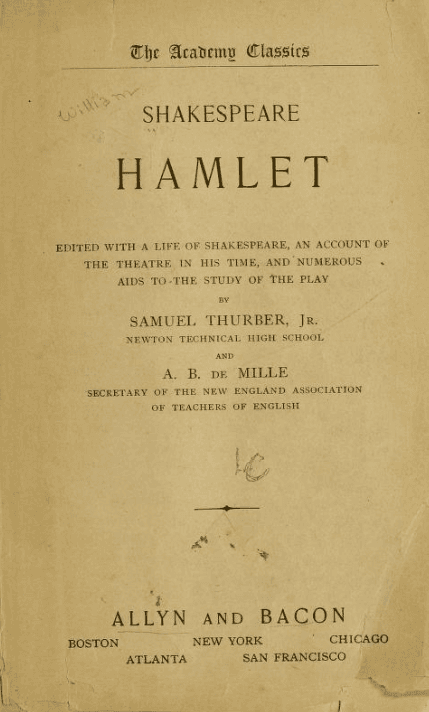
Title of the Work | Hamlet | ||||||||
|---|---|---|---|---|---|---|---|---|---|
Type | Tragedy | ||||||||
Author | William Shakespeare | ||||||||
Date of Writing | Approximately 1599–1601 | ||||||||
Language | English | ||||||||
Structure of the Section | Five acts | ||||||||
Important Characters | Ophelia (Polonius's daughter) Ghost (Deceased King Hamlet) Horatio (Hamlet's friend) Laertes (Polonius's son) Polonius (Chief Advisor) Gertrude (Hamlet's mother) Claudius (King of Denmark) Hamlet (Prince of Denmark) | ||||||||
Main Themes | Betrayal and loyalty Revenge and justice Death and the afterlife Appearance and reality Indecision and inaction | ||||||||
Hamlet is a five-act tragedy written by William Shakespeare around 1599–1601. It is not only Shakespeare’s longest play but also regarded as one of the most profound explorations of human psychology in Western literature and theatre history. The full title is The Tragedy of Hamlet, Prince of Denmark ("The Tragedy of Hamlet, Prince of Denmark").
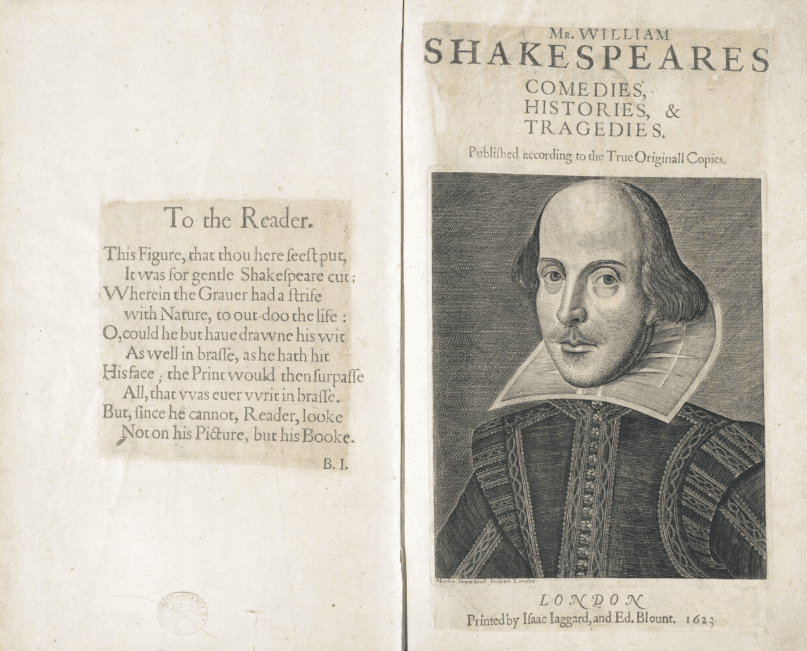
The First Folio Edition of Shakespeare. (Collections)
The play unfolds around the inner conflicts and quest for revenge experienced by Prince Hamlet following the death of the King of Denmark. Hamlet’s uncle Claudius ascends the throne after the king’s death and marries Queen Gertrude. Hamlet learns from his father’s ghost that Claudius committed murder and begins devising strategies to expose the truth. However, his indecisiveness and philosophical questioning complicate the process. As court intrigues intensify, Hamlet’s plan leads to tragic consequences. By the end of the play, many characters including Claudius, Gertrude, Laertes and Hamlet himself die. The play concludes with Fortinbras assuming the Danish throne.
The heir to the Danish throne. After his father’s death he suffers a severe psychological breakdown upon learning that his mother Gertrude has married Claudius. He is informed by his father’s ghost that Claudius murdered him and sets out to seek revenge. Throughout the play he oscillates between indecision moral questioning and the desire for vengeance.
Hamlet’s uncle. He murders the former king to seize the throne. He employs various political strategies to conceal his guilt and plots to eliminate Hamlet.
Hamlet’s mother. She marries Claudius shortly after the death of her husband the king. Although she shows affection toward her son she is not fully aware of the deeper dimensions of the events unfolding in the court.
A key advisor in the Danish court. He is at the center of intrigues and surveillance efforts throughout the play. He opposes the relationship between his daughter Ophelia and Hamlet. He is accidentally killed by Hamlet.
Polonius’s daughter. She has an emotional relationship with Hamlet. After her father’s death she loses her mental balance and undergoes a process that ends in her death.
Polonius’s son. After the deaths of his father and sister he seeks revenge against Hamlet. He collaborates with Claudius to participate in a plot to assassinate Hamlet during a duel.
Hamlet’s friend from university and his closest confidant. He witnesses Hamlet’s actions throughout the play and is tasked with documenting the events.
The spirit of the deceased King Hamlet. He reveals to Hamlet that he was murdered by Claudius and demands revenge. The character serves as a supernatural element in the play.
Hamlet’s childhood friends. They are commissioned by Claudius to observe Hamlet’s behavior and to escort him to England. They are killed by a counterplot orchestrated by Hamlet.
The Prince of Norway. He assumes the Danish throne after Hamlet’s death. The character functions as a symbol of restored political order.
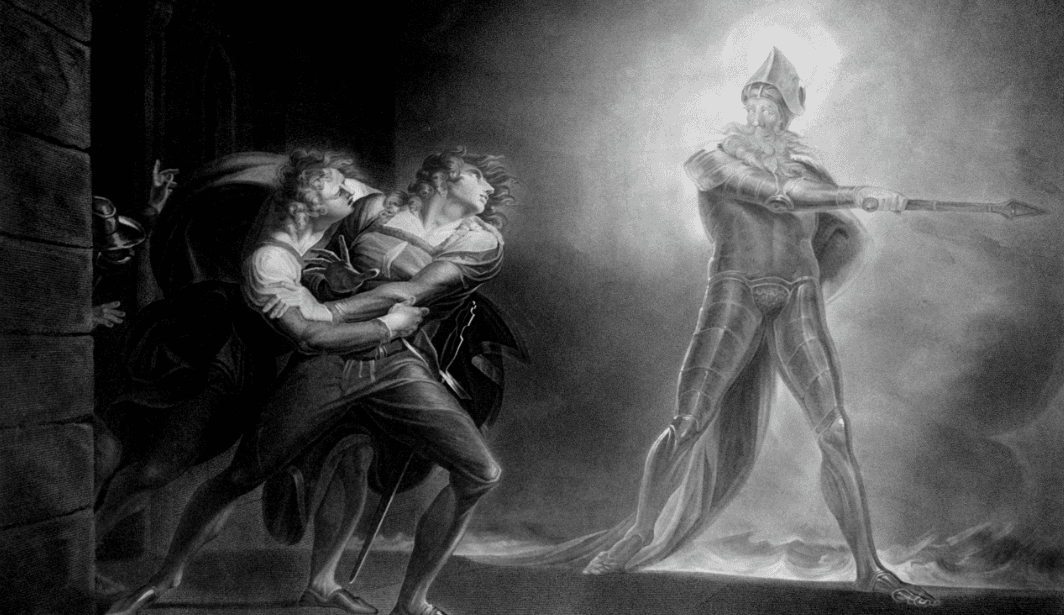
Hamlet ve Babasının Hayaleti-Henry Fuseli (Libraryofcongress)
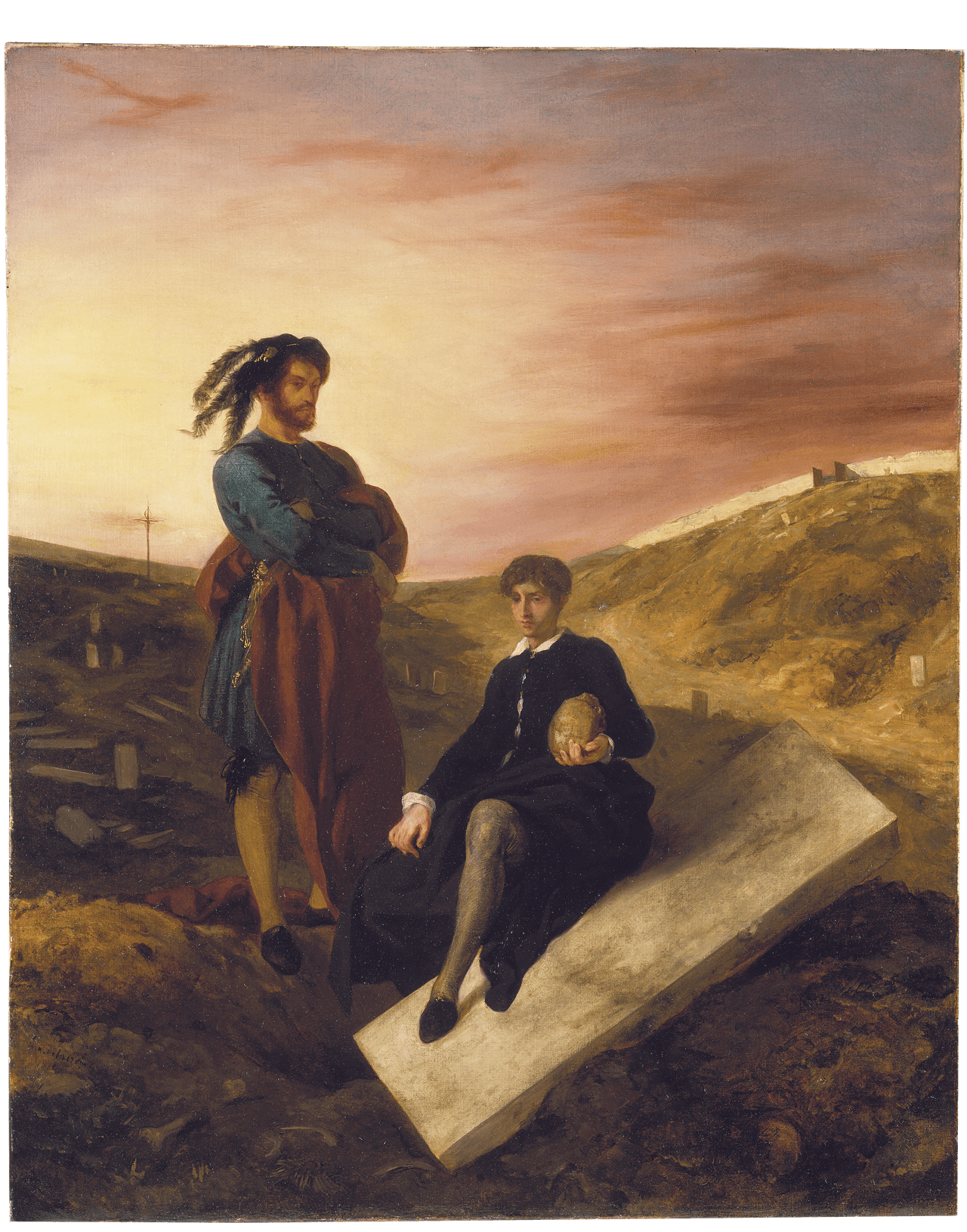
Hamlet ve Horatio Mezarlıkta-Eugène Delacroix (Städel Museum, Frankfurt am Main, Eigentum des Städelschen Museums-Vereins e.V.)
The dramatic structure generally explores the relationship between individual inner conflict and social order through a progressive narrative. Spatial transitions are limited; most events occur within Elsinore Castle reinforcing the play’s claustrophobic and oppressive atmosphere.
Hamlet’s "To be or not to be" soliloquy in Act 3 Scene 1 is one of the most famous passages in world theatre history. This monologue reflects Prince Hamlet’s philosophical inquiry into death life consciousness and existence. It is interpreted as an outward expression of personal indecision and inner turmoil.
In this speech Hamlet grapples with a mental dilemma between enduring the sufferings of life and choosing death. Death is seen as an escape from pain yet the uncertainty of what comes after creates the fundamental hesitation that prevents Hamlet from acting. The ambiguity surrounding the nature of death and what follows it is portrayed as a force that weakens human will.
The structure of the soliloquy relies heavily on rhetorical questions and contrasts. The concepts of "to be" and "not to be" initiate not only a philosophical debate on physical life and death but also on the meaning and meaninglessness of conscious existence. Hamlet questions why humans continue to endure life’s hardships and how fear and the unknown shape human behavior.
As a reflection of the play’s overall structure this soliloquy helps explain Hamlet’s intellectual hesitation and his delay in taking action. It also opens a discussion on individual consciousness moral responsibility and the limits of human will. The language of the soliloquy is built on intense figurative expressions and abstract concepts transforming it into more than a dramatic device into a profound existential philosophical text.
Hamlet has been reinterpreted and staged in diverse cultural and historical contexts from its time of writing to the present. Because the play contains universal themes such as individual inner conflict power struggles and ethical questioning it possesses a flexible structure open to multiple contemporary artistic readings.
In modern productions Hamlet is no longer viewed solely as a revenge tragedy but also as a narrative linked to questions of individual identity and social decay. In this context the characters and plot have been reimagined to reflect the political social and cultural issues of different eras. Particularly Hamlet has been interpreted by contemporary directors as a symbol of alienation and societal pressure within the individual psyche.
Stage designs have also varied according to historical periods. Traditional Elizabethan costumes and sets have often been replaced by modern abstract or minimalist settings. Concepts of time and space are used flexibly to diversify the narrative. Hamlet’s inner monologues have been adapted in modern theatre using stream-of-consciousness techniques making individual mental processes more visible.
Hamlet has also been adapted across various art forms including cinema television opera and literature. Particularly the film adaptations by Laurence Olivier (1948) Kenneth Branagh (1996) and Grigori Kozintsev (1964) are significant for demonstrating the diversity of interpretations. Numerous academic studies have also been produced in literature and philosophy exploring the existential questions raised in the play.
Today Hamlet is not only regarded as an example of classical theatre but also as a source of intellectual discourse on human nature the individual-society relationship and ethical dilemmas. The play’s ability to be staged with different layers of meaning across eras has made it a dynamic element in contemporary theatre.
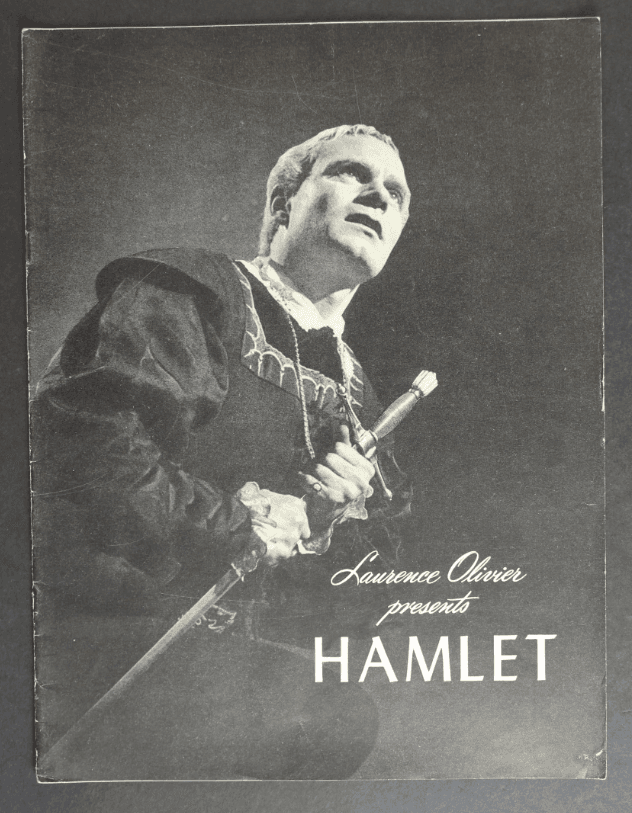
Hamlet (1948) Filmi (IMDb)
Folger Shakespeare Library. “Hamlet: Read the Play.” Accessed April 27, 2025.https://www.folger.edu/explore/shakespeares-works/hamlet/read/
Fuseli, Henry. Hamlet and His Father's Ghost. c. 1780–1790. Painting. Kunsthaus Zürich, Switzerland.
Honigmann, E. A. J. Shakespeare: Seven Tragedies. Basingstoke: Macmillan, 1997.
IMDb. "Hamlet (1948)." IMDb Website. Accessed April 27, 2025.https://www.imdb.com/title/tt0040416/mediaviewer/rm3052952320/
IMDb. "Hamlet (1996)." IMDb Website. Accessed April 27, 2025.https://www.imdb.com/title/tt0116477/
IMDb. "Hamlet (2023 Yapımı Mini Dizi)." IMDb Website. Accessed April 27, 2025.https://www.imdb.com/title/tt20598076/
IMDb. "Hamlet (2023)." IMDb Website. Accessed April 27, 2025.https://www.imdb.com/title/tt14032126/
Jenkins, Harold. Hamlet. The Arden Shakespeare, Second Series. London: Methuen, 1982.
Library of Congress. “Hamlet and Horatio at the Cemetery, 1835." Library of Congress. Accessed April 29, 2025.https://www.loc.gov/item/95521789/
MIT Shakespeare. "Hamlet: Full Text." Accessed April 27, 2025.https://shakespeare.mit.edu/hamlet/full.html
STÄDEL MUSEUM. “Hamlet and Horatio at the Cemetery, 1835." STÄDEL MUSEUM. Accessed April 29, 2025.https://sammlung.staedelmuseum.de/en/work/hamlet-and-horatio-at-the-cemetery?utm_source=chatgpt.com
Shakespeare Birthplace Trust. “Hamlet.” Accessed April 27, 2025.https://www.shakespeare.org.uk/explore-shakespeare/shakespedia/shakespeares-plays/hamlet/
Shakespeare, William. *Hamlet*. Boston: Ginn and Company, 1900. Accessed April 27, 2025.https://www.loc.gov/resource/gdcmassbookdig.hamlet02shak/?sp=9
Shakespeare, William. Hamlet. Edited by G. R. Hibbard. Oxford: Oxford University Press, 1987.
Victoria and Albert Museum. "Shakespeare's First Folio." Accessed April 29, 2025.https://collections.vam.ac.uk/item/O1397689/shakespeares-first-folio-book-shakespeare-william/

Title of the Work | Hamlet | ||||||||
|---|---|---|---|---|---|---|---|---|---|
Type | Tragedy | ||||||||
Author | William Shakespeare | ||||||||
Date of Writing | Approximately 1599–1601 | ||||||||
Language | English | ||||||||
Structure of the Section | Five acts | ||||||||
Important Characters | Ophelia (Polonius's daughter) Ghost (Deceased King Hamlet) Horatio (Hamlet's friend) Laertes (Polonius's son) Polonius (Chief Advisor) Gertrude (Hamlet's mother) Claudius (King of Denmark) Hamlet (Prince of Denmark) | ||||||||
Main Themes | Betrayal and loyalty Revenge and justice Death and the afterlife Appearance and reality Indecision and inaction | ||||||||
Plot Summary
Characters
Hamlet
Claudius
Gertrude
Polonius
Ophelia
Laertes
Horatio
Ghost
Rosencrantz and Guildenstern
Fortinbras
Act Summaries
Themes
Dramatic Structure
The "To Be or Not to Be" Soliloquy
Modern Interpretations of Hamlet