This article was automatically translated from the original Turkish version.
Geographical Indication Type | Mahreç Sign | ||||||||
|---|---|---|---|---|---|---|---|---|---|
Registration Number | 1356 | ||||||||
Registration Date | 16.05.2023 | ||||||||
Product / Product Group | Rugs and kilims | ||||||||
Province | Hakkari | ||||||||
Applicant / Registrant | Hakkari Chamber of Commerce and Industry | ||||||||
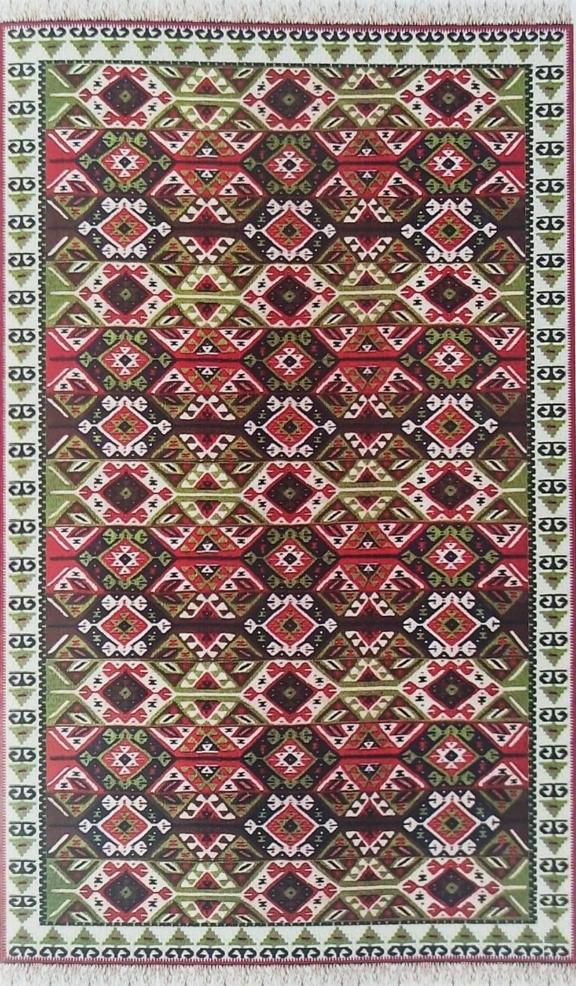
Hakkâri Kilim is a type of woven textile unique to Hakkâri province in southeastern Türkiye, produced using traditional weaving techniques and imbued with cultural and symbolic meanings. It has been registered as a geographical indication under Law No. 6769 on Industrial Property and granted protection on 16 May 2023. The registered owner is the Hakkâri Chamber of Commerce and Industry.
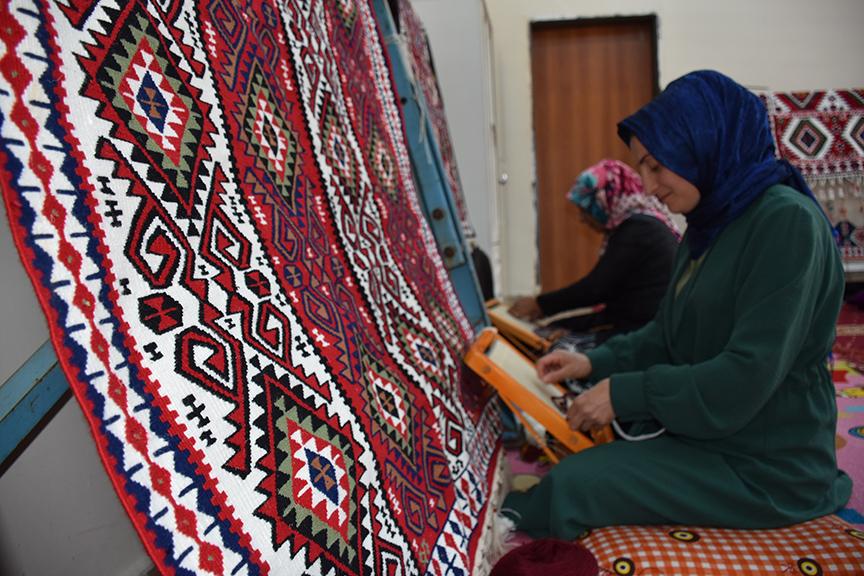
Hakkari Kilimi (AA)
The Hakkâri Kilim has been registered as a geographical indication under Law No. 6769 on Industrial Property. The registration process was carried out by the Hakkâri Chamber of Commerce and Industry; the application was submitted on 10 June 2022 and the product was officially registered and granted protection on 16 May 2023. The registration number is 1356.
The owner of the geographical indication, the Hakkâri Chamber of Commerce and Industry, operates at Pehlivan Mahallesi, Kayacan Caddesi, Merkez/Hakkâri. The registered product group is listed under “carpets and kilims” and is designated as “Hakkâri Kilim”. The geographical boundary of the product is limited to Hakkâri province.
The use of the term “Hakkâri Kilim” together with the geographical indication emblem is mandatory on the product or its packaging. If this marking cannot be placed directly on the product, it must be displayed in a clearly visible location at the production facility. This practice informs consumers of the product’s geographical origin and safeguards its authenticity.
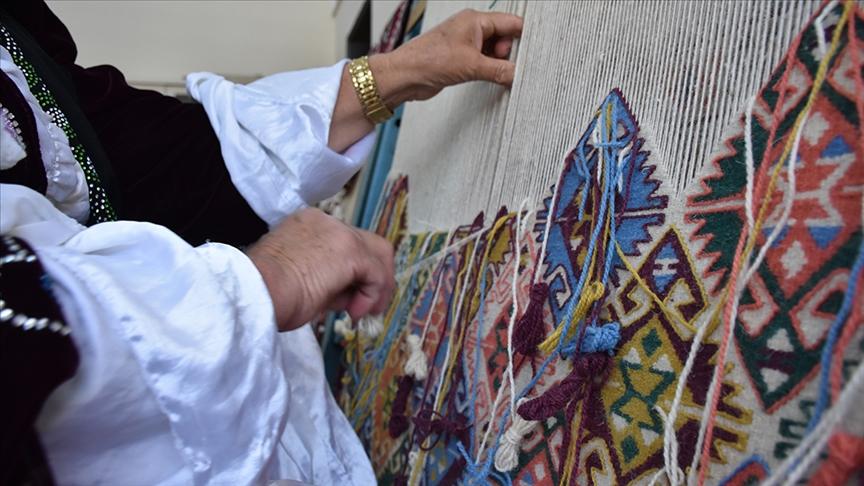
Hakkari Kilimi (AA)
The kilims are woven using yarn spun from wool of sheep and lambs raised on high pastures. The wool sheared during the annual “Lamb Shearing Festivals” in the region is washed, combed, and then twisted into single-ply yarn using a hand-operated spindle. Weaving is performed on vertical iron looms, typically using the ikat technique. The weft threads are secured using the chain-pull (warp-wrapping) method. The weft threads pass between the warp threads to form motifs, which are then tightly packed with a comb to cover the warp threads. The boundaries of the motifs are defined using contrasting-colored weft threads.
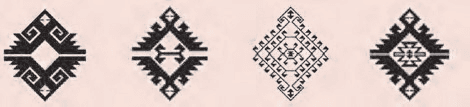
Scorpion: A symbol used for protection against external harm and danger. It commonly appears as a ground motif. This motif forms the core element of canbezar kilims. It is also frequently found in herki, aynalı, hevçeker, and çılgül kilims.

Akrep Motifi (Hakkari İl Kültür ve Turizm Müdürlüğü)
Sarya’s Rose (Eli Belinde): The term “Sarya” holds significant cultural importance in the region’s collective memory. It is believed that the phrase “Gülsarya” derives from “Gül-ü Sarya,” meaning “Sarya’s Rose” or “Sarya Rose.” This motif is also known in Hakkâri weavings as “eli belinde.” In other regions of Anatolia, it is referred to as “gelin kız,” “kâküllü kız,” or “çocuklu kız.” The motif symbolizes motherhood, fertility, happiness, joy, prosperity, and good fortune. Sarya’s rose motif is commonly found in gülsarya, gevdan, canbezar, hevçeker, lüleper, halitbey, and çılgül kilims.
Sarya’nın Gülü Motifi (Hakkari İl Kültür ve Turizm Müdürlüğü)
Ram’s Horn: The horn motif is regarded as a symbol of strength and power, representing masculinity and heroism. It is also seen as a symbol of fertility and resilience. Known as “Koçboynuzu,” this motif is also referred to as “boynuzlu yanış,” “koçlu yanış,” “gözlü koç,” and “koçbaşı.” It appears in various forms in Hakkâri-specific herki, aynalı, gevdan, canbezar, lüleper, and halitbey kilims, used both in the ground and border areas.

Koçboynuzu Motifi (Hakkari İl Kültür ve Turizm Müdürlüğü)
Wolf’s Eye: A common motif in Hakkâri kilims symbolizing optimism and protection. Inspired by the wolf’s ability to see in darkness, this motif is regarded as a symbol of light and the sun. It is typically placed between the border and ground to serve a protective function and to provide an aesthetic transition between colors. Believed to shield people from danger, the wolf’s eye motif also represents bravery, honesty, security, fertility, heroism, strength, and masculinity. It is most often used as a complementary element on the ground. This motif appears in gülsarya, aynalı, gülgever, şamari, and halitbey kilims.

Kurtağzı Motifi (Hakkari İl Kültür ve Turizm Müdürlüğü)
Earring: A motif symbolizing a young woman’s desire for marriage, carrying significant meaning in Hakkâri kilims. It is most commonly found in border sections but occasionally appears sparsely on the ground. It is especially prevalent in dowry kilims woven by young women reaching marriageable age. Examples include gülsarya, canbezar, hevçeker, şamari, and herki kilims.

Küpe Motifi (Hakkari İl Kültür ve Turizm Müdürlüğü)
Hook (Nehrek): A protective eye motif believed to ward off the evil eye and its negative effects. It also represents the unification of opposites and different planes. Associated with marriage and fertility, this motif is commonly found in herki, canbezar, şamari, gülhazar, and halitbey kilims.

Çengel (Nehrek) Motifi (Hakkari İl Kültür ve Turizm Müdürlüğü)
Hand, Fingers, Comb (Lapik, Tiyari): The hand motif, known in the region as “Lapik” (glove) or “Tiyari” (the area between Hakkâri and Iraq), symbolizes power, authority, and dominion. In other parts of Anatolia, it is referred to as “Pençe-i Âli Aba,” “Fatma Ana Eli,” or “Meryem’in Eli.” These patterns represent fertility, abundance, and protective power and are found in various forms in şehvani, herki, hevçeker, lüleper, şamari, gülsarya, gülhazar, and halitbey kilims.

El, Parmak, Tarak (Lapik, Tiyari) Motifi (Hakkari İl Kültür ve Turizm Müdürlüğü)
Fertility: A significant traditional pattern symbolizing abundance, good fortune, and eternal happiness. Animals such as ram, bull, and deer; and natural elements such as trees, plants, water, and mountains are regarded as symbols of fertility and the cycle of life. This motif also represents the unity of male and female in life. The fertility pattern, the central motif of kesneker kilims, is also frequently found in herki kilims.

Bereket Motifi (Hakkari İl Kültür ve Turizm Müdürlüğü)
Şimkubik: The Şimkubik motif, meaning “bride’s heel” or “beautiful heel,” appears in Hakkâri-specific gevdan, gülgever, and şamari kilims.

Şimkubik Motifi (Hakkari İl Kültür ve Turizm Müdürlüğü)
Snake’s Comb (Şahmari): The snake’s comb motif symbolizes power, immortality, origin, and the creation of the world and is one of the primary motifs of canbezar and şamari kilims. In Turkish tales, the snake is often portrayed as a respectful, patient, hospitable, friendly, helpful, compassionate, forgiving, and wise being, capable of sacrificing itself for humanity. However, due to its forked tongue, it also symbolizes gossip and mischief. This motif is particularly prominent as the main decorative element in şamari kilims.
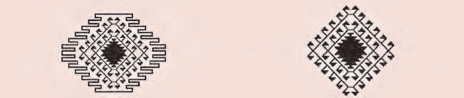
Yılan Tarağı (Şahmari) Motifi (Hakkari İl Kültür ve Turizm Müdürlüğü)
Star: Found in both the ground and borders of Hakkâri kilims, the star motif carries different meanings depending on the number of its arms. A five-pointed star symbolizes perfection, a six-pointed star represents marriage, and a seven-pointed star symbolizes the rainbow. This motif is frequently found in gevdan, aynalı, hevçeker, gülgever, lüleper, şamari, gülhazar, halitbey, and çılgül kilims.
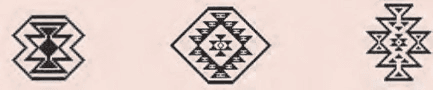
Yıldız Motifi (Hakkari İl Kültür ve Turizm Müdürlüğü)
Waterway: Symbolizes rebirth, physical and spiritual purification, the fluidity and continuity of life, as well as fertility, nobility, wisdom, purity, and virtue. Water is regarded as the source of both life and death. Known in various regions of Anatolia as the “meander” or “zigzag” motif, this design is frequently used as a divider between the border and ground in gülgever, aynalı, gülhazar, and halitbey kilims.

Su Yolu Motifi (Hakkari İl Kültür ve Turizm Müdürlüğü)
Lovebird: Symbolizes happiness, joy, love, and affection, and is sometimes used to represent the soul of the deceased. The bird element, associated with women, conveys longing and the anticipation of news. It also symbolizes strength and power and is linked to death. In lüleper kilims, the stylized lovebird appears as a ground motif and is also found in other kilims.

Muhabbet Kuşu Motifi (Hakkari İl Kültür ve Turizm Müdürlüğü)
Pıtrak: This motif is used to ward off the effects of the evil eye. Known in Anatolia as “pıtırdak” or “bıtrak,” it is especially common in herki kilims.

Pıtrak Motifi (Hakkari İl Kültür ve Turizm Müdürlüğü)
Eye, Nazar, Amulet: The use of amulets and the evil eye motif to protect against envy and jealousy has become widespread in Anatolia. In Hakkâri kilims, the eye, nazar, and amulet motifs serve the same function, symbolizing protection from the evil eye and the removal of negative energies.

Göz, Nazar, Muska Motifi (Hakkari İl Kültür ve Turizm Müdürlüğü)
Goat’s Track: Inspired by the footprints left by goats in snow, this motif symbolizes hunting skill, productivity, and courage.
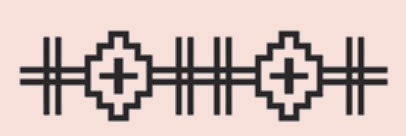
Keçi İzi Motifi (Hakkari İl Kültür ve Turizm Müdürlüğü)
Windmill (Çarkıfelek): This motif, symbolizing the wheel of a windmill, is commonly found in borders and frequently used in herki kilims.
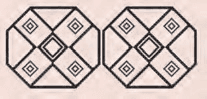
Rüzgârgülü (Çarkıfelek) Motifi (Hakkari İl Kültür ve Turizm Müdürlüğü)
Cat’s Ear: Used for protection against the evil eye and negative energies, this motif is commonly found in the borders of aynalı kilims woven in the Hakkâri region.
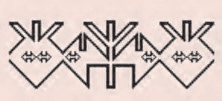
Kedi Kulağı Motifi (Hakkari İl Kültür ve Turizm Müdürlüğü)
Butterfly: Symbolizes freedom and the desire for liberty and is used in both the ground and border decorations of herki kilims.
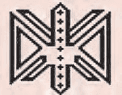
Kelebek Motifi (Hakkari İl Kültür ve Turizm Müdürlüğü)
House: The house motif, representing family, unity, and wholeness, is used as a ground decoration in herki kilims.
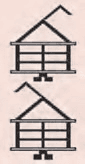
Ev Motifi (Hakkari İl Kültür ve Turizm Müdürlüğü)
Lapik Motif: Symbolizes protection and power.
Bukağı Motif: Represents attachment and marriage.
Yaba Motif: Expresses fertility and productivity.
Chest Motif: Symbolizes hidden valuables and dowry.
Five-Stone Motif: Represents balance and order.
Flower (Rose) Motif: Symbolizes beauty and nature.
Tree of Life Motif: Represents the continuity of life.
Camel’s Foot / Camel’s Track Motif: Symbolizes journey and endurance.
Zigzag Motif: Represents transition and movement.
Comb Motif: Symbolizes cleanliness and order.
Starred Chest Motif: Represents protection and concealed knowledge.
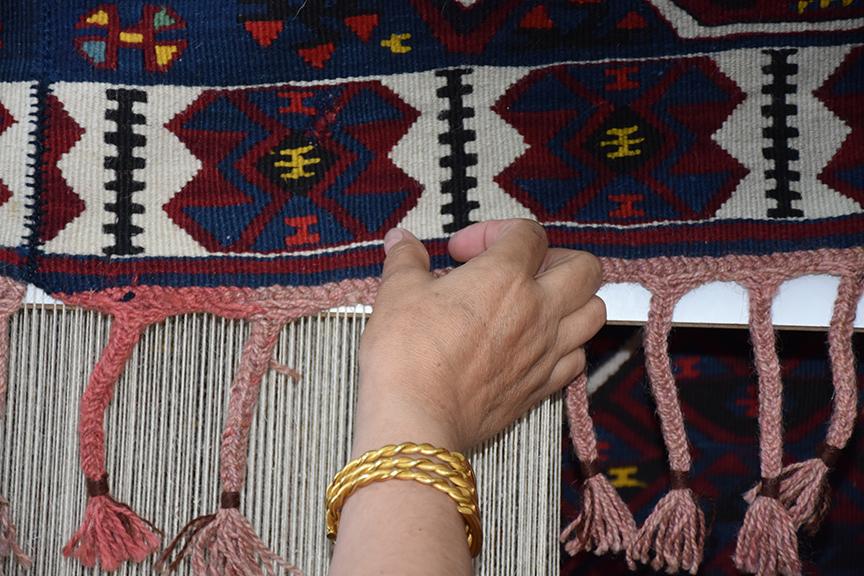
Hakkari Kilimi (AA)
Canbezar Kilim requires skill due to its harmonious and symmetrical motif arrangement. Its name, meaning “life-wearying,” reflects the difficulty of its weaving. Traditionally woven in sizes of 3–5 m² with double wings, these kilims were used as floor coverings, wall hangings, or bedspreads; today their dimensions have decreased. Vertical fertility or evil eye motifs (oblique rectangles or hexagons) form the main composition, adorned with hook (nehrek) motifs. It includes motifs such as Sarya’s rose (eli belinde), scorpion, star, and sawtooth. Borders are separated by comb motifs and contain designs such as ram’s horn and fishbone.
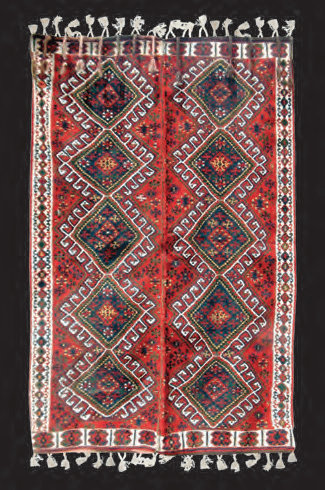
Canbezar Kilimi (Hakkari İl Kültür ve Turizm Müdürlüğü)
Çılgül Kilim means “forty roses” and is shaped by an eight-legged spider composition derived from the ram’s horn motif, surrounded by a sawtooth border. Woven in sizes of 3–5.5 m² with double wings, it is used as a floor, wall, or bed covering. The ground is predominantly brown, supported by navy, white, and orange secondary colors. Vertical hexagons and rectangles are filled with scorpion and wolf’s eye motifs; the white border is decorated with eye motifs.
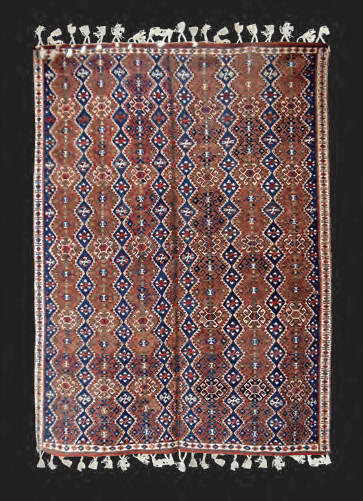
Çılgül Kilimi (Hakkari İl Kültür ve Turizm Müdürlüğü)
Ertuşi Kilim derives its name from the tribes of Hakkâri, and is also known as Şehvani. Woven in sizes of 3–5 m², it is used as a floor covering or bedspread. It is woven using the ikat technique with wool yarn, and the wefts are secured with the chain-pull method. Primary colors are red, navy, and white; secondary colors include yellow, orange, and green. It is decorated with vertical rows of hexagons, stars, scorpions, and Sarya’s rose motifs; borders are separated by comb edges.
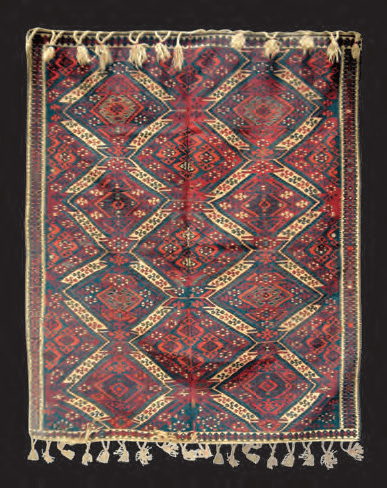
Ertuşi Kilimi (Hakkari İl Kültür ve Turizm Müdürlüğü)
Gevdan Kilim is associated with the Gevdan tribe and is double-winged. Woven in sizes of 3–5.5 m² for use as a floor covering or bedspread, it is produced using the ikat technique with wefts secured by chain-pull. Dominant colors are red, navy, and white; hexagons are filled with scorpion and star motifs, while rectangles are adorned only with star motifs. Borders contain sawtooth and comb motifs alongside ram’s horn.
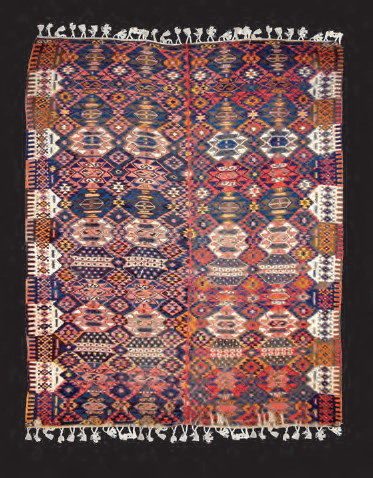
Gevdan Kilimi (Hakkari İl Kültür ve Turizm Müdürlüğü)
Gülgever Kilim means “highland rose” and is linked to the Yüksekova (Gever) region. Woven by the Kaşuri tribe in sizes of 3–5.5 m² with double wings, it is produced using the ikat technique with chain-pull weft securing and wool yarn. Dark colors (red, navy) and secondary colors (green, orange) are preferred. Vertical rectangles and hexagons are filled with motifs such as Sarya’s rose; a single border separates the design.
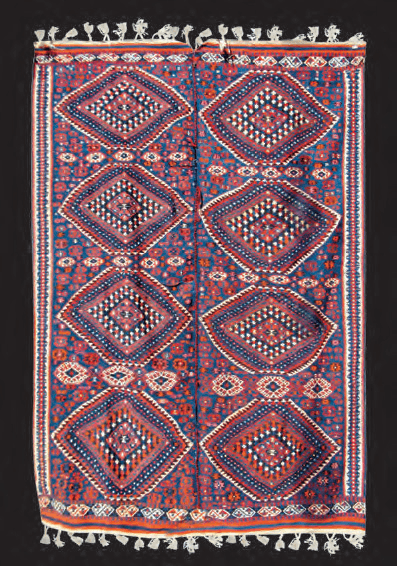
Gülgever Kilimi (Hakkari İl Kültür ve Turizm Müdürlüğü)
Gülhezar Kilim means “thousand roses” and consists of numerous rose motifs. Woven in sizes of 3.5–5 m² with double wings, today single-winged smaller sizes are common. It is produced using the ikat technique with chain-pull weft securing. Primary colors are red, navy, and white; secondary colors include yellow and blue. Vertical bands are decorated with eli belinde or rose motifs; a single border separated by comb edges.
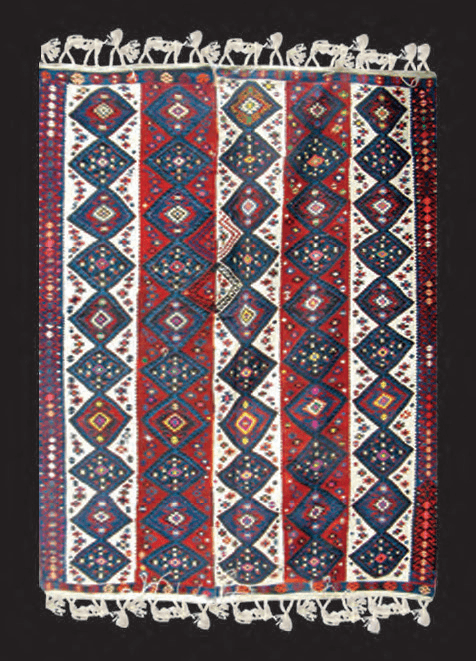
Gülhezar Kilimi (Hakkari İl Kültür ve Turizm Müdürlüğü)
Gülsarya Kilim derives its name from “Sarya’s rose,” and is said to have been first woven by a woman named Sarya. Woven in sizes of 3.5–5.5 m² with double wings, today standard dimensions are 120x200 cm. It is produced using the ikat technique with chain-pull weft securing. Dark colors (red, black) and secondary colors (green, yellow) are used. Diagonal Sarya’s rose motifs dominate; borders contain ram’s horn and five-stone motifs.
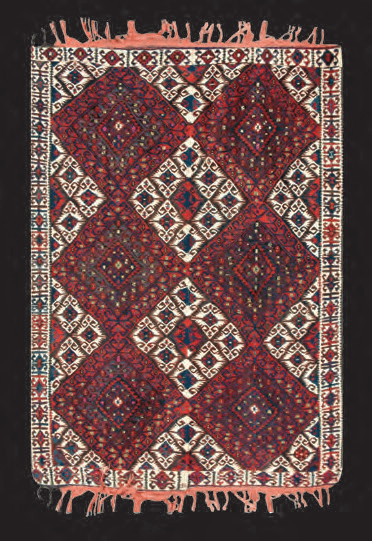
Gülsarya Kilimi (Hakkari İl Kültür ve Turizm Müdürlüğü)
Halitbey Kilim takes its name from a tribal chief and unites the motifs of the bride’s and groom’s tribes. Woven in sizes of 3–5 m², either single or double-winged, it uses the ikat technique with chain-pull weft securing. Horizontal bands are decorated with red, navy, and white colors, featuring scorpion and star motifs; borders contain five-stone patterns.
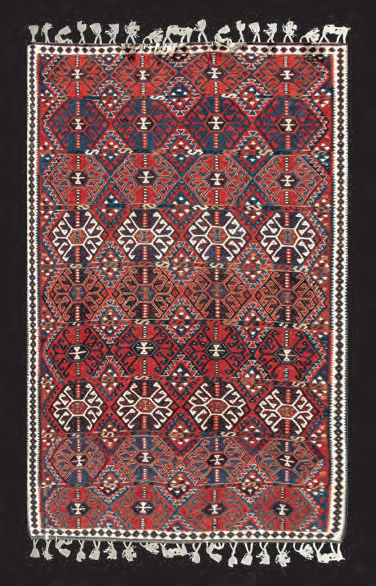
Halitbey Kilimi (Hakkari İl Kültür ve Turizm Müdürlüğü)
Herki Kilim is associated with the Herki tribe and is woven in sizes of 3.5–5 m², either single or double-winged. It is produced using ikat, sumak, or knotted techniques. Dark colors (red, navy) and secondary colors (green, yellow) are used. Horizontal or central compositions are adorned with motifs such as scorpion, rose, and ram’s horn; the three-border application is distinctive.
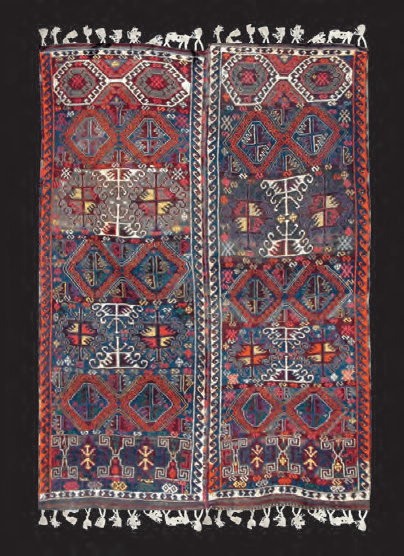
Herki Kilimi (Hakkari İl Kültür ve Turizm Müdürlüğü)
Hevçeker Kilim means “rare” and is based on the spider or dragon motif. Woven in sizes of 3–5 m² with double wings, it uses the ikat technique with chain-pull weft securing. It features dark colors (red, blue) and secondary colors (green, orange); horizontal bands are enclosed by a single border.
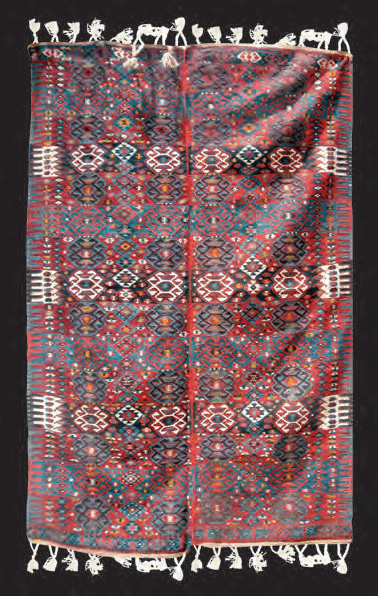
Hevçeker Kilimi (Hakkari İl Kültür ve Turizm Müdürlüğü)
Kesneker Kilim means “no one can make it” and is known for its fine patterns. Traditionally woven in 5 m² sizes, today smaller dimensions are common. It is produced using the ikat technique with chain-pull weft securing. Horizontal bands in red, white, and navy colors feature fertility and amulet motifs; the white border is adorned with eye motifs.
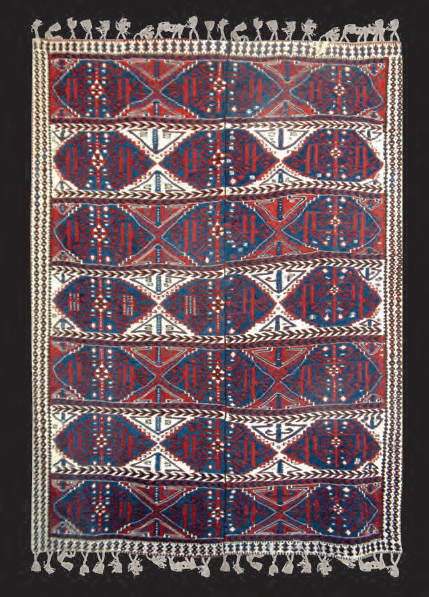
Kesneker Kilimi (Hakkari İl Kültür ve Turizm Müdürlüğü)
Lüleper Kilim is inspired by the water lily-like flowers of Yüksekova and is known for its lovebird motif. Woven in sizes of 3–5.5 m² with double wings, it can be produced using the ikat technique with chain-pull weft securing. Dark colors (red, navy) and secondary colors (pink, green) are used; vertical bands are separated by a single border.
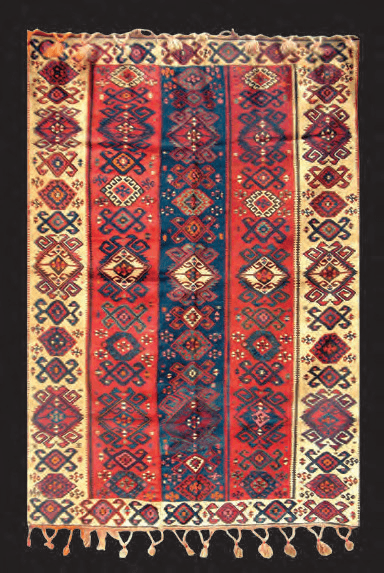
Lüleper Kilimi (Hakkari İl Kültür ve Turizm Müdürlüğü)
Şamari Kilim means “purified” and is woven in Çığlıca Village. Woven in sizes of 3.5–5.5 m² with double wings, it uses the ikat technique with chain-pull weft securing. Dark colors (red, navy) and secondary colors (green, pink) are used; horizontal or vertical bands are decorated with şimkubik and scorpion motifs.
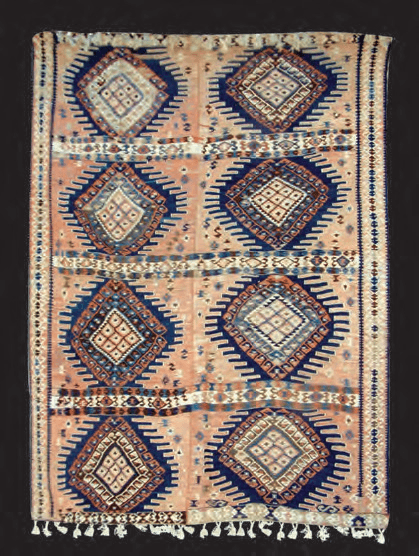
Şamari Kilimi (Hakkari İl Kültür ve Turizm Müdürlüğü)
Şehvani Kilim is densely woven in the Tiyar Valley and is known for its “şalalbülbül” (nightingale’s nest) motifs. Woven in sizes of 3–5 m² with double wings, it uses the ikat technique with chain-pull weft securing. Dark colors (red, navy) and secondary colors (yellow, green) are used; horizontal bands are enclosed by a single border.
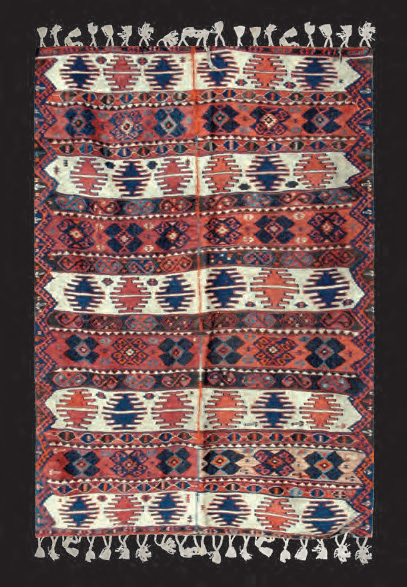
Şehvani Kilimi (Hakkari İl Kültür ve Turizm Müdürlüğü)
Şimkubik Kilim means “bride’s heel” and is shaped with rose and şimkubik motifs. Woven in sizes of 3–5 m² with double wings, it uses the ikat technique with chain-pull weft securing. Dark colors (red, navy) and secondary colors (pink, orange) are used; horizontal bands are separated by single or triple borders.
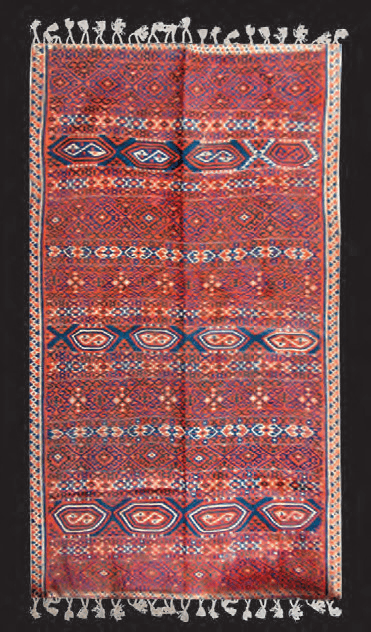
Şimkubik Kilimi (Hakkari İl Kültür ve Turizm Müdürlüğü)
Inspections are conducted at least once a year under the coordination of the Hakkâri Chamber of Commerce and Industry by a minimum three-member expert panel from the Hakkâri TOBB Professional Training Center, Hakkâri Public Education Center, and Hakkâri Provincial Directorate of Culture and Tourism. Inspections may be carried out at any time upon complaint or if deemed necessary. During inspections, the production method, motif and design conformity, and use of the geographical indication emblem are verified.
Anadolu Ajansı. "Hakkari Kiliminin Her Motifi Ayrı Bir Anlam Taşıyor." Anadolu Ajansı, August 6, 2022. Accessed October 24, 2025.https://www.aa.com.tr/tr/kultur/hakkari-kiliminin-her-motifi-ayri-bir-anlam-tasiyor/2655095
T.C.Hakkari İl Directorate of Culture and Tourism. "Hakkari Kilimleri." Hakkari Provincial Directorate of Culture and Tourism. Accessed October 24, 2025.https://hakkari.ktb.gov.tr/TR-159889/hakkari-kilimleri.html
T.C.Hakkari İl Directorate of Culture and Tourism. "Hakkari Kültüründe Kullanılan Motifler." Accessed October 24, 2025.https://hakkari.ktb.gov.tr/TR-159362/hakkari-kulturunde-kullanilan-motifler.html
Turk Patent and Trademark Office. "Hakkari Kilimi." Coğrafi İşaretler Portalı. Accessed October 24, 2025.https://ci.turkpatent.gov.tr/cografi-isaretler/detay/6942.
Turk Patent and Trademark Office. "Hakkâri Kilimi Coğrafi İşaret Sicil Belgesi." Accessed October 24, 2025.https://ci.turkpatent.gov.tr/Files/GeographicalSigns/8e84210c-6bca-452c-9cf8-17e8df9da440.pdf.

Geographical Indication Type | Mahreç Sign | ||||||||
|---|---|---|---|---|---|---|---|---|---|
Registration Number | 1356 | ||||||||
Registration Date | 16.05.2023 | ||||||||
Product / Product Group | Rugs and kilims | ||||||||
Province | Hakkari | ||||||||
Applicant / Registrant | Hakkari Chamber of Commerce and Industry | ||||||||
Registration Details
Materials and Production Process
Motifs and Their Meanings
Kilim Types
Technical Specifications
Inspection Process