

This article was automatically translated from the original Turkish version.
+2 More
Construction Date(s)(Text) | 1903 | ||||||||
|---|---|---|---|---|---|---|---|---|---|
Architectural Feature(s) | Traditional Urfa architecture constructed using nahit stones | ||||||||
Location | Köprübaşı location Atatürk Boulevard Şanlıurfa | ||||||||
Building Type | Historic mansion | ||||||||
Construction Cost | Approximately 12,000 gold coins | ||||||||
Commissioned by | Hacı Yusuf Kâmil | ||||||||
Building Name | Hacı Kamil Konağı | ||||||||
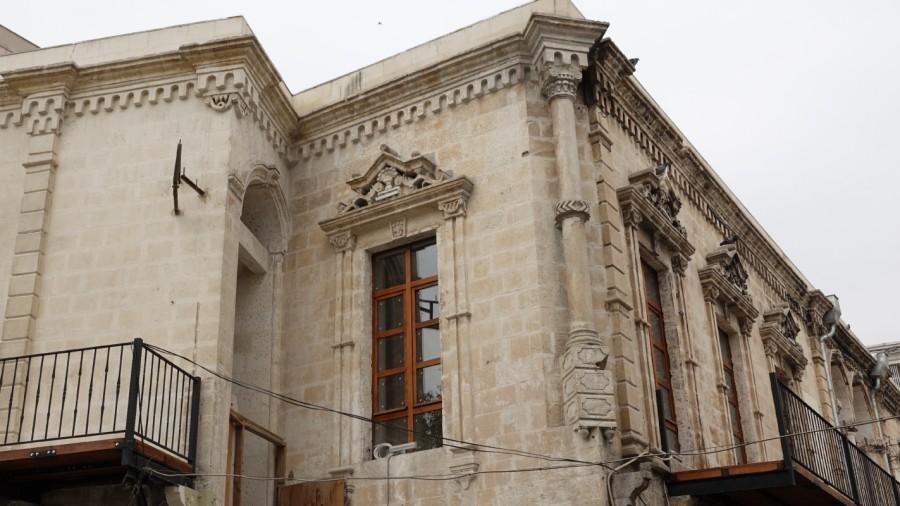
Hacı Kamil Konağı is one of the significant structures reflecting the architectural heritage and social life of Şanlıurfa within its historic urban fabric. Located on Atatürk Boulevard at the Köprübaşı site, the mansion was constructed in the early 20th century and is among the buildings exhibiting Ottoman architectural features. Situated in relation to the historic built environment around Karakoyun Stream, the mansion played an important role in the urban development of its region. Used over many years for various functions, the structure underwent multiple alterations and remained unused for a period. Following recent restoration efforts, it has been reactivated and reintegrated into the city’s cultural life.
Hacı Kamil Konağı was commissioned in 1903 by Hacı Yusuf Kâmil. It is reported that approximately 12,000 gold coins were spent on its construction, a substantial sum by the standards of the time.【1】 Upon completion, the mansion, together with its surroundings, became an important center in the city’s commercial and social life. Throughout its history, the building was not only used as a residence but also served various other functions, including its time as the Ottoman Bank.【2】 This use underscores the building’s significance as a key node in the city’s economic and commercial activities. Over time, urban transformations and new construction projects led to the mansion losing its former prominence and remaining unused for an extended period. During this time, the structure suffered various physical interventions that partially compromised its architectural integrity. Later, the Şanlıurfa Metropolitan Municipality acquired the mansion and initiated restoration efforts, reassessing its potential. Following the completion of these works in 2023, the building was reopened for use.
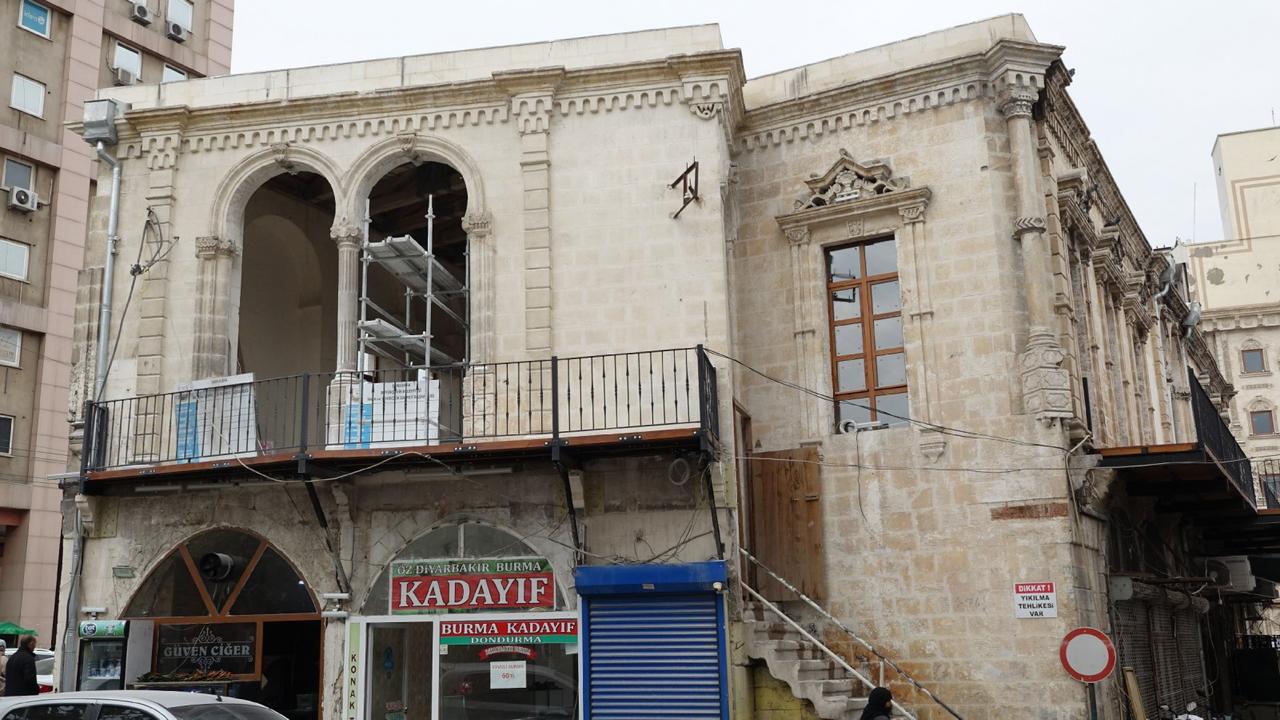
Hacı Kamil Konağı (Şanlıurfa Büyükşehir Belediyesi)
Hacı Kamil Konağı is regarded as a structure embodying the characteristic features of traditional Urfa architecture. Local stone materials were used in its construction, with nahit stones—commonly found in Urfa architecture—forming one of its key architectural elements. The stonework and façade arrangements reflect the architectural sensibilities of the period. Although some concrete elements were added during later interventions, these were removed during restoration. The restoration process aimed to preserve the building’s original layout and architectural features. The roof was entirely replaced, harmful interior elements were cleared, and materials consistent with the original architectural fabric were employed. Thus, the structure was reconfigured while retaining its historical identity.
Hacı Kamil Konağı is recognized as one of the structures reflecting Şanlıurfa’s historical and cultural heritage. In the past, it functioned as a center linked to the city’s commercial and social activities and served multiple roles across different periods. This highlights the mansion’s importance not only architecturally but also in terms of the city’s social and economic life. After a long period of disuse, the Şanlıurfa Metropolitan Municipality restored the building and reintroduced it to active use. Following restoration, the mansion began to be used as an art gallery and exhibition space. In this context, the exhibition “From Past to Present: Hacı Yusuf Kamil Konağı and Its Bridge” was organized as an event reflecting the building’s historical journey and the city’s cultural memory.【3】 Today, Hacı Kamil Konağı serves as a venue for cultural events, contributing to the preservation and promotion of the city’s historical heritage.
NŞanlıurfa Haber. "Hacı Kamil Konağı." Accessed March 18, 2026. https://www.nsanliurfa.com/haci-kamil-konagi-2/
İnce Gayberi, Şeyda, and Neslihan Dalkılıç. “Urfa Tarihi Kent Merkezi’ndeki Kültürel Peyzajın Değişim ve Dönüşümü: Saray Meydanı (Sarayönü) ve Belediye Parkı Örneği (1923–1990).” Kent Akademisi 17, no. 6 (2024): 2219–2247. Accessed March 18, 2026. https://dergipark.org.tr/en/download/article-file/3846266
Şanlıurfa Büyükşehir Municipality. "Başkan Gülpınar: Amacımız Hacı Kamil Konağını Kültür Noktası Haline Getirmek." Accessed March 18, 2026. https://www.sanliurfa.bel.tr/icerik/18895/21/baskan-gulpinar-amacimiz-haci-kamil%20konagini-kultur-noktasi-haline-getirmek
Şanlıurfa Büyükşehir Municipality. "Tarihi Hacı Kamil Konağı Turizme Kazandırılacak." Accessed March 18, 2026. https://www.sanliurfa.bel.tr/icerik/15009/21/tarihi-haci-kamil-konagi-turizme kazandirilacak
[1]
Şanlıurfa Büyükşehir Belediyesi. “Tarihi Hacı Kamil Konağı Turizme Kazandırılacak.” Erişim 18 Mart 2026. https://www.sanliurfa.bel.tr/icerik/15009/21/tarihi-haci-kamil-konagi turizme-kazandirilacak
[2]
Şanlıurfa Büyükşehir Belediyesi. “Başkan Gülpınar: Amacımız Hacı Kamil Konağını Kültür Noktası Haline Getirmek.” Erişim 18 Mart 2026. https://www.sanliurfa.bel.tr/icerik/18895/21/baskan-gulpinar-amacimiz haci-kamil-konagini-kultur-noktasi-haline-getirmek
[3]
Şanlıurfa Büyükşehir Belediyesi. “Başkan Gülpınar: Amacımız Hacı Kamil Konağını Kültür Noktası Haline Getirmek.” Erişim 18 Mart 2026. https://www.sanliurfa.bel.tr/icerik/18895/21/baskan-gulpinar-amacimiz-haci-kamil konagini-kultur-noktasi-haline-getirmek

Construction Date(s)(Text) | 1903 | ||||||||
|---|---|---|---|---|---|---|---|---|---|
Architectural Feature(s) | Traditional Urfa architecture constructed using nahit stones | ||||||||
Location | Köprübaşı location Atatürk Boulevard Şanlıurfa | ||||||||
Building Type | Historic mansion | ||||||||
Construction Cost | Approximately 12,000 gold coins | ||||||||
Commissioned by | Hacı Yusuf Kâmil | ||||||||
Building Name | Hacı Kamil Konağı | ||||||||
History
Architectural Features and Process
Cultural and Social Context