


This article was automatically translated from the original Turkish version.
+2 More
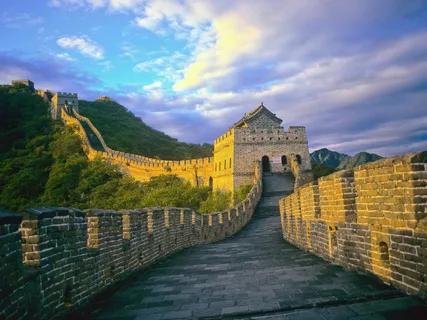
Great Wall of China
Earth | Northern Borders of the People's Republic of China | ||||||||
|---|---|---|---|---|---|---|---|---|---|
Length | 18 km 21196 | ||||||||
Construction Process | Constructed by Various Dynasties from the 7th Century BC to the 17th Century AD | ||||||||
Material | Wood Stone Brick Sun-dried Brick Compacted Earth | ||||||||
UNESCO World Heritage | Since 1987 | ||||||||
Most Famous Sections | Badaling, Mutianyu, Jinshanling | ||||||||
The Great Wall of China, stretching 21,196.18 kilometers in total and encircling northern China, is the longest man-made defensive wall in the world. Its construction spanned over 2,300 years and served as the core of China’s military, border, and trade control system under successive dynasties throughout its history. The primary purpose of its construction was to provide protection against raids by nomadic tribes from the north. Over time, this colossal structure evolved beyond a purely military feature to become a political, economic, and symbolic representative of Chinese civilization.
The Chinese name for the Great Wall of China is “Chángchéng” (长城 – Long Wall), also commonly referred to as “Wànlǐ Chángchéng” (万里长城 – Wall of Ten Thousand Li). The walls extend along China’s northern frontier, traversing mountains, valleys, deserts, and rivers to encompass numerous administrative regions including Hebei, Gansu, Shaanxi, Ningxia, and Inner Mongolia.
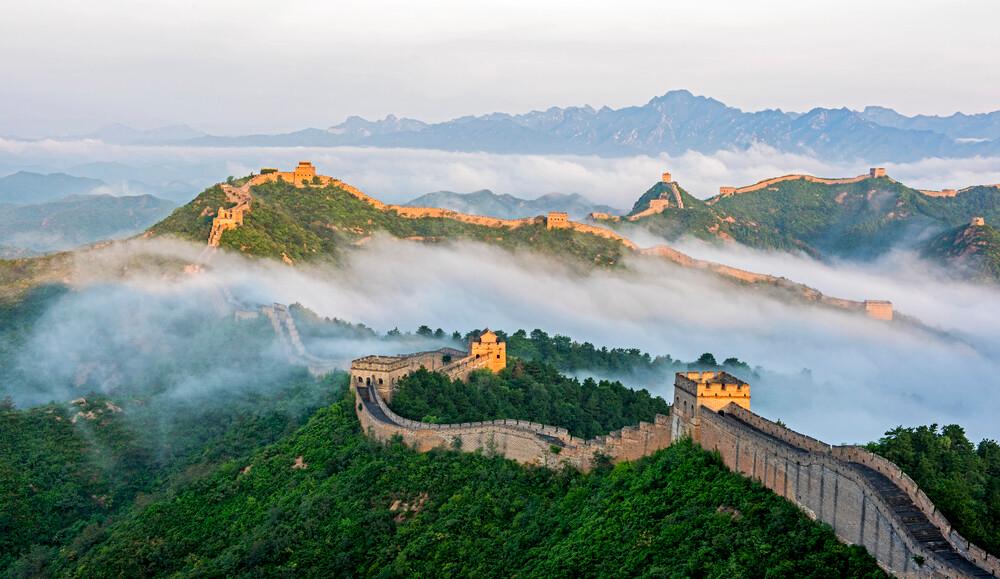
Çin Seddi (UNESCO)
The Great Wall of China begins at Shanhaiguan on the coast of the Yellow Sea in the east and extends to Jiayuguan Fortress on the edge of the Gobi Desert in the west. Along this route, it crosses challenging geographical obstacles such as mountains, valleys, and deserts. The height of the wall’s structures averages between 6 and 7 meters, reaching over 10 meters in some areas. The width typically ranges from 4 to 5 meters, allowing patrol soldiers to walk comfortably along the top.
Materials used in construction varied according to regional availability. In western regions, earth and gravel were commonly used, while in eastern areas, stone and fired brick were preferred. Additionally, defensive elements such as watchtowers, ramparts, and fortresses were constructed at regular intervals.
Watchtowers were used for signaling, employing smoke, fire, and mirrors for communication. Fortresses were designed to house troops, store supplies, and control strategic passes. Jiayu Pass, Juyong Pass, and Shanhai Pass are notable examples of such fortified structures.
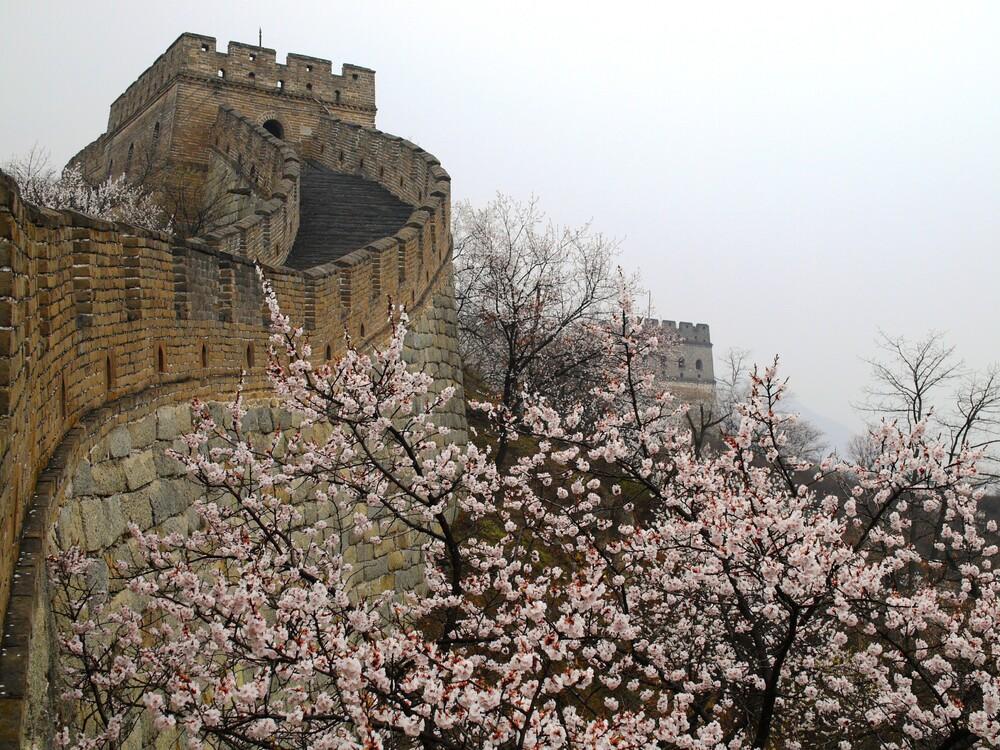
Çin Seddi (UNESCO)
The construction of the Great Wall involved hundreds of thousands of laborers, including soldiers, peasants, convicts, and conscripted workers. Materials were transported primarily by human power, using ropes and carts, or by goats on steep slopes. Construction conditions were harsh, and many workers lost their lives during this massive undertaking.
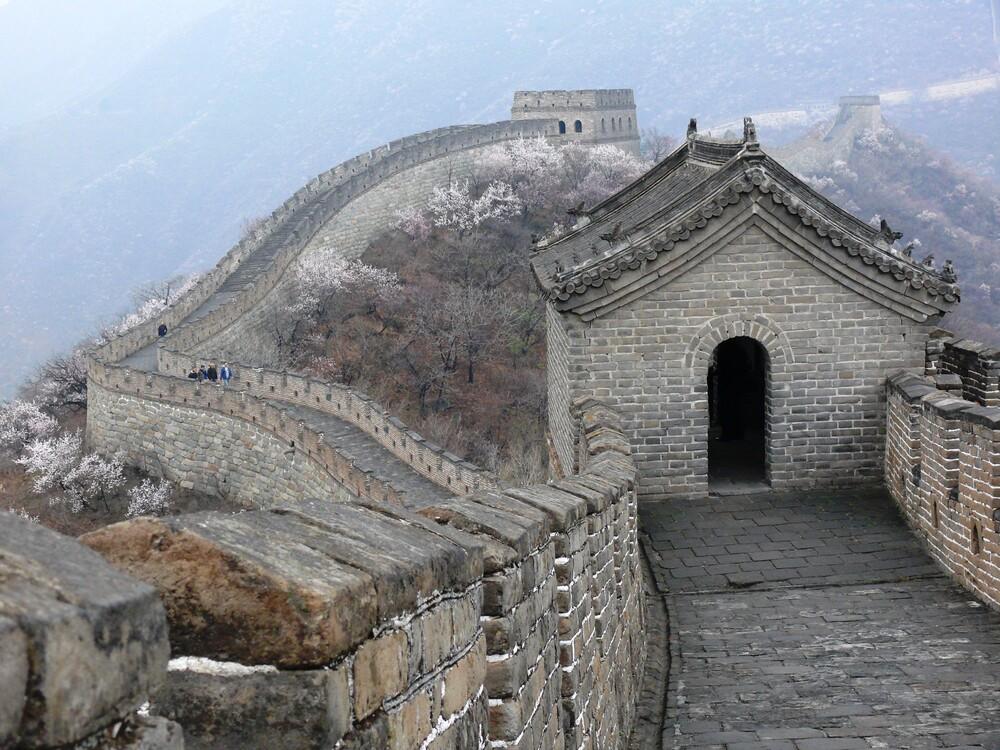
Çin Seddi (UNESCO)
The primary function of the Great Wall was to defend against attacks from nomadic groups originating in the north, including the Huns, Mongols, and various Turkic tribes. In addition to halting enemy advances, the wall was used to facilitate communication, regulate trade routes, and maintain order along the borders. Military garrisons stationed along the wall conducted continuous patrols and established communication networks using signal fires, smoke, and flags.
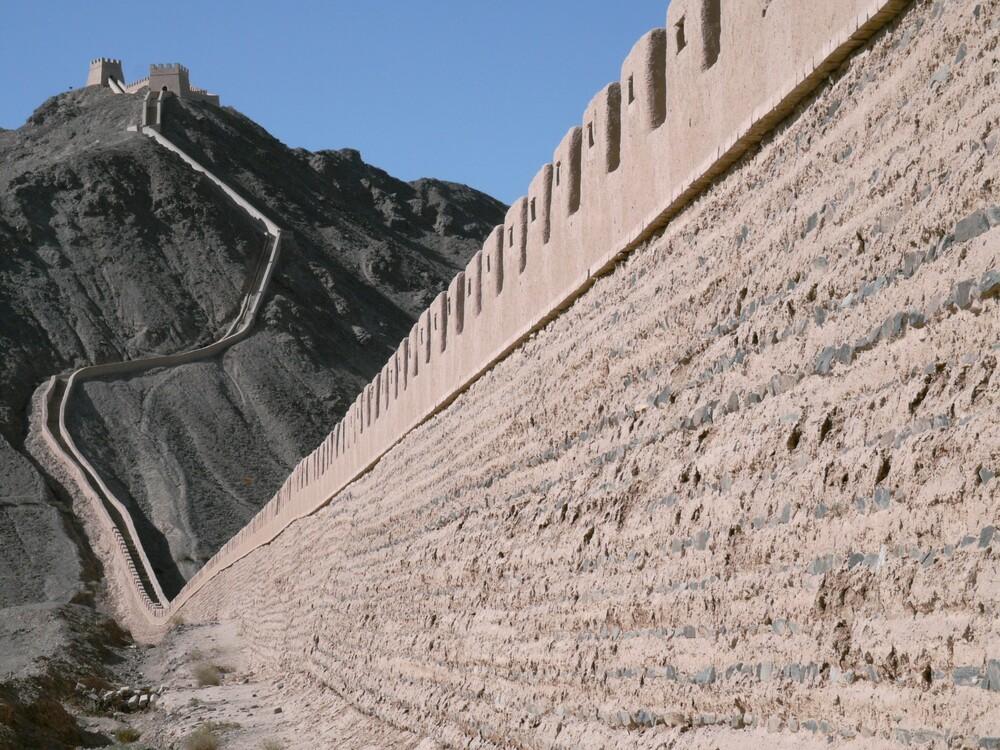
Çin Seddi (UNESCO)
The labor force for building the wall consisted largely of soldiers, prisoners, and conscripted peasants. The construction process, due to its physical demands and adverse climatic conditions, resulted in a very high death toll. Although official records lack precise figures, it is estimated that hundreds of thousands of people worked on the Great Wall and a significant portion of them perished during its construction.
Different sections of the Great Wall of China are open to tourism:
Badaling: The most popular and best-preserved section, located near Beijing.
Mutianyu: Offers a quieter and more natural landscape with a cable car system.
Jinshanling: Partially restored, ideal for hiking and photography.
Simatai: The steepest and most challenging section preserving its original structure.
Guided tours, historical narrations, night camping activities, photography tours, and cultural events are also offered.
Throughout history, the Great Wall of China has been more than just a physical defensive structure; it has also served as a symbol of imperial Chinese ideology. This structure, which defined China’s borders and sovereignty, aimed to reinforce the power of central authority. The construction and preservation of the wall were regarded as symbols of the state’s strength and control over society.
More than 30 percent of the wall has been lost over time. Natural erosion, construction activities, and tourism are the main causes of this loss. In 2006, the People’s Republic of China enacted the Great Wall Protection Ordinance to provide a legal framework for its preservation. Designated a UNESCO World Heritage Site, significant restoration efforts have been undertaken in areas such as Badaling.
The Great Wall of China is one of the country’s most visited tourist attractions. Millions of tourists visit annually, making it a vital component of China’s cultural and historical promotion. It has also become a symbolic representation of Chinese identity, frequently appearing in works of art, cinema, and literature.
Today, tourist sections such as Badaling, Mutianyu, and Jinshanling have been restored and opened to the public. Millions of visitors come to the Great Wall each year. Its value as a cultural heritage and collective memory is immense. In the 21st century, digital documentation and 3D modeling of the wall are being carried out using modern technologies.
China Highlights. "The Great Wall of China — 10 Essential Facts You Should Know." Accessed May 13, 2025.https://www.chinahighlights.com/greatwall/#length.
Sarı, Zafer. “Çin Seddi’nin Çin Kültüründeki Yeri ve Önemi.” *International Journal of Social and Humanities Sciences Research (JSHSR)* 10, no. 93 (2023): 555–561. Accessed May 13, 2025.https://jshsr.org/index.php/pub/article/view/53/51
UNESCO World Heritage Centre. “The Great Wall.” UNESCO World Heritage Centre. Accessed May 13, 2025.https://whc.unesco.org/en/list/438/.
UNESCO World Heritage. "The Great Wall." Accessed May 13, 2025.https://unescoworld.com/heritage/the-great-wall/.
Yang, Jin, Fabian Hadipriono Tan, and Adrian Tan. “The Ancient Construction Materials and Methods: The Great Wall of China in Jinshanling as a Case Study.” *Journal of Construction Engineering and Project Management* 7, no. 1 (March 2017): 37–49. Accessed May 13, 2025.https://www.researchgate.net/publication/318704953_The_Ancient_Construction_Materials_and_Methods_The_Great_Wall_of_China_in_Jinshanling_as_a_Case_Study

Great Wall of China
Earth | Northern Borders of the People's Republic of China | ||||||||
|---|---|---|---|---|---|---|---|---|---|
Length | 18 km 21196 | ||||||||
Construction Process | Constructed by Various Dynasties from the 7th Century BC to the 17th Century AD | ||||||||
Material | Wood Stone Brick Sun-dried Brick Compacted Earth | ||||||||
UNESCO World Heritage | Since 1987 | ||||||||
Most Famous Sections | Badaling, Mutianyu, Jinshanling | ||||||||
No Discussion Added Yet
Start discussion for "Great Wall of China" article
History
General Architectural Structure and Materials
Construction Methods and Labor Force
Military and Political Function
Construction Process and Cost
Visitation Sites and Experiences
Cultural and Symbolic Meaning
Conservation Status and Threats
Tourism and Public Perception
The Great Wall Today