This article was automatically translated from the original Turkish version.
+1 More
Scientific Field | Astrophysics - Physics - Astronomy | ||||||||
|---|---|---|---|---|---|---|---|---|---|
First Direct Detection | 2015, LIGO | ||||||||
Detectors | LIGO, Virgo | ||||||||
Detection Method | Laser interferometry | ||||||||
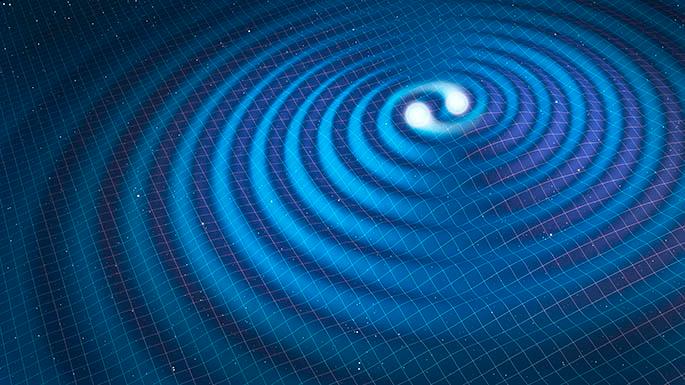
Gravitational waves are ripples in spacetime generated by the acceleration of massive objects and propagate at the speed of light. These waves were predicted within the framework of general relativity and cause temporary deformations in spacetime. Energy-carrying gravitational waves enable the direct study of dynamic events in the universe.
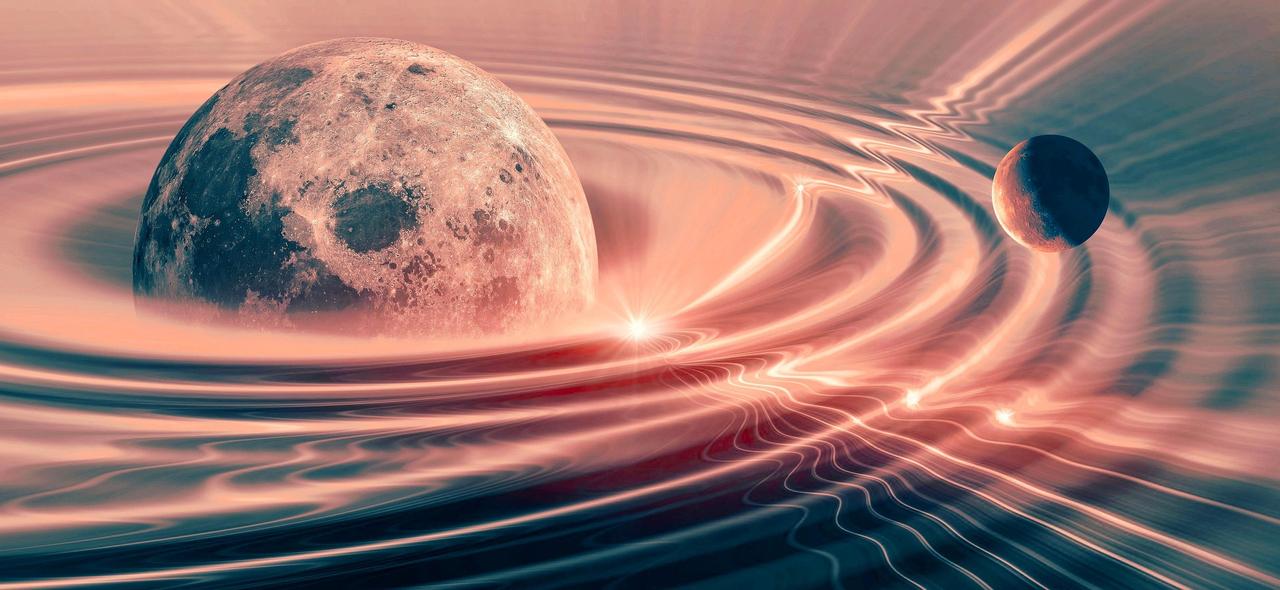
Visualization of Gravitational Waves (Pixabay)
The existence of gravitational waves was first predicted in 1916 by Albert Einstein within the framework of general relativity. Theoretical studies showed that changes in the distribution of mass and energy produce waves in spacetime.
For many years direct detection was impossible, but in 2015 experiments conducted by LIGO provided the first direct observation of gravitational waves. These recordings detected waves generated by high-energy events such as collisions between black holes and neutron stars.
The subtle effects of gravitational waves are measured using highly sensitive laser interferometers. Detectors such as LIGO detect minute differences in distance between two points to identify fluctuations in spacetime.
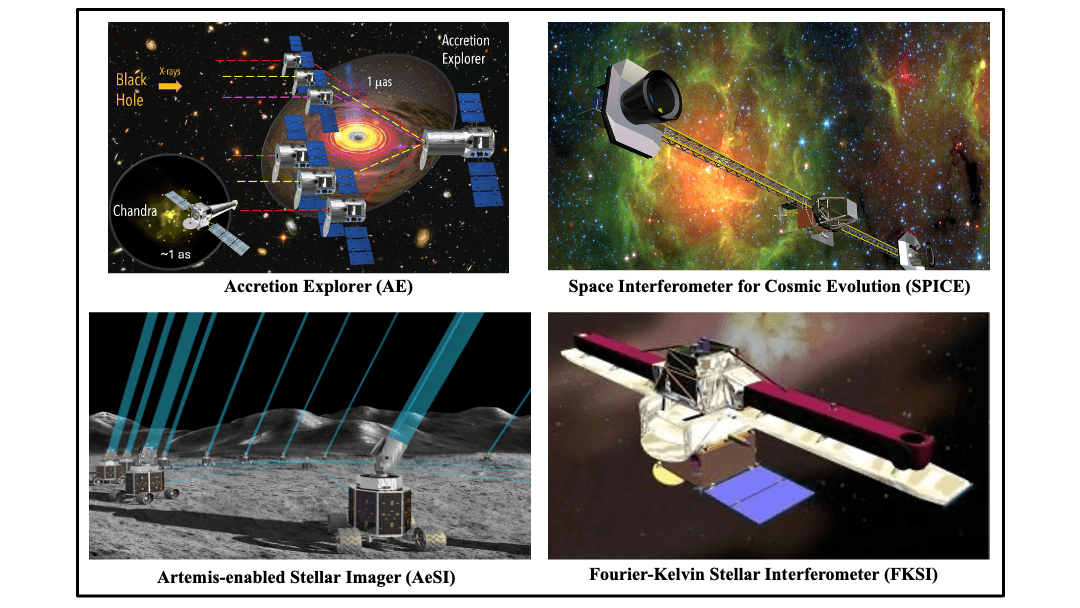
Interferometry Visualization (NASA)
Coordinated operation of multiple detectors increases the reliability of detections and enables determination of wave sources. LIGO, Virgo and other detectors use this multi-detector approach to monitor events across different regions of the universe.
The mathematical structure of gravitational waves is derived from the field equations of general relativity. Wave solutions describe how energy and momentum are carried, how spacetime geometry changes, and how waves propagate. Research studies provide detailed analyses of conceptual foundations wave characteristics and potential detection effects.
Gravitational Wave Frequency and Signal Graph (NASA)
Gravitational waves emerge as deformations in spacetime during collisions of dense massive objects. Their detection provides direct information about black hole and neutron star mergers and contributes to understanding high-energy processes in the universe.
The detection of these waves makes it possible to gather data on intergalactic collisions and supernovae as well as conditions in the early universe. This allows more accurate investigation of cosmic dynamic processes energy distributions and mass densities.
The detection of gravitational waves has spurred advances in interferometer technology data processing algorithms and multi-detector coordination. The recordings have provided experimental confirmation of general relativity and opened a new era in astrophysical research.
Simulated Gravitational Wave Image (NASA)
Since 2015 LIGO and Virgo detection networks have regularly recorded gravitational waves originating from black hole and neutron star mergers. These recordings enable detailed analysis of wave properties and mapping of high-energy events across various regions of the universe.
Anadolu Ajansı. "NASA: Kütle çekimsel dalgaları üçüncü kez kayda aldı." Accessed March 2, 2026. https://www.aa.com.tr/tr/bilim-teknoloji/nasa-kutle-cekimsel-dalgalari-ucuncu-kez-kayda-aldi/835044
Dirkes, Alain. “Gravitational Waves: A Review on the Conceptual Foundations of Gravitational Radiation.” *arXiv* 1802.05958. Accessed March 2, 2026. https://arxiv.org/pdf/1802.05958
Dyne, Bryan. “Kütle çekim dalgalarının keşfi: Bilimsel bir dönüm noktası.” *World Socialist Web Site*, February 13, 2016. Accessed March 2, 2026. https://www.wsws.org/tr/articles/2016/02/13/pers-f13.html
Kurious (Koç Üniversitesi). “Kütleçekim Dalgaları Saptandı: Einstein Son Sınavı da Geçti.” Kurious. Accessed March 2, 2026. https://kurious.ku.edu.tr/haberler/kutlecekim-dalgalari-saptandi-einstein-son-sinavi-da-gecti/
Thorne, Kip S. “Gravitational Radiation in General Relativity.” *arXiv* gr-qc/9506086. Accessed March 2, 2026. https://arxiv.org/pdf/gr-qc/9506086
TÜBİTAK Bilim Genç. “Kütleçekimsel Dalgalar ve Einstein.” Bilim Genç. Accessed March 2, 2026. https://bilimgenc.tubitak.gov.tr/makale/kutlecekimsel-dalgalar

Scientific Field | Astrophysics - Physics - Astronomy | ||||||||
|---|---|---|---|---|---|---|---|---|---|
First Direct Detection | 2015, LIGO | ||||||||
Detectors | LIGO, Virgo | ||||||||
Detection Method | Laser interferometry | ||||||||
No Discussion Added Yet
Start discussion for "Gravitational Waves" article
History
Theoretical Predictions
First Detections
Detection Methods
Interferometry
Multi-Detector Networks
Sources and Mathematical Foundations
Astrophysical Significance
Black Hole and Neutron Star Collisions
Studying the Dynamic Structure of the Universe
Technological and Scientific Contributions
Recent Developments