


This article was automatically translated from the original Turkish version.
+2 More
A graphics card is a fundamental hardware component in a computer system responsible for processing graphical data and transmitting it to display devices. Also known as a graphics processing unit (GPU), graphics cards play a central role in applications requiring high-resolution imagery. These units are essential for graphically intensive tasks such as 3D modeling, video editing, gaming technologies, and engineering applications.
Graphics cards are generally divided into two main categories: integrated and discrete graphics cards. Integrated graphics cards are typically embedded on the same chip as the central processing unit (CPU) and share the system memory. While sufficient for basic graphical operations, they offer limited performance. In contrast, discrete graphics cards have their own memory unit (VRAM) and are installed independently on the motherboard. Thanks to these features, they achieve significantly higher graphics processing capacity.
Modern graphics cards are not limited to image generation alone; they also provide parallel processing power and are used in fields such as scientific computing, artificial intelligence applications, and cryptocurrency mining. The GPU architecture offers a significant advantage over CPUs in multi-data processing due to its structure with thousands of cores.
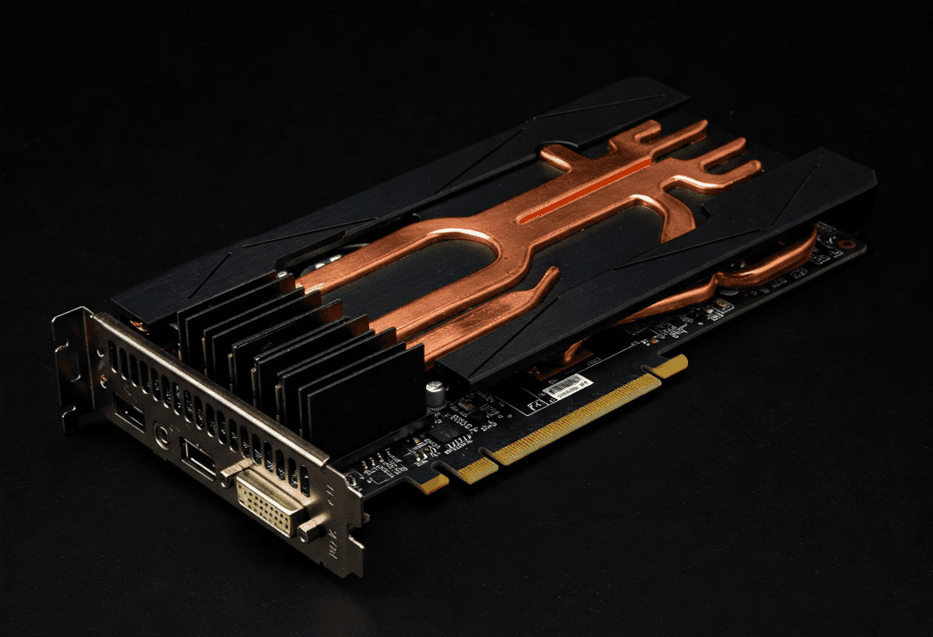
Ekran kartı (Yapay zeka tarafından üretilmiştir)
Key factors determining graphics card performance include core count, clock speed, VRAM capacity, and memory bus width. Additionally, the card’s cooling system and power consumption profile directly affect overall performance. Cooling systems are designed with either fan-based or liquid cooling to maintain operating temperatures within acceptable limits. In applications requiring high performance, advanced cooling solutions have become essential.
An integrated GPU (English: Integrated GPU or IGP) is a graphics processing component embedded within the central processing unit (CPU) or on the chipset of the motherboard. This design performs basic graphical operations without requiring a separate graphics card and shares system memory (RAM) for processing graphical data.
Modern integrated GPUs have been developed by various manufacturers including Intel HD/UHD Graphics, Iris, Iris Plus/Pro, and Xe series; AMD’s APU (Accelerated Processing Unit) architecture; and ARM-based Adreno and Mali GPUs. Notably, newer generation integrated GPUs such as Intel Iris Xe offer significantly higher energy efficiency and graphics performance compared to previous models, delivering an experience approaching that of a discrete GPU for low-to-mid-range gaming and video processing tasks.
Integrated GPUs do not contain dedicated VRAM since they rely on system RAM. In most systems, the amount of shared memory is dynamically determined by the BIOS or operating system. Thanks to this simple hardware architecture, integrated GPUs reduce the physical size of the system and provide low power consumption. Consequently, they are highly suitable for laptops, ultrabooks, mini-PCs, and embedded devices.
The most fundamental advantages of integrated GPUs include low cost, energy efficiency, and a compact form factor. Since no external graphics card or cooling system is required, device cost is significantly reduced. Additionally, low power consumption enables longer battery life and minimal heat generation.
Furthermore, by using shared system memory, integrated GPUs do not occupy additional physical space within the device, which is a major advantage in portable systems. For everyday use scenarios such as web browsers, office applications, and video playback, their performance is adequate and many users may not require a separate GPU.
The most significant limitation of an integrated GPU is its reliance on shared system memory. Since system RAM is typically used concurrently for CPU operations, it offers lower bandwidth and higher latency compared to discrete GPUs. In modern systems, shared memory bandwidth may reach up to approximately 128 GB/s, whereas VRAM data pathways in discrete GPUs can provide bandwidth of 1000 GB/s or higher.
In such architectures, graphically intensive tasks such as high-resolution gaming, professional video editing, CAD, and 3D modeling suffer from insufficient performance. Integrated GPUs are limited in shader performance, thread count, and parallel core count, leading to bottlenecks under heavy graphics or data processing loads.
Integrated GPUs are preferred primarily in the following scenarios:
A discrete GPU (English: discrete GPU or dedicated GPU) refers to a separate graphics processing unit that operates independently of the CPU and is installed on the motherboard. Such GPUs feature their own dedicated memory (VRAM), power supply, and typically advanced cooling systems. This architecture enables them to deliver significantly higher graphics and parallel processing capabilities than integrated GPUs.
Discrete GPUs are preferred in modern gaming computers, professional content creation systems (video editing, 3D modeling, CAD), artificial intelligence/machine learning applications, scientific computing centers, and high-resolution multi-monitor setups.
Discrete GPUs are installed on the motherboard via PCI Express (PCIe) slots and operate independently from the rest of the system, with their own processing units, VRAM, power delivery, and cooling components. The graphics data processing workflow consists of stages such as vertex processing, rasterization, fragment processing, and final image output. GPUs are optimized to execute these stages in parallel with high efficiency.
Through GPGPU usage, platforms such as CUDA or OpenCL enable parallel data processing for scientific simulations, machine learning training, and cryptocurrency mining at speeds far exceeding those of CPUs.
Inman, Matthew J., and Atef Z. Elsherbeni. "Programming video cards for computational electromagnetics applications." IEEE Antennas and Propagation Magazine 47, no. 6 (2006): 71-78.https://ieeexplore.ieee.org/abstract/document/1608730.
Kaldewey, Tim, Jeff Hagen, Andrea Di Blas, and Eric Sedlar. "Parallel search on video cards." In *First USENIX Workshop on Hot Topics in Parallelism (HotPar'09)*. 2009.https://www.usenix.org/legacy/event/hotpar09/tech/full_papers/kaldeway/kaldeway_html/.
Nickolls, John, and William J. Dally. "The GPU computing era." IEEE Micro 30, no. 2 (2010): 56-69.https://ieeexplore.ieee.org/abstract/document/5446251.
Owens, John D., Mike Houston, David Luebke, Simon Green, John E. Stone, and James C. Phillips. "GPU computing." *Proceedings of the IEEE* 96, no. 5 (2008): 879-899.https://ieeexplore.ieee.org/abstract/document/4490127.

Integrated (Onboard) Graphics Card
Advantages
Limitations and Performance Constraints
Use Cases
Discrete (Dedicated) GPU
Advantages
Disadvantages
Technical Specifications and Operating Principle
Use Cases
Comparison of Integrated (iGPU) and Discrete (dGPU) GPUs