This article was automatically translated from the original Turkish version.
Type of Geographical İndication | Place of Origin | ||||||||
|---|---|---|---|---|---|---|---|---|---|
Registration Number | 313 | ||||||||
Registration Date | 02.01.2018 | ||||||||
Product / Product Group(s) | Processed and unprocessed fruits vegetables and mushrooms | ||||||||
Province(s) | Bolu | ||||||||
Applicant/Registrant(s) | Göynük Chamber of Agriculture | ||||||||
Göynük Bombay Bean is a variety of Phaseolus coccineus L. characterized by a climbing growth habit, late development, and hypogeal germination (germination below the soil surface). It was officially registered as a geographical indication on 2 January 2018 under Law No. 6769 on Industrial Property and is protected as a geographical indication. The registering authority is the Göynük Chamber of Agriculture.
The cultivation area for this product includes the district of Göynük and its villages in Bolu, as well as the neighboring villages of Duman, Pirler, Hacıaliler, and Akçapınar in the Taraklı district of Sakarya; and the villages of Çamoluk, Ormanpınar, and Gelinözü in the Mudurnu district of Bolu. The region exhibits transitional climate characteristics rather than Black Sea climate traits; this climatic structure directly influences the bean’s adaptation to the region and its quality attributes.
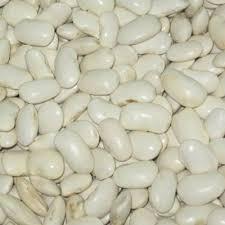
Göynük Bombay Bean is easily distinguished from other bean varieties by its large, glossy white seeds. The seeds are oval-shaped, with pods that are notably large, long, rough-textured, and thick-walled, featuring hard sutures. It is not suitable for consumption as a fresh vegetable. It is particularly preferred for the preparation of piyaz and is served in this manner in high-end restaurants.
Due to its relatively thick skin, the cooking time is prolonged (55–63 minutes). For optimal results, it is recommended to cook it over low heat or to remove the skins after boiling. The seeds attract attention in both domestic and international markets for their size, gloss, aroma, and flavor.
Sowing is carried out in May–June. Fields are plowed in autumn with animal manure and prepared before sowing using a combination of harrow and tine. Beans are planted by hand in furrows at a depth of 3–4 cm and spaced 13–18 cm apart. The distance between furrows is 80–100 cm. Irrigation is performed at least 13–15 times during the growing season using the flood irrigation method.
Stakes are erected in mid-June, sourced from poplar pruning and forest products in the region. Pods mature in August and are harvested individually, dried in the sun, and threshed by hand or using a low-speed thresher. Harvesting continues until the first frost in autumn. Seed beans are selected from the largest seeds.
The product is monitored by the Göynük District Directorate of Food, Agriculture and Livestock, the Göynük Municipality, the Agricultural Credit Cooperative, and the Göynük Branch of the Village Headmen’s Association. Inspections are conducted in early August to verify morphological conformity and adherence to production methods. Additional inspections may be carried out as necessary.
Turk Patent and Trademark Office. "Göynük Bombay Fasulye" Geographical Indication Registration Certificate, No. 313. Accessed October 24, 2025. https://ci.turkpatent.gov.tr/Files/GeographicalSigns/313.pdf.
Turk Patent and Trademark Office. "Göynük Bombay Fasulye." *Coğrafi İşaretler Portalı*. Accessed October 24, 2025. https://ci.turkpatent.gov.tr/cografi-isaretler/detay/38157.

Type of Geographical İndication | Place of Origin | ||||||||
|---|---|---|---|---|---|---|---|---|---|
Registration Number | 313 | ||||||||
Registration Date | 02.01.2018 | ||||||||
Product / Product Group(s) | Processed and unprocessed fruits vegetables and mushrooms | ||||||||
Province(s) | Bolu | ||||||||
Applicant/Registrant(s) | Göynük Chamber of Agriculture | ||||||||
No Discussion Added Yet
Start discussion for "Göynük Bombay Beans" article
Geographical Boundary
Distinctive Characteristics
Botanical Characteristics
Technological Characteristics
Production Method
Monitoring