Type of Geographical Indication | Designation of Origin | ||||||||
|---|---|---|---|---|---|---|---|---|---|
Registration Number | 313 | ||||||||
Registration Date | January 2, 2018 | ||||||||
Product / Product Group(s) | Processed and unprocessed fruits and mushrooms vegetables | ||||||||
Province(s) | Bolu | ||||||||
Applicant/Registrant(s) | Göynük Chamber of Agriculture | ||||||||
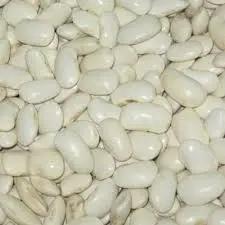
The Göynük Bombay Bean is a variety of Phaseolus coccineus L. with a climbing growth habit, late development, and hypogeal (germinating underground) characteristics. It was registered as a “designation of origin” on January 2, 2018 and is protected under Industrial Property Law No. 6769. The registration was carried out by the Göynük Chamber of Agriculture.
The cultivation areas include Göynük district and villages in Bolu, as well as the neighboring Taraklı district (Sakarya) villages of Duman, Pirler, Hacıaliler, and Akçapınar; and the villages of Çamoluk, Ormanpınar, and Gelinözü in Mudurnu (Bolu) district. The region has transitional climate characteristics rather than a pure Black Sea climate, which directly influences the beans’ adaptation and quality traits.
The Göynük Bombay Bean is easily distinguished from other bean types by its large, glossy white seeds. The pods are elongated, thick, and slightly rough, with stiff veins. It is not suitable for consumption as fresh beans and is primarily preferred for piyaz (bean salad), often served in fine dining establishments.
Due to its relatively thick pods, the cooking time is long (55–63 minutes). For best results, it is recommended to cook over low heat or to separate the pods after boiling. The beans’ size, glossiness, aroma, and flavor make them appealing in both domestic and international markets.
Sowing occurs between May and June. Fields are plowed in autumn using animal manure and prepared before planting with a combination of harrow and rake. Beans are sown manually in furrows at a depth of 3–4 cm and 13–18 cm apart, with 80–100 cm between rows. During the season, at least 13–15 irrigations are performed using flood irrigation.
In mid-June, poles are placed using local poplar prunings and forest materials. Mature pods are harvested individually in August, sun-dried, and blended by hand or low-speed threshers. Harvest continues until frost in late autumn. Seed beans are selected from the largest pods.
The product is supervised by the Göynük District Directorate of Food, Agriculture and Livestock, Göynük Municipality, Agricultural Credit Cooperative, and the Göynük Branch of the Headmen’s Association. Inspections take place in early August in the field, checking morphological traits and compliance with the production method. Additional inspections may be conducted if necessary.
Türk Patent ve Marka Kurumu. "Göynük Bombay Fasulyesi." Coğrafi İşaretler Portalı. Accessed October 24, 2025. https://ci.turkpatent.gov.tr/cografi-isaretler/detay/38157
Türk Patent ve Marka Kurumu. Göynük Bombay Fasulyesi: Coğrafi İşaret Sicil Belgesi, No: 313. Accessed October 24, 2025. https://ci.turkpatent.gov.tr/Files/GeographicalSigns/313.pdf

Type of Geographical Indication | Designation of Origin | ||||||||
|---|---|---|---|---|---|---|---|---|---|
Registration Number | 313 | ||||||||
Registration Date | January 2, 2018 | ||||||||
Product / Product Group(s) | Processed and unprocessed fruits and mushrooms vegetables | ||||||||
Province(s) | Bolu | ||||||||
Applicant/Registrant(s) | Göynük Chamber of Agriculture | ||||||||
Geographical Area
Distinctive Features
Botanical Characteristics
Technological Properties
Production Method
Inspection
This article was created with the support of artificial intelligence.