This article was automatically translated from the original Turkish version.
Length(s) | 26-29 cm | ||||||||
|---|---|---|---|---|---|---|---|---|---|
Branch | Chordata | ||||||||
Team(s) | Charadriiformes | ||||||||
Weight(s) | 140–312 g | ||||||||
Conservation Status | LC-Low Concern (IUCN) | ||||||||
Egg Count | 3–4 | ||||||||
Incubation Period | 28–31 days | ||||||||
Average Lifespan | 12 years | ||||||||
Family | Charadriidae | ||||||||
Wingspan | 67-76 cm | ||||||||
Class | Aves | ||||||||
Realm | Animalia | ||||||||
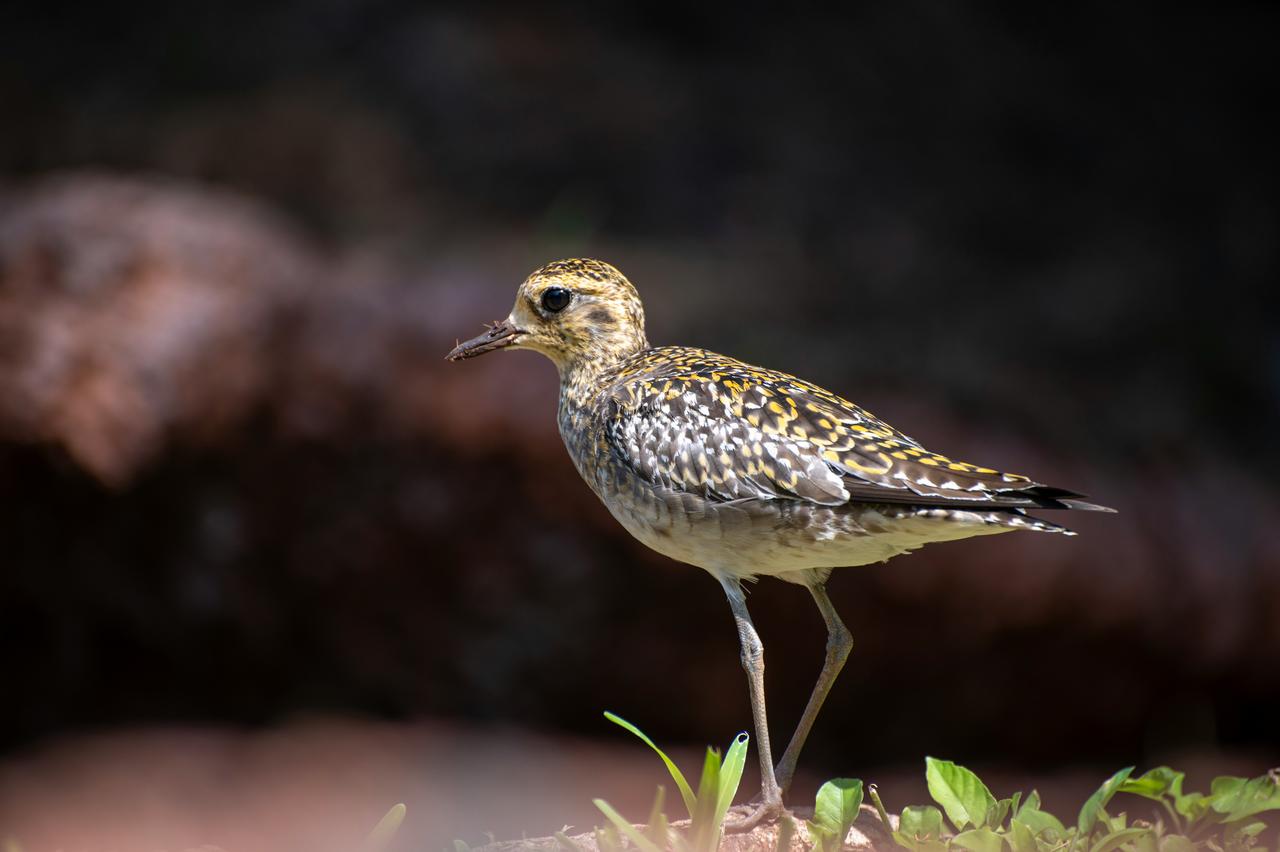
Golden Plover (Pluvialis apricaria) is a medium-sized, slender-billed, and elegant shorebird belonging to the family Charadriidae. During the breeding season, its underparts are black and its upperparts are golden-brown with speckling; in winter, its plumage becomes paler and the black on the underparts disappears. In flight, a striking contrast is visible between the white underwing and the dark underside.
The golden plover is a bird species within the class Aves and is classified in the family Charadriidae. Two subspecies are generally recognized: Pluvialis apricaria apricaria and Pluvialis apricaria altifrons. These subspecies exhibit distinct geographic distributions.
The golden plover is a medium-sized shorebird measuring 25–29 cm in length with a wingspan of 67–76 cm and a weight of 140–312 g. It has a slender bill and a relatively plump body; its wings are equal in length to or slightly longer than its tail.
In breeding plumage the underparts are black and the upperparts are dark brown with golden speckling. In flight a distinct contrast appears between the white underwing and the black underparts. The white wing stripe is faint. The legs do not extend beyond the tail tip in flight.
In winter plumage the black on the underparts vanishes; the breast is streaked brown and the belly is white. The golden speckling on the upperparts becomes less conspicuous and may turn grayish. Juveniles resemble the winter plumage but have pale gray edging on the flanks and belly.
Females typically have less black plumage and may show brown markings on the underparts. Although color and pattern differ between subspecies their overall morphological structure is similar.
The golden plover is a Palaearctic species that breeds around the Arctic Circle in subarctic tundra and northern regions of Europe and western Asia. Its breeding range extends from Iceland to Russia. During winter it disperses widely across southern Europe to Morocco and Anatolia. In Türkiye it is observed throughout the country during migration periods and is particularly common in winter in Central Anatolia southern Marmara eastern Mediterranean central Black Sea and Aegean coasts.
During the breeding season it prefers tundra bog and open wetland habitats. It nests on high-altitude bogs moss- and lichen-covered tundra and open flat areas with sparse vegetation. In winter and during migration it is found in wet grasslands meadows stubble fields fallow lands agricultural fields floodplains lagoons and coastal areas of lakes and seas. It also frequents tidal flats and shallow coastal zones preferring open and expansive areas for feeding and roosting.
This species occurs in large flocks during winter and forms long lines in flight. During the breeding season it is more solitary.
It favors open treeless areas and inhabits low-vegetation flat terrain to enable rapid escape from predators. In breeding areas individuals are mostly solitary or sparsely distributed with distinct spacing between nests. It shows strong site fidelity and often returns to the same breeding grounds.
It is a migratory species with some populations exhibiting partial migration. Populations typically abandon breeding areas by late summer and early autumn.
The species may be active both during day and night.
Its diet consists primarily of invertebrates. Insects especially Coleoptera and their larvae earthworms and other invertebrates form a major part of its diet. Spiders myriapods snails and polychaete worms in tidal areas are also consumed.
Plant material is occasionally consumed including fruits seeds and grasses. It typically obtains food by pecking at the surface or probing the soil to a depth of 1–2 cm.
Feeding behavior varies seasonally. During breeding insects especially larvae are the main food source while in winter earthworms become the primary prey. Individuals may feed at night and travel considerable distances from nesting areas in search of food.
The golden plover (Pluvialis apricaria) is monogamous and pairs often form lifelong bonds. Pairs typically establish shortly before arriving at breeding grounds. During the breeding season males create several shallow depressions on the ground and the female selects one to use as a nest.
The nest is a shallow depression constructed by the male and lined with plant material by the female. The female typically lays 3–4 eggs at intervals of approximately 48–60 hours.
Chicks are precocial and leave the nest shortly after hatching. Parents lead them to feeding areas and continue to care for them. Chicks acquire full plumage within about a month and become independent. Sexual maturity is usually reached by the second year.
The golden plover (Pluvialis apricaria) is listed as Least Concern (LC) on the IUCN Red List. The global population trend is considered stable; however local declines and habitat reductions have been reported in some southern and western parts of Europe.
The global population is estimated at 2.96 million to 4.37 million individuals or approximately 1.97 million to 2.91 million adults. Habitat loss particularly the conversion of bog and wetland areas to agriculture and afforestation has led to range contractions.
Significant local declines have occurred in some regions. For example populations breeding from Belgium to Poland have largely disappeared. Populations in England and Ireland have declined. In contrast seasonal increases have been recorded in some areas such as Iceland and Finland.
Wintering numbers can be very high in certain countries; for instance tens of thousands of individuals have been reported wintering in England and the Netherlands. Population fluctuations are associated with habitat changes hunting and environmental conditions.
International Union for Conservation of Nature. “Porphyrio porphyrio.” The IUCN Red List of Threatened Species. Accessed April 2026. https://www.iucnredlist.org/species/22693727/154464259.
Ornito. "Bird Detail 47." ornito.org. Accessed April 2026. https://ornito.org/Bird/Detail/47
Trakuş. "Altın Yağmurcun (Pluvialis apricaria)." *trakus.org*. Accessed April 2026. https://www.trakus.org/kods_bird/uye/?fsx=2fsdl17@d&tur=Alt%C4%B1n%20ya%C4%9Fmurcun
Vu, Trac. “A small bird with speckled feathers stands on the ground.” Unsplash. Accessed April 2026. https://unsplash.com/photos/a-small-bird-with-speckled-feathers-stands-on-the-ground-MtloNrsAtlU
Wiersma, Popko, Guy M. Kirwan, and Peter F. D. Boesman. “European Golden-Plover (Pluvialis apricaria).” Birds of the World. Cornell Lab of Ornithology. Accessed April 2026. https://birdsoftheworld.org/bow/species/eugplo/cur/introduction

Length(s) | 26-29 cm | ||||||||
|---|---|---|---|---|---|---|---|---|---|
Branch | Chordata | ||||||||
Team(s) | Charadriiformes | ||||||||
Weight(s) | 140–312 g | ||||||||
Conservation Status | LC-Low Concern (IUCN) | ||||||||
Egg Count | 3–4 | ||||||||
Incubation Period | 28–31 days | ||||||||
Average Lifespan | 12 years | ||||||||
Family | Charadriidae | ||||||||
Wingspan | 67-76 cm | ||||||||
Class | Aves | ||||||||
Realm | Animalia | ||||||||
No Discussion Added Yet
Start discussion for "Golden Plover (Pluvialis apricaria)" article
Taxonomy
Morphological Characteristics
Distribution and Habitat
Behavior and Ecology
Feeding
Breeding
Conservation Status