


This article was automatically translated from the original Turkish version.
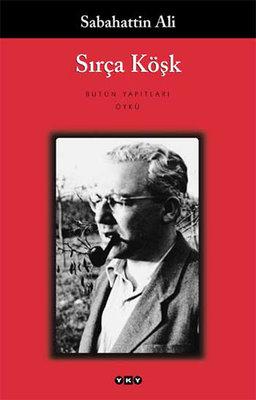
Glass Pavilion
Author(s) | Sabahattin Ali | ||||||||
|---|---|---|---|---|---|---|---|---|---|
Type(s) | Short story | ||||||||
Language(s) | Turkish | ||||||||
Publication Date | 1947 | ||||||||
Publisher(s) | Everest Yayınları (2020) Yapı Kredi Yayınları (2003) Remzi Kitabevi (1974) | ||||||||
Sırça Köşk is a book by Sabahattin Ali, published in 1947, composed of stories and fairy tales written in a social realist vein. It is one of the author’s works that reflect his sharp and critical perspective, drawing attention through narratives that satirize the social structure and governance of the era. The stories and fairy tales in the book feature fictional constructs aimed at raising public awareness and containing profound social criticism.
Sırça Köşk consists of stories that depict the relationship between individual and society, the mechanism of justice, the conflict between rulers and the ruled, the exploitation of the people, and their process of awakening. The most striking section of the book, which gives it its title, is the fairy tale "Sırça Pavilion". This fairy tale is a structured allegory representing the deception of the people, the repressive attitude of the rulers, and the people’s awakening on.
In addition, other stories in the book explore themes such as the hardships faced by Anatolia society, village life, the position of women in society, and the pursuit of justice such as. Particularly, the story "Cankurtaran" exposes the inequalities of the healthcare system through the desperate struggle of a man to save his wife.
In Sırça Köşk, Sabahattin Ali typically creates two fundamental character types in his stories and fairy tales:
The central themes of Sırça Köşk are as follows:
Sabahattin Ali employs a simple and accessible language in Sırça Köşk. The descriptions in the stories are powerful and vivid event but striking. In the fairy tales, he chooses a plain and comprehensible narrative style accessible to the general public. In this work, where the author frequently employs irony and satire, the narration is generally direct and message urgent. The majority of the stories adhere to social realism and use a simple style understandable to the people.
Sırça Köşk holds a prominent place among Turkey’s social realist literary works and is regarded as one of the exemplary pieces in Sabahattin Ali’s literary legacy.
Sabahattin Ali. Sırça Köşk. Yapı Kredi Yayınları, 2003.

Glass Pavilion
Author(s) | Sabahattin Ali | ||||||||
|---|---|---|---|---|---|---|---|---|---|
Type(s) | Short story | ||||||||
Language(s) | Turkish | ||||||||
Publication Date | 1947 | ||||||||
Publisher(s) | Everest Yayınları (2020) Yapı Kredi Yayınları (2003) Remzi Kitabevi (1974) | ||||||||
No Discussion Added Yet
Start discussion for "Glass Pavilion (Book)" article
Subject of the Book
Characters
Theme of the Book
Language and Style