This article was automatically translated from the original Turkish version.
Scientific Name | Giraffa camelopardalis | ||||||||
|---|---|---|---|---|---|---|---|---|---|
Body Length | Between 4.5 and 5.7 meters | ||||||||
Maximum Speed | 56 to 60 kilometers per hour | ||||||||
Social Structure | Loose groups called towers | ||||||||
Lifespan | In the wild, an average of 10 to 25 years | ||||||||
Conservation Status | Sensitive and declining population | ||||||||
Body Weight | Between 680 and 1930 kilograms | ||||||||
Neck Structure | 7 vertebrae and 2.4 meters in length | ||||||||
Feeding Style | Herbivorous and folivorous | ||||||||
Favorite Food | Acacia tree leaves | ||||||||
Language Features | 45-50 centimeters in length and black-purple in color | ||||||||
Gestation Period | Approximately 14 to 15 months | ||||||||
Birth Length | Between 1.8 and 2 meters | ||||||||
Sleep Duration | A total of 5 to 30 minutes per day | ||||||||
Habitat | African savannas and open woodlands | ||||||||
Giraffe Species | Northern, Angolan, Masai and Southern | ||||||||
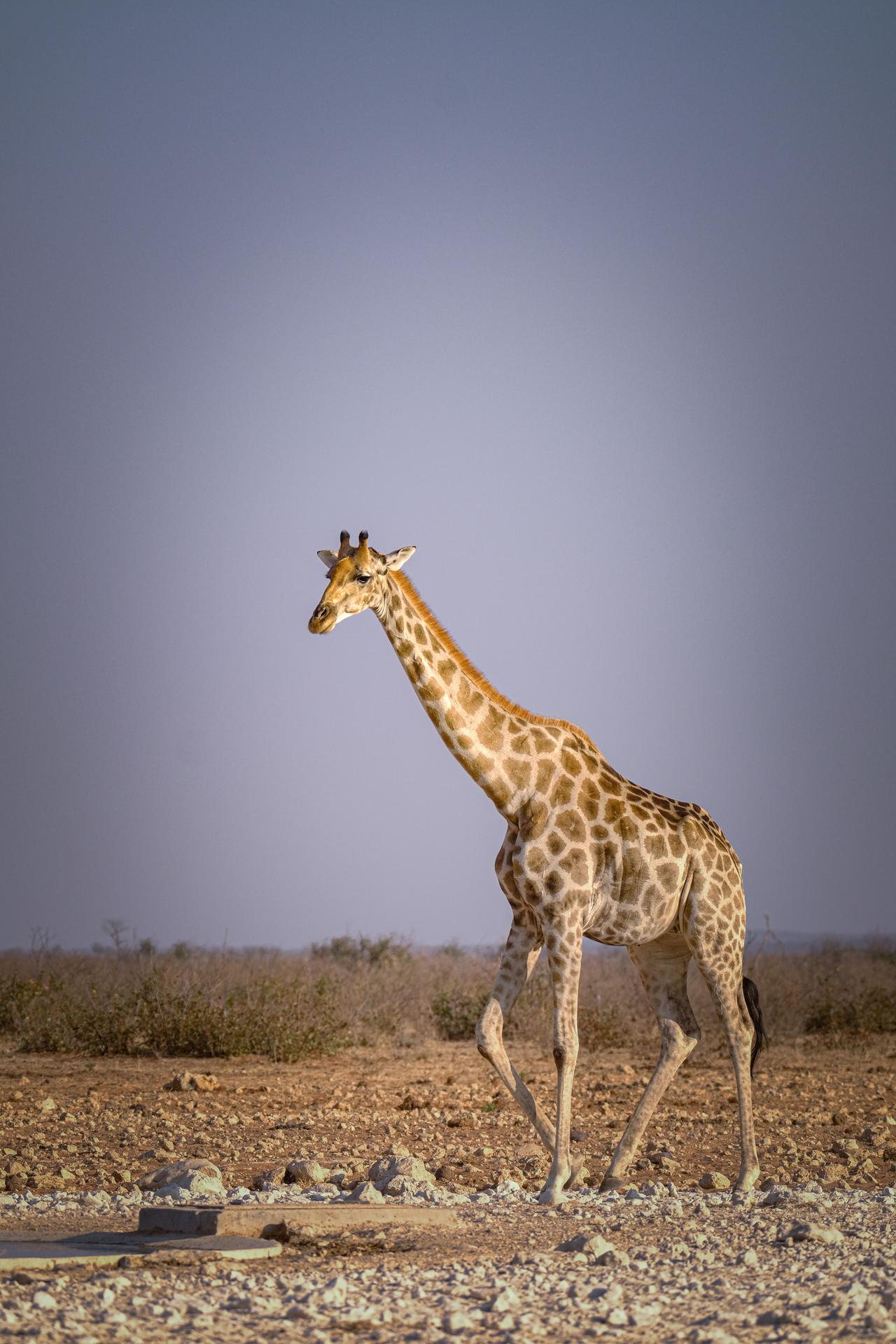
Giraffe (Giraffa camelopardalis) is the tallest living land animal, belonging to the order Artiodactyla within the class Mammalia and the family Giraffidae. Its closest living relative in nature is the okapi, which also belongs to the same family. Historically classified as a single species (Giraffa camelopardalis) with nine subspecies, recent research has divided giraffes into four main species: Northern, Masai, Reticulated, and Southern giraffe.
Adult male giraffes can reach heights of 5.5 to 5.7 meters and weigh up to 1,930 kilograms, while females are shorter and lighter. Like most mammals, including humans, they have seven cervical vertebrae; however, each vertebra is significantly elongated, resulting in a total neck length of 2 to 2.4 meters.
Their coats are covered with brown, chestnut, or black patches separated by white to beige lines, providing camouflage in their natural habitat. On their heads, they possess ossicones—horn-like structures composed of bone covered with skin and hair. Their tongues, used for feeding, measure 45 to 50 centimeters in length and are dark blue to purple in color due to melanin pigmentation that protects them from sunburn.
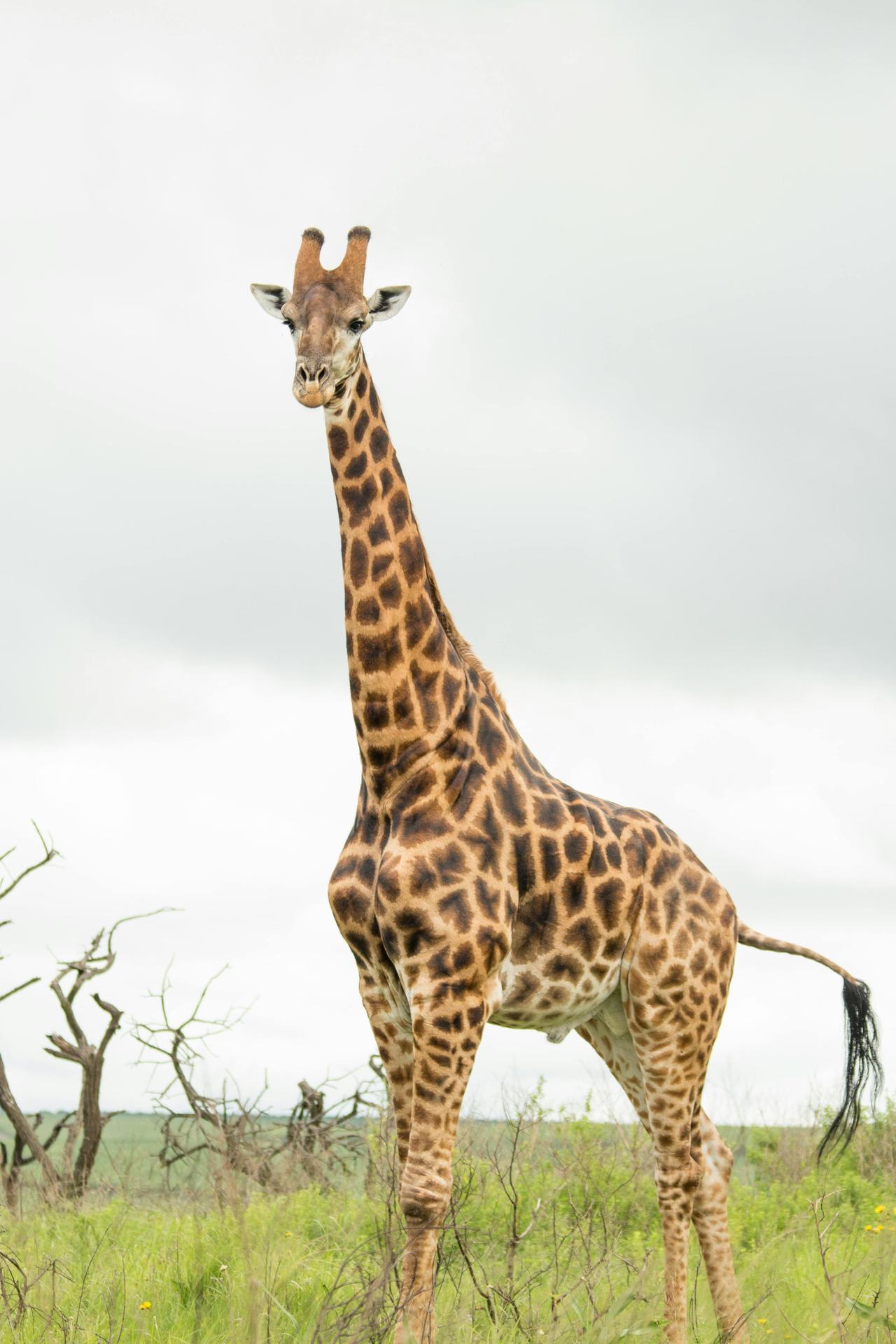
Giraffe (Giraffa Camelopardalis) (Pexels)
Giraffes are endemic to the African continent. Today, they are primarily distributed across sub-Saharan Africa, particularly in East, Central, and Southern Africa. They typically inhabit savannas, grasslands, and open woodlands. The extent of their range varies with the availability of water and food, expanding during dry periods and contracting during wet seasons. In times of food scarcity, they tend to disperse over wider areas.
Giraffes are herbivorous and primarily feed on the leaves, shoots, flowers, and fruits of acacia trees (Acacia spp.). As ruminants, they possess a four-chambered stomach.
Thanks to their long tongues, narrow mouths, and flexible upper lips, they can feed on vegetation from high, thorny branches. The thorns of acacia trees are rendered harmless by the giraffe’s thick saliva and specialized molars. An adult individual can consume between 34 and 66 kilograms of plant material daily. Males typically feed from higher branches, while females prefer leaves at chest and head height, which are often more nutritious.
Giraffes live in dynamic and flexible social groups, usually consisting of 10 to 30 individuals, with members joining or leaving according to their own preferences. They sleep for short periods of 5 to 30 minutes at a time, often standing up, to remain alert to predators; their total daily sleep time rarely exceeds four hours.
They are fast-moving mammals capable of reaching speeds of 56 to 60 kilometers per hour over short distances. Although generally quiet, they communicate with each other using infrasonic sounds inaudible to humans, as well as grunts, whistles, and hisses depending on the situation. Adult males engage in a behavior known as “necking,” in which they swing their necks and strike each other to establish dominance and mating priority within the herd.
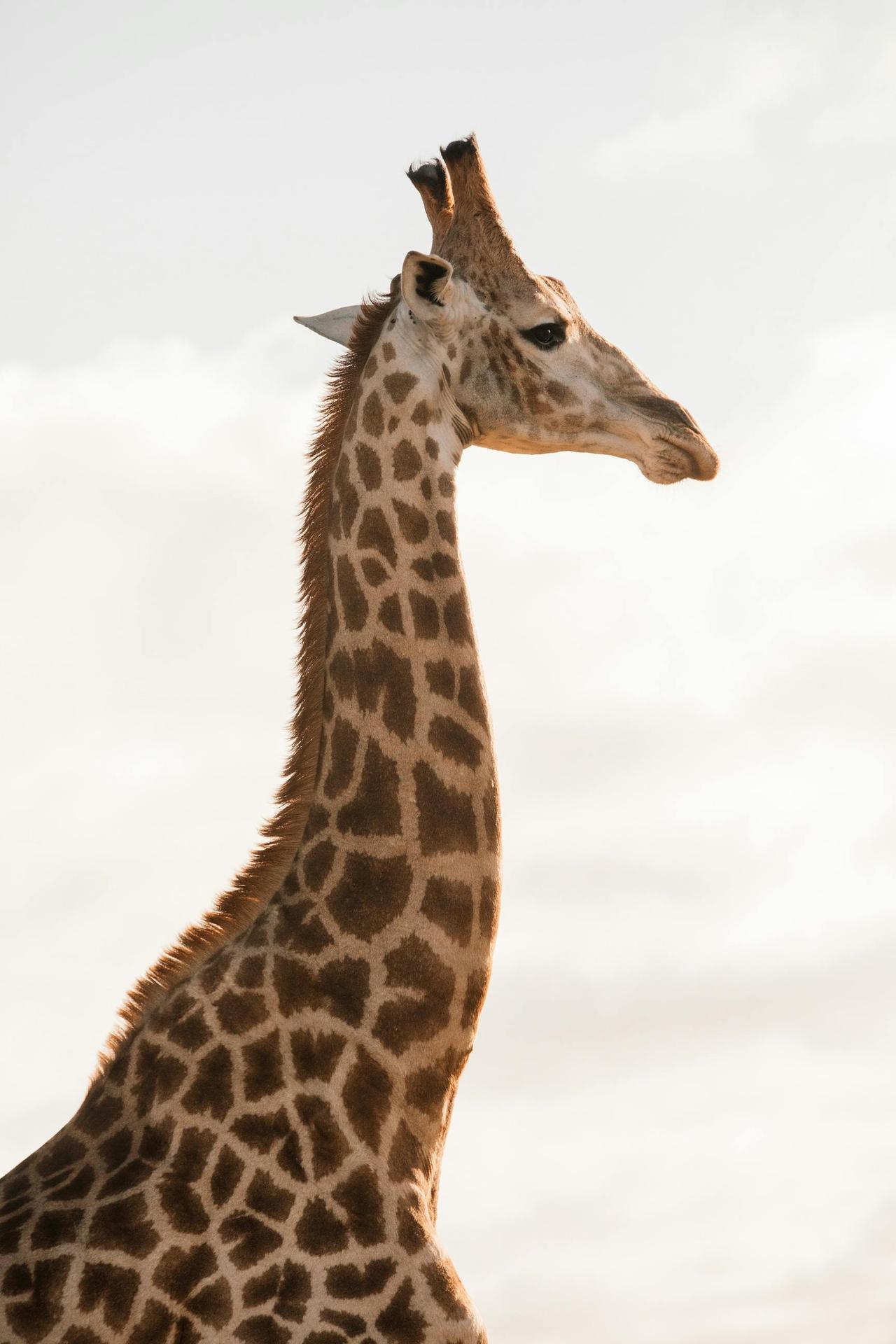
Giraffe (Giraffa Camelopardalis) (Pexels)
Giraffes have a polygynous mating system. Gestation lasts approximately 14 to 15 months (average 457 days). Females give birth standing up, causing newborn calves to fall about 1.5 to 2 meters to the ground. A newborn giraffe is approximately 2 meters tall and weighs between 50 and 100 kilograms. Within about an hour after birth, the calf stands up and begins nursing. In the wild, giraffes live an average of 10 to 15 years, though some may reach 26 years. In captivity, their lifespan can extend to 27 years.
Traditionally, giraffes were classified as a single species, Giraffa camelopardalis, with nine subspecies distinguished by coat patterns and geographic distribution. However, recent molecular genetic studies have revealed the existence of four distinct main species in the wild, each geographically isolated and showing no evidence of interbreeding. According to this new taxonomic framework, giraffes are now divided into four independent species: Northern giraffe (Giraffa camelopardalis), Reticulated giraffe (Giraffa reticulata), Masai giraffe (Giraffa tippelskirchi), and Southern giraffe (Giraffa giraffa).
These four main species are clearly distinguishable by their coat patterns and geographic ranges. For example, Masai giraffes have irregular, oak-leaf-shaped markings, while Reticulated giraffes display a network of sharp, narrow white lines on a dark background. Northern and Southern giraffes, each containing several subspecies, are distributed across northern, western, central, and southern habitats of Africa. The total wild population of these four main species is estimated at between 117,000 and 140,000 individuals, with populations showing a significant declining trend.
Giraffes are classified as “Vulnerable” by the International Union for Conservation of Nature (IUCN) due to declining populations; some subspecies are critically endangered. An estimated 117,000 to 140,000 individuals remain in the wild. Major threats to giraffe populations include habitat loss and fragmentation due to expanding agricultural land, drought linked to climate change, armed conflict in the region, and illegal poaching for meat and hides.
Born Free Foundation. "Giraffes." Born Free Foundation. Accessed March 28, 2026. https://www.bornfree.org.uk/animals/giraffes/
Doğabilim. "Yaşayan En Uzun Kara Hayvanı: Zürafa (Giraffa camelopardalis)." Doğabilim. Accessed March 28, 2026. https://dogabilim.org/yasayan-en-uzun-kara-hayvani-zurafa-giraffa-camelopardalis/
Giraffe Conservation Foundation. "Not all giraffe are the same." Giraffe Conservation Foundation. Accessed March 28, 2026. https://giraffeconservation.org/giraffe-species/
International Fund for Animal Welfare (IFAW). "Giraffes: Diet, Habitat, Threats, & Conservation." IFAW. Accessed March 28, 2026. https://www.ifaw.org/animals/giraffes
Maisano, Sarah. "Giraffa camelopardalis (giraffe)." Animal Diversity Web. Accessed March 28, 2026. https://animaldiversity.org/accounts/Giraffa_camelopardalis/
Pexels. "Desen Hayvan Vahşi Safari." Accessed March 28, 2026. https://www.pexels.com/tr-tr/fotograf/desen-hayvan-vahsi-safari-4577784/
Pexels. "Hayvan Zürafa Vahşi Tropik." Accessed March 28, 2026. https://www.pexels.com/tr-tr/fotograf/hayvan-zurafa-vahsi-tropik-26727927/
Pexels. "Zürafa Safari Memeli Hayvan Fotoğrafçılığı." Accessed March 28, 2026. https://www.pexels.com/tr-tr/fotograf/zurafa-safari-memeli-hayvan-fotografciligi-19723230/
San Diego Zoo Wildlife Alliance. "Giraffe." San Diego Zoo Animals & Plants. Accessed March 28, 2026. https://animals.sandiegozoo.org/animals/giraffe

Scientific Name | Giraffa camelopardalis | ||||||||
|---|---|---|---|---|---|---|---|---|---|
Body Length | Between 4.5 and 5.7 meters | ||||||||
Maximum Speed | 56 to 60 kilometers per hour | ||||||||
Social Structure | Loose groups called towers | ||||||||
Lifespan | In the wild, an average of 10 to 25 years | ||||||||
Conservation Status | Sensitive and declining population | ||||||||
Body Weight | Between 680 and 1930 kilograms | ||||||||
Neck Structure | 7 vertebrae and 2.4 meters in length | ||||||||
Feeding Style | Herbivorous and folivorous | ||||||||
Favorite Food | Acacia tree leaves | ||||||||
Language Features | 45-50 centimeters in length and black-purple in color | ||||||||
Gestation Period | Approximately 14 to 15 months | ||||||||
Birth Length | Between 1.8 and 2 meters | ||||||||
Sleep Duration | A total of 5 to 30 minutes per day | ||||||||
Habitat | African savannas and open woodlands | ||||||||
Giraffe Species | Northern, Angolan, Masai and Southern | ||||||||
No Discussion Added Yet
Start discussion for "Giraffe (Giraffa camelopardalis)" article
Physical Characteristics
Habitat and Geographic Distribution
Feeding Habits
Behavior and Social Structure
Reproduction and Lifespan
Giraffe Species and Taxonomic Classification
Conservation Status and Threats