This article was automatically translated from the original Turkish version.
+1 More
Location | Selçuklu, Konya, Türkiye | ||||||||
|---|---|---|---|---|---|---|---|---|---|
Position | Takkeli Dağ Zirvesi | ||||||||
Elevation | 1.600 m | ||||||||
Periods | Hellenistic, Roman, Byzantine, Anatolian Seljuk, Karamanids, Ottoman | ||||||||
Prominent Features | Walls, towers, cisterns, tunnel system | ||||||||
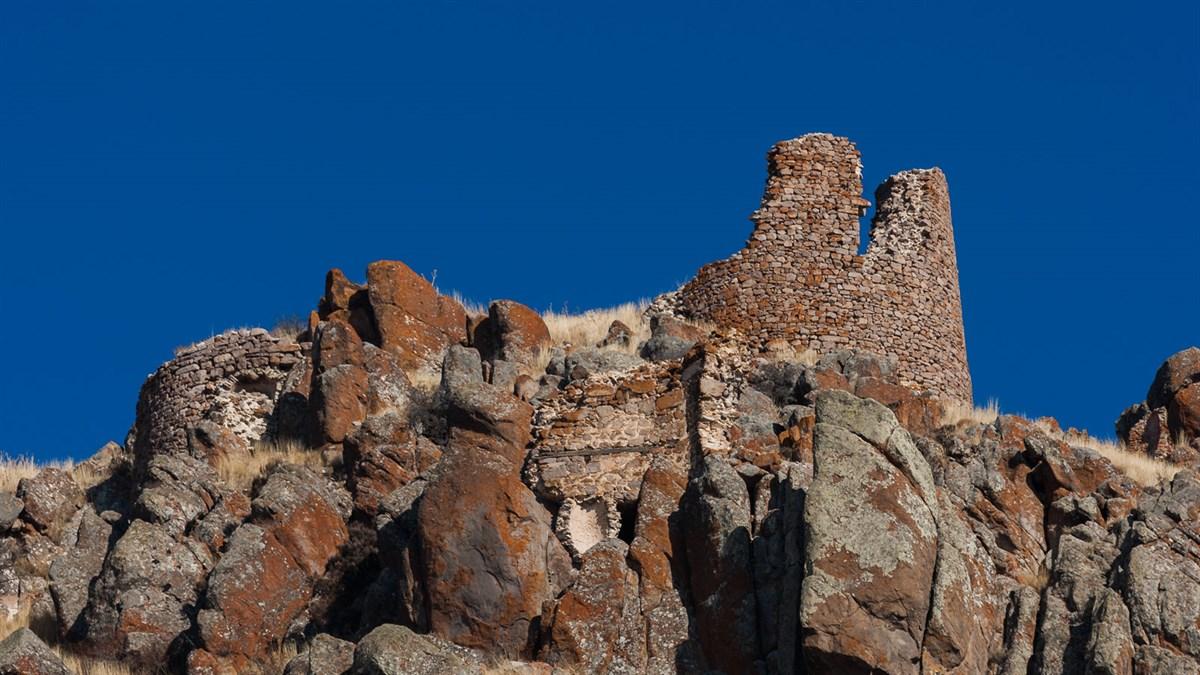
Gevale Castle is a historical defensive structure located at the summit of Takkeli Mountain, within the boundaries of the Selçuklu district of Konya province in Türkiye, near Sarayköy Village. Positioned strategically above the Konya Plain, the castle stands at an elevation exceeding approximately 1,600 meters above sea level, occupying a key position west of the city center of Konya. Throughout history it has played a significant role in the military, administrative, and political control of the region. Thanks to its geographical location, it provided oversight of both the Konya Plain and the surrounding transportation routes. Due to its construction atop a natural volcanic massif, the castle possesses inherent defensive advantages. This feature enables Gevale Castle to be regarded as a military settlement seamlessly integrated with its natural surroundings.
A view from Gevale Castle (T.C. Selçuklu Kaymakamlığı)
The settlement history of Gevale Castle, based on archaeological and historical evidence, extends back to the Hellenistic period. Since this early era, the castle has come under the control of various civilizations and has demonstrated a long historical continuity. During the Roman and Byzantine periods, it formed part of the regional defense system and retained its importance throughout the Middle Ages.
During the Anatolian Seljuk period, Gevale Castle gained increased strategic significance following Konya’s designation as the capital. In this era, the castle functioned not only as a military garrison but also as a center for state administration, reception of envoys, and, when necessary, detention of political prisoners. Written and archaeological sources from the Seljuk period confirm that the castle was an active and multifunctional settlement.
In the 14th century, Gevale Castle came under the control of the Karamanids and continued to maintain its military and administrative importance. During the Karamanids’ political struggles in and around Konya, the castle served as a defensive and control point. In the second half of the 15th century, during the Ottoman campaign against Karaman, the castle was incorporated into Ottoman territory and gradually lost its military significance from that point onward.
Gevale Castle exhibits a defensive architecture adapted to the topography. The castle walls were constructed parallel to the natural slopes of the mountain and reinforced with towers. Surviving remains include curtain walls, towers, internal structures, and cisterns.
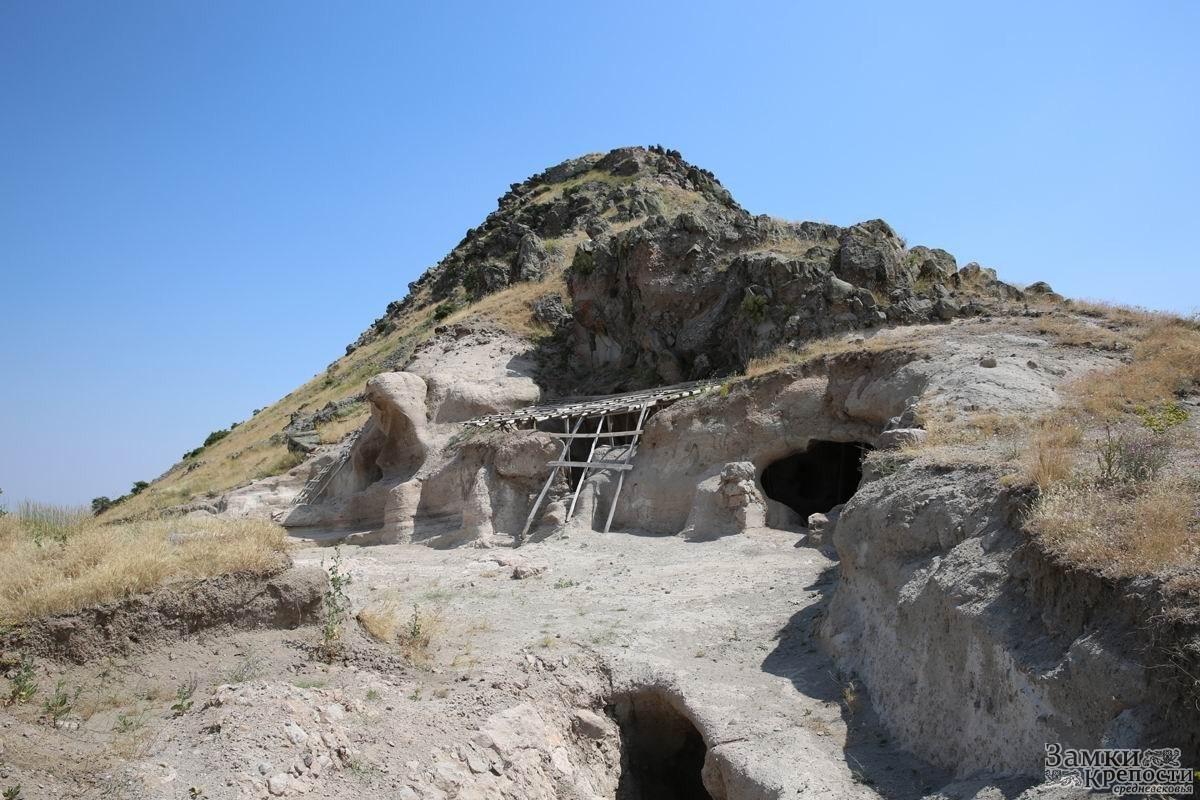
The cisterns within the castle were constructed to ensure a water supply during prolonged sieges. One of these cisterns has been identified as connected to an extensive tunnel system extending into the interior of the mountain. This demonstrates that the defensive and residential infrastructure of Gevale Castle was highly developed. Archaeological finds reveal intense settlement across multiple periods. Ceramic fragments, glass objects, metal artifacts, arrowheads, and stone projectiles constitute the primary evidence supporting the castle’s military character.
Systematic scientific research at Gevale Castle began in the 2010s. Surface surveys and excavations, conducted under the leadership of Selçuklu Municipality in collaboration with academic institutions and the Ministry of Culture and Tourism, have yielded significant data regarding the castle’s structural layout. These investigations have identified spatial arrangements, rooms, civil use areas, worship spaces, and prison cells. In particular, figurative finds indicate that the castle was not only a military site but also a social and cultural settlement.
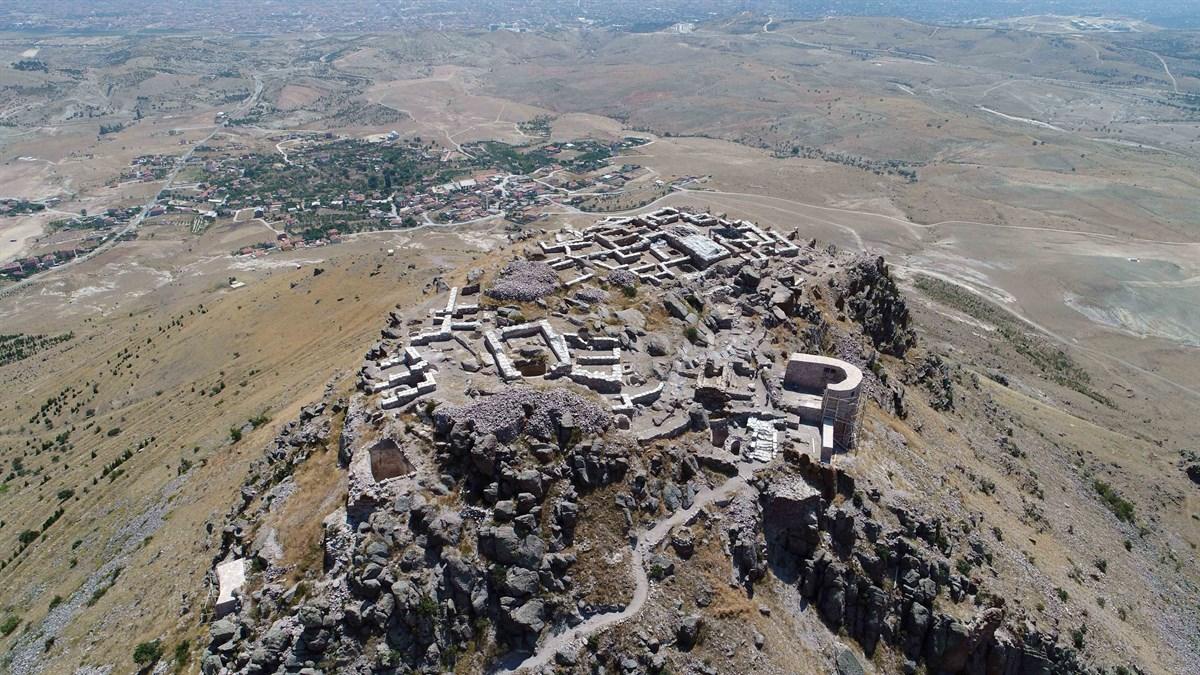
Gevale Kalesi (T.C. Selçuklu Kaymakamlığı)
Restoration efforts at Gevale Castle are ongoing with the aim of preserving the structure and transmitting it to future generations. Consolidation and conservation work has been carried out on the curtain walls, towers, and structural foundations. These efforts seek to enhance the castle’s tourism potential and increase its visibility within Konya’s cultural heritage. Planned outcomes include the controlled opening of Gevale Castle to visitors as part of cultural tourism following the completion and continuation of restoration phases.
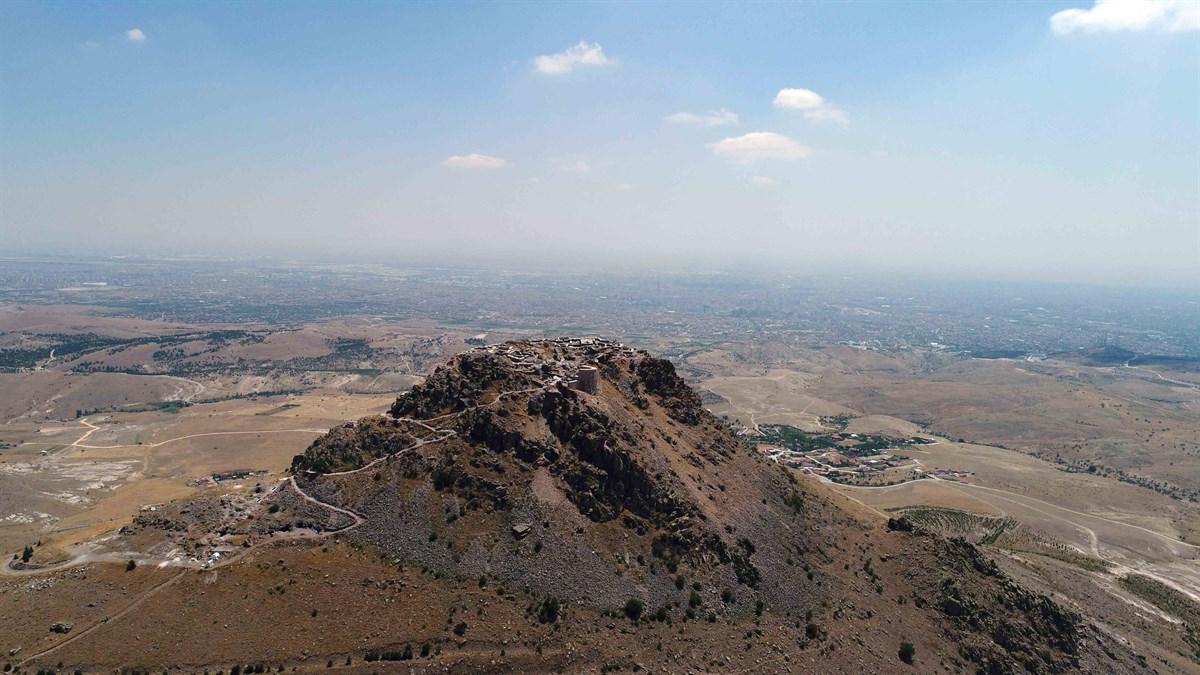
Gevale Kalesi (T.C. Selçuklu Kaymakamlığı)
Gevale Castle is a significant archaeological and historical site reflecting the layered history of Konya and its surroundings. The military, administrative, and social functions it fulfilled across different periods have transformed it from a mere defensive structure into a valuable settlement of regional historical importance. Ongoing scientific and preservation efforts today contribute to a deeper understanding of Gevale Castle’s historical identity.
Aygör, Erkan. “Gevale Kalesi.” Türkiye Turizm Ansiklopedisi. Accessed January 1, 2026.https://turkiyeturizmansiklopedisi.com/gevale-kalesi
Selçuklu Belediyesi. "Gevale – Turizm." Accessed January 1, 2026.https://www.selcuklu.bel.tr/p/kesfet/8/turizm/22/Gevale
Selçuklu Kent Konseyi. "Gevale Kalesi." Accessed January 1, 2026.https://www.selcuklukentkonseyi.org.tr/gezilecekler/gevale-kalesi-3
T.C.Selçuklu Kaymakamlığı Governorship. "Gevale Kalesi." Accessed January 1, 2026.http://www.selcuklu.gov.tr/gevale-kalesi
Çaycı, Ahmet, and Ahmet Yavuzyılmaz. “Gevale Kalesi Figürlü Buluntuları.” *Selçuklu Medeniyeti Araştırmaları Dergisi*, 2024. Accessed January 1, 2026.https://dergipark.org.tr/en/download/article-file/4347998

Location | Selçuklu, Konya, Türkiye | ||||||||
|---|---|---|---|---|---|---|---|---|---|
Position | Takkeli Dağ Zirvesi | ||||||||
Elevation | 1.600 m | ||||||||
Periods | Hellenistic, Roman, Byzantine, Anatolian Seljuk, Karamanids, Ottoman | ||||||||
Prominent Features | Walls, towers, cisterns, tunnel system | ||||||||
Historical Development
Architectural Structure and Defense System
Archaeological Research and Excavations
Restoration and Current Status
Cultural and Historical Significance