


This article was automatically translated from the original Turkish version.
+1 More
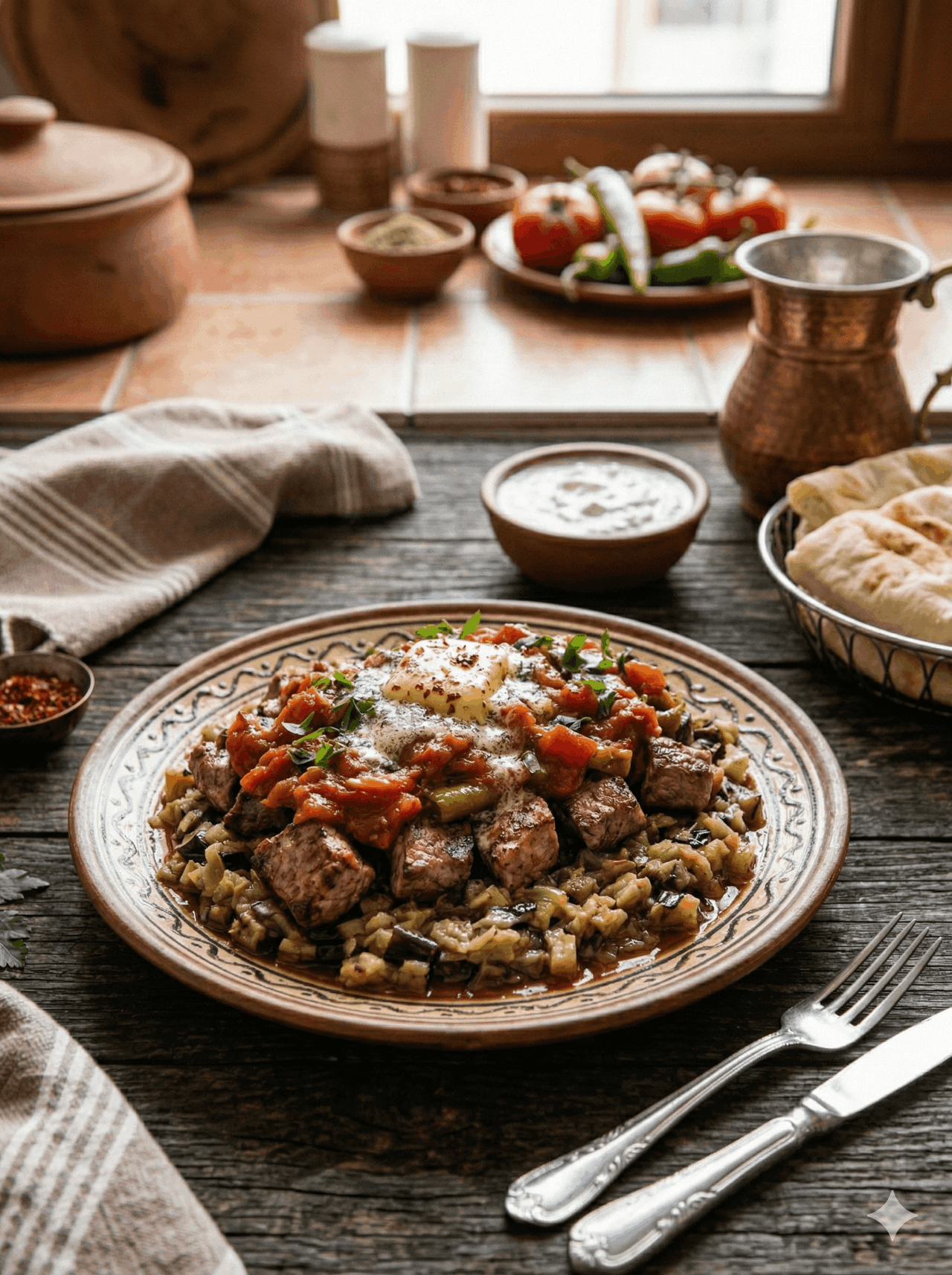
Geleli Kebabı (Generated by Artificial Intelligence)
Main Component(s) | Eggplant Fillet Lamb Meat | ||||||||
|---|---|---|---|---|---|---|---|---|---|
Region(s) | Türkiye Malatya | ||||||||
Type of Oil | Salted Butter, Culinary Salted Fat | ||||||||
Historical Origin | Ottoman Empire Period, Geleli Village | ||||||||
Vegetable Content | Eggplant, Tomato, Green Pepper | ||||||||
Cooking Techniques | Grilling, Barbecue, Stewing, Baking | ||||||||
Geleli Kebabı Malatya cuisine is characterized by this traditional meat dish, whose main ingredients are lamb or beef fillet and charcoal-grilled eggplant. Known to have been part of the regional culinary tradition since the late Ottoman period, this kebab derives its name from the village of Geleli, which was located within historical Malatya boundaries and where the dish was traditionally prepared in large quantities. Today it is regarded as one of the signature flavors of Malatya cuisine.
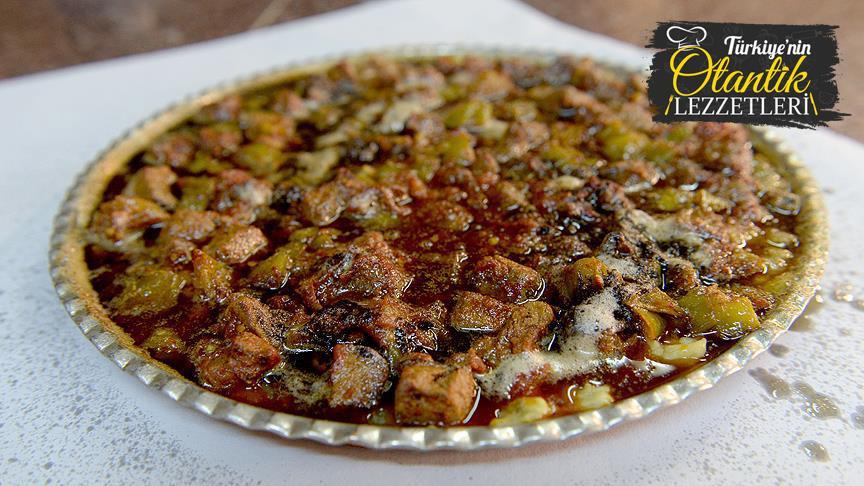
Geleli Kebabı (AA)
Geleli kebabı has been preserved through generations as a continuation of Ottoman culinary heritage. Passed down orally and practically across families, it has become an inseparable element of the region’s table culture. Since the 1940s, it has also been featured in professional restaurant kitchens and is traditionally served at gatherings and at customary Malatya meals due to its elaborate preparation process.
The primary meat component is selected from lean cubed lamb or beef fillet sourced from local livestock. The vegetable garnish consists of eggplant, tomato, and green pepper. A defining element of its flavor profile is the use of salted butter, commonly used in the region. A standard recipe typically calls for four eggplants, four tomatoes, and four green peppers for every 500 grams of meat.
The preparation of Geleli kebabı involves processing each ingredient using distinct methods before combining them in the final stage:
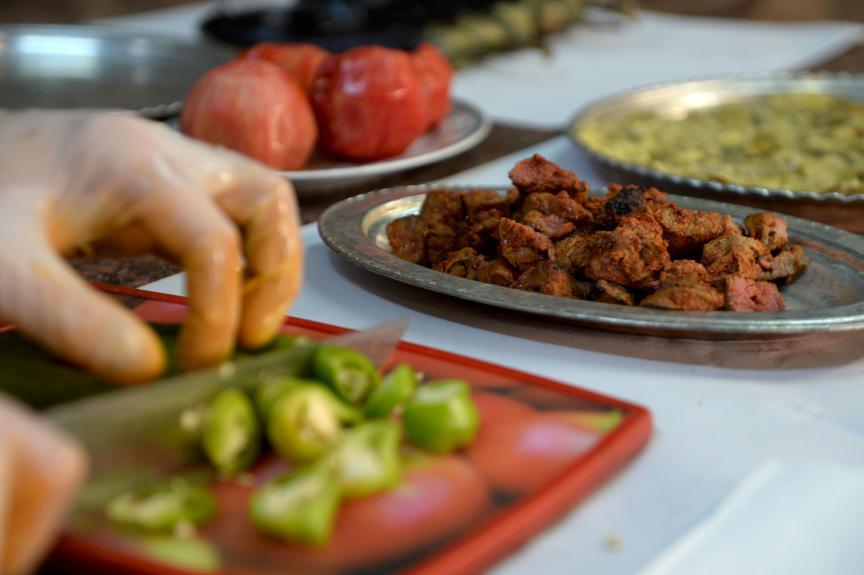
Geleli Kebabı Hazırlanışı (AA)
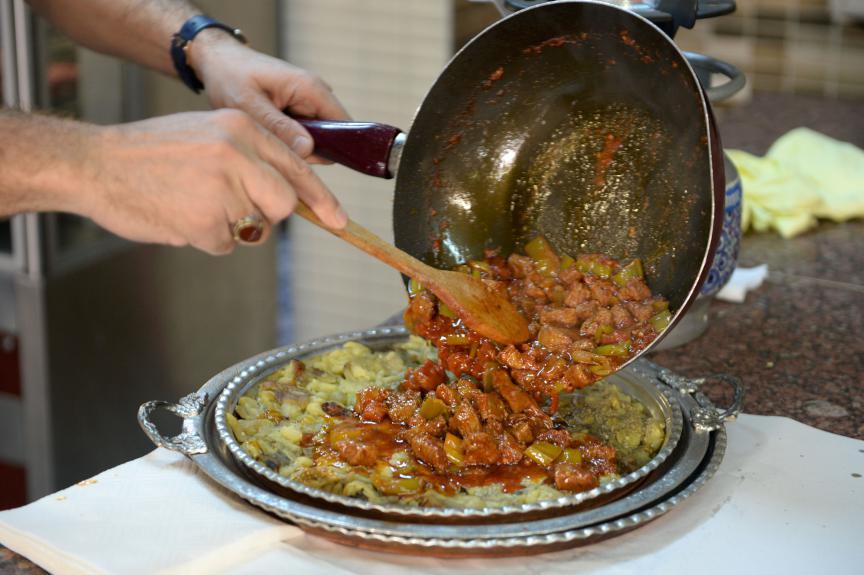
Geleli Kebabı Sunum Hazırlanışı (AA)
Geleli kebabı is served hot, with melted salted butter poured over the top immediately after removal from the oven. The smoky eggplant base and the tomato-infused meat layer above form the dish’s distinctive visual and textural structure. This kebab belongs to the category of Malatya meat dishes.
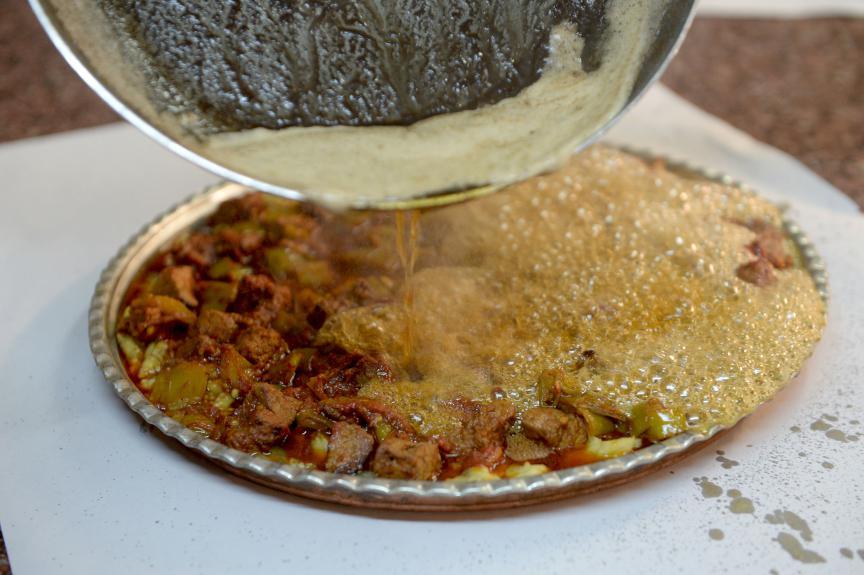
Geleli Kebabı Sunum (AA)
Anadolu Ajansı. “Osmanlı'dan Bugüne Uzanan Lezzet: Geleli Kebabı.” September 13, 2018. Accessed March 1, 2026. https://www.aa.com.tr/tr/turkiyenin-otantik-lezzetleri/osmanlidan-bugune-uzanan-lezzet-geleli-kebabi/1253561
T.C. Ministry of Culture and Tourism. "Geleli Kebabı - Malatya." Geleneksel Mutfak. Accessed March 1, 2026. https://www.kulturportali.gov.tr/turkiye/malatya/neyenir/gelelli-kebabi

Geleli Kebabı (Generated by Artificial Intelligence)
Main Component(s) | Eggplant Fillet Lamb Meat | ||||||||
|---|---|---|---|---|---|---|---|---|---|
Region(s) | Türkiye Malatya | ||||||||
Type of Oil | Salted Butter, Culinary Salted Fat | ||||||||
Historical Origin | Ottoman Empire Period, Geleli Village | ||||||||
Vegetable Content | Eggplant, Tomato, Green Pepper | ||||||||
Cooking Techniques | Grilling, Barbecue, Stewing, Baking | ||||||||
Historical Background and Cultural Significance
Ingredients and Characteristics
Preparation and Cooking Techniques
Serving Characteristics