


This article is not approved yet.
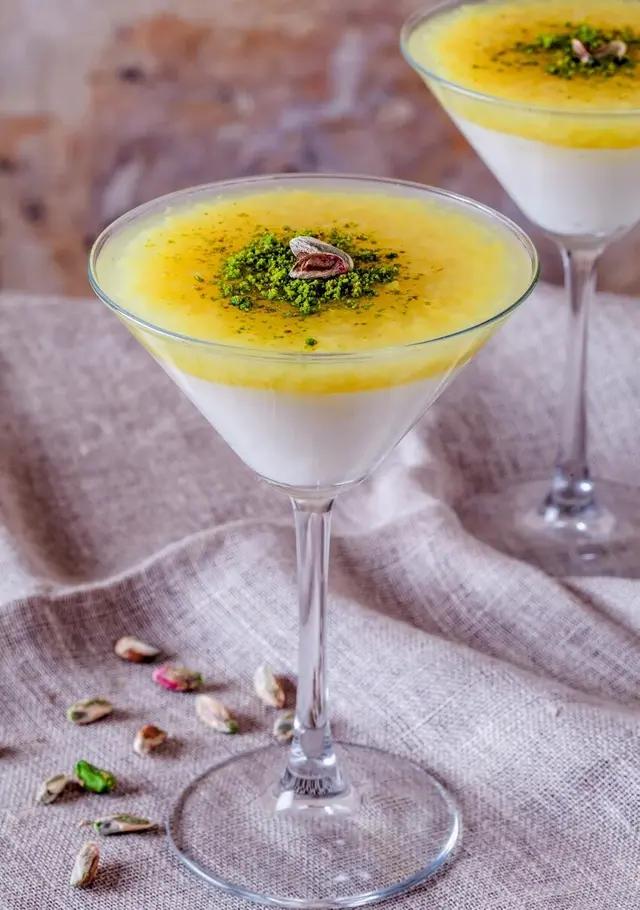
Gaziantep Sütlü Zerdesi
Registration Number(Text) | 610 | ||||||||
|---|---|---|---|---|---|---|---|---|---|
Registration Date(Text) | 26.11.2020 | ||||||||
Applicant/Registrant(s) | Gaziantep Development Foundation | ||||||||
Province(s) | Gaziantep | ||||||||
Product / Product Group(s) | Bakery and confectionery products desserts pastries | ||||||||
Type of Geographical Indication | Designation of Origin | ||||||||
Gaziantep sütlü zerdesi, also known as Gaziantep layered rice pudding (astarlı sütlaç), is a unique dessert in Turkish cuisine, created by layering rice pudding (sütlaç) and zerde. This two-colored presentation gives the dessert its designation as “layered” while providing it with a distinctive identity both visually and in terms of content.
Gaziantep sütlü zerdesi / Gaziantep astarlı sütlaç has been registered as a designation of origin under Law No. 6769 on Industrial Property. The registration was carried out by the Gaziantep Development Foundation, and the product has been protected since November 26, 2020. This registration requires that the product be produced using traditional methods within the boundaries of Gaziantep province.
The dessert is traditionally prepared in Gaziantep especially during holidays. Its most distinctive feature is that the rice pudding layer contains no sugar, and the zerde layer placed on top is colored with locally sourced haspir (Carthamus tinctorius L.) petals. This gives the dessert its natural yellow color and reinforces its geographical authenticity. Gaziantep cookbooks and travel guides frequently include this dessert.
The production of Gaziantep sütlü zerdesi / Gaziantep astarlı sütlaç involves two stages: first, the rice pudding is prepared, followed by the addition of the zerde layer. This layered structure gives the dessert its distinctive visual and content qualities.
For the rice pudding, 1 liter of milk, 50–70 grams of rice, and optionally 5–10 grams of rose water are used. The rice is boiled with enough water to cover it, then added to boiling milk and cooked further. When the rice softens, rose water may be added as desired. After boiling for a short time, the mixture is removed from heat, portioned, and allowed to cool.
For the zerde layer, 40–60 grams of rice, 250–400 grams of sugar, 2–3 grams of haspir, and 1 liter of water are used. The washed rice is cooked in water, then sugar is added and boiled for about five more minutes. Warm-soaked and strained haspir is added to give the zerde its characteristic yellow color. The prepared zerde is poured over the cooled rice pudding in a ratio of two parts rice pudding to one part zerde to complete the dessert.
Since the dessert is prepared using a traditional method that requires expertise, all production stages must take place within the boundaries of Gaziantep province. Inspections are conducted under the coordination of the Gaziantep Development Foundation by an authority consisting of representatives from the Gaziantep Provincial Directorate of Agriculture and Forestry, Gaziantep Metropolitan Municipality, and the Gaziantep Union of Chambers of Tradesmen and Craftsmen. Inspections are carried out at least once a year and can also be conducted upon complaint if necessary.
Turkish Patent and Trademark Office. "Gaziantep Sütlü Zerdesi / Gaziantep Astarlı Sütlacı." Geographical Indications Portal. Accessed October 19, 2025. https://ci.turkpatent.gov.tr/cografi-isaretler/detay/1807
Turkish Patent and Trademark Office. "Gaziantep Sütlü Zerdesi / Gaziantep Astarlı Sütlacı Registration Certificate." Accessed October 19, 2025. https://ci.turkpatent.gov.tr/Files/GeographicalSigns/b340fa4e-6c0a-47f8-bba2-c1d05c627a03.pdf

Gaziantep Sütlü Zerdesi
Registration Number(Text) | 610 | ||||||||
|---|---|---|---|---|---|---|---|---|---|
Registration Date(Text) | 26.11.2020 | ||||||||
Applicant/Registrant(s) | Gaziantep Development Foundation | ||||||||
Province(s) | Gaziantep | ||||||||
Product / Product Group(s) | Bakery and confectionery products desserts pastries | ||||||||
Type of Geographical Indication | Designation of Origin | ||||||||
No Discussion Added Yet
Start discussion for "Gaziantep Sütlü Zerdesi," article
Geographical Indication and Protection Status
Distinctive Features
Preparation
Production Conditions and Inspection
This article was created with the support of artificial intelligence.