


This article was automatically translated from the original Turkish version.
+1 More
Gaziantep Kalesi is a historical structure located southeast of the city center, beside the Alleben Stream. Although its exact construction date is unknown, excavations have revealed that the region’s history extends far into antiquity. Originally built as an observation tower during the Roman Empire, the castle underwent major renovations during the reign of Byzantine Emperor Justinian, transforming it into a significant defensive point to ensure military and trade route security. The tunnels of Gaziantep Kalesi were shaped over a structure believed to date back to the 2nd and 3rd centuries AD. While the precise construction date of the tunnels cannot be determined, they are thought to have been built by various civilizations including the Mamluks and Ottomans as defensive measures against the risks of warfare and siege. Some sections of the tunnels were used to secure water supply while others formed part of the defensive structures surrounding the castle. Through successive additions and repairs over different periods, the castle acquired its current form, and its architecture bears traces of multiple civilizations. Archaeological excavations conducted at the castle have yielded significant findings, shedding light on the region’s historical transitions.
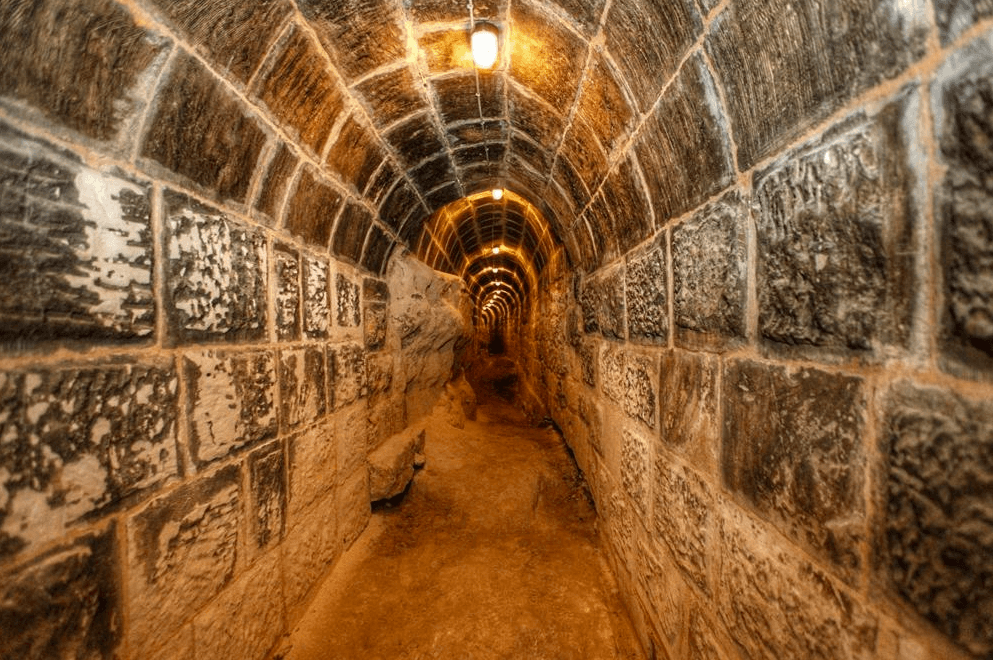
Gaziantep Kalesi Tünelleri (Source: Gaziantep Municipality)
The majority of the tunnels were designed for both water supply and defense purposes, connecting the castle with surrounding fortresses to transport water into the citadel. Cleaning and excavation efforts have revealed that the tunnels extend over considerable distances, spanning several kilometers. Additionally, internal sections of the tunnels contain various connecting pathways, galleries, and channels carved out for water transport. The depth of the tunnels reaches up to 18 meters in some areas, and in certain locations they extend all the way to water sources, enabling water to be channeled within the castle.
The construction materials of the tunnels consist of stone, earth, and clay, determined by the construction techniques and available natural resources of the period. These materials played a crucial role in preserving the internal structure of the tunnels. Moreover, symbols and markings carved into the tunnel walls have been discovered in certain sections, indicating that the tunnels were also utilized as defensive structures.
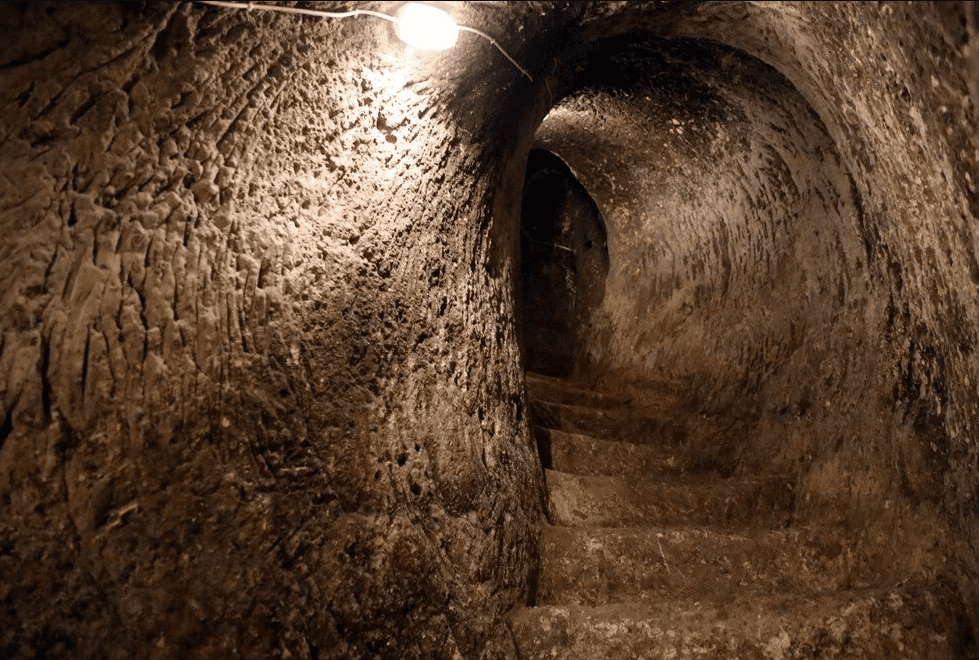
Gaziantep Kalesi Tünelleri (Source: NTV)
Historical evidence indicates that the tunnels beneath Gaziantep Kalesi served multiple purposes over time. Initially, their primary functions were to provide water and to support defensive additions to the castle. Over time, however, the tunnels acquired broader functionality. Particularly during the Mamluk and Ottoman periods, they served as escape routes that strengthened the castle’s defense and aligned with the city’s overall defensive strategy. Internal sections of the tunnels contain reservoirs used to meet water needs as well as traces of defensive measures constructed against enemy attacks.
At first glance, the tunnels may appear to have functioned solely as water conduits, but archaeological studies have revealed that the structure is far more complex. The tunnels were not only used for water supply but also for launching surprise attacks against enemies, providing secure areas during warfare, and even serving as hiding places.
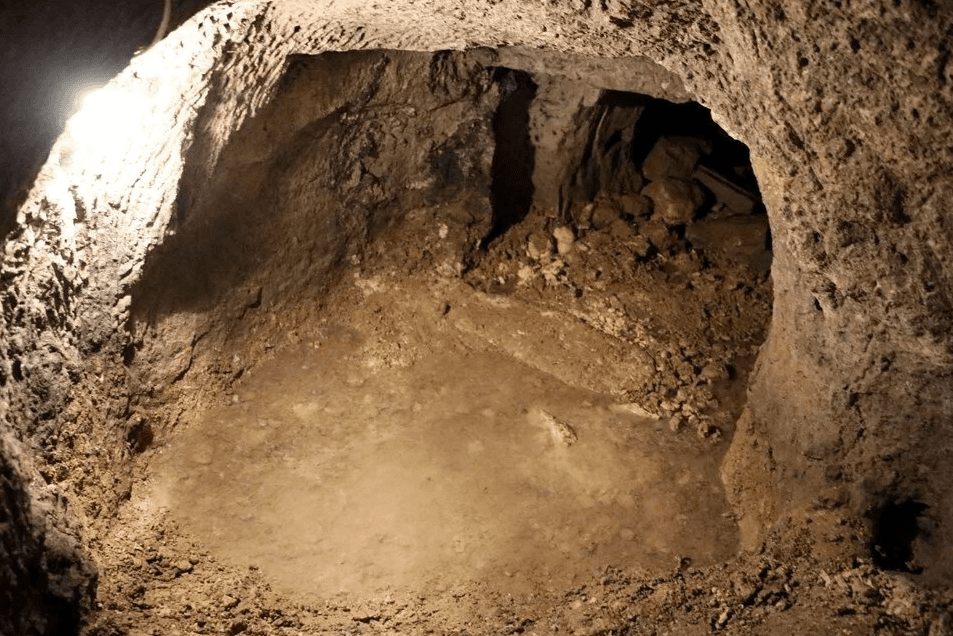
Gaziantep Kalesi Tünelleri (Source: NTV)
Today, Gaziantep Kalesi and its underground tunnels hold great significance in terms of historical and cultural heritage. The excavations and restoration efforts led by Gaziantep Metropolitan Municipality aim to uncover the tunnels and integrate them into tourism. The tunnels offer substantial potential for underground tourism. Restoration work is planned to ensure their safety and provide visitors with a historical experience.
The tunnels beneath Gaziantep Kalesi are not only valuable for tourism but also for archaeological research. They provide critical data for understanding the functionality of the defensive structures surrounding the city and for linking the legacies of different civilizations to the present. Furthermore, research into the water sources within the tunnels will yield new insights into historical water supply and usage practices.
Anadolu Ajansı. "Tarihi Gaziantep Kalesi'nde Tüneller ve Su Alanı Bulundu." Accessed February 25, 2025.https://www.aa.com.tr/tr/kultur-sanat/tarihi-gaziantep-kalesinde-tuneller-ve-su-alani-bulundu/1926257
Gaziantep Büyükşehir Municipality. "Gaziantep Kalesi'nin Altındaki Tünel Sistemi Gün Yüzüne Çıkarılıyor." Accessed February 25, 2025.https://www.gaziantep.bel.tr/tr/haberler/gaziantep-kalesinin-altindaki-tunel-sistemi-gun-yuzune-cikariliyor
NTV. "Gaziantep Kalesi'nin Altındaki Tarihi Tüneller Turizme Kazandırılıyor." Accessed February 25, 2025.https://www.ntv.com.tr/galeri/seyahat/gaziantep-kalesinin-altindaki-tarihi-tuneller-turizme-kazandiriliyor,QjfLq0JXVkaP62lclpdACQ/YdG8ofbhmESACjWdZaJ4_w
İletişim Başkanlığı. "Gaziantep Kalesi'nin Tünelleri Ziyarete Açılmak İçin Gün Sayıyor." Accessed February 25, 2025.https://www.iletisim.gov.tr/turkce/yerel_basin/detay/gaziantep-kalesinin-tunelleri-ziyarete-acilmak-icin-gun-sayiyor

No Discussion Added Yet
Start discussion for "Gaziantep Castle Tunnels" article
Structural Features of the Tunnels
Uses of the Tunnels
Connection to the Present and Contribution to Tourism