This article was automatically translated from the original Turkish version.
+1 More
Foundation Date | 8 January 1537 | ||||||||
|---|---|---|---|---|---|---|---|---|---|
Location | Baščaršija Sarajevo Bosnia and Herzegovina | ||||||||
Founder | Gazi Hüsrev Bey | ||||||||
Purpose of Establishment | A medrese was built in memory of his mother Selçuk Hatun | ||||||||
Nature of the Madrasa | The oldest educational institution in Bosnia and Herzegovina | ||||||||
Educational Content | General studies Islamic studies | ||||||||
Historical Continuity | It has never closed during any period including the First and Second World Wars, the Yugoslav era, and the Bosnian War of 1992–1995 | ||||||||
Gazi Hüsrev Bey Medresesi is the oldest secondary education institution in Bosnia and Herzegovina’s city of Sarajevo that has provided uninterrupted education since the Ottoman period to the present day. The medrese was commissioned by Gazi Hüsrev Bey, a grandson of Ottoman Sultan Bayezid II, on 8 January 1537 and established in memory of his mother, Selçuk Hatun. Its foundation deed forms the basis of the medrese’s educational and financial structure. The official founder of the institution is the Islamic Union of Bosnia and Herzegovina, which exercises the founding rights and responsibilities through the Presidency. Due to its lead-covered roof, the medrese is also popularly known as the “Kurşunlu Medrese.”
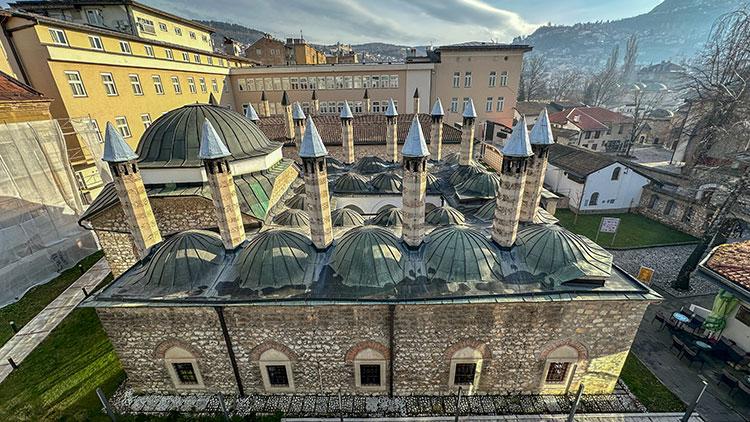
Gazi Hüsrev Bey Medresesi (AA)
The medrese has been providing continuous education for 488 years. Throughout this period, it never fully closed, even during the First and Second World Wars, the Yugoslav era, and the 1992–1995 Bosnian War, maintaining educational continuity in every era.
The curriculum includes both general subjects such as natural sciences, social sciences and foreign languages and specialized Islamic disciplines such as qira’at, tafsir, hadith, fiqh, aqidah and ethics. Graduates of the medrese have the same opportunity as students from other secondary schools to enroll in any faculty of their choice.
The medrese is known for its broad student body, including students from former Yugoslavia.
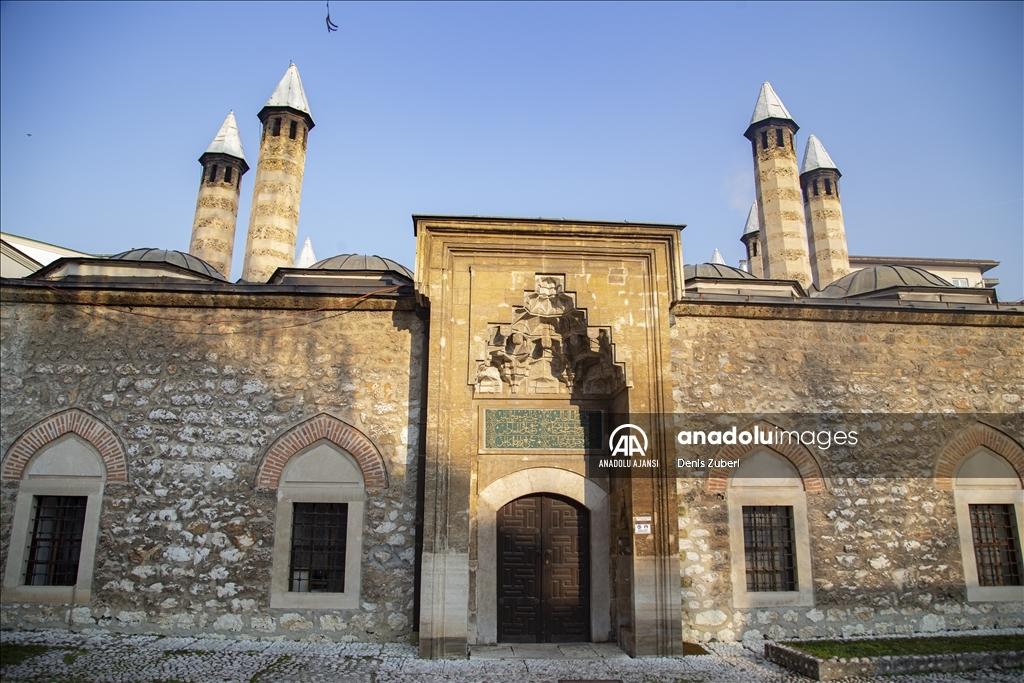
Gazi Hüsrev Bey Medresesi (AA)
Gazi Hüsrev Bey (d. 1541) was an Ottoman sanjak bey who served in the Sanjak of Bosnia during the reign of Kanuni Sultan Süleyman. He was born around 1480; his father was Ferhad Bey and his mother was Selçuk Sultan, daughter of Sultan Bayezid II. After his father’s death in battle and his mother’s passing, he received private education in Istanbul. He held governorships in Semendire and Bosnia, captured the fortresses of Belgrade, Knin, Skradin and Ostrovica, and secured the second Ottoman takeover of Jajce Fortress. For his military achievements, he was granted the title “Gazi.”
Hüsrev Bey played a pivotal role in the Islamization of Sarajevo and its surroundings, commissioning the Gazi Hüsrev Bey Külliye for this purpose. The külliye includes a mosque, medrese, tombs, library, bathhouse, caravanserai, covered market, bazaar and clock tower. These structures formed both an economic infrastructure that generated income for the medrese and a central hub in the social and cultural life of Sarajevo. The library within the külliye houses valuable manuscripts and records in Arabic, Turkish, Persian and Bosnian.
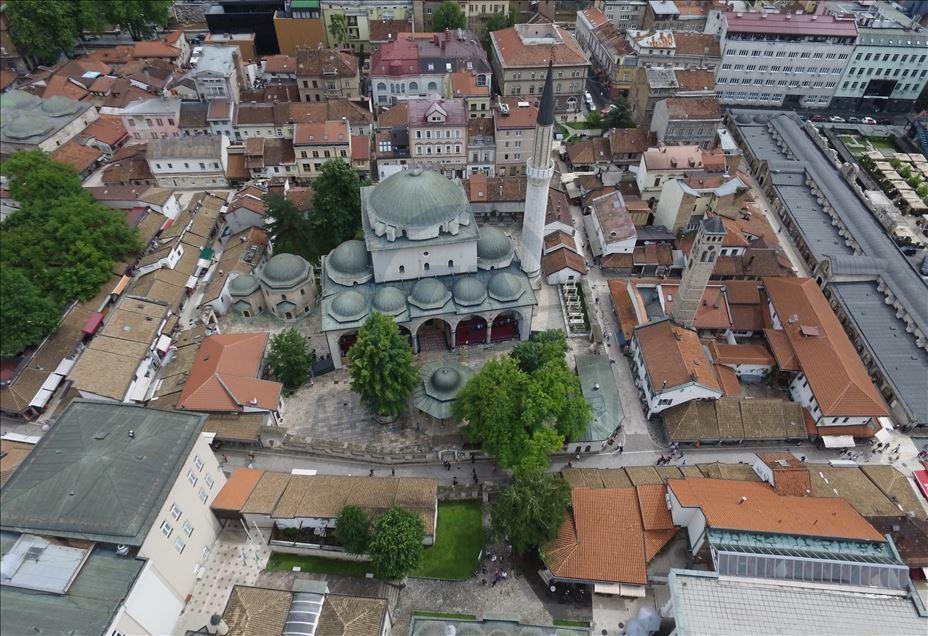
Gazi Hüsrev Bey Camii (AA)
The medrese is part of the külliye located in Baščaršija and is covered with lead. The inscription above the entrance gate indicates that the medrese was completed in 944 AH (1537–38 CE). The inner courtyard is rectangular and surrounded by arcades supported by columns on three sides. At the center of the courtyard stands a şadırvan and domed arcades. The dershane-mescid has a square plan measuring approximately 6.5–7 meters internally and is covered by a muqarnas-supported drum dome. The courtyard contains a total of twelve cells and tabhâne rooms. Until 1960, the medrese continued to provide advanced Islamic theological education.
The Gazi Hüsrev Bey Mosque within the külliye was completed in 937 AH (1530–31 CE) and constructed entirely of cut stone. Its main dome rises approximately 26 meters and, together with the Hüsrev Pasha Mosque in Aleppo, represents one of the final examples of the Ottoman tabhâne-type mosque. The minaret, standing 35–47 meters tall, reflects the tall proportions characteristic of Ottoman minarets in Rumelia. Beside the mosque stand the tomb of Gazi Hüsrev Bey and the tomb of Murad Bey.
The caravanserais, bathhouse and other structures within the külliye were built both to generate income for the medrese and to support the commercial life of Sarajevo. Stone caravanserais, arasta markets and similar buildings are significant in this context. The clock tower, treasury and muvakkithâne complete the functional and social unity of the külliye.
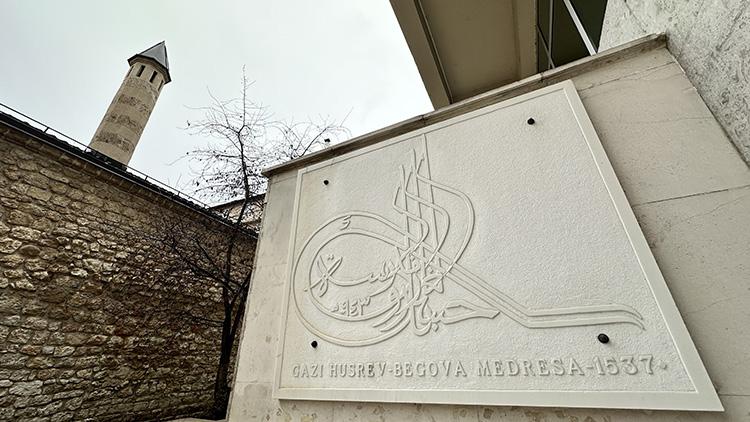
Gazi Hüsrev Bey Medresesi (AA)
The medrese has long been recognized in Bosniak society as a sustained center of education and culture. Over its history, it has educated thousands of students, many of whom have held various positions in Bosnia and Herzegovina and abroad. The institution is also known for its traditional graduation ceremonies, during which students celebrate their graduation with a symbolic procession from Baščaršija to the Gazi Hüsrev Bey Mosque.
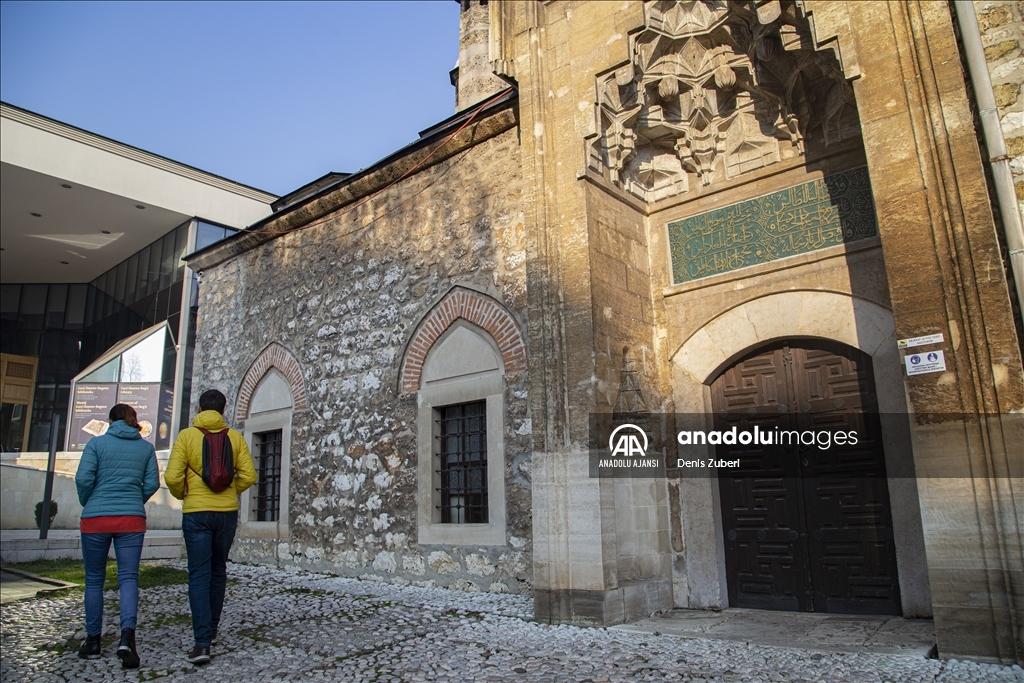
Gazi Hüsrev Bey Medresesi's Portal (AA)
On the inscription above the historical medrese’s entrance are the following words: “This building was constructed for those who seek knowledge and love of God through prayer. Gazi Hüsrev, defender of the faith, source of good intention and pride of justice.” 【1】
The medrese also played a central role in the urbanization of Sarajevo and the development of its commercial life, maintaining its educational continuity even after the Ottoman period.
Anadolu Ajansı. "Bosna Hersek'in Osmanlı mirası eğitim kurumu Gazi Hüsrev Bey Medresesi 486 yaşında." Accessed December 2, 2025.https://www.aa.com.tr/tr/kultur/bosna-hersekin-osmanli-mirasi-egitim-kurumu-gazi-husrev-bey-medresesi-486-yasinda/2781135
Anadolu Ajansı. "Bosna Hersek'teki 486 yıllık Osmanlı mirası: Gazi Hüsrev Bey Medresesi." Accessed December 2, 2025.https://www.aa.com.tr/tr/pg/foto-galeri/bosna-hersekteki-486-yillik-osmanli-mirasi-gazi-husrev-bey-medresesi
Anadolu Ajansı. "Bosna Hersek'teki Osmanlı mirası Gazi Hüsrev Bey Medresesi 487 yıldır hizmet veriyor." Accessed December 2, 2025.https://www.aa.com.tr/tr/kultur/bosna-hersekteki-osmanli-mirasi-gazi-husrev-bey-medresesi-487-yildir-hizmet-veriyor/3101752.
Anadolu Ajansı. "Boşnak baba oğul, mezunu oldukları 487 yıllık Gazi Hüsrev Bey Medresesi'ni anlattı." Accessed December 2, 2025.https://www.aa.com.tr/tr/insana-dair/bosnak-baba-ogul-mezunu-olduklari-487-yillik-gazi-husrev-bey-medresesini-anlatti/3102271
Anadolu Ajansı. "Saraybosna'yı 'inşa eden' Osmanlı: Gazi Hüsrev Bey." Accessed December 2, 2025.https://www.aa.com.tr/tr/pg/foto-galeri/saraybosnayi-insa-eden-osmanli-gazi-husrev-bey
Eyice, Semavi. "Gazi Hüsrev Bey Külliyesi." TDV İslâm Ansiklopedisi, 1996. Accessed December 2, 2025.https://islamansiklopedisi.org.tr/gazi-husrev-bey-kulliyesi
Gazi Husrev-begova medresa. "Gazi Husrev-begova medresa." medresasa.edu.ba. Accessed December 2, 2025.https://medresasa.edu.ba/
Okiç, Muhammed Tayyib. "Gazi Hüsrev Bey." TDV İslâm Ansiklopedisi, 1996. Accessed December 2, 2025.https://islamansiklopedisi.org.tr/gazi-husrev-bey
TRT Avaz. "Saraybosna'daki Gazi Hüsrev Bey Medresesi 475'inci mezunlarını verdi." Accessed December 2, 2025.https://www.trtavaz.com.tr/haber/tur/turkistandan/saraybosnadaki-gazi-husrev-bey-medresesi-475inci-mezunlarini-verdi/68298a7cc7242099e66ad2d0
[1]
Anadolu Ajansı, "Bosna Hersek'teki Osmanlı mirası Gazi Hüsrev Bey Medresesi 487 yıldır hizmet veriyor," Erişim: 2 Aralık 2025, https://www.aa.com.tr/tr/kultur/bosna-hersekteki-osmanli-mirasi-gazi-husrev-bey-medresesi-487-yildir-hizmet-veriyor/3101752.

Foundation Date | 8 January 1537 | ||||||||
|---|---|---|---|---|---|---|---|---|---|
Location | Baščaršija Sarajevo Bosnia and Herzegovina | ||||||||
Founder | Gazi Hüsrev Bey | ||||||||
Purpose of Establishment | A medrese was built in memory of his mother Selçuk Hatun | ||||||||
Nature of the Madrasa | The oldest educational institution in Bosnia and Herzegovina | ||||||||
Educational Content | General studies Islamic studies | ||||||||
Historical Continuity | It has never closed during any period including the First and Second World Wars, the Yugoslav era, and the Bosnian War of 1992–1995 | ||||||||
No Discussion Added Yet
Start discussion for "Gazi Hüsrev Bey Medresesi" article
Gazi Hüsrev Bey and the Külliye
Architectural and Educational Structure
Building Material and Entrance
Courtyard and Arcades
Dershane-Mescid
Cells and Corner Solutions
Cultural and Social Significance