


This article was automatically translated from the original Turkish version.
The ceasefire agreement signed at the end of the Israel-Hamas war, which escalated following Hamas’s Operation Al-Aqsa Flood on October 7 and lasted more than 15 months. The agreement was signed on January 15, 2025, following negotiations mediated by Qatar, Egypt, and the US in Doha, the capital of Qatar. On March 18, 2025, Israel violated the agreement by launching attacks against the Gaza Strip.
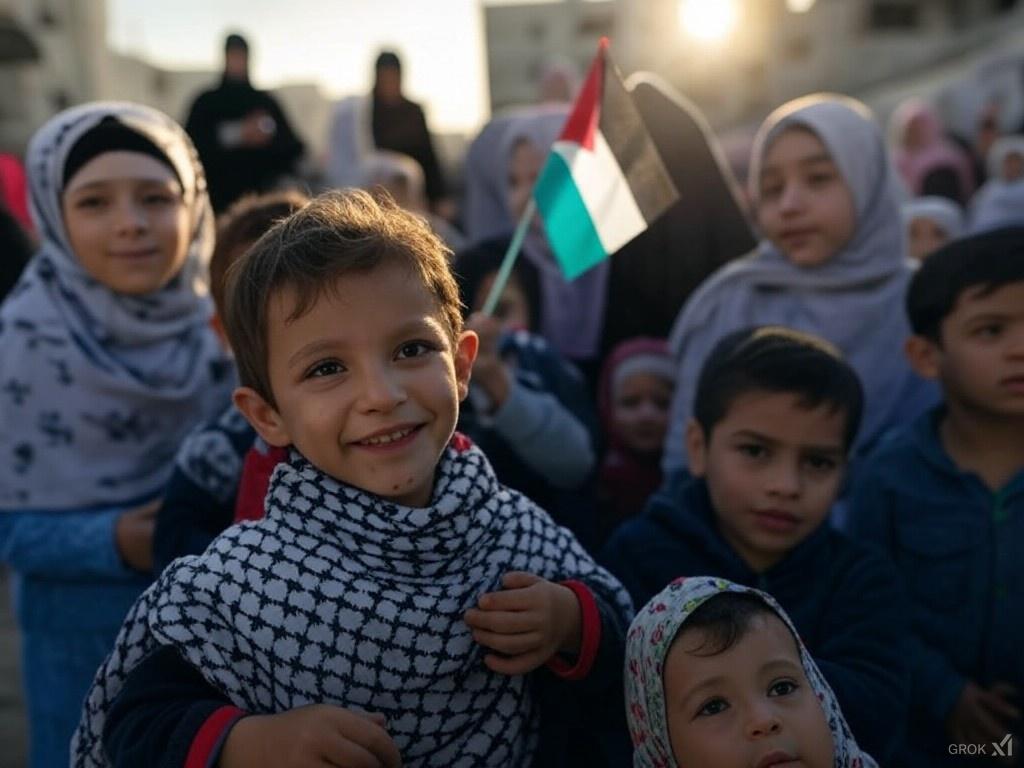
Image generated by artificial intelligence
Throughout the war, Israel’s intensive air, land, and sea attacks in Gaza caused massive destruction. According to the Palestinian Ministry of Health, since Israel’s operations began on October 7, 2023, a total of 48,543 people have been killed and 111,981 injured in Gaza. The majority of those killed were women and children.
During this period, Gaza’s electricity, water, and other infrastructure systems were completely destroyed; schools and hospitals ceased operations. In ongoing cases at the International Criminal Court (ICC), Israel’s actions have been classified as genocide in historical terms. Although agreements had been reached multiple times before, Israel withdrew from each one.
After negotiations aimed at ending the more than 15-month-long Israel-Hamas war, the parties reached an agreement on a ceasefire and mutual prisoner exchange. The agreement was finalized during talks mediated by Qatar, Egypt, and the US in Doha. A three-phase plan was outlined for implementing the ceasefire, and its details were made public.
The agreement included key elements such as the declaration of the ceasefire, the delivery of humanitarian aid to Gaza, the release of hostages and detainees, the return of displaced persons, and the reconstruction of Gaza. Nevertheless, due to Israel’s domestic political dynamics, the feasibility of implementing the process became a subject of debate.
Israeli Prime Minister Benjamin Netanyahu postponed the planned narrow security cabinet meeting to approve the agreement. Netanyahu accused Hamas of refusing to adhere to the agreed terms and raised doubts about the agreement’s details. This situation triggered tensions within the Israeli government.
In particular, far-right National Security Minister Itamar Ben-Gvir announced his intention to withdraw from the government, arguing that the agreement harmed Israel’s interests. Ben-Gvir claimed the deal provided advantages to Hamas and reversed Israel’s strategic gains in Gaza. Nevertheless, he declared that his party would continue to support the government from outside. During this period, Israeli attacks continued in Gaza. Despite the announcement of the ceasefire, the attacks caused heavy losses among civilian populations in Gaza.
According to the Gaza Civil Defense Directorate, 113 people were killed and 264 injured in the attacks. Of those killed, 28 were children and 31 were women. This situation increased international concerns about the sustainability of the ceasefire.
The postponed security cabinet meeting was held on this date, and the Israeli Security Cabinet approved the ceasefire and mutual prisoner exchange agreement. Israeli Prime Minister Netanyahu announced that the process of releasing hostages would begin on Sunday, January 19. Hamas confirmed its commitment to the agreement and stated that obstacles to the process had been removed as a result of mediators’ efforts. Hamas declared that the prisoner swap was a national objective and would be implemented according to established procedures.
The ceasefire was effectively implemented. Hamas handed over three Israeli female hostages to the International Red Cross. In return, Israel released 90 Palestinian female and child hostages. However, Israel delayed the release process of the prisoners.
Palestinians welcomed the released hostages with great enthusiasm in Ramallah. Israeli forces intervened with tear gas and sound bombs against Palestinians at the handover locations. It was reported that on this date, Israeli forces conducted raids on the homes of some Palestinian prisoners in East Jerusalem and prevented journalists from obtaining information from the scene.
The three-phase ceasefire plan is as follows:
Hamas will gradually release a total of 33 Israeli hostages. In return, Israel will release 50 Palestinian prisoners, 30 of whom are serving life sentences, followed by all women and children under the age of 19 detained since October 7, 2023. Israel will grant limited permission for civilians in northern Gaza to return to their homes. Reconstruction efforts for Gaza’s infrastructure, including electricity and water networks, will begin. Up to 600 trucks of humanitarian aid and 50 trucks of fuel will be permitted to enter the area daily. Israel will allow injured Palestinians to be transferred outside Gaza for medical treatment. Israel will withdraw its military forces from Gaza to a distance of no more than 700 meters from the Israeli border. Israel will withdraw from the Netzarim Corridor and the Philadelphi Corridor, which divide Gaza.
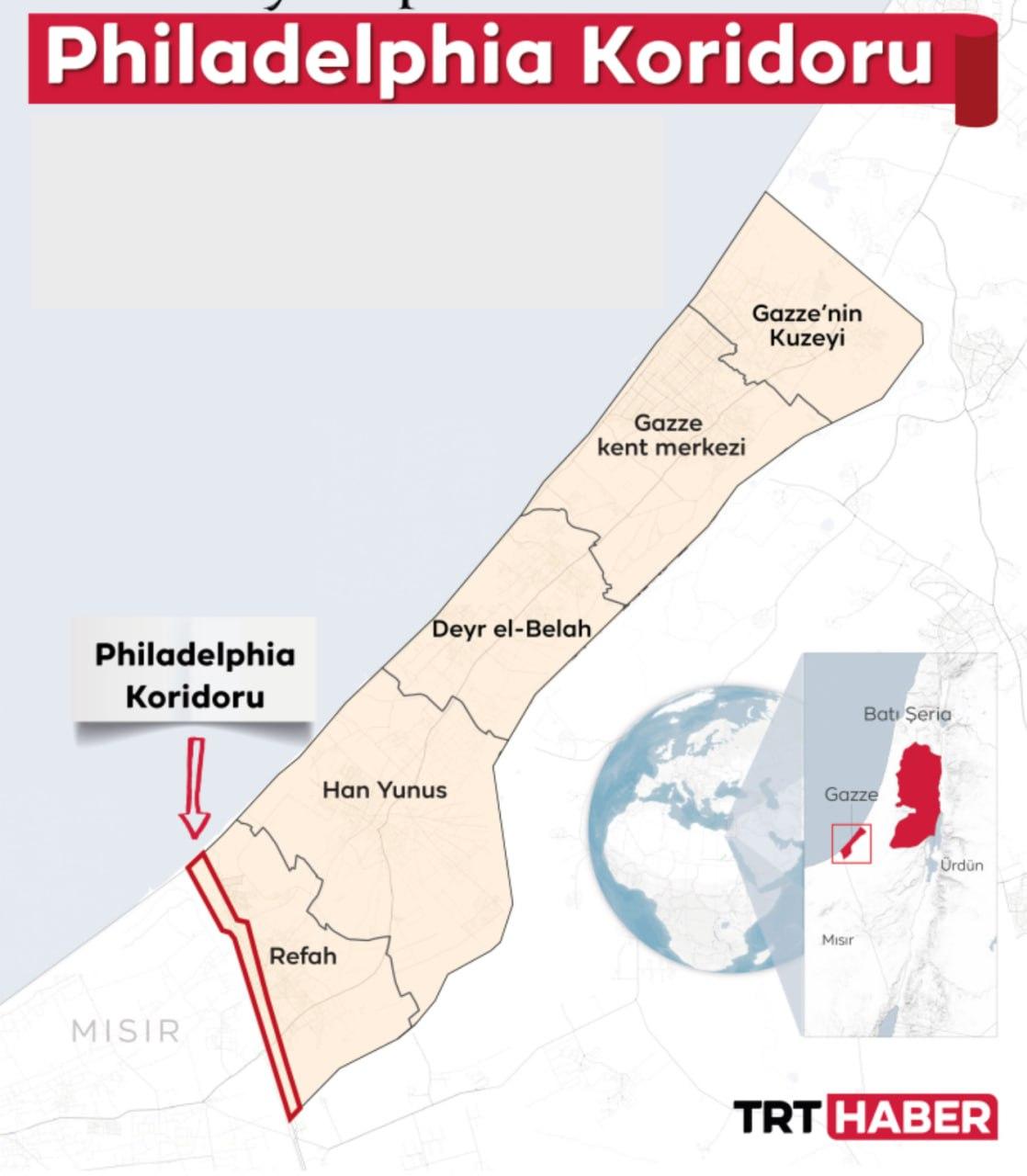
Philadelphi Corridor (source: TRT Haber)
The details of the second phase will be finalized through negotiations conducted while the first phase remains in effect. The remaining hostages will be exchanged mutually.
The focus will shift to the reconstruction of Gaza and infrastructure restoration. Body exchanges between Israel and Palestine will be carried out.
Hamas handed over three Israeli female hostages to the International Red Cross Committee. In return, Israel released 90 Palestinian prisoners. The released Palestinian prisoners were welcomed in Ramallah, Gaza, and East Jerusalem. Israeli forces attempted to prevent celebrations by conducting raids on the homes of released Palestinians. The Israeli government experienced internal debates regarding the continuity of the prisoner exchange, with some ministers arguing that the swap would produce negative outcomes for Israel.
Hamas released four Israeli female IDF soldiers. In return, Israel released 200 Palestinian detainees, 121 of whom were serving life sentences. Palestinians held large celebrations in Ramallah and Gaza, but Israeli security forces intervened to suppress them.
Hamas released three Israeli hostages and five Thai civilian hostages. In return, Israel released 110 Palestinian detainees, 32 of whom were serving life sentences. It was announced that among the released hostages were elderly and ill Israeli civilians. The reunions of Palestinian prisoners with their families were celebrated with large-scale events in the West Bank and Gaza. The Israeli army attempted to prevent celebrations by conducting raids on Palestinian homes in East Jerusalem and the West Bank.
Hamas handed over two of the three Israeli hostages it had announced it would release to the Red Cross. Israel announced it would release 90 Palestinian prisoners, 81 of whom were serving long prison sentences. Israel delayed the release process and attempted to obstruct the smooth progress of the exchange.
Hamas handed over three Israeli male hostages to the International Red Cross Committee. In return, Israel released 183 Palestinian prisoners. The released Palestinian prisoners were welcomed in the West Bank, East Jerusalem, and Gaza. Israeli forces intervened in the village of Beitunya with tear gas and live ammunition against Palestinians. Seven of the released Palestinian prisoners were hospitalized due to poor health conditions.
Hamas handed over Alexander Sasha Troufanov, a Russian-Israeli dual citizen, Sagui Dekel-Chen, an American-Israeli dual citizen, and Yair Horn to the International Red Cross Committee. In return, Israel released 369 Palestinian prisoners, including 36 serving life sentences and 333 detained since October 7, 2023, in the Gaza Strip. Palestinians gathered in large crowds in front of the Mahmoud Darwish Museum in Ramallah to welcome the released prisoners. Israeli forces intervened in Beitunya to prevent celebrations. Some of the released Palestinian prisoners were transferred to the Europe Gaza Hospital in Khan Yunis due to health issues. Upon arriving in Gaza, the released Palestinian prisoners burned the David Star uniforms they had been forced to wear by Israel.
The seventh round of the ceasefire and prisoner exchange agreement between Hamas and Israel took place on February 22 and 27, 2025. All six surviving Israeli male prisoners were handed over to International Red Cross teams on February 22. Israeli prisoners Tal Shoham and Avera Mengistu were handed over to the Red Cross in the morning in the Gaza Strip town of Refah, while Omer Shem-Tov, Eliya Cohen, and Omer Wenkert were handed over at the Nusayrat Refugee Camp in the Gaza Strip.
Hamas announced that Israel had delayed the release of Palestinian prisoners during the seventh round and violated the agreement. The 641 Palestinian prisoners expected to be released on February 22 were instead released on February 27. With the completion of this round, all 33 Israeli prisoners designated for release under the first phase had been handed over, and the number of freed Palestinians rose to 1,776.
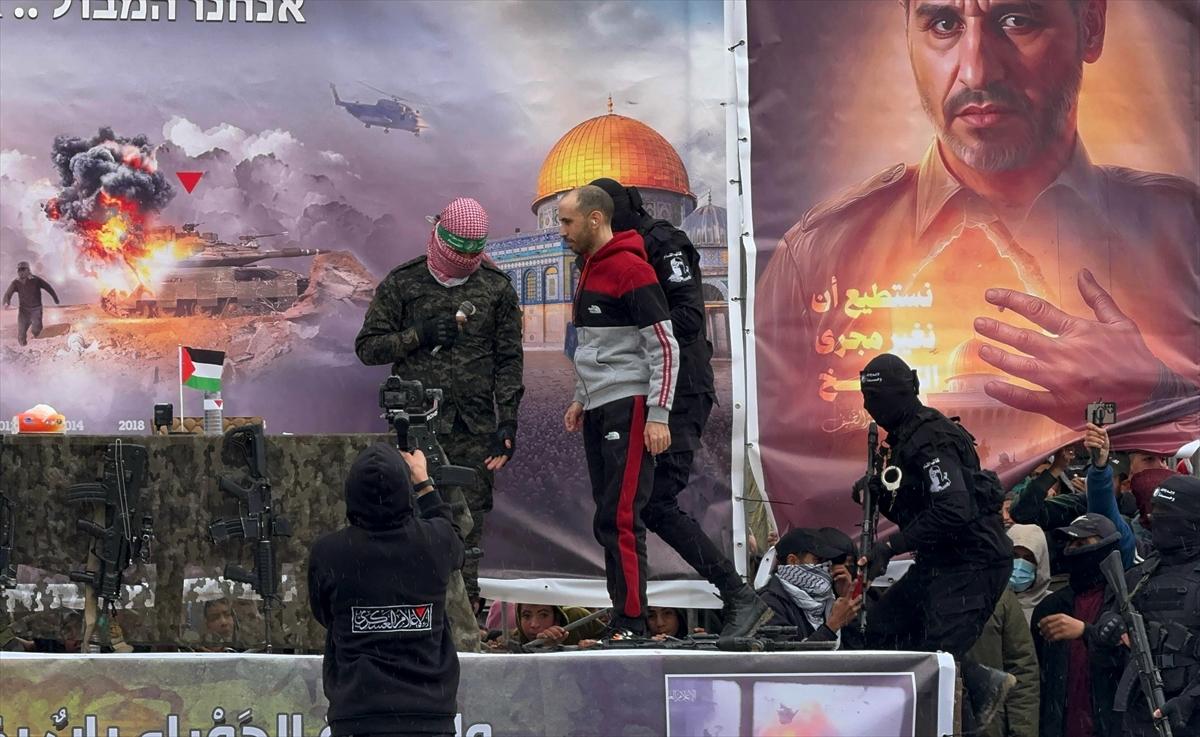
During the seventh round of prisoner exchange, Hamas hands over prisoners to International Red Cross teams, February 22, 2025 – Anadolu Agency
On February 9, 2025, in accordance with the ceasefire agreement reached with Hamas, the Israeli military withdrew from the Netzarim Corridor, which divides Gaza from north to south. This withdrawal was carried out as part of the ceasefire agreement. The Netzarim Corridor was established by Israel during its land invasion of Gaza in November 2023 and became a strategic line separating Gaza into northern and southern regions. To establish the corridor, the Israeli military demolished approximately 600 structures to gain control of the area. Following Israel’s withdrawal, previously displaced Palestinians began moving between the north and south of Gaza on foot and by vehicle through the corridor.
On February 20, 2025, Hamas handed over the bodies of four Israeli prisoners killed in Israeli attacks to the International Red Cross Committee. The bodies handed over included those of Oded Lifshitz, Shiri Bibas, and their children Ariel and Kfir Bibas.
The Israeli military collected the bodies from the Red Cross and transported them to a medical center for identification. Hamas announced that the prisoners had been killed in Israeli air strikes and publicly displayed this information through posters. Israel holds Hamas responsible for the deaths of the prisoners, while Hamas argues that Israel’s intense bombardment caused their deaths. According to the agreement, Israel was expected to release a group of Palestinian prisoners on February 22, 2025, in exchange for the bodies.
On February 10, 2025, Hamas’s military wing, the Izz ad-Din al-Qassam Brigades, announced the suspension of the prisoner exchange scheduled for February 15, citing Israel’s failure to fulfill its commitments under the ceasefire agreement. Hamas stated that Israel had violated four key provisions of the agreement: delaying the return of Palestinians to northern Gaza, continuing attacks on civilians in Gaza, blocking the entry of shelter materials, and delaying the entry of medical supplies and medications. This development prompted Israeli Prime Minister Benjamin Netanyahu to consult with security agencies. Netanyahu held a meeting aimed at ensuring the completion of the prisoner exchange, but the uncertainty surrounding the process triggered public reactions in Israel.
Itamar Ben-Gvir, leader of the far-right Jewish Power Party in Israel, argued that the Israeli military should target everything in Gaza, including humanitarian aid. Following Hamas’s announcement on February 15 that it was suspending the sixth round of prisoner exchange until further notice, Ben-Gvir declared on his X account that Israel must launch renewed heavy attacks on Gaza. Protests and Domestic Reactions: After Hamas suspended the prisoner exchange, hundreds of people in Tel Aviv demanded that the Netanyahu government complete the prisoner swap agreement. Protesters blocked roads in front of the Israeli Ministry of Defense. Slogans such as “Bring Them All Back” were carried, and chants of “Netanyahu broke the agreement” were raised. Families of the hostages demanded that the government accelerate the process and ensure the safe return of the prisoners.
US President Donald Trump, in a statement at the White House, stated that if all prisoners in Gaza were not released by Saturday noon, the ceasefire would be canceled. Trump used the phrase “Then let chaos reign.”
Negotiations for the second phase of the ceasefire and prisoner exchange agreement in Gaza did not begin on the scheduled date. According to the agreement, second-phase talks were supposed to commence 16 days after the first phase took effect, i.e., on February 3, 2025. However, the Israeli government postponed sending a delegation to Doha until February 2, delaying the process. Although the Israeli delegation traveled to Doha on February 8, it was not granted authority to negotiate the second phase; it was only authorized to discuss the implementation of the first phase.
Israeli Prime Minister Benjamin Netanyahu has been accused of deliberately sabotaging the process. Negotiations progressed slowly due to domestic political pressures and objections from right-wing coalition partners to the agreement. It was announced that Netanyahu, in coordination with US President Donald Trump’s Middle East Special Representative Steve Witkoff, would convene the cabinet on February 16 to address second-phase negotiations.
On March 18, 2025, Israel violated the ceasefire by launching large-scale air and land attacks against the Gaza Strip. The Israeli military conducted intense bombardments targeting numerous locations from northern to southern Gaza in the early morning hours. Areas including Khan Yunus, the city of Gaza, and the Nusayrat Refugee Camp were among the primary targets of the attacks, along with civilian settlements, refugee tents, schools, and hospitals. As a result of these attacks, hundreds of people were killed and injured, triggering a major humanitarian crisis in Gaza.
Anadolu Ajansı. "Gazze Ateşkes Anlaşması Detayları (İnfografik)." Accessed January 20, 2025.https://www.aa.com.tr/tr/info/infografik/43228.
Anadolu Ajansı. "Gazze'de Ateşkes Başladı." Accessed January 20, 2025.https://www.aa.com.tr/tr/dunya/gazze-de-ateskes-basladi/3454995.
Anadolu Ajansı. "Gazzede Ateşkes ve Esir Takası Anlaşması Kapsamında 90 Filistinli Esir Serbest Bırakıldı." Accessed January 20, 2025.https://www.aa.com.tr/tr/dunya/gazzede-ateskes-ve-esir-takasi-anlasmasi-kapsaminda-90-filistinli-esir-serbest-birakildi/3455729.
Anadolu Ajansı. "Hamas 3 İsrailli Kadın Esiri Kızılhaç'a Teslim Etti." Accessed January 20, 2025.https://www.aa.com.tr/tr/dunya/hamas-3-israilli-kadin-esiri-kizilhaca-teslim-etti/3455504.
Anadolu Ajansı. "Hamas ile İsrail Arasındaki Esir Takasında 5. Tur Gerçekleşti." Anadolu Ajansı, February 8, 2025. Accessed February 10, 2025.https://www.aa.com.tr/tr/dunya/hamas-ile-israil-arasindaki-esir-takasinda-5inci-tur/3475744
Anadolu Ajansı. "Kassam Tugayları, İsrail Taahhütlerini Yerine Getirene Kadar Esir Takasını Ertelediğini Duyurdu." Anadolu Ajansı, February 10, 2025. Accessed February 11, 2025.https://www.aa.com.tr/tr/dunya/kassam-tugaylari-israil-taahhutlerini-yerine-getirene-kadar-esir-takasini-erteledigini-duyurdu/3477685.
Anadolu Ajansı. "İsrail Ordusu, Gazze'deki Netzarim Koridorundan Çekildi." Anadolu Ajansı, February 9, 2025. Accessed February 10, 2025.https://www.aa.com.tr/tr/dunya/israil-ordusu-gazzedeki-netzarim-koridorundan-cekildi/3476317.
Reuters. "Trump Says Hamas Should Free All Hostages by Midday Saturday or 'Let Hell Break Out'." Reuters, February 10, 2025. Accessed February 11, 2025.https://www.reuters.com/world/middle-east/trump-says-palestinians-would-not-have-right-return-gaza-2025-02-10/
Reuters. "Trump Says Palestinians Would Not Have Right to Return to Gaza." Reuters, February 10, 2025. Accessed February 11, 2025.https://www.reuters.com/world/middle-east/trump-says-palestinians-would-not-have-right-return-gaza-2025-02-10/.
No Discussion Added Yet
Start discussion for "Gaza Ceasefire Agreement" article
Conflict Process
Approval Process of the Agreement
January 15, 2025
January 16, 2025
January 17, 2025
January 19, 2025
January 20, 2025
Three-Phase Agreement
First Phase
Second Phase
Third Phase
Prisoner Exchange Rounds Under the First Phase
First Round (January 19–20, 2025)
Second Round (January 20, 2025)
Third Round (January 30, 2025)
Fourth Round (February 1, 2025)
Fifth Round (February 8, 2025)
Sixth Round (February 15, 2025)
Seventh Round (February 22–27, 2025)
Israel Defense Forces’ Withdrawal from the Netzarim Corridor
Hamas-Israel Prisoner Body Handover (February 20, 2025)
Developments During the Ceasefire Process (February 2025)
Delays in the Prisoner Exchange Process
Israel’s Military Preparations
International Reactions
Current Status of Second Phase Negotiations
Termination of the Ceasefire (March 18, 2025)