


This article was automatically translated from the original Turkish version.
Furniture and space formation refers to the guiding interventions carried out through furniture elements that shape the physical arrangement functional organization and perceptual experience of an interior space. In this approach furniture is not merely a supplementary accessory but is regarded as a fundamental design component that defines how the space is used sets its boundaries and establishes its atmosphere.
Furniture placement directly influences spatial decisions such as the balance of fullness and emptiness visual focal points circulation paths and user orientation. Especially in open-plan and multifunctional buildings furniture becomes a flexible tool for delineating different usage areas. At the same time furniture imparts meaning and identity to the space through user identity cultural context and aesthetic preferences. Therefore in contemporary interior architecture furniture design is treated not as a formal exercise but as part of a strategic planning process.
Beyond its traditional role of furnishing space furniture has become an element that shapes guides and organizes interior spaces functionally. This is particularly evident in open-plan spaces large interior volumes accommodating multiple uses or compact living areas. In this context the Ankara National Library exemplifies how furniture is integrated into spatial configuration and demonstrates that flexibility is primarily determined by furniture design.
In the library’s large reading halls the layout is designed not only to meet users’ seating needs but also to respond to diverse activities such as quiet study group interaction and individual relaxation. Modular bookshelf systems replace fixed walls performing dual functions of book storage and creating visual and acoustic boundaries that define personalized areas for users. These systems simultaneously satisfy the need for privacy and transform the relationship between library users and the space through perceptual strategies such as direction focus and zoning.
Similarly the arrangement of seating groups is planned not only to meet ergonomic requirements but also to offer flexible solutions tailored to different user behaviors such as socializing individual reading or resting. Portable table systems acoustic partitions and chairs with varying seat heights create micro-spaces within the architectural volume transforming furniture from a supportive element into a tool that shapes enables and transforms the space.
In this context furniture design forms the foundation for all flexible usage scenarios in the library. The space’s ability to adapt to changing needs is made possible not through fixed architectural elements but through mobile adaptable and multifunctional furniture systems. Thus the Ankara National Library is not only a space for information access but also an example of a public space that can be reconfigured through furniture.
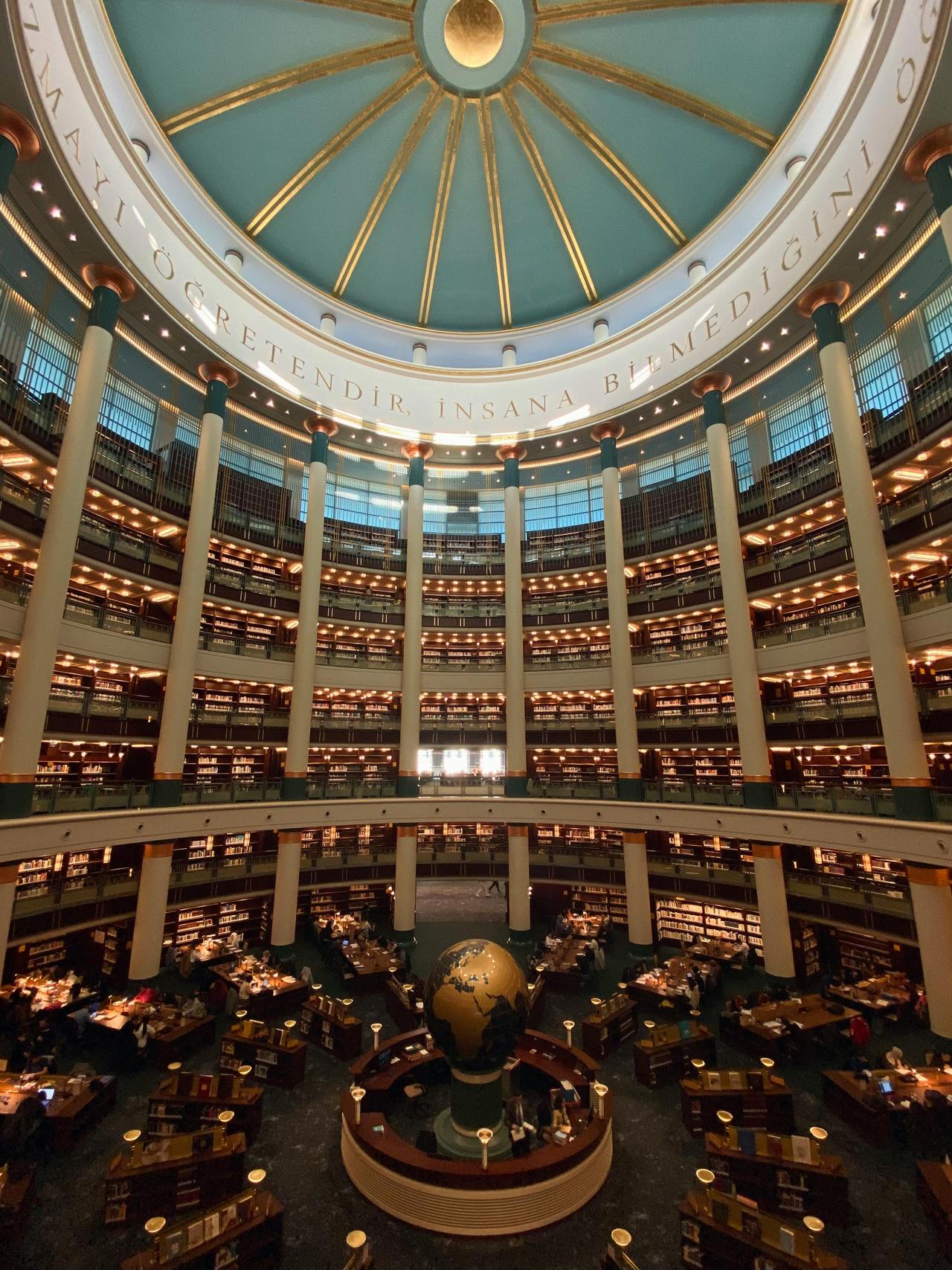
Millet Kütüphanesi, Ankara (Pexels, Melike)
The aesthetic value of furniture is assessed not only visually but also through tactile and functional experiences. Particularly in late 19th and early 20th century design philosophies shaped by the Arts and Crafts movement furniture crafted by hand was regarded as an inseparable part of architectural space. Chairs tables and ceiling lighting produced in William Morris’s workshops were not merely decorative items but were evaluated as artistic expressions. During this period individual production local material use and craftsmanship transformed furniture from an anonymous object into a narrative structure. From an interior architecture perspective this approach laid the foundation for practices in which every detail carries meaning and the space is shaped by a holistic aesthetic. Today these approaches are being reinterpreted around the concepts of personalization and slow design.
Materials used in furniture design are selected based on multidimensional criteria including aesthetic expression functionality production ease durability and environmental impact. In this context each material type stands out with specific qualities suited to different furniture types:
Solid wood is preferred especially for seating groups dining tables and handcrafted cabinets due to its natural structure and warmth. Hardwoods such as oak walnut and beech offer durable and classic products. Plywood MDF and particleboard are used in the production of modern office desks panel-based bookshelves and economical kitchen modules requiring flat surfaces and easy assembly.
Steel pipes or aluminum profiles serve functionally in chair frames adjustable table legs and shelving systems by combining strength with lightness. Cast metal components are used decoratively or structurally in table legs bar stools and outdoor seating units to emphasize industrial aesthetics.
Moldable plastics such as acrylic or polycarbonate are used in ergonomic chair shells transparent table surfaces and children’s furniture offering colorful lightweight and easy-to-clean products. Durable types such as polypropylene are frequently chosen for stackable chairs providing suitable options for both indoor and outdoor use.
Tempered glass creates effects of lightness and transparency especially on coffee tables and dining table surfaces while offering scratch resistance and ease of cleaning. Natural stones such as marble or granite are used as surface finishes in luxury-oriented console and table designs valued for their aesthetic weight and surface quality.
Carbon fiber and fiberglass are used in portable table systems sportive chair frames and ergonomic office chairs where high strength and low weight are required. Thermochromic surfaces appear in experimental furniture such as table tops that change color with temperature or interactive seating units. Recycled plastics or textile waste are employed as structural materials for modular seating elements decorative screens and multifunctional furniture designed for ecological purposes.
This diversity reveals that each furniture element requires a unique material selection not only for aesthetic reasons but also in relation to production method service life maintenance needs and user experience. Thus material has become a fundamental component that shapes the function lifespan and relational value of furniture within space.
The widespread adoption of digital design tools has transformed the furniture design process from a purely aesthetic practice into a data-driven performance-oriented process directly integrable with production. The use of parametric modeling and computer-aided 3D design (3D CAD) software enables designers to develop models with high geometric complexity open to functional variations and analyzable before production. As a result furniture can now be evaluated in detail not only by visual qualities but also by criteria such as ergonomic suitability material efficiency modularity and ease of assembly.
Digital prototyping techniques overcome the limitations of traditional model making allowing early-stage testing of parameters such as scale proportion contextual compatibility and user interaction in virtual environments. Through virtual reality (VR) applications users can experience the placement of a designed chair within its spatial context and its relationship to surrounding elements while augmented reality (AR) technologies integrate digital furniture layouts into real spaces to support more intuitive and visual decision-making. These interactive platforms enable personalized furniture recommendations tailored to user profiles particularly in interior architecture projects.
Moreover the integration of BIM (Building Information Modeling) systems with furniture design allows furniture components to be considered as integral parts of the architectural system. In a BIM environment a table or cabinet is not defined merely as an object but with detailed information on material properties manufacturing specifications assembly instructions and maintenance scenarios. This integration fosters a multidisciplinary collaboration model among architects interior architects engineers and manufacturers throughout the project process.
Additionally advances in digital fabrication technologies such as CNC cutting laser engraving and 3D printing enable the direct translation of digital design data into physical products. This process provides solutions not only for mass production but also for customized designs. Thus digital tools have become instruments not merely for representation but for developing testing optimizing and realizing design solutions.
In conclusion contemporary furniture design has evolved into a multidimensional structure thanks to the new representation analysis and production possibilities offered by digital environments. Designers now have the opportunity to develop new design strategies based not only on form but also on data performance and interaction.
Kalay, Turgut. "İç Mekan Kurgusunda Mobilya’nın Yeri: Minimalist Yaklaşımlar." *İleri Teknoloji Bilimleri Dergisi* (Journal of Advanced Technology Sciences), no. 4. Uluslararası Mobilya ve Dekorasyon Kongresi Özel Sayısı, 2017. Accessed May 28, 2025.https://dergipark.org.tr/en/download/article-file/378610
Kurtoğlu, Ahmet, and Evci, Fikret. "Mobilya Tasarımı." *İstanbul Üniversitesi Orman Fakültesi Dergisi*, Series B 38, no. 4, 1988. Accessed May 28, 2025.https://dergipark.org.tr/en/download/article-file/175171
Pexels. “Interior of Turkey's Presidential Library JPG.” Accessed May 28, 2025.https://www.pexels.com/photo/interior-of-turkey-s-presidential-library-14470919/
Savaş, Sinan. "Kısıtlı Mekan-Mobilya Çözümlerinde Çağdaş Yaklaşımlar." Master's thesis,Marmara Üniversitesi Institute of Fine Arts, Interior Architecture, 2011. Accessed May 28, 2025.https://www.proquest.com/openview/84c16723cee5daa09b39a39df014270f/1?pq-origsite=gscholar&cbl=2026366&diss=y
Özel, Yaprak, and Ürük, Zerrin Funda. "Mobilya- Biçim- Tercih." *Avrupa Bilim ve Teknoloji Dergisi* 21 (2021): 589–600. Accessed May 28, 2025.https://dergipark.org.tr/en/download/article-file/1609204
Özel, Yaprak. "İç Mekân Kurgusunda Mobilya ve Mekân Kompozisyonu İlişkisi." *Avrupa Bilim ve Teknoloji Dergisi* 25 (August 2021): 94–104. Accessed May 28, 2025.https://dergipark.org.tr/en/download/article-file/1737394

No Discussion Added Yet
Start discussion for "Furniture and Space Design" article
The Configurative and Divisive Role of Furniture in Space
Aesthetics and Craftsmanship in Furniture Design
Furniture Materials
Wood Materials
Metal Materials
Plastic and Synthetic Materials
Glass and Stone Materials
Composite and Next-Generation Materials
Digital Tools and New Modes of Representation