


This article was automatically translated from the original Turkish version.
+1 More
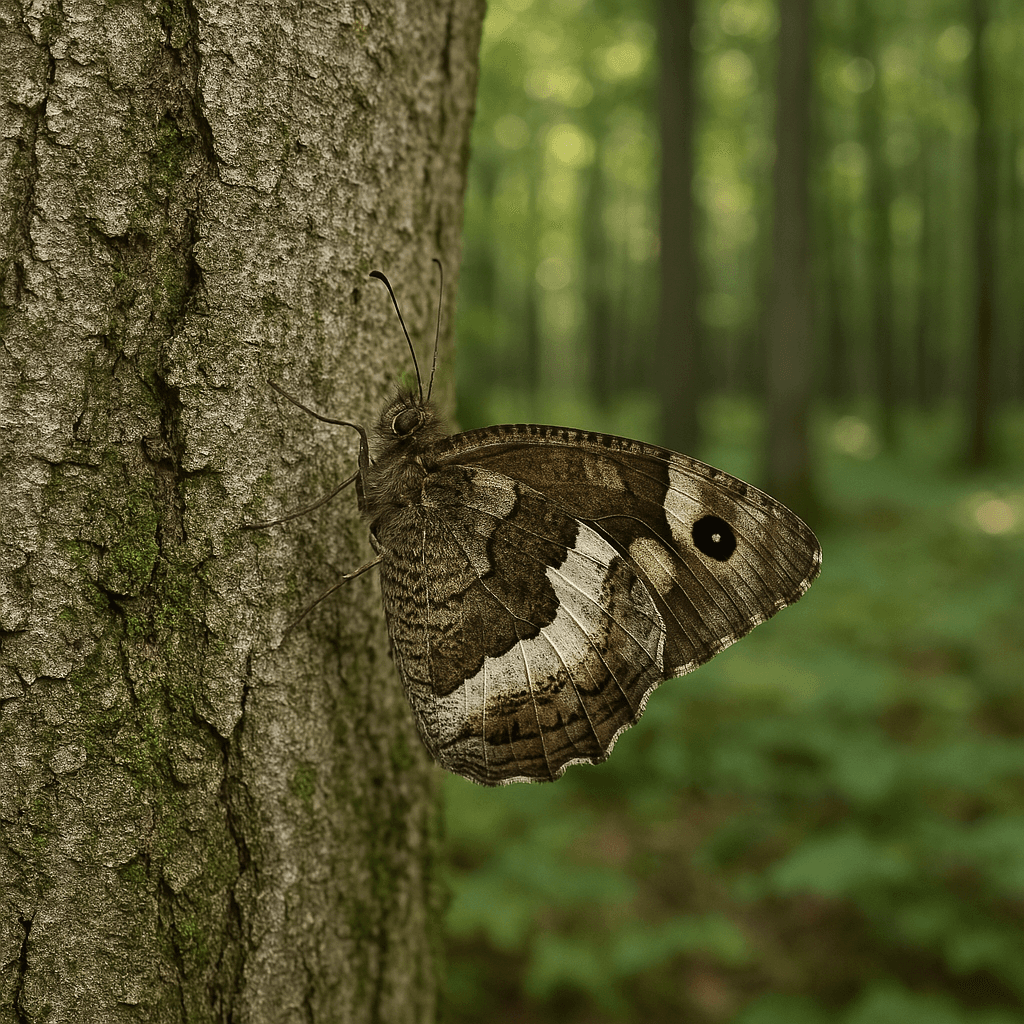
An AI-generated Hipparchia Fagi
Family | Nymphalidae | ||||||||
|---|---|---|---|---|---|---|---|---|---|
Subfamily | Satyrinae | ||||||||
Genus | Hipparchia | ||||||||
Hipparchia fagi, is a butterfly species found in the forest ecosystems of Europe. It belongs to the family Nymphalidae within the order Lepidoptera and is classified under the subfamily Satyrinae. This species plays an important role in the biological diversity of European forests and depends primarily on habitats characterized by beech trees (Fagus sylvatica). Population declines have been observed due to threats such as habitat fragmentation, forest conversion and climate change. As a result, Hipparchia fagi is included among the species considered in nature conservation policies across Europe.
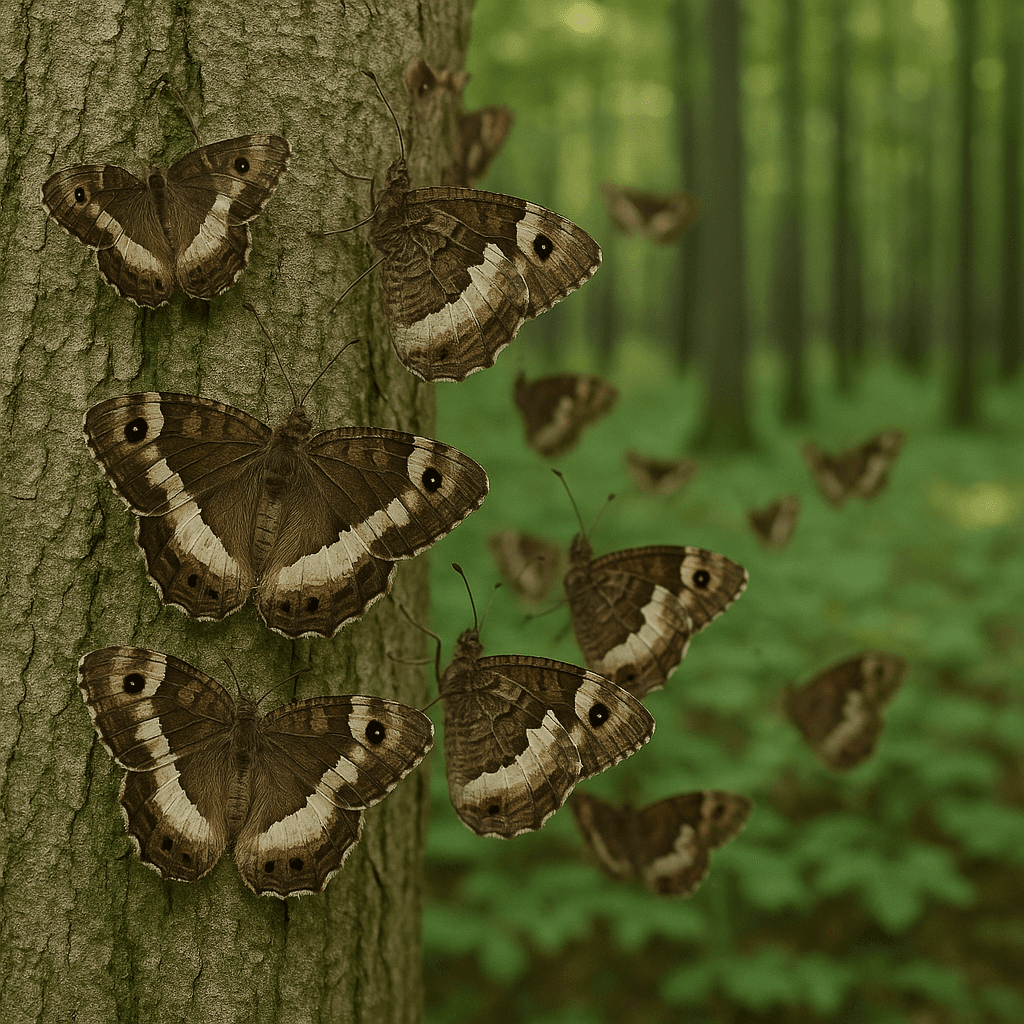
An AI-generated population of Hipparchia fagi
Hipparchia fagi was first described by Giovanni Antonio Scopoli in 1763. The species is classified within the genus Hipparchia and exhibits the typical characteristics of this genus. Its scientific name, Hipparchia fagi, places it within the family Nymphalidae and the subfamily Satyrinae.
The systematic position of this species has been clarified through morphological and molecular analyses. In particular, wing patterns, habitat dependency and behavioral traits are key features distinguishing H. fagi from other Hipparchia species.
Hipparchia fagi is a medium-sized butterfly with a wingspan typically ranging from 55 to 70 millimeters. Males are distinguished by dark brown wings with relatively simple patterns, while females exhibit lighter tones and more prominent eye spots. These eye spots are surrounded by yellow rings.
A distinct white band is visible on the underside of the hindwings. This pattern aids in camouflage against the forest floor, helping individuals avoid predators. The ventral wing surfaces are highly suited for environmental camouflage. The morphological features of this species are important not only for identification but also for understanding its ecological adaptations.
Hipparchia fagi is a univoltine species, meaning it produces only one generation per year. Adult individuals are typically active from mid-July to early September. This period coincides with the warm summer months and encompasses mating and egg-laying activities.
Females lay eggs primarily on the leaves of herbaceous plants. Larvae hatch and begin development in autumn, entering a state of developmental arrest (diapause) during the winter months. They become active again in spring, pupate, and emerge as adults by early summer. The primary food sources for larvae are various grasses belonging to the family Poaceae. The presence of these plants is critical for larval survival.
The primary habitat of this species is natural beech forests in temperate climate zones. Forest clearings, slopes and sparsely wooded areas are particularly suitable habitats for Hipparchia fagi. Rocky areas and sun-exposed patches are also frequently selected. Population density is higher in areas where the natural forest structure is preserved and agricultural pressure is low. Forestry activities that disrupt the habitat, especially the establishment of monoculture plantations, are reducing the available habitat for this species.
Hipparchia fagi is predominantly distributed across Central and Southern Europe. Local populations occur in France, Germany, Switzerland, Austria, Italy and Balkan countries. Its presence has also been observed in countries bordering the Mediterranean. Its natural range extends eastward through the Balkans to the Black Sea region. However, its distribution is highly fragmented. Habitat suitability, human impact and climatic factors have led to regional isolation of populations. This situation may lead to reduced genetic diversity and pose challenges for the long-term conservation of the species.
The International Union for Conservation of Nature (IUCN) has assessed Hipparchia fagi as Near Threatened (NT). Although the species is not currently at immediate risk of extinction, ongoing threats could lead to its classification in higher risk categories.
Major threats include habitat loss, climate change and forestry activities. In particular, the conversion of natural beech forests for agriculture, tourism and urban development is significantly reducing available habitat. Climate change may cause shifts in flight seasons, imbalances in larval development and reduced egg survival rates. Conservation strategies recommend protecting natural forest ecosystems, establishing habitat corridors and conducting field studies to monitor population distribution.
Hipparchia fagi is an important component of the ecosystems in which it occurs. Larvae feed on grasses, influencing their population dynamics. At the same time, they serve as a food source for birds and other insects, playing a significant role in predator-prey relationships.
This species can be regarded as an indicator of healthy forest ecosystems. Its presence reflects the naturalness and sustainability of the habitat. In this regard, it may be considered an indicator species. The presence of Hipparchia fagi is regarded as an important biological signal for maintaining ecological balance.
Hipparchia fagi is a butterfly species with high aesthetic and ecological value, inhabiting the biologically rich forests of Europe. Due to its life cycle, habitat dependency and sensitivity to climatic conditions, it is among the species requiring conservation. The development of more effective conservation strategies is essential for its long-term survival in the face of environmental threats such as habitat loss, climate change and forest interventions.
In this context, measures such as protecting natural beech forests, enhancing habitat connectivity and continuously monitoring local populations must be implemented. Ecological and population-level research on Hipparchia fagi will provide a scientific basis for policies and practices aimed at its conservation.
European Environment Agency (EEA). "Hipparchia fagi (Scopoli, 1763)." *EUNIS Species Database*. Accessed April 9, 2025.https://eunis.eea.europa.eu/species/90893.
IUCN. "Hipparchia fagi: European Red List Assessment." *The IUCN Red List of Threatened Species*. Last modified 2024. Accessed April 9, 2025.https://www.iucnredlist.org/species/173209/245852748
Museum für Naturkunde Berlin. "Hipparchia fagi (Scopoli, 1763)." Fauna Europaea Archive. Accessed April 9, 2025.https://web.archive.org/web/20160304122205/http://fauna.naturkundemuseum-berlin.de/full_results.php?id=441548.
Papillons en Poitou-Charentes. "Hipparchia fagi (Scopoli, 1763)." Accessed April 9, 2025.https://www.papillon-poitou-charentes.org/Hipparchia-fagi-Scopoli-1763,17491.html

An AI-generated Hipparchia Fagi
Family | Nymphalidae | ||||||||
|---|---|---|---|---|---|---|---|---|---|
Subfamily | Satyrinae | ||||||||
Genus | Hipparchia | ||||||||
No Discussion Added Yet
Start discussion for "Forest Grayling (Hipparchia fagi)" article
Taxonomy and Systematic Position
Morphology
Life Cycle and Behavior
Habitat and Ecological Preferences
Geographic Distribution
Conservation Status and Threats
Ecological Role and Importance