


This article was automatically translated from the original Turkish version.
+1 More
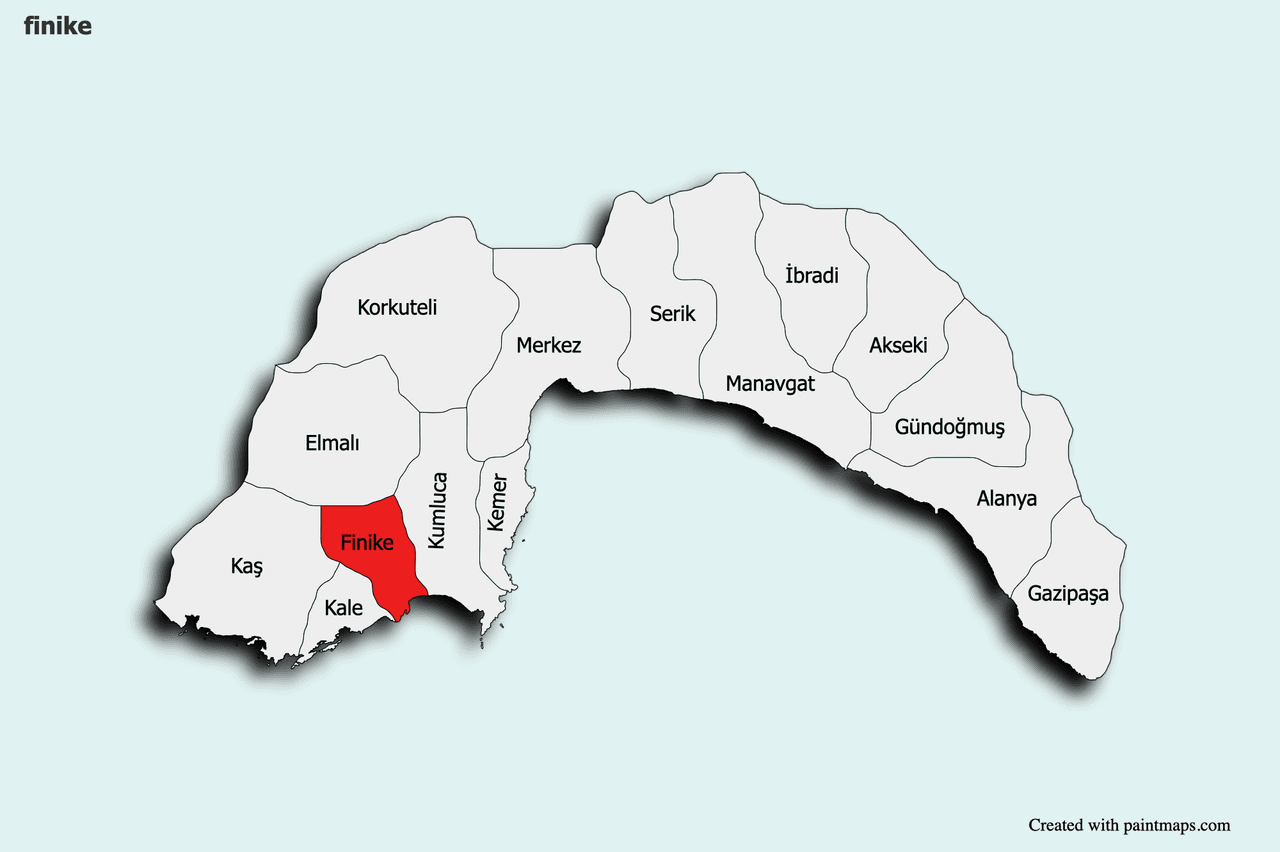
Finike (district)
Province | Antalya | ||||||||
|---|---|---|---|---|---|---|---|---|---|
Area | 655 km² | ||||||||
Population (2024) | 51.620 (2024) | ||||||||
Elevation | Average 10 m | ||||||||
Climate | Mediterranean climate | ||||||||
Neighboring Districts | Elmalı Demre Kumluca | ||||||||
Prominent Product | Finike Orange (geographically indicated) | ||||||||
Mayor | Mustafa Geyikçi (as of 2024) | ||||||||
District Governor | Musa Kazım Çelik (as of 2024) | ||||||||
Finike is a coastal district located on the Mediterranean coast to the west of Antalya, known for its historical harbors, citrus production, and ancient heritage. The district is situated approximately 115 km from the city center of Antalya, bordered by Kumluca to the east, Demre to the west, Elmalı to the north, and the Mediterranean Sea to the south. Built on the alluvial Finike Plain, the district has been a major center for agriculture and maritime activities throughout history due to its fertile soils and strategic harbor location. With its tranquil character where nature and history intertwine, Finike remains one of the distinctive districts along the Mediterranean coast with a unique identity.
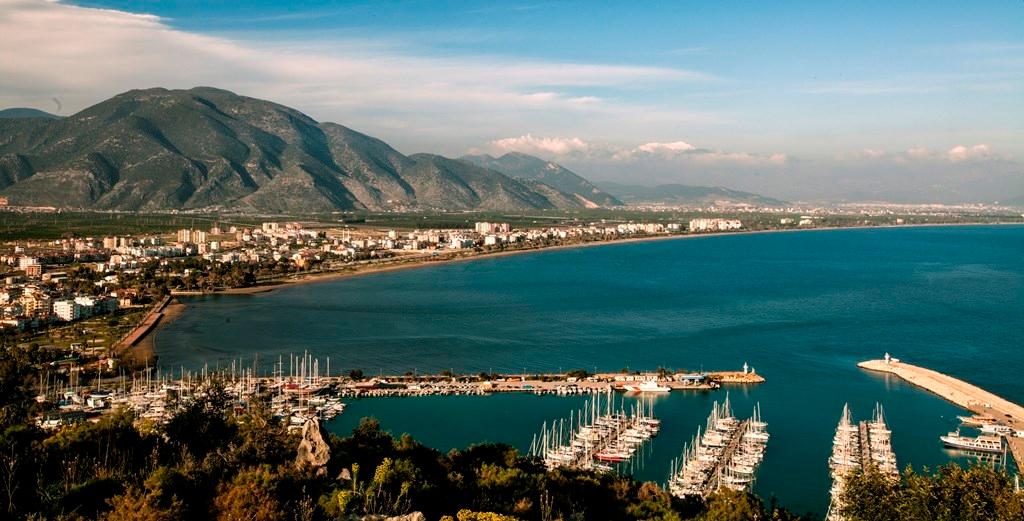
Finike (T.C. Finike Kaymakamlığı)
Finike’s history dates back to the 5th century BCE as part of the Lycian region. In antiquity, known as Phoinikos, it became one of Lycia’s important harbor settlements. Thanks to its harbor, it played an active role in east-west maritime trade and was among the cities with representation rights in the Lycian League.
There is no consensus on the origin of the name Finike, but traditions suggest it may derive from the Phoenicians. However, archaeological research indicates human settlement in the region as far back as 3000 BCE, though definitive evidence from this period has yet to be established.
Finike retained its importance during the Hellenistic, Roman, and Byzantine periods, continuously serving as a settlement due to its location along trade routes and its strategic position. Particularly during the Roman Empire, it was incorporated into the Lycian provincial system, and maritime activities increased significantly.
During the Middle Ages, Finike maintained its significance under the Seljuks and later the Ottomans, being recognized as a small harbor settlement. Under Ottoman rule, Finike was a subdistrict (nahiye) of the Elmalı kazas until it gained district status in 1914. Following World War I, the district was briefly under Italian occupation between 1919 and 1921, but after the War of Independence it was reintegrated into Turkish territory.
With the establishment of the Republic, Finike emerged as a prominent center for agriculture, especially citrus production. The drainage of marshlands and the adoption of modern agricultural techniques contributed significantly to the district’s economic development. Today, Finike continues to be one of the distinctive districts along the Mediterranean coast, recognized for its ancient heritage, natural harbor, and agricultural output.

Limyra Ancient City (
The district is bordered by the Alakır River and Kumluca to the east, Alacadağ and Gülmez Mountains and Demre (formerly Kale) to the west, Avlan Beli and Elmalı to the north, and the Mediterranean Sea to the south. Geographically situated between 30–31 degrees east longitude and 36–37 degrees north latitude, Finike is built upon a fertile plain. The district center covers an area of approximately 2,458 hectares on the Mediterranean coast, covered by alluvial deposits. The district’s administrative boundaries span 655 square kilometers and include a coastline of approximately 28 kilometers in length.
Finike’s mountainous terrain forms a natural barrier between the coast and inland areas. Due to this geomorphological structure, the Mediterranean’s mild climate does not fully penetrate inland, resulting in a marked climatic difference between the coastal and inland regions.
The climate exhibits typical Mediterranean characteristics: hot, dry summers and mild, rainy winters. Annual average temperatures range between 18–20°C, with summer temperatures frequently exceeding 30°C. The region’s high number of sunny days throughout the year and consistent rainfall patterns make it exceptionally suitable for agriculture and citrus production.
Extensive alluvial soils in the eastern and western parts of the Finike Plain are used for agricultural activities. The mountainous areas are home to natural vegetation, forested zones, and rural highland settlements. The district also features notable natural geographical formations such as the Alakır Valley and Gökbük Canyon.
According to the 2024 Address-Based Population Registration System (ADNKS) data, Finike’s total population is 51,620, with 25,837 males and 25,783 females, indicating nearly equal gender distribution. The district comprises 26 neighborhoods. The most densely populated neighborhoods are Kum Mahallesi (7,934 inhabitants), Turunçova Mahallesi (7,820 inhabitants), and Yeni Mahalle (6,767 inhabitants). Other significant settlement centers include Sahilkent, Hasyurt, and Yeşilyurt.
Population growth is relatively low, and Finike generally exhibits a stable demographic structure. However, temporary population increases occur during summer months due to seasonal agricultural workers and tourism. The literacy rate exceeds 98%, and the educational level is relatively high. The educational infrastructure includes 42 schools serving 8,330 students and employing 718 teachers. Health services are provided through the state hospital and family health centers, while educational and social institutions, including public and private student dormitories, support the district’s educational and social life.
Finike’s economy is largely based on agriculture and related secondary sectors. Thanks to the fertile alluvial soils of the Finike Plain, plant production has been the primary economic activity in the district.
Of the district’s total land area of 69,900 hectares, 7,101 hectares are used for agricultural purposes. Finike is particularly renowned for citrus production. Of the 50,119 decares allocated for fruit cultivation, 35,237 decares are dedicated to citrus fruits such as oranges, lemons, mandarins, and grapefruits. Orange production accounts for the highest share, with 138,252 tons produced in 2024.
The “Finike Orange” is a geographically indicated product, recognized in Turkey and abroad for its aromatic fragrance, low acidity, and juicy texture. Research conducted by the University of California identified the Finike orange as one of the world’s highest-quality oranges. In addition to oranges, significant agricultural products in Finike include pomegranates (31,152 tons production), lemons (1,005 tons production), and olives (cultivated on 1,420 decares). Furthermore, local agricultural products such as “Yazır Grape” and “Yalnız Lettuce” stand out for their quality and production volume.
Protected cultivation also holds significant importance in Finike. On 6,490 decares, vegetables such as tomatoes, lettuce, cucumbers, peppers, and eggplants are grown using greenhouse techniques, yielding over 100,209 tons annually. Small-scale olive oil production, small livestock farming, and beekeeping are also practiced as rural economic activities. Efforts to promote organic farming and geographically indicated products are increasing.
Livestock farming, while secondary to agriculture, remains economically significant. The district has 557 head of cattle, 3,096 sheep, and 15,489 goats. Additionally, there are 19,197 bee hives in Finike, contributing to the economy through honey, beeswax, and pollen production. The majority of income from livestock farming comes from milk, honey, and other apiculture products. In 2024, the district produced 190 tons of honey, generating approximately 57 million Turkish Liras in revenue.
The waters of Finike Bay and surrounding marine areas support the development of fishing activities. The district has six freshwater fish production facilities and three marine fish production facilities. In 2024, 3,590 tons of farmed fish were produced, generating substantial economic returns. Finike is also rich in freshwater resources, with species such as mullet, sea bass, carp, and snakehead found in rivers like Akçay and Karaçay.
Finike possesses rich potential for nature and cultural tourism. The district lies along the famous Lycian Way hiking trail, which stretches from Fethiye to Antalya, and is favored by hiking enthusiasts as a destination for accommodation and rest.
Arykanda Ancient City: Located north of Finike near Arif Village, Arykanda is one of Lycia’s important cities with a history extending to the 5th century BCE. The city, built on terraces following the natural slope of the terrain, features notable structures such as an agora, theater, stadium, and bathhouse.
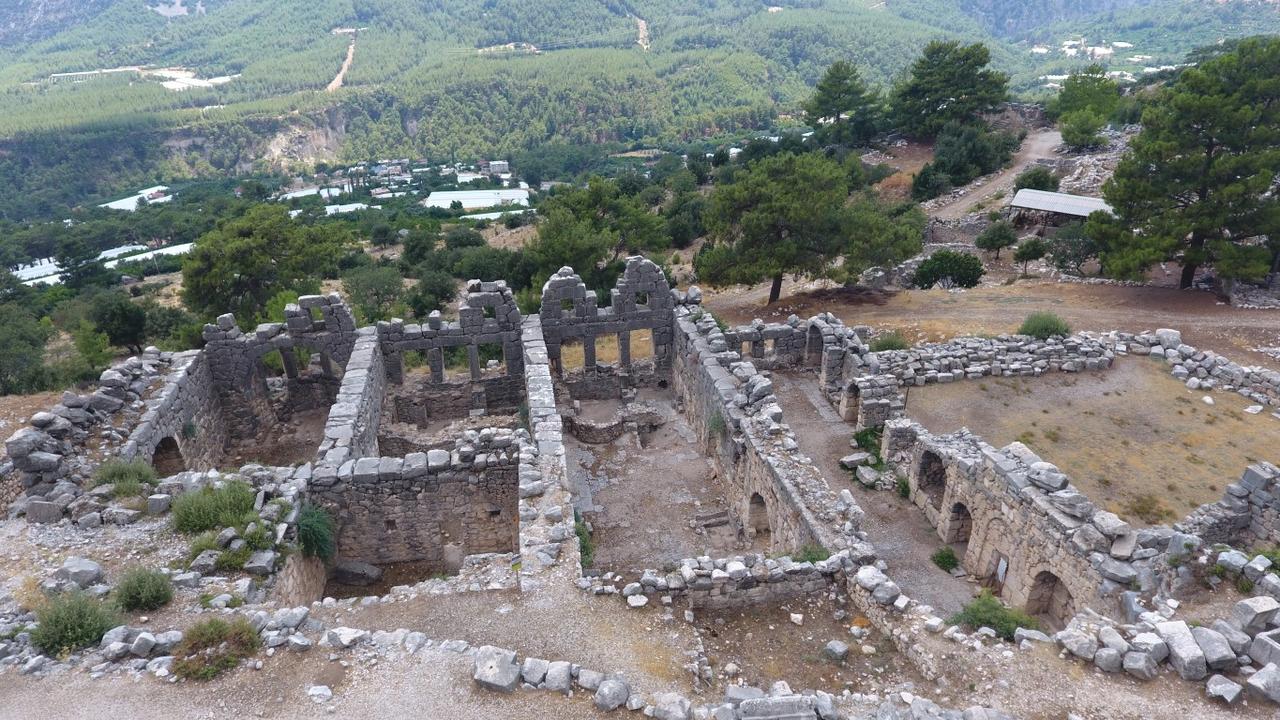
Arykanda Ancient City (Finike Municipality)
Limyra Ancient City: Located 4 km from the district center, Limyra was an important settlement that served as the capital of the Lycian League. The city is particularly notable for its rock-cut tombs and theater, making it a key destination for history and archaeology enthusiasts.
Suluin Cave (Zincirli Gök Cave): Suluin is the deepest known underwater cave in Asia. Although it attracts diving enthusiasts, tourist diving activities remain limited.
Finike boasts long beaches, natural coves, and harbors suitable for yachting along the Mediterranean coast. Coastal areas such as Gökliman Beach and Radyofar Cove are major centers for sea tourism during summer months. Natural areas inland, including the Alakır Valley and Gökbük Canyon, are ideal for hiking and photography.
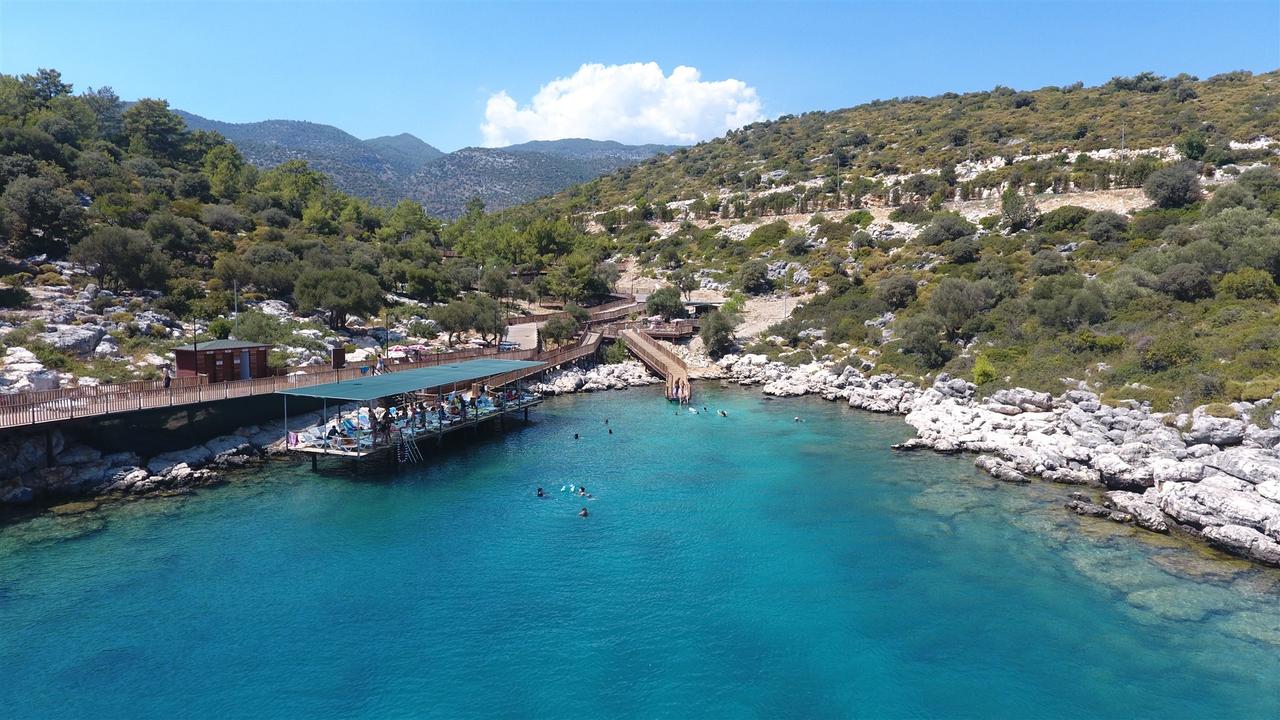
Radyofar Cove (Finike Municipality)
Setur Finike Marina, opened in 1997, is one of the region’s key yachting ports with a total capacity of 500 berths—350 at sea and 150 on land. The marina contributes to yachting tourism through its technical services and safety facilities.
Finike also holds potential for hunting tourism and outdoor sports. Wild goat hunting is practiced in the vicinity of the villages of Arif, Yalnız, and Akçaalan. Additionally, freshwater fishing in the Akçay and Karaçay rivers is a significant activity in the district.
Finike’s cultural identity has been shaped by its historical past, agricultural traditions, and Mediterranean lifestyle. The Finike Culture House, established by restoring a historic building formerly known as the “Historic Customs House,” serves to support the district’s cultural life. Located next to the remains of Finike Harbor Castle, mentioned in Evliya Çelebi’s Seyahatname, the building now functions as a museum reflecting the region’s cultural heritage. The annual Citrus Festival, held in the district each year, sustains Finike’s cultural identity through events promoting local products, folk concerts, traditional cuisine, and various cultural activities.
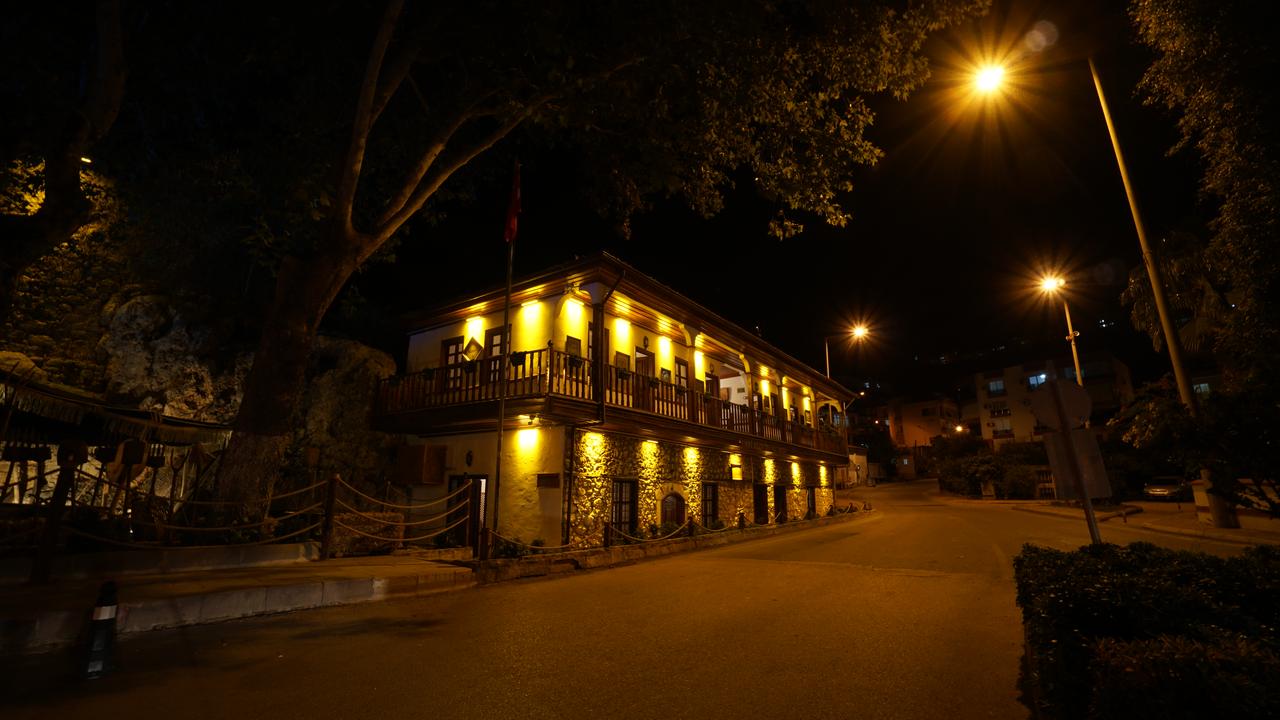
Culture House (Finike Municipality)
Finike’s cuisine reflects the characteristic features of Mediterranean dietary culture while also incorporating influences from the Yörük way of life. Fresh agricultural produce, olive oil, and seafood form the foundation of Finike’s culinary tradition. Olive oil-based vegetable dishes hold a prominent place in the local cuisine. Particularly notable regional specialties include olive oil–prepared artichokes, squash blossom stuffing, and citrus-based jams. Citrus jams made from Finike oranges are prominent both in local breakfasts and as souvenirs.
The coastal areas of Finike offer a rich seafood cuisine. Fish such as sarigan, sea bream, and orfoz are commonly consumed on local tables. Alongside fish dishes, various herb-based meals and olive oil appetizers are natural components of Finike’s cuisine. Inland areas show stronger influences of traditional Yörük cuisine. Cheese made from goat milk and dairy-based desserts are widely consumed. Additionally, homemade tarhana, börek, and regional bread varieties play an important role in Finike’s rural culinary tradition.
The geographically indicated Finike Orange is not only consumed fresh but also used in local dishes and desserts. Olive oil produced in the district plays a vital role as the primary cooking fat in the local cuisine. Weekly markets held in Finike are important cultural spaces where handcrafted food products and regional dishes are presented to the public.
Finike Belediyesi. "Finike Tarihi." Finike Belediyesi Web Sitesi. Accessed April 19, 2025.https://www.finike.bel.tr/tr/hakkinda
Finike Belediyesi. "Gezi Rehberi." Finike Belediyesi Web Sitesi. Accessed April 19, 2025.https://www.finike.bel.tr/tr/gezi-rehberi
Finike Belediyesi. "Kültür Evi." Finike Belediyesi Web Sitesi. Accessed April 19, 2025.https://www.finike.bel.tr/tr/kultur-evi
Finike Belediyesi. "Likya Yolu." Finike Belediyesi Web Sitesi. Accessed April 19, 2025.https://www.finike.bel.tr/tr/likya-yolu
Finike Belediyesi. "Nüfus Bilgileri." Finike Belediyesi Web Sitesi. Accessed April 19, 2025.https://www.finike.bel.tr/tr/nufus-bilgileri
Finike Belediyesi. “Arykanda Antik Kenti.” Finike Belediyesi Web Sitesi. Accessed April 19, 2025.https://www.finike.bel.tr/tr/arykanda-antik-kenti
Finike Belediyesi. “Limyra Antik Kenti.” Finike Belediyesi Web Sitesi. Accessed April 19, 2025.https://www.finike.bel.tr/tr/galeri/limyra-antik-kenti/1
Finike Belediyesi. “Limyra Antik Kenti.” Finike Belediyesi Web Sitesi. Accessed April 19, 2025.https://www.finike.bel.tr/tr/galeri/limyra-antik-kenti/1
Finike Belediyesi. “Radyofar Koyu.” Finike Belediyesi Web Sitesi. Accessed April 19, 2025.https://www.finike.bel.tr/tr/galeri/radyofar-koyu/1
T.C. Finike Kaymakamlığı. “Tarım.” T.C. Finike Kaymakamlığı Web Sitesi. Accessed April 19, 2025.http://www.finike.gov.tr/ilemizde-tarim-sektr
T.C. Kültür ve Turizm Bakanlığı. "Tarım." Antalya İl Kültür ve Turizm Müdürlüğü. Accessed April 19, 2025.https://antalya.ktb.gov.tr/Eklenti/8685,67-dundenbuguneantalya-1cilt-finikepdf.pdf
T.C. Kültür ve Turizm Bakanlığı. “Tarım.” Antalya İl Kültür ve Turizm Müdürlüğü. Accessed April 19, 2025.https://antalya.ktb.gov.tr/Eklenti/8685,67-dundenbuguneantalya-1cilt-finikepdf.pdf
T.C. Ministry of Culture and Tourism. "Tarım." Antalya İl Kültür veTurizm Müdürlüğü. Accessed April 19, 2025.https://antalya.ktb.gov.tr/Eklenti/8685,67-dundenbuguneantalya-1cilt-finikepdf.pdf
T.C. Ministry of Culture and Tourism. "Tarım." Antalya İl Kültür veTurizm Müdürlüğü. Accessed April 19, 2025.https://antalya.ktb.gov.tr/Eklenti/8685,67-dundenbuguneantalya-1cilt-finikepdf.pdf
T.C. Ministry of Culture and Tourism. "Tarım." Antalya İl Kültür veTurizm Müdürlüğü. Accessed April 19, 2025.https://antalya.ktb.gov.tr/Eklenti/8685,67-dundenbuguneantalya-1cilt-finikepdf.pdf
T.C.Finike Kaymakamlığı Governorship. "Eğitim ve Kültür." T.C. Finike District Governorship Municipal Website. Accessed April 19, 2025.http://www.finike.gov.tr/ilemizin-egitim-ve-kltr-durumu
T.C.Finike Kaymakamlığı Governorship. "Tarım." T.C. Finike District Governorship Website. Accessed April 19, 2025.http://www.finike.gov.tr/ilemizde-tarim-sektr
T.C.Finike Kaymakamlığı Governorship. "Tarım." T.C. Finike District Governorship Website. Accessed April 19, 2025.http://www.finike.gov.tr/ilemizde-tarim-sektr
T.C.Finike Kaymakamlığı Governorship. "Tarım." T.C. Finike District Governorship Website. Accessed April 19, 2025.http://www.finike.gov.tr/ilemizde-tarim-sektr
T.C.Finike Kaymakamlığı Governorship. "Tarım." T.C. Finike District Governorship Website. Accessed April 19, 2025.http://www.finike.gov.tr/ilemizde-tarim-sektr
T.C.Finike Kaymakamlığı Governorship. “Finike.” T.C. Finike District Governorship Municipal Website. Accessed April 19, 2025.http://www.finike.gov.tr/finike
Turkiye İstatistik Kurumu (TÜİK). "Adrese Dayalı Nüfus Kayıt Sistemi (ADNKS) Sonuçları, 2024." Accessed April 19, 2025.https://cip.tuik.gov.tr/
Çeliköz, Bülent, and Mete Kuşat. “Finike (Antalya) Körfezin’de Dip Paraketasındaki Farklı İğnelerin Av Verimi”. Süleyman Demirel Üniversitesi Eğirdir Su Ürünleri Fakültesi Dergisi 12, no. 1 (August 2016): 1–10.https://doi.org/10.22392/egirdir.246311
Finike (district)
Province | Antalya | ||||||||
|---|---|---|---|---|---|---|---|---|---|
Area | 655 km² | ||||||||
Population (2024) | 51.620 (2024) | ||||||||
Elevation | Average 10 m | ||||||||
Climate | Mediterranean climate | ||||||||
Neighboring Districts | Elmalı Demre Kumluca | ||||||||
Prominent Product | Finike Orange (geographically indicated) | ||||||||
Mayor | Mustafa Geyikçi (as of 2024) | ||||||||
District Governor | Musa Kazım Çelik (as of 2024) | ||||||||
History
Geography and Climate
Population and Demographic Structure
Economic Structure
Agriculture
Livestock Farming
Fishing and Aquatic Products
Tourism
Historical Sites
Nature Tourism
Yachting Tourism
Sports and Alternative Tourism
Culture
Cuisine