This article was automatically translated from the original Turkish version.
+2 More
Country | Belgium | ||||||||
|---|---|---|---|---|---|---|---|---|---|
Region(s) | Wallonia Region Province: Liège | ||||||||
Settlement | at the foothills of the Ardennes Mountains | ||||||||
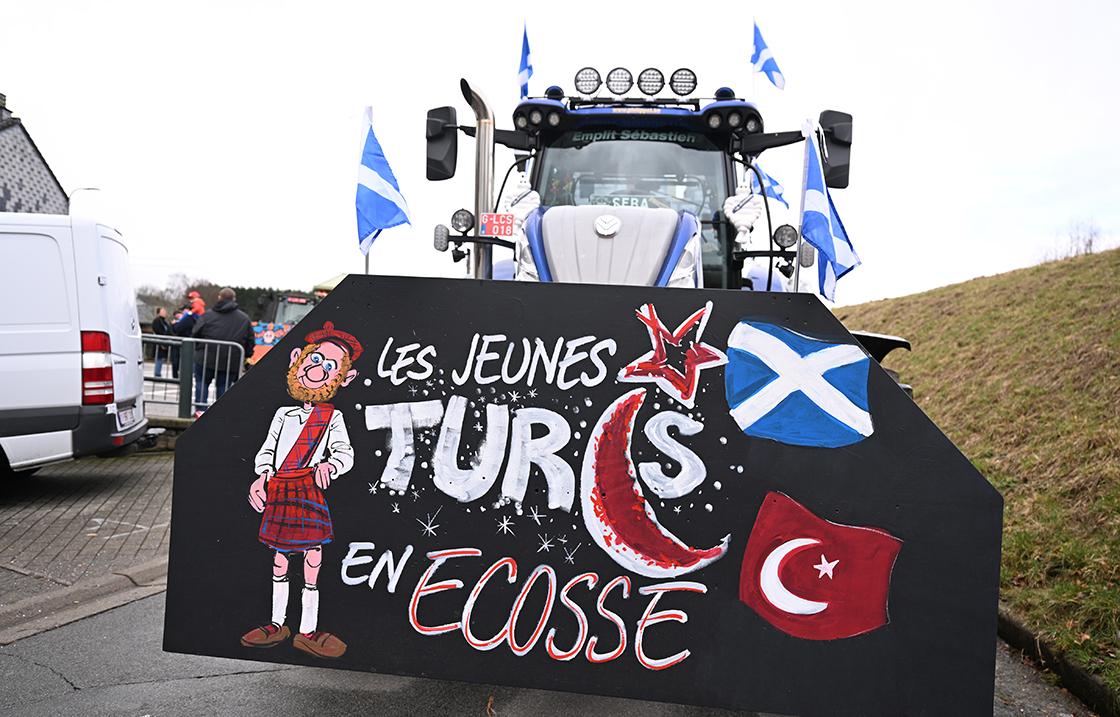
Faymonville is a village located in the foothills of the Ardennes Mountains, within the Waimes district of the Liège province in the Walloon region of Belgium. Although there are no Turkish citizens residing in Faymonville, the village is frequently referred to in public discourse as the “Turkish village.” This designation is linked to the villagers’ adoption of a “Turkish” identity, which is explained through three local legends and an annual traditional carnival. The term “Turk” is accepted within the village as a nickname and a collective identity marker, transmitted to new generations through oral tradition and carnival practices. The villagers have embraced this identity.
Faymonville (TRT Archive)
Legend of the Battle of Ambleve: It is claimed that during the Battle of Ambleve in 716, the villagers of Faymonville fought alongside the Turks against the Christians and were subsequently nicknamed “Turks” by neighboring villages. In Saint-Vith sources, this battle is recorded as the “Turkenschlacht” or “Turkish Battle.”
Legend of the Crusades: During the period when the Prince-Bishopric of Stavelot-Malmedy collected taxes for the Crusades, it is said that the people of Faymonville, which belonged to the Duchy of Luxembourg, refused to pay these taxes and declined to send soldiers against Muslims. As a result, neighboring villages began calling them “Turks.” This event is believed to have occurred in the 16th or 17th century.
Legend of the Mimicked Call to Prayer: It is recounted that before bells were installed in the church tower of Faymonville, the priest would climb to the top and mimic the Islamic call to prayer to summon the villagers to worship.
The carnival committee leaders state that the first two legends have been more influential in popularizing the “Turk” nickname. Additionally, according to another local tradition, during the German occupation in World War II, the presence of Turkish flags and crescent-and-star symbols in the village led the Nazis to refrain from damaging it; following this event, the “Turkish” identity became even more deeply embraced.

Faymonville (AA)
Various symbols representing the “Turkish” identity are observed throughout the village. A Turkish flag motif carved in stone adorns the entrance of the town hall; the weathervane on the roof features the Turkish flag; on special occasions, both the Belgian and Turkish flags are hung outside the building; the cultural center’s sign and the emblem of the local football club “R.F.C. Turkania” include the crescent-and-star; the same football club takes to the field wearing jerseys bearing the Turkish emblem and carries Turkish flags during matches; the youth club “Les Jeunes Turcs Réunis” organizes social and cultural events that encourage young people to adopt this identity; the village’s official anthem is the song “Long Live Türkiye and Long Live Faymonville”; and the liqueur brands “Turkenblut” and “Turkania,” produced since World War II by the local Heindrichs Melchior family company, feature the Turkish flag motif on their labels. These are among the most concrete examples of this identity.

Faymonville (AA)
The annual carnival held in the village is a cultural event centered on the “Turkish” image. The carnival allows participants to adopt different costumes and transcend everyday social boundaries, symbolizing the transition from winter to spring and serving as a collective activity that reduces social tension.
Processions include horsemen dressed in Ottoman attire carrying Turkish flags; some musical groups also join the parade in similar Turkish-themed costumes. The carnival is not limited solely to the “Turkish” identity, as groups representing other nations and themes also participate. The first carnival celebration is said to have taken place in 1961.
Interest in this event has grown, with Turkish citizens living in Belgium, Germany, the Netherlands, and France attending as spectators. However, the carnival committee generally declines requests for active participation by Turkish associations, in order to preserve the event’s local character.
The “Turkish” identity is passed on to new generations in Faymonville through oral tradition and carnival culture. It is noted that children adopt this identity at an early age and internalize it during adolescence. The carnival, symbolic representations, and social structures play a vital role in sustaining this identity.
Anadolu Ajansı. “Belçika’da Hiç Türk’ün Yaşamadığı ‘Türk Köyü’: Faymonville.” Accessed July 25, 2025. https://www.aa.com.tr/tr/dunya/belcikada-hic-turkun-yasamadigi-turk-koyu-faymonville/3135755.
Anadolu Ajansı. “Faymonville Carnival in Belgium’s ‘Turk Village’.” Accessed July 25, 2025. https://www.aa.com.tr/en/pg/photo-gallery/faymonville-carnival-in-belgiums-turk-village.
Irmak, Yılmaz, and Ertuğrul Taş. “Belçika’daki Faymonville Türk Köyü ve Karnavalı.” *Milli Folklor* 27, no. 106 (2015). https://search.trdizin.gov.tr/tr/yayin/detay/175210/belcikadaki-faymonville-turk-koyu-ve-karnavali
TRT Archive. "Faymonville Türk Köyü (1989)." YouTube. Accessed July 25, 2025. https://www.youtube.com/watch?v=DPCzGBHavrw.

Country | Belgium | ||||||||
|---|---|---|---|---|---|---|---|---|---|
Region(s) | Wallonia Region Province: Liège | ||||||||
Settlement | at the foothills of the Ardennes Mountains | ||||||||
Legends Regarding the “Turkish Village” Designation
Turkish Motifs in the Village
The Faymonville Carnival