This article was automatically translated from the original Turkish version.
The culture of display is the name given to an era in which human existence is tied to public validation, and the private gradually loses its meaning. Once, diaries were locked away in boxes, and photographs were left to yellow in albums. Today, what we eat, where we sleep, whom we love, and when we cry are all transferred to screens. Life is no longer lived to be experienced—it is constructed to be shared.
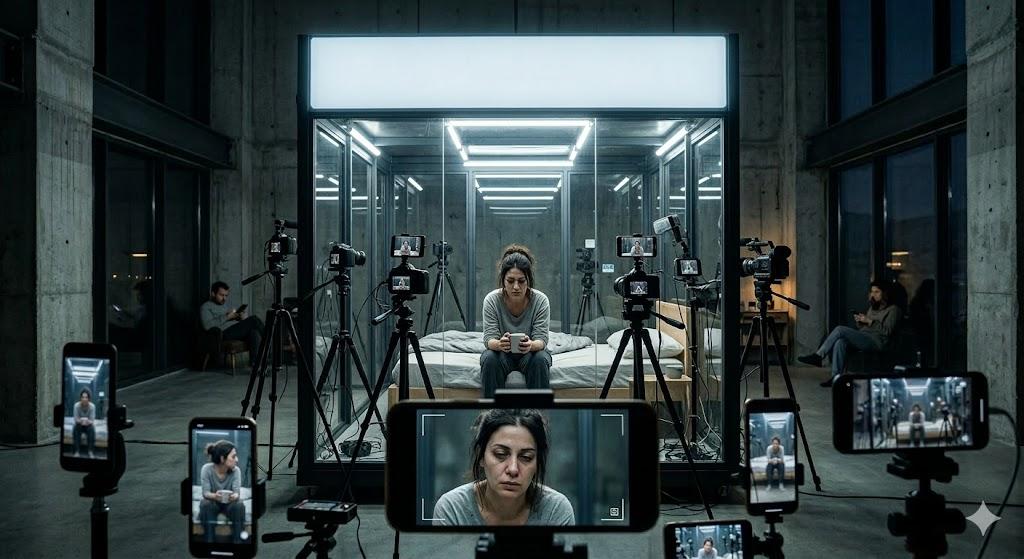
Visual Representing the Culture of Display (Generated by Artificial Intelligence)
When a video on your social media homepage stops you in your tracks, consider this: someone’s most intimate tears, their fiercest argument with a spouse, or their child’s most vulnerable moment... Whatever once was captured by the saying “a broken arm stays inside the sleeve”, today is pushed onto the digital marketplace under the label “viewed, engaged”.
"So how did we become both the radiologist and the exhibitor of our own lives?"
It is easy to blame technology alone for this phenomenon. Yet humans have always desired to be seen. They painted on cave walls, commissioned monumental statues, and carved their names into stone. But the difference now is this: for the first time in history, billions of people are simultaneously and continuously forced to be the actor, director, and audience of their own lives. And this has profoundly shaken human psychology.
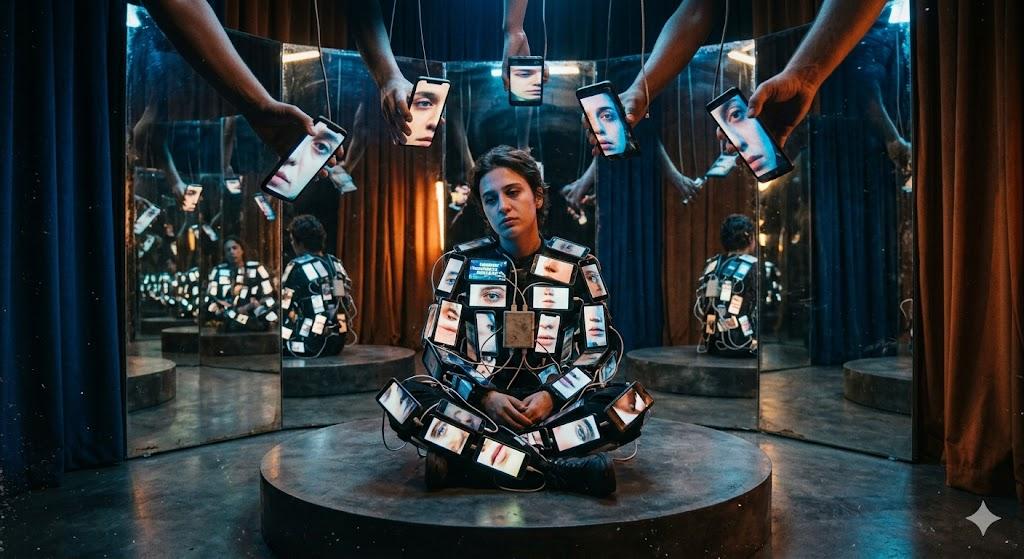
Visual Representing the Culture of Display (Generated by Artificial Intelligence)
Social media platforms did not accidentally discover the like mechanism. This system, built on the dopamine reward pathway, delivers a small reward with every approval and leaves behind an ambiguous sense of lack with every silence. The result: Share more, be seen more, collect more approval. Identity is no longer formed through lived experience but through the gaze of others. The question “Who am I?” has surrendered to “How do others see me?”
While the culture of display promises us a false sense of community, it condemns us to profound loneliness. When the screen’s light goes out, the only thing left in our hands is a “life narrative” we tried to make others admire but have grown alienated from ourselves.
Perhaps the first step toward healing is to turn off the camera and return to the quiet peace of sharing a moment only with those present in it.
“Remember: in a place where everything is displayed, nothing retains its value.”
Üstün, Nida. "Teşhir Kültürü." Unpublished Story, 2026.