


Exchange
Have you ever traded a toy with a friend for something you really loved? What you just did is actually the world’s oldest method of exchange: barter! Let’s travel back to a time before money was invented and explore this fascinating journey of goods together.
The Friendship of Goods: What Is Barter?
Barter is the exchange of a good or service for another good or service without using money. In ancient times, people could not produce everything they needed themselves. For example, a skilled fisherman might go to his neighbor, who grew wheat in his field, and say, “I’ll give you these fresh fish, and you give me some wheat.”
In this system, both parties negotiated what they would exchange. Barter was not limited to goods; services could also be traded. In the past, valuable items such as salt, camels, sheep, and even tea served as mediums of exchange, much like money does today.
Shopping Without Money
Even when money existed, people sometimes still needed to use barter. This ancient method often proved lifesaving during periods of economic instability or when money became scarce.
About 96 years ago, in the 1930s, the world experienced a severe economic crisis known as the Great Depression. In the United States during this time, money became extremely hard to obtain, so people began using barter again to acquire food or access services.
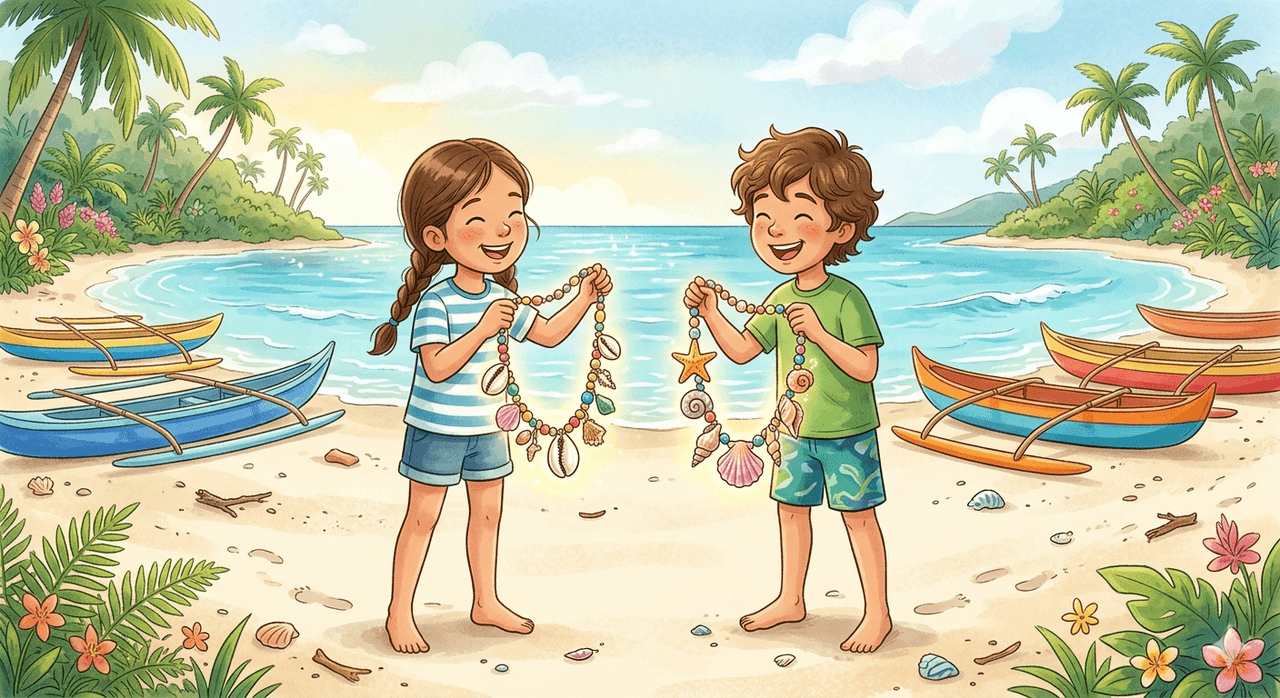
Kula Ring, a visual representing seashells (Generated by artificial intelligence.)
A Colorful Journey Between Islands: The Kula Ring
Let me tell you about a fascinating example of barter! On the islands of Papua New Guinea, people practice a special ceremonial exchange called the Kula Ring. Local men sail in canoes for hundreds of kilometers to exchange necklaces and armbands made from seashells with people on other islands.
This journey is not just about trading goods; it is also a ritual that strengthens bonds between communities. The exchange grants participants great respect and social status within their society. Imagine sailing across a vast ocean just for a seashell necklace—how exciting that must be!
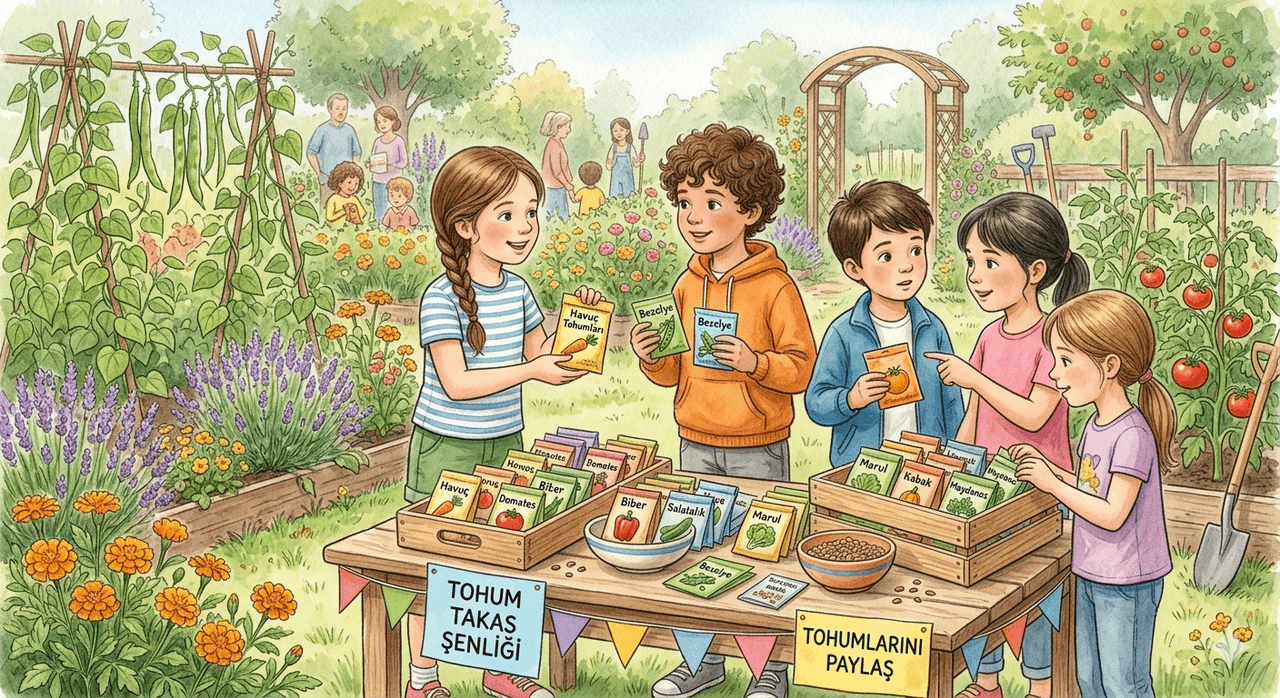
Visual representing a Seed Exchange Festival (Generated by artificial intelligence.)
Does Barter Still Exist Today?
Yes, barter still takes place in many parts of the world today! For example, in some villages in Venezuela, where cash is scarce, fishermen trade their catch for rice, flour, or medicine to meet their daily needs.
In Türkiye, many cities host “Seed Exchange Festivals.” At these events, farmers share local seeds with each other to promote plant propagation. These activities, carried out under the slogan “Let local seeds live and multiply!” help protect nature and strengthen friendships.





