This article was automatically translated from the original Turkish version.
+1 More
Location | Ereğli Türkiye Konya | ||||||||
|---|---|---|---|---|---|---|---|---|---|
Year of Construction | 1426 | ||||||||
Founder(s) | Mehmet Bey son of Karamanoğlu İbrahim Bey | ||||||||
Plan Type | Rectangular plan, kufe type | ||||||||
Number of Columns | 32 | ||||||||
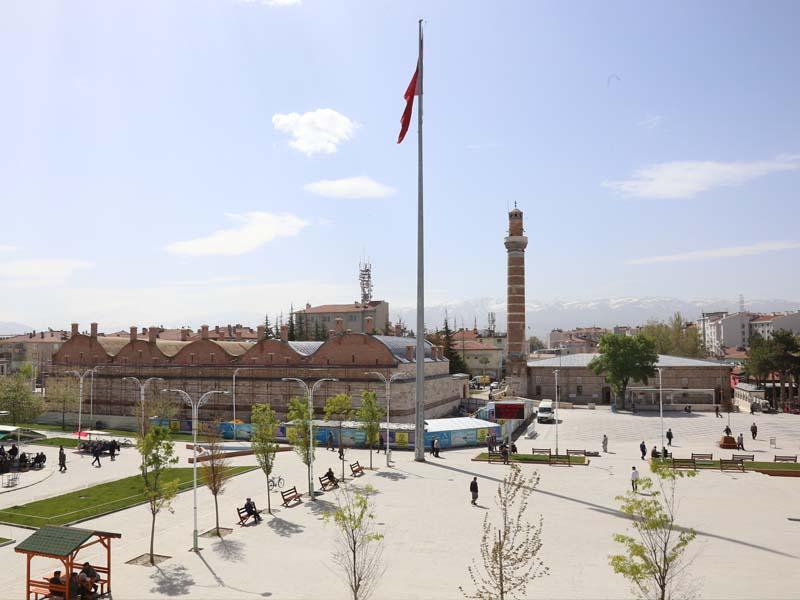
Ereğli Ulu Camii is located within the historic urban fabric of the Ereğli district in Konya province, Türkiye. It was constructed in 1426 as a waqf property by Mehmet Bey, son of Karamanid Bey Ibrahim Bey. Recognized as one of the original examples of architecture from the beylik period in the region, the mosque is considered an important historical and cultural heritage. The structure has played a significant role in the social and religious life of the area for many centuries.
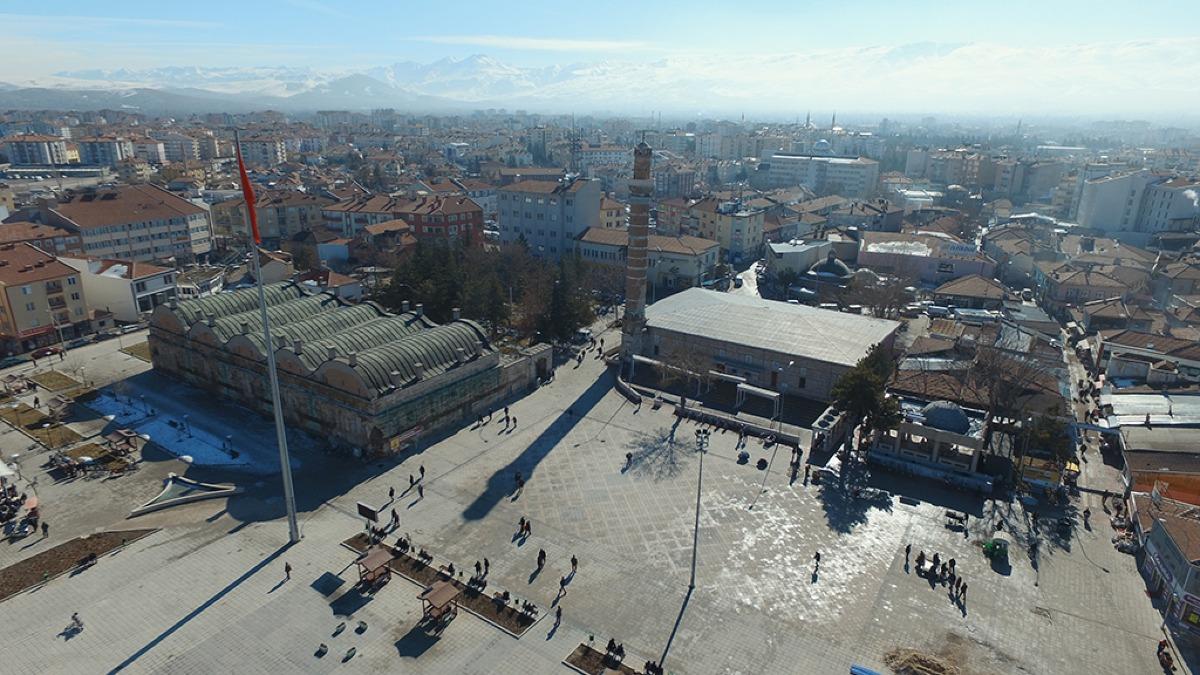
Ereğli Ulu Camii (Ereğli Municipality)
The mosque has a rectangular plan and is constructed of rubble stone. Its interior space is divided into aisles by 32 columns arranged perpendicular to the qibla wall. Some of these columns are spolia, with capitals exhibiting features characteristic of Roman and Byzantine periods. This indicates the reuse of materials from earlier structures during its construction. The ceiling of the harim section is finished internally as a flat wooden coffered ceiling and externally covered by a broken roof. These architectural details reflect the building techniques and aesthetic sensibilities of the period.
The minaret, situated in the northeast corner of the mosque, dates to the reign of Anatolian Seljuk Sultan I. Mesut in 1116. Built of cut stone, its cylindrical shaft is adorned with ceramic decorations. The minaret served not only as a place for the call to prayer but also as an observation tower. This multifunctional structure is a significant element that enhances the historical and architectural value of the mosque.
Ereğli Ulu Camii has undergone various restoration efforts throughout its history. Notably, in 1940 the mihrab was reconstructed and restoration work was carried out in the harim section. Today, the mosque is preserved both as a place of religious worship and as a cultural heritage site, welcoming visitors as an integral part of the region’s historic fabric.
Ereğli Ulu Camii holds importance not only for its architectural form but also as a social and cultural center for the local community. Throughout history, it has hosted various religious ceremonies, meetings, and social events, playing a central role in the spiritual life of Ereğli. In this regard, the mosque is a vital structure contributing to the preservation and continuation of local culture.
Ereğli Belediyesi. "Ulu Cami." Accessed June 25, 2025. https://www.eregli.bel.tr/gorulecek-yerler/ulu-cami-8.
Ereğli Kaymakamlığı. "Kervansaray ve Ulu Cami." Accessed June 25, 2025. http://www.eregli.gov.tr/kervansaray-ve-ulu-cami.
Şahipaşa Müzesi. "Ereğli Ulu Camii." Accessed June 25, 2025. https://sahipatamuzesi.gov.tr/tr/eserler/eregli-ulu-camii.
Location | Ereğli Türkiye Konya | ||||||||
|---|---|---|---|---|---|---|---|---|---|
Year of Construction | 1426 | ||||||||
Founder(s) | Mehmet Bey son of Karamanoğlu İbrahim Bey | ||||||||
Plan Type | Rectangular plan, kufe type | ||||||||
Number of Columns | 32 | ||||||||
Architectural Plan and Materials
Minaret
Renovations and Conservation
Cultural and Social Significance