


This article was automatically translated from the original Turkish version.
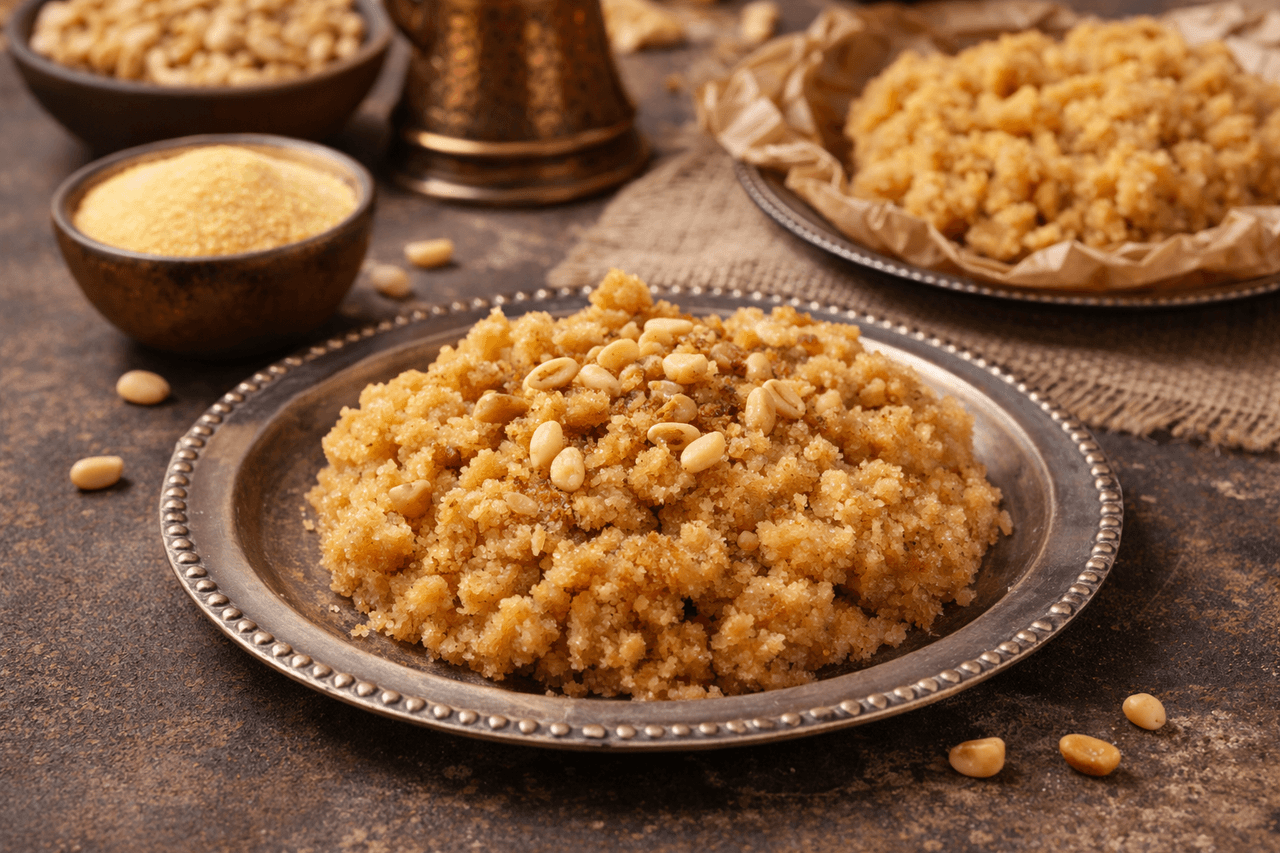
(Generated by Artificial Intelligence.)
Egyptian Flour Halva
Type(s) | Traditional Turkish dessert | ||||||||
|---|---|---|---|---|---|---|---|---|---|
Cultural Significance | It is part of the helva tradition; a traditional food associated with social and special occasions | ||||||||
Preparation Method | Prepared using the kavurma technique | ||||||||
Basic Ingredients | Corn flour, fat, sweetened water or milk | ||||||||
Corn flour halva is one of the traditional halva varieties in Turkish cuisine made using corn flour in sweet preparations. Its main ingredients are corn flour, fat, and a sugary liquid. It is prepared using the toasting method and may vary in ingredients and proportions depending on the region.
Halva is a term originally from the Middle East used historically to describe sweet products made from cereal, fat, and sweeteners. During the Ottoman period, halva was present in both palace and folk cuisine in various forms; this diversity gradually became widespread in Anatolian cuisine. The existence of dedicated units within the Ottoman palace kitchen for halva production highlights its established role in historical culinary practices.
The increased use of corn flour in Anatolian cuisine is linked to the spread of corn cultivation, particularly in the Black Sea Region. This development created the conditions for corn flour to be used not only in bread and main dishes but also in sweet preparations. Corn flour halva is therefore regarded as an example of halva adapted with local ingredients.
In preparing corn flour halva, the corn flour is toasted in fat and then mixed with sugary water or milk. In some regional variations, nuts such as hazelnuts or walnuts are added. The type of fat used, the ratio of liquid, and the duration of toasting are key factors that determine the texture and structural properties of the halva.
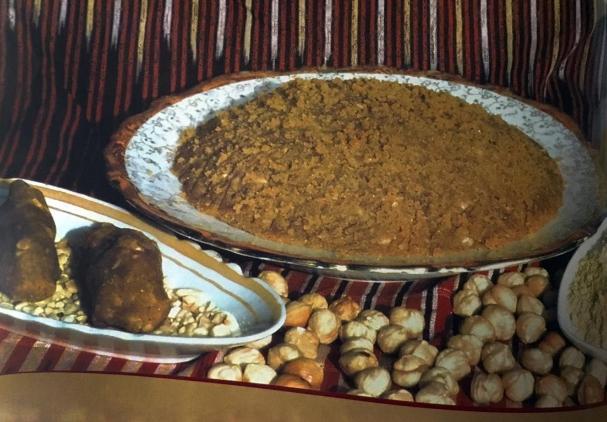
Corn Flour Halva-Giresun Provincial Directorate of Culture and Tourism
Corn flour halva is an energy-rich sweet. Due to its content of corn flour, fat, and sugar, it is considered high in calories. It belongs to the category of traditional sweets and is commonly served during tea times or on special occasions.
Halva is a food group in Turkish culinary culture prepared and consumed in various social contexts. Different types of halva are associated with events such as births, deaths, religious holidays, and communal meals. Corn flour halva is part of this broader halva tradition and is prepared especially in regions where corn is commonly consumed.
Bozağcı, Elif Cemre. “Türk Mutfak Kültüründe Helva ve Helva Gelenekleri.” *Uluslararası Türk Dünyası Turizm Araştırmaları Dergisi* 8, no. 2 (2023). Accessed December 13, 2025. https://avesis.gelisim.edu.tr/yayin/37eedd30-5034-43c5-a152-6540427e7929/turk-mutfak-kulturunde-helva-ve-helva-gelenekleri
Giresun İl Kültür ve Turizm Müdürlüğü. "Mısır Unu Helvası." *Go Türkiye Turizm Tanıtım Platformu*. Accessed December 13, 2025. http://giresun.ktb.gov.tr/TR-215653/misir-unu-helvasi.html
Kaymaz, Elif. *Türk mutfak kültüründe helva’nın yeri ve önemi / The Place and Importance of Halva in Turkish Culinary Culture*. Gazi Üniversitesi, Lisansüstü Eğitim Enstitüsü, Gastronomi ve Mutfak Sanatları Anabilim Dalı, 2020. Accessed December 13, 2025. https://tezara.org/theses/637448
Vural, Emre. “Maddeden Mânâya Bir Tatlının Serüveni: Helvanın Klasik Türk Edebiyatındaki Akisleri.” *Doğu Esintileri* 23 (2025): 61–69. Accessed December 13, 2025. https://doi.org/10.62425/dogu.1745433

(Generated by Artificial Intelligence.)
Egyptian Flour Halva
Type(s) | Traditional Turkish dessert | ||||||||
|---|---|---|---|---|---|---|---|---|---|
Cultural Significance | It is part of the helva tradition; a traditional food associated with social and special occasions | ||||||||
Preparation Method | Prepared using the kavurma technique | ||||||||
Basic Ingredients | Corn flour, fat, sweetened water or milk | ||||||||
No Discussion Added Yet
Start discussion for "Egyptian Flour Halva" article
History
Preparation and Nutritional Characteristics
Nutrition and Usage
Cultural Context