


This article was automatically translated from the original Turkish version.
+2 More
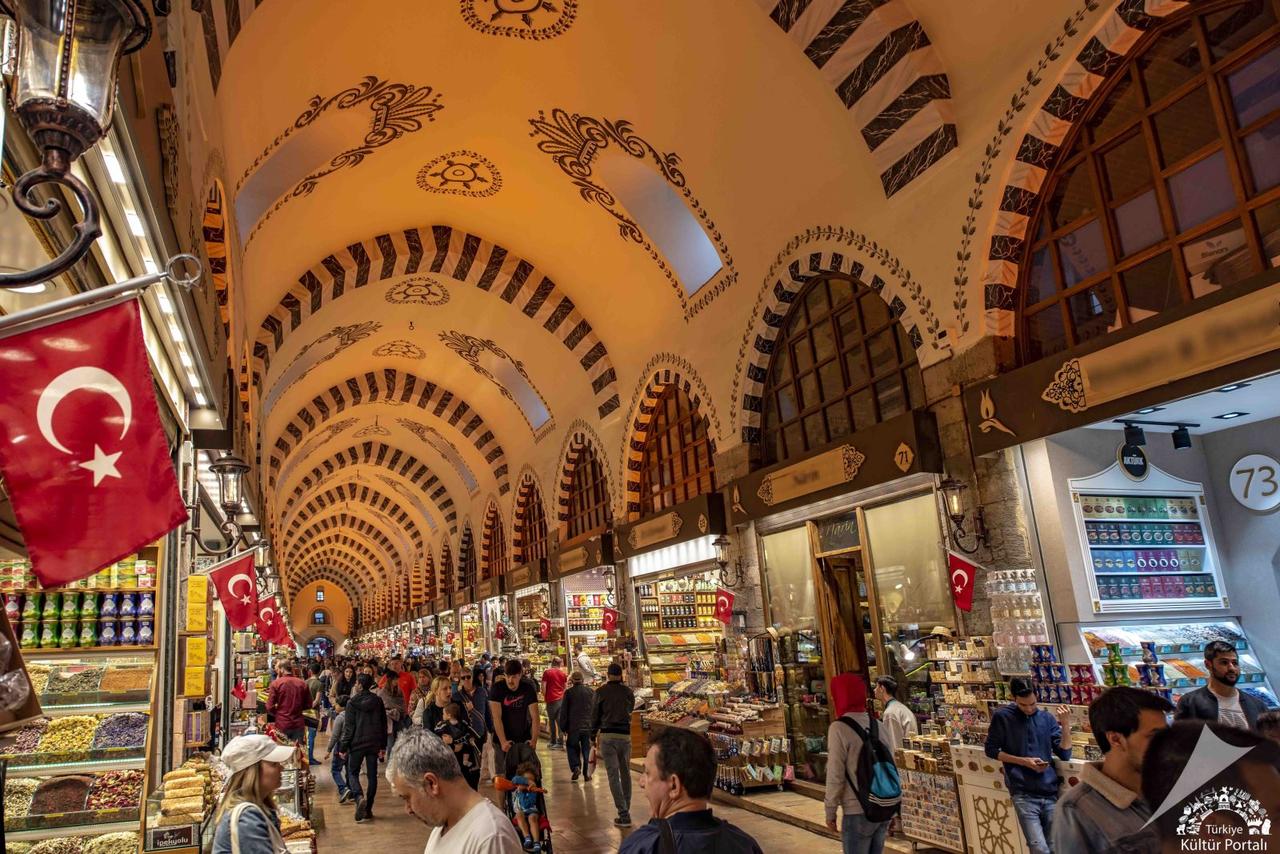
Egyptian Bazaar
Location | Eminönü - Istanbul / Türkiye | ||||||||
|---|---|---|---|---|---|---|---|---|---|
Foundation | 1660–1664 | ||||||||
Commissioned by | Hatice Turhan Sultan (as part of the Yeni Cami Külliyesi) | ||||||||
Architectural Style | Ottoman classical architecture, 'L'-shaped arasta | ||||||||
Material | Stone and brick | ||||||||
Historical Names | Yeni Çarşı Valide Çarşısı | ||||||||
Featured Products | Souvenirs Spice Lokum Market products | ||||||||
Visiting Hours | Daily 08.00–19.30 (except official holidays) | ||||||||
The Spice Bazaar, located in the Eminönü district of İstanbul, is one of the most important covered bazaars to have survived from the Ottoman period to the present day. Construction began in 1660 under the orders of Hassa Baş Mimarı Kâzım Ağa, mother of IV. Mehmed, Turhan Sultan, and was completed in 1664 by Mustafa Ağa. This bazaar, part of the Yeni Cami Külliyesi, was originally designed as an arasta to generate income for the mosque.
The name “Spice Bazaar” is linked to the fact that part of the revenue used for its construction came from Egypt, and that the majority of goods sold there were of Egyptian origin. From the mid-18th century onward, the bazaar became known by this name and was used by spice merchants and cotton traders. Built in an “L” plan and in the style of Ottoman classical architecture, the Spice Bazaar is today one of Istanbul’s most prominent commercial and tourist landmarks, especially known for its spices, lokum, dried fruits, souvenirs, and jewelry.
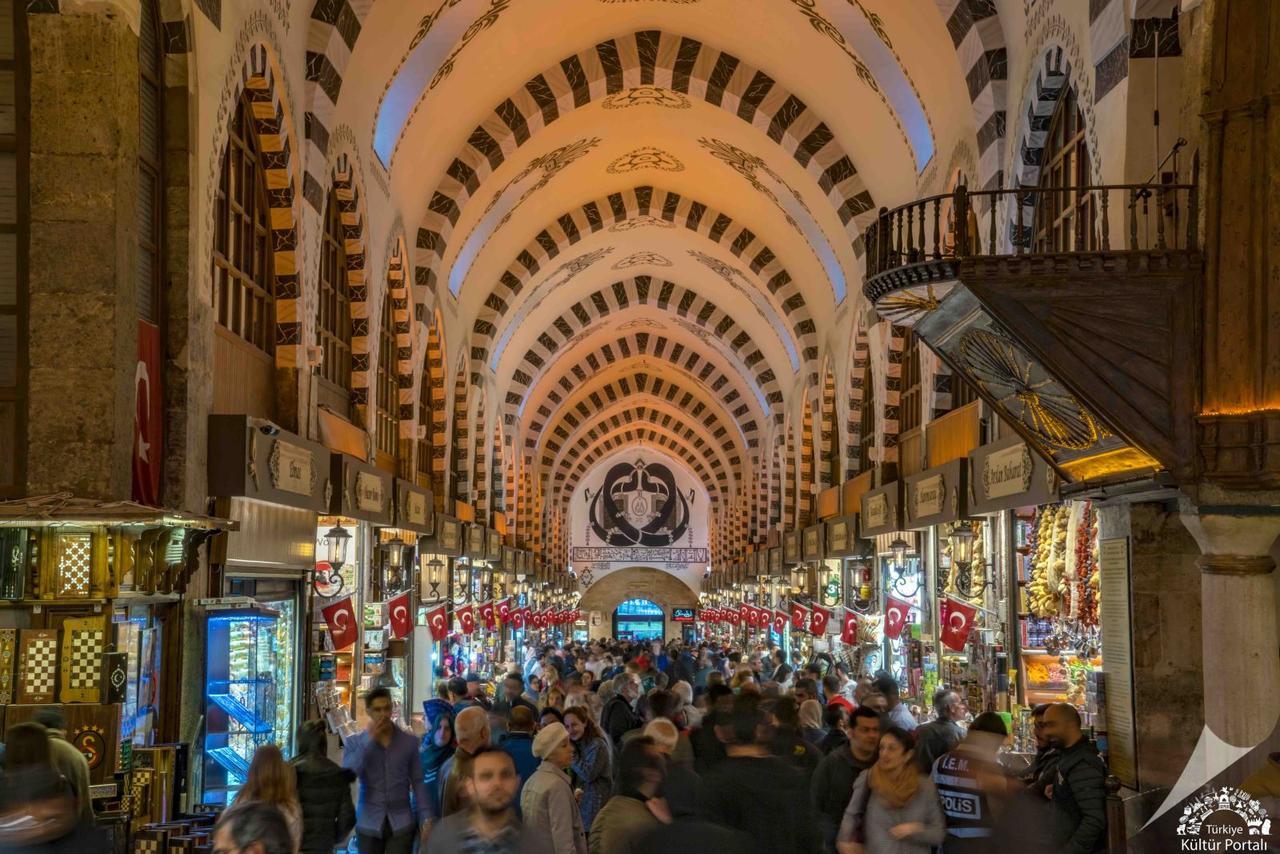
Spice Bazaar (Turkey Culture Portal)
The foundations of the Spice Bazaar were laid within the Yeni Cami Külliyesi, reflecting the Ottoman system of külliye complexes that shaped social and economic life. Construction began in 1597 under the orders of Safiye Sultan, but was halted due to political instability and court power struggles. The mosque and its complex were later revived by IV. Mehmed’s mother, Hatice Turhan Sultan, and construction resumed in 1660. The Spice Bazaar was completed between 1663 and 1664 and opened for service.
The decision to replace the medrese with an arasta (bazaar) within the külliye was closely tied to Eminönü’s role as a commercial waterfront district. In this sense, the Spice Bazaar was constructed as an example of the classical Ottoman urban concept integrating religious and economic functions. From its inception, the bazaar was allocated to two distinct groups of artisans: spice merchants and cotton traders. Six entrance gates were designated, three for each group: the Fish Market, Straw Weavers, and Rope Makers gates were assigned to spice merchants; the New Mosque, Haseki, and Flower Market gates were assigned to cotton traders. In the early period, approximately 49 of the bazaar’s 100 shops were used by spice merchants.
Fires in 1688 and 1691 caused some of the most devastating destruction in the bazaar’s history. The 1691 fire destroyed most of the structure, leaving only a few shops with iron doors intact. The bazaar was subsequently rebuilt. In the 19th century, the shanty shops located between the New Mosque and the bazaar were temporarily removed, then reopened. Restored by the Istanbul Municipality between 1940 and 1943, the building lost some of its original architectural elements during this process. In 1941, a road was constructed between the New Mosque and the bazaar, disrupting the külliye’s unity.
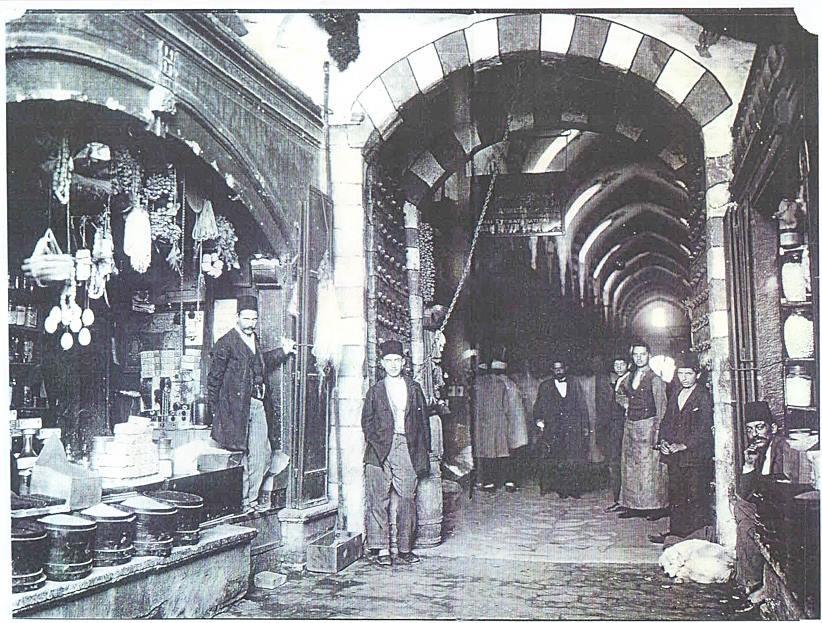
Old Spice Bazaar (Fatih District Governorship)
Between 2013 and 2018, the Spice Bazaar underwent a comprehensive restoration by the General Directorate of Foundations. During this process, infrastructure, electrical wiring, internet, and telephone cables were moved underground, adapting the historic structure to modern commercial conditions. At the request of President Recep Tayyip Erdoğan, the traditional “bereket prayer” held every Friday morning was reinstated.
The area where the Spice Bazaar stands has been a center of trade since prehistoric times. During the Byzantine period, a spice market known as “Makro Envalos” existed here, and Venetian and Genoese merchants conducted business in the area. This historical continuity demonstrates that the bazaar’s location was not accidental but integral to Istanbul’s identity as a port and commercial city. The active Spice Bazaar today, with a history approaching 400 years, is one of Istanbul’s oldest continuously operating commercial centers. Alongside the Grand Bazaar, it forms the core of the city’s historic trade network, preserving its architectural and social significance.
The Spice Bazaar is designed as an “L”-shaped arasta embodying typical elements of Ottoman classical architecture. The two main arms – the long and short arms – meet at a right angle. The long arms each contain 23 shops facing each other (totaling 46 eyvans and shops), while the short arms feature 18 shops arranged in a similar facing layout. At the junction of the two arms, a prayer hall covered by a cross-vault houses six eyvans and cells, resulting in a total of 86 to 88 shops.
The primary building materials are stone and brick, with arches, vaults, and domes typical of Ottoman architecture providing structural support. Wooden peyk systems on the front of the shops served as display and sales areas, while rear sections contained storage and workshop rooms. Transitions between these areas were achieved through wooden joinery and arched openings. Some shop entrances featured symbolic markers such as a fire tower, small boat, ostrich egg, scissors, or tassel to enhance recognition.
Additionally, two-story structures built above the main entrance gates at either end of the bazaar functioned as the Commerce Court, resolving legal disputes between merchants and the public. In this regard, the Spice Bazaar is a multi-layered space that goes beyond being merely a commercial center, incorporating social and administrative functions. During restoration efforts, the original plan and layout were largely preserved, while interventions over time have adapted the structure to modern needs.
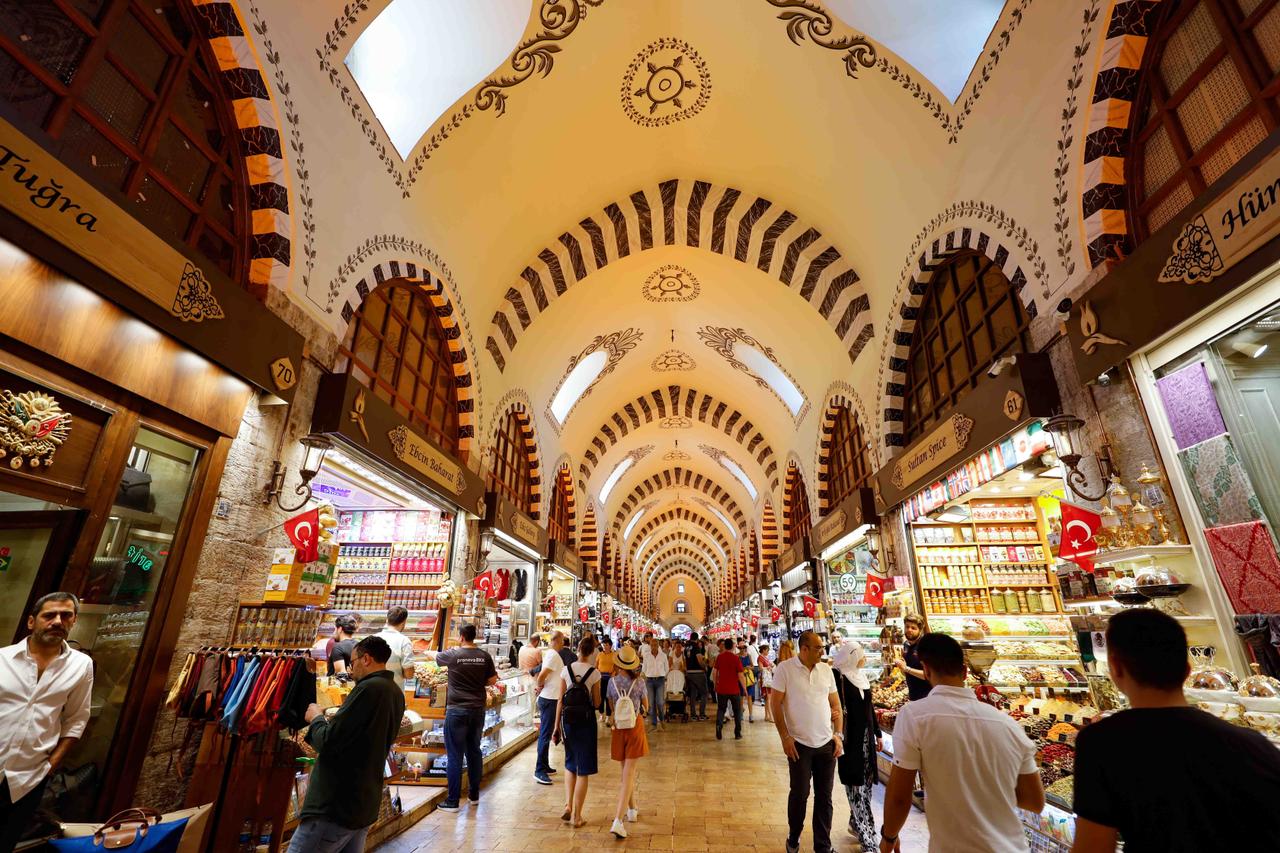
Spice Bazaar Today (Istanbul Governorship)
Alongside its architectural fabric, the Spice Bazaar features a variety of symbols and decorative elements used by artisans to identify their shops and protect consumer rights. Wooden peyk systems on the fronts of some shops bear symbolic motifs representing the shop’s trade. These include a fire tower, small boat, ostrich egg, scissors, and tassel. Each symbol was used to indicate which artisan group the shop belonged to and to help customers easily locate desired products.
These decorative practices served not only an aesthetic purpose but also functioned as a practical navigation system within the bazaar. The symbols used to identify shops reflected traditional cooperation and operational norms, playing a vital role in safeguarding consumer rights. Thus, the symbolic and decorative elements of the Spice Bazaar have contributed both to the preservation of cultural heritage and to the orderly functioning of daily commercial activities.
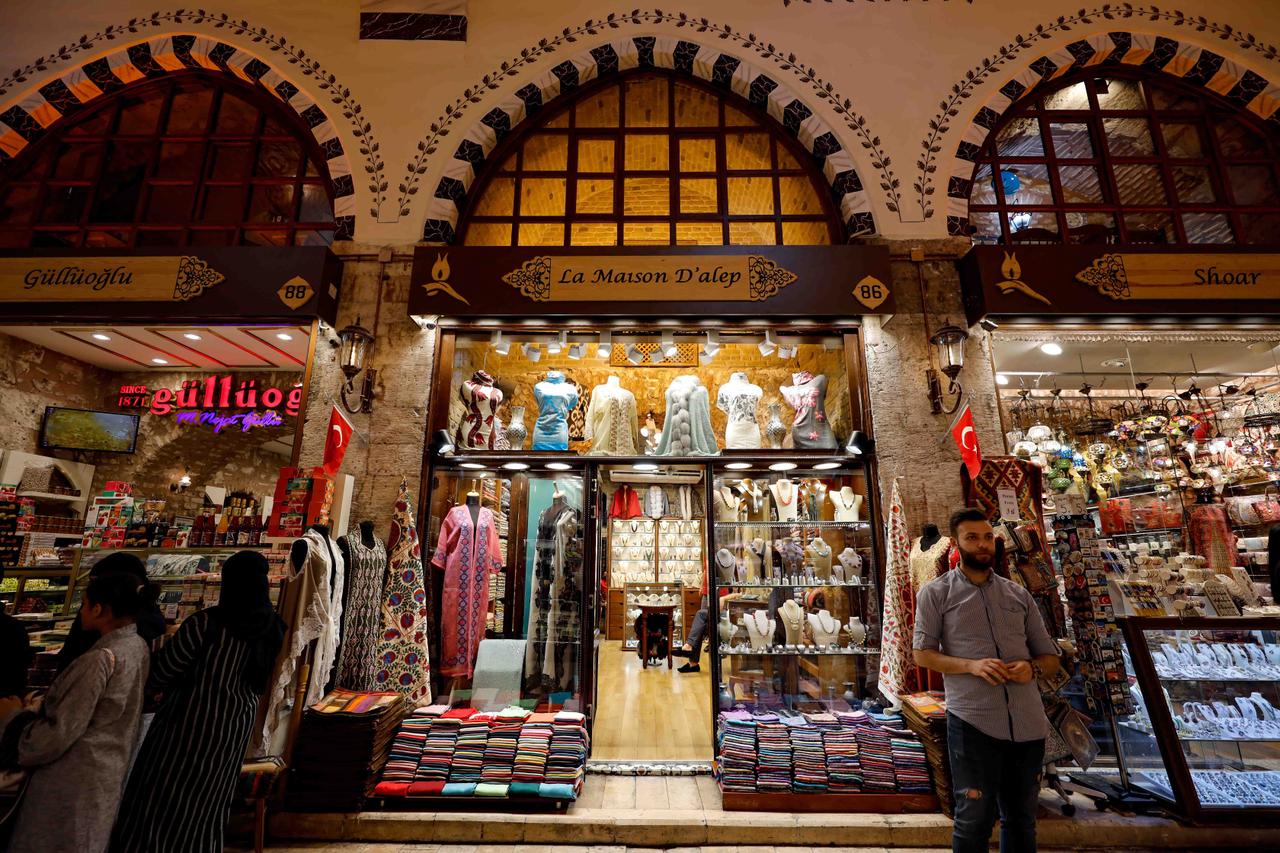
Shop in the Spice Bazaar (Istanbul Governorship)
The Spice Bazaar is more than just a commercial space; it is an integral part of Istanbul’s cultural and social life. Throughout history, the bazaar has served not only as a meeting point for local residents but also as an interactive platform bringing together people from diverse ethnic and cultural backgrounds. Traditions such as the “bereket prayer,” along with merchants offering services in multiple languages (Spanish, French, German, English, Latin, Arabic, Chinese, Japanese, and Greek), have enriched the bazaar’s social fabric and highlighted its cultural diversity and international engagement.
T.C. Fatih Kaymakamlığı. “Tarihi Mısır Çarşısı.” T.C. Fatih Kaymakamlığı Resmi Web Sitesi. Accessed April 13, 2025.http://fatih.gov.tr/tarihi-misir-carsisi
T.C. Ministry of Culture and Tourism. "Mısır Çarşısı." Türkiye Kültür Portalı. Accessed April 13, 2025.https://www.kulturportali.gov.tr/turkiye/istanbul/gezilecekyer/misir-carsisi
T.C. Ministry of Culture and Tourism. "Çarşılar-Bedestenler." İstanbul İl Kültür veTurizm Müdürlüğü. Accessed April 13, 2025.https://istanbul.ktb.gov.tr/TR-276803/carsilar-bedestenler.html
T.C. İstanbul Valiliği. “Baharat Ticaretinin Kalbi 400 Yıldır Mısır Çarşısı'nda Atıyor.” İstanbul Valiliği Resmi Web Sitesi. Accessed April 13, 2025.https://www.istanbul.gov.tr/baharat-ticaretinin-kalbi-400-yildir-misir-carsisinda-atiyor

Egyptian Bazaar
Location | Eminönü - Istanbul / Türkiye | ||||||||
|---|---|---|---|---|---|---|---|---|---|
Foundation | 1660–1664 | ||||||||
Commissioned by | Hatice Turhan Sultan (as part of the Yeni Cami Külliyesi) | ||||||||
Architectural Style | Ottoman classical architecture, 'L'-shaped arasta | ||||||||
Material | Stone and brick | ||||||||
Historical Names | Yeni Çarşı Valide Çarşısı | ||||||||
Featured Products | Souvenirs Spice Lokum Market products | ||||||||
Visiting Hours | Daily 08.00–19.30 (except official holidays) | ||||||||
History
Architectural Structure
Symbols and Decorative Elements
Cultural and Social Role