


This article was automatically translated from the original Turkish version.
+2 More
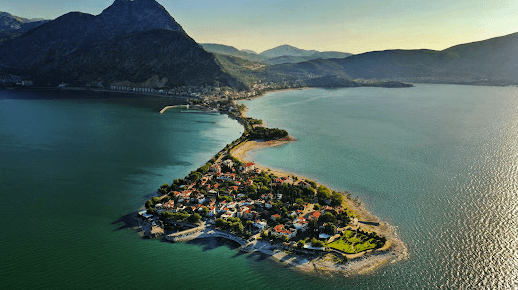
Eğirdir Lake
Location | Isparta | ||||||||
|---|---|---|---|---|---|---|---|---|---|
Surface Area | 62621 ha | ||||||||
Elevation | 915 m – 1870 m | ||||||||
Eğirdir Lake is Türkiye's second largest freshwater lake and is located within the boundaries of Isparta province. The lake has a karstic structure and lies in a collapse area formed primarily by karstic processes during pluvial periods. With a surface area of 479 km², it is Türkiye's fourth largest lake and reaches a maximum water level of 918.80 m. Eğirdir Lake plays a significant role in meeting regional drinking water and irrigation needs. The lake consists of two main sections: the smaller northern part known as Hoyran Lake and the larger southern part, which is called Eğirdir Lake.
Eğirdir Lake lies at an elevation of 917.7 meters above sea level and is 48 km long with a width ranging from 3 to 15 km. The lake is divided into two sections by the Kemer Strait; this strait narrows to about 1.8 km in an east-west direction, creating the visual impression of two distinct lake basins. The lake’s surroundings are bordered by steep cliffs, which are especially prominent in the western areas.
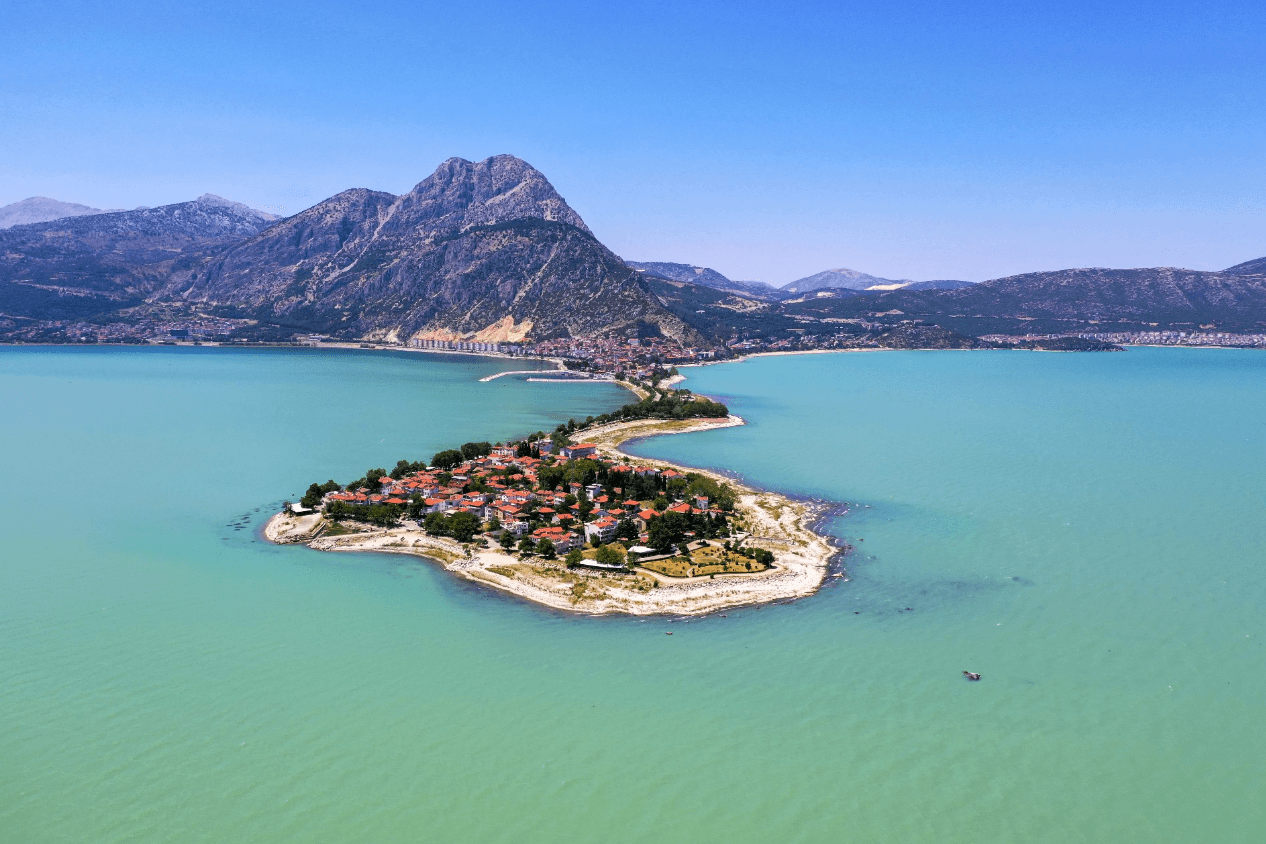
Eğirdir Lake (Source: Isparta Governorship)
The lake’s water supply comes from various streams descending from surrounding mountains and springs emerging from the lakebed. The water of Eğirdir Lake is freshwater, and its water level fluctuations have been shaped by both natural factors and human interventions. In recent years, a significant change has occurred in the lake’s recharge system, with water withdrawals being redirected to the Karacaören I and II Dams located in the Çandır Plain. Additionally, the 22 km long Kovada Canal, which naturally connects Eğirdir Lake with Kovada Lake, is another key factor influencing the lake’s hydrological regime.
Eğirdir Lake is notable for its rich biological diversity. The lake’s ecosystem includes native fish species such as Carp, Chub Carp, Pike Perch, Eel and Silver Fish, as well as non-native predatory species like Pike Perch (Stizostedion lucioperca). The biological balance of the lake has been significantly altered since fish stocking programs began in 1955. The reed beds and aquatic vegetation surrounding the lake are critical to the ecosystem and are directly linked to the lake’s water level. Eğirdir Lake also serves as a wintering ground for numerous waterbird species, including native and migratory birds such as the Eurasian Wigeon, Tufted Duck and Red-crested Pochard.
Eğirdir Lake was declared a natural site by the Ministry of Environment in 1996. However, the lake’s ecosystem is under threat due to various human interventions, including agricultural irrigation, urbanization and improper fishing practices. Changes in water level and declines in biological diversity have disrupted the ecological balance. Furthermore, water withdrawals and insufficient circulation have led to a deterioration in water quality, causing damage to the ecosystem.
Doğa Derneği. "Eğirdir Gölü." Accessed February 21, 2025.https://dogadernegi.org/egirdir-golu/
Eğirdir Kaymakamlığı. "Eğirdir Gölü." Accessed February 21, 2025.http://www.egirdir.gov.tr/egirdir-golu.
Isparta İl Kültür ve Turizm Müdürlüğü. "Yedi Renkli Göl: Eğirdir." Accessed February 21, 2025.https://isparta.ktb.gov.tr/TR-166054/yedi-renkli-gol-egirdir.html.
Kesici, Erol, and Cevdan Kesici. "Eğirdir Gölü (Isparta)’nün Doğal Yapısına Yapılan Müdahalelerin Gölün Ekolojik Yapısına Etkileri." *E.Ü. Su Ürünleri Dergisi* / *E.U. Journal of Fisheries & Aquatic Sciences* 23, Ek/Suppl. (2006): 99–103. Accessed February 21, 2025.http://jfas.ege.edu.tr/.

Eğirdir Lake
Location | Isparta | ||||||||
|---|---|---|---|---|---|---|---|---|---|
Surface Area | 62621 ha | ||||||||
Elevation | 915 m – 1870 m | ||||||||
Hydrological Characteristics
Ecosystem and Biological Diversity
Conservation Status and Ecological Challenges