


This article was automatically translated from the original Turkish version.
+1 More
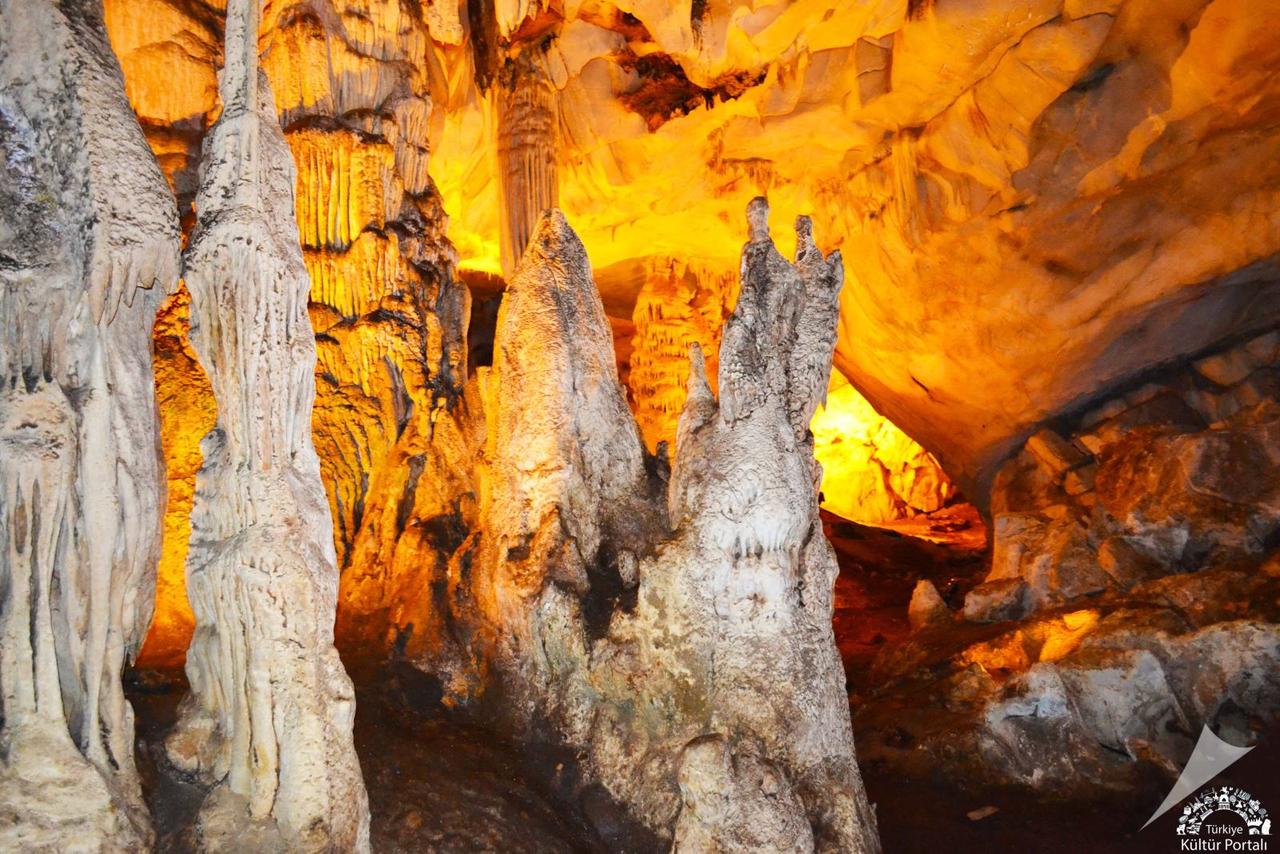
Republic of Türkiye Ministry of Culture and Tourism Culture Portal. n.d. “Dupnisa Cave.” Access Date: 27 June 2025. https://www.kulturportali.gov.tr/turkiye/kirklareli/gezilecekyer/dupnisa-magarasi.
Dupnisa Cave
Location | Sarpdere Village Demirköy Kırklareli | ||||||||
|---|---|---|---|---|---|---|---|---|---|
Total Length | 3,200 metres | ||||||||
Sections | Sulu Cave, Kuru Cave, Kız Cave | ||||||||
Opened to Tourism | 2003 | ||||||||
Bat Population | Approximately 60,000 individuals, 16 species | ||||||||
Located within the boundaries of the Demirköy district of Kırklareli province, near the border with Bulgaria, Dupnisa Mağarası is one of the most notable subterranean formations in the Thrace Region, significant both geologically and biologically. This karst cave, situated within the forested areas of the Istranca Mountains, has become a focal point for scientific research and conservation-based tourism. It exemplifies a multifaceted natural heritage through its surface features, bat populations, travertine formations, and its role in local cultural narratives.
Dupnisa Mağarası is located approximately 58 kilometers northeast of the city center of Kırklareli and about 6 kilometers southeast of Sarpdere Village, which is under the administration of Demirköy district. It lies roughly 5 kilometers from the Bulgarian border. Access to the cave is via road and it is heavily visited by individual tourists and groups, especially during the summer months. The surrounding area is covered by forested land and forms part of a natural ecosystem.
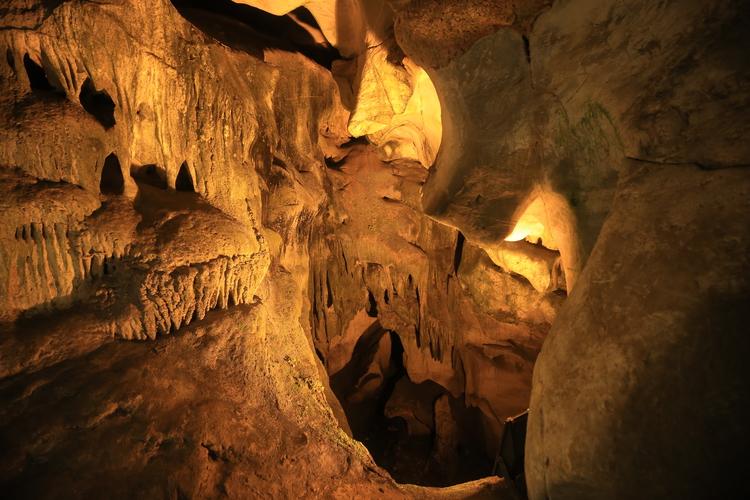
Image showing the interior of Dupnisa Mağarası. (Anadolu Ajansı)
Dupnisa Mağarası is a karst cave formed within limestone structures dating back to the Jurassic period, approximately 180 million years ago. The total length of the cave system is 3,200 meters and consists of three main sections:
Only 500 meters of the cave are open to tourism, and this area is equipped with interior lighting, walking paths, and informational panels.
Dupnisa Mağarası is one of the rare sites in Türkiye where bat populations are found in high density. Approximately 60,000 individuals belonging to 16 different species inhabit the cave. Among these species are several that are endangered and prioritized for conservation. Bat species play a vital role in the cave’s ecosystem as key components of biological diversity.
To preserve the ecological balance of the cave, access to the site is closed to visitors annually from November 15 to May 15, to prevent disturbance to the bats’ hibernation and breeding cycles. This practice represents a management model designed to balance conservation with tourism.
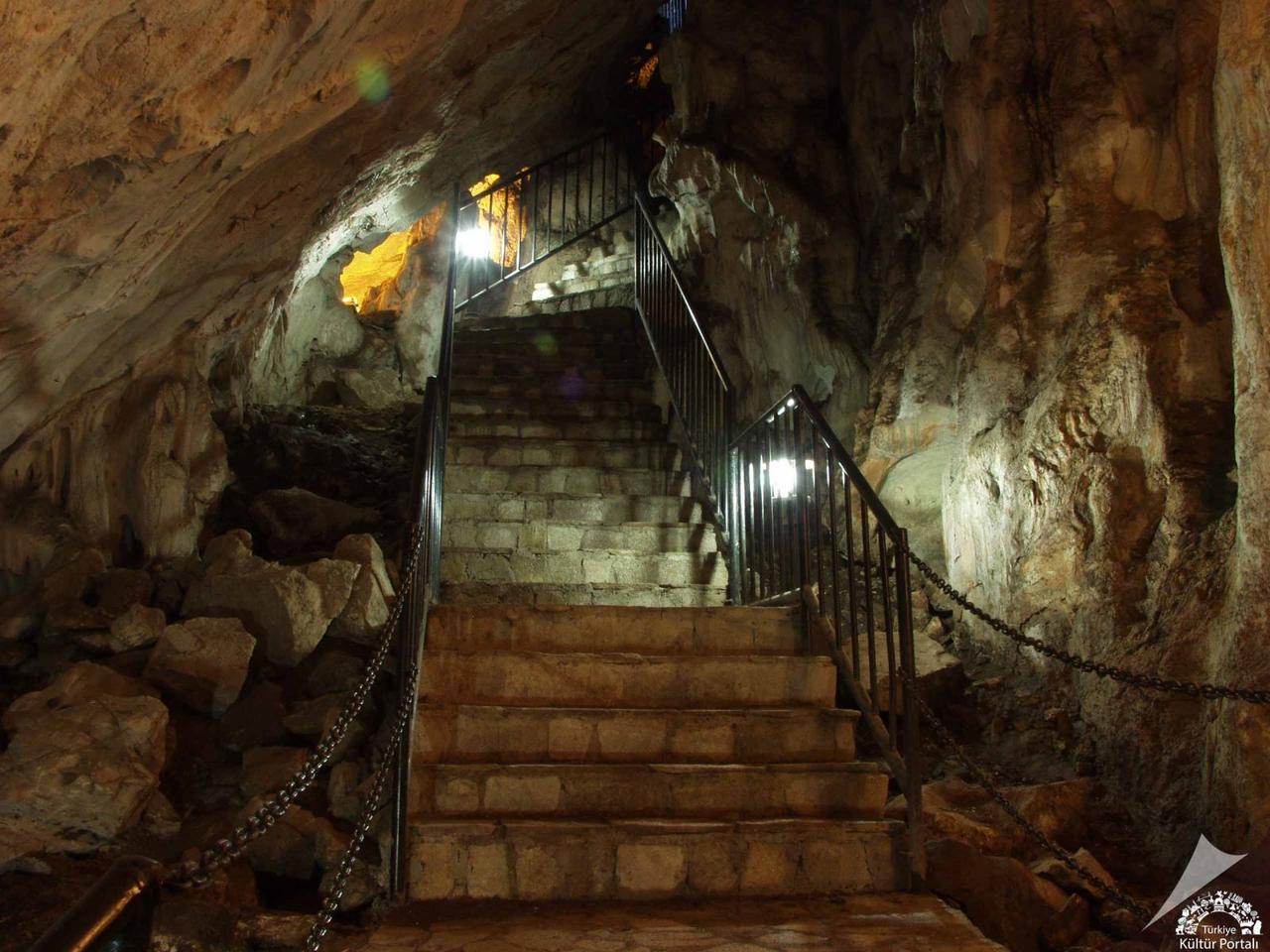
Image of the transition zone between the Wet Cave and the Dry Cave. (Ministry of Culture and Tourism)
In 2003, after infrastructure development projects carried out by the General Directorate of Forestry, Dupnisa Mağarası was opened for controlled tourism. The entrance area, walking platforms, and interior lighting systems have been designed to ensure visitor safety and protect the natural structure.
Activities such as nature walking, cave observation, photography, and ecotourism are commonly practiced around Dupnisa Mağarası. The majority of visitors are nature enthusiasts, students, researchers, and domestic tourists.
A local legend associated with the Girl’s Cave section of Dupnisa Mağarası is significant in demonstrating the cave’s place in cultural memory. According to the tale, two young lovers who were deeply in love but forbidden to marry agreed to meet secretly inside the cave. The girl arrived early but disappeared within the cave before her lover arrived. After this event, the cave began to be known as the Girl’s Cave.
This narrative illustrates that Dupnisa Mağarası is not merely a natural formation but also a symbolic space embedded in oral culture. In this sense, the cave embodies the interaction between nature and culture.
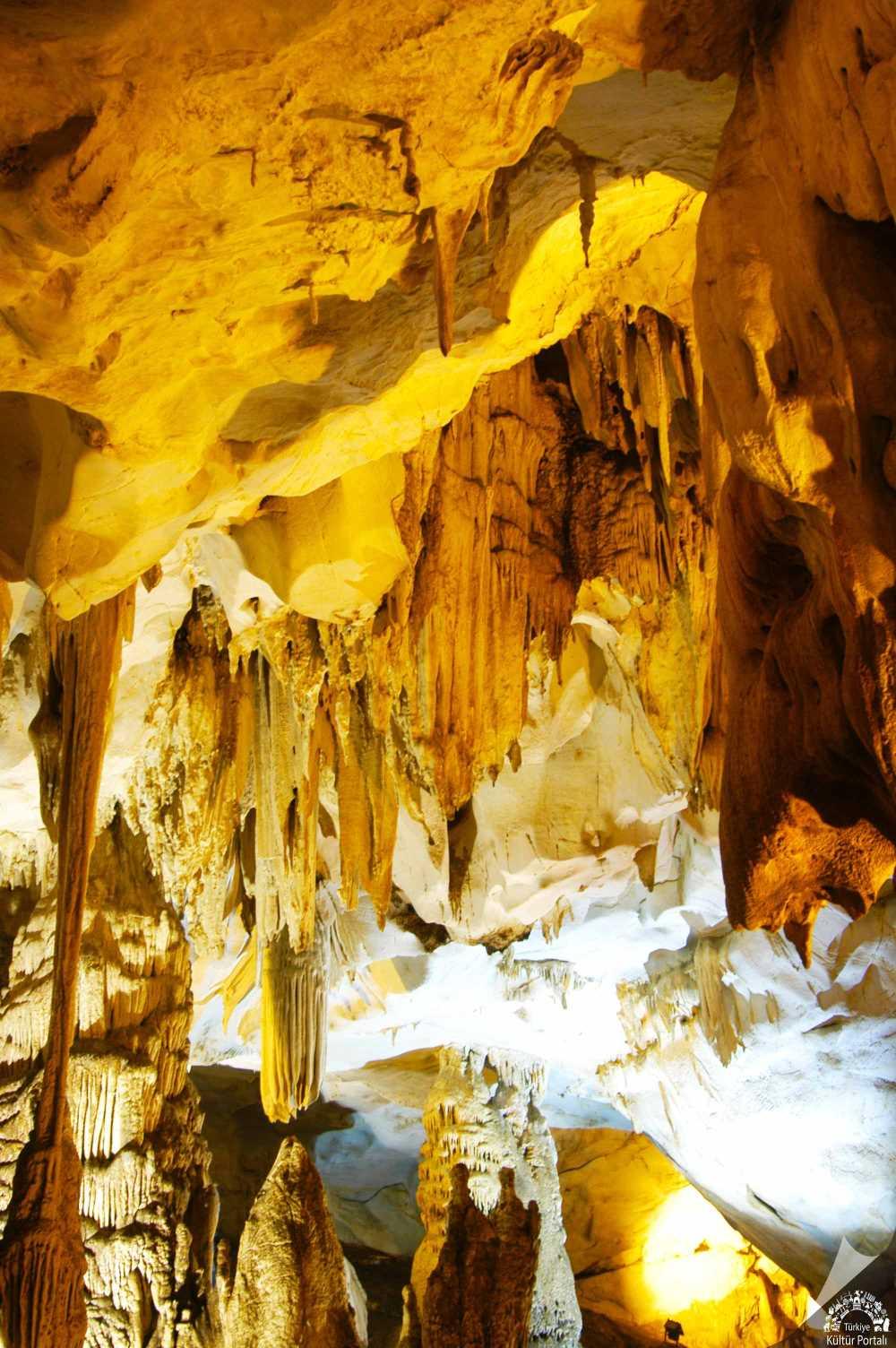
Image showing dripstone formations inside Dupnisa Mağarası. (Ministry of Culture and Tourism)
Dupnisa Mağarası is one of the protected areas coordinated by the Ministry of Culture and Tourism and the General Directorate of Forestry. The seasonal closure implemented specifically to protect bat populations enables public access without disrupting the cave’s natural life cycles.
Access to areas outside the designated tourist zones is restricted, and special permits are required for scientific research. Conservation efforts aim to ensure the continuity of biological diversity and promote ecotourism in a sustainable manner.
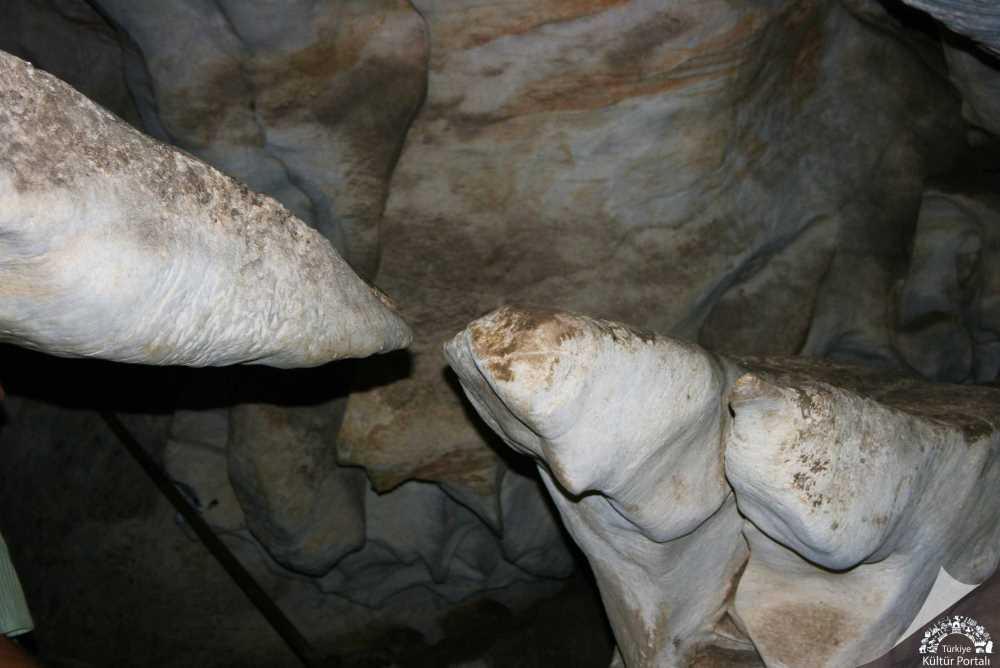
Image of the Lovers’ Stone at Dupnisa Mağarası. (Ministry of Culture and Tourism)
Dupnisa Mağarası is one of the most prominent natural formations in the Thrace Region, notable both geomorphologically and ecologically. Its karst structure, underground water system, bat populations, and cultural narratives combine to create a multidimensional site for research and observation. Supported by controlled tourism activities and conservation policies, this area is regarded as an example contributing to the sustainability of regional natural heritage.
Video introducing Dupnisa Mağarası. (Doğadan Paylaştıklarım)
Anadolu Ajansı. 2020. “Yarasalı Mağarada Buruk Bir Aşk Öyküsü Gizli.” *AA*, November 9, 2020. Accessed June 27, 2025.https://www.aa.com.tr/tr/kultur-sanat/yarasali-magarada-buruk-bir-ask-oykusu-gizli/1504909
Anadolu Ajansı. 2023. “Binlerce Yarasayı Barındıran Dupnisa Mağarası Turistlerin İlgi Odağı Oldu.” *AA*, March 14, 2023. Accessed June 27, 2025.https://www.aa.com.tr/tr/yasam/binlerce-yarasayi-barindiran-dupnisa-magarasi-turistlerin-ilgi-odagi-oldu/2660847
Demirköy Kaymakamlığı. "Dupnisa Mağarası." Accessed June 27, 2025.http://www.demirkoy.gov.tr/dupnisa-magarasi
Doğadan Paylaştıklarım. "Dupnisa Mağarası | Kırklareli | Doğa ve Tarih." YouTube video, April 20, 2024. Accessed June 27, 2025.https://youtu.be/ryqKwjfFNQo?si=428z8R8QSSnhnLAR
Kırklareli Valiliği. "Dupnisa Mağarası." Accessed June 27, 2025.http://www.kirklareli.gov.tr/dupnisa-magarasi.
T.C. Ministry of Culture and Tourism Culture Portal. t.y. "Dupnisa Mağarası." Accessed June 27, 2025.https://www.kulturportali.gov.tr/turkiye/kirklareli/gezilecekyer/dupnisa-magarasi

Republic of Türkiye Ministry of Culture and Tourism Culture Portal. n.d. “Dupnisa Cave.” Access Date: 27 June 2025. https://www.kulturportali.gov.tr/turkiye/kirklareli/gezilecekyer/dupnisa-magarasi.
Dupnisa Cave
Location | Sarpdere Village Demirköy Kırklareli | ||||||||
|---|---|---|---|---|---|---|---|---|---|
Total Length | 3,200 metres | ||||||||
Sections | Sulu Cave, Kuru Cave, Kız Cave | ||||||||
Opened to Tourism | 2003 | ||||||||
Bat Population | Approximately 60,000 individuals, 16 species | ||||||||
Location and Access
Geological Structure and Physical Characteristics
Biological Richness and Ecological Importance
Tourism Activities and Regulations
Cultural Narratives and Local Memory
Conservation and Management