


This article was automatically translated from the original Turkish version.
One night, you surrendered to the sweet arms of sleep and suddenly found yourself floating among hundreds of balloons. Colorful balloons carried you here and there across the sky. But wait a minute! This is a dream! Let us explore together why dreams exist scientifically and how our brain creates this world full of mysteries.
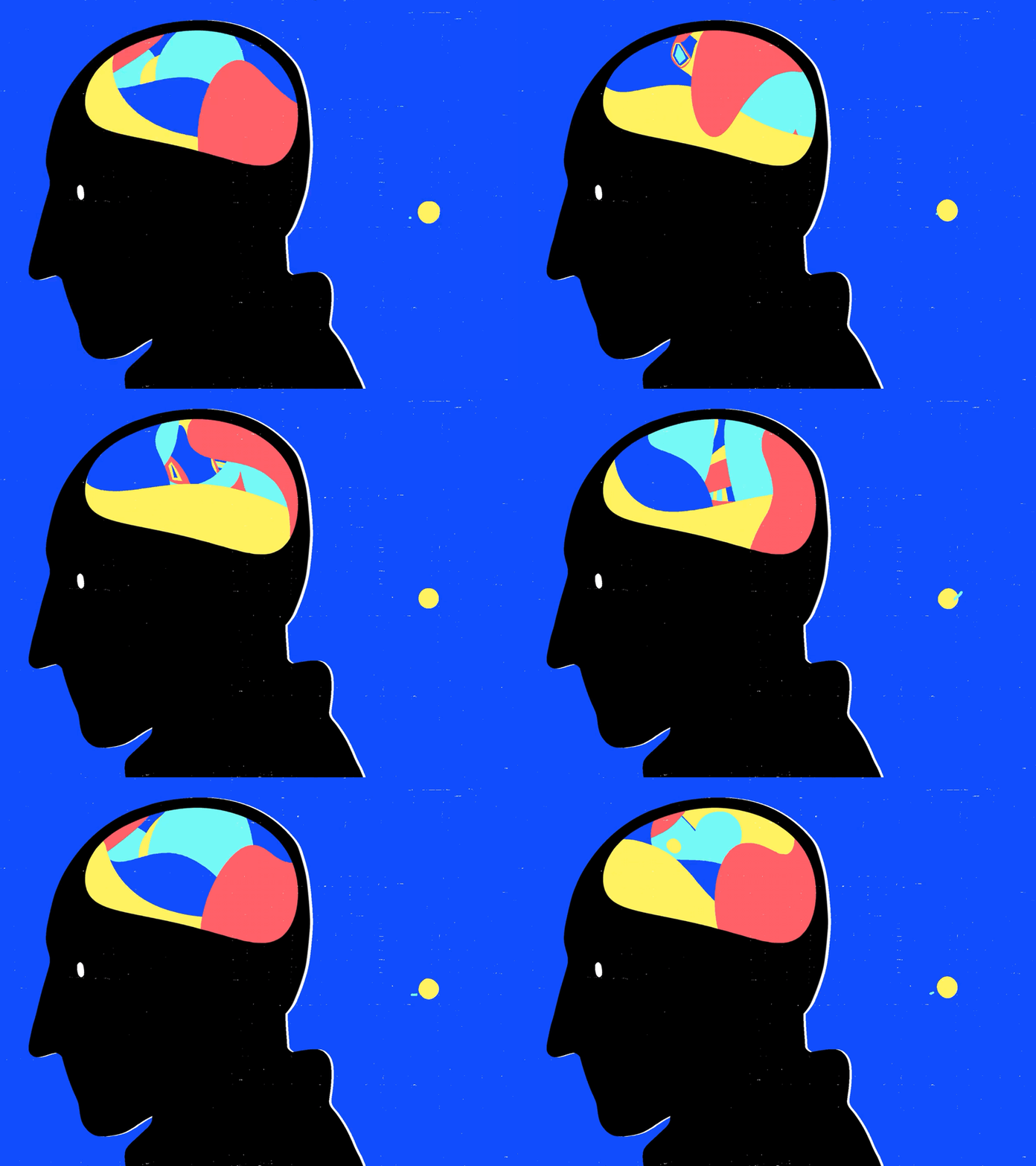
The brain is one of the most complex structures in the world. It contains billions of nerve cells (neurons) that become highly active during dreaming. Our dreams emerge during a specific phase of the sleep process: REM (Rapid Eye Movement) sleep. REM stands for "rapid eye movement." During this phase, our brain becomes as active as when we are awake and begins to create stories.
class=\
Although science has not yet fully solved the purpose of dreams, several theories have been proposed:
Not dreaming may indicate a disruption in the brain’s "rest" and "organization" mechanisms. Studies have shown that people who do not dream enough feel more stressed, forgetful, and tired. It is believed that during REM sleep the brain replenishes energy and renews itself. Therefore, healthy sleep is vital for a healthy brain.
Scientists suggest that writing down dreams is a good way to understand them. Take a notebook and write down the dreams you remember when you wake up. Note the colors, feelings, and events in your dreams. Over time, you may notice which dreams you experience more frequently.

class=\
Scientists have not yet fully decoded dreams, but every new research sheds light on this mysterious world. Understanding dreams helps us not only comprehend our brain but also understand who we are. Before falling asleep, remember this: Every dream is a unique story created by your brain for you.
Domhoff, G. William. Finding Meaning in Dreams: A Quantitative Approach. New York: Plenum Press, 1996.
Hobson, J. Allan. The Dreaming Brain: How the Brain Creates Both the Sense and the Nonsense of Dreams. New York: Basic Books, 1988.
Stickgold, Robert, and Matthew Walker. "The Neuroscience of Sleep: Implications for Memory and Mental Health." *Nature Reviews Neuroscience* 14, no. 11 (2013): 721–33. https://doi.org/10.1038/nrn3577.
Zadra, Antonio, and Robert Stickgold. When Brains Dream: Exploring the Science and Mystery of Sleep. New York: W.W. Norton & Company, 2021.

No Discussion Added Yet
Start discussion for "Dream Scientist: The Mysterious World of the Brain (Çocukr)" article
The Brain: Our Dream Factory
Why Do We Dream?
What Happens If We Do Not Dream?
Understanding Dreams: Science’s Endless Adventure