


This article was automatically translated from the original Turkish version.
+1 More
Döşemealtı El Halısı
Registration Number | 796 | ||||||||
|---|---|---|---|---|---|---|---|---|---|
Registration Date | 08.07.2021 | ||||||||
Application Number | C2020/246 | ||||||||
Application Date | 27.08.2020 | ||||||||
Name of the Geographical Indication | Döşemealtı El Halısı | ||||||||
Product / Product Group | Halı / Halılar ve Kilimler | ||||||||
Type of Geographical Indication | Mahreç İşareti | ||||||||
Applicant / Registrant | Döşemealtı Belediyesi | ||||||||
Address of the Registrant | Yeniköy Mah. Atatürk Cad. No:521 Döşemealtı ANTALYA | ||||||||
Geographical Boundary | Antalya İli Döşemealtı İlçesi | ||||||||
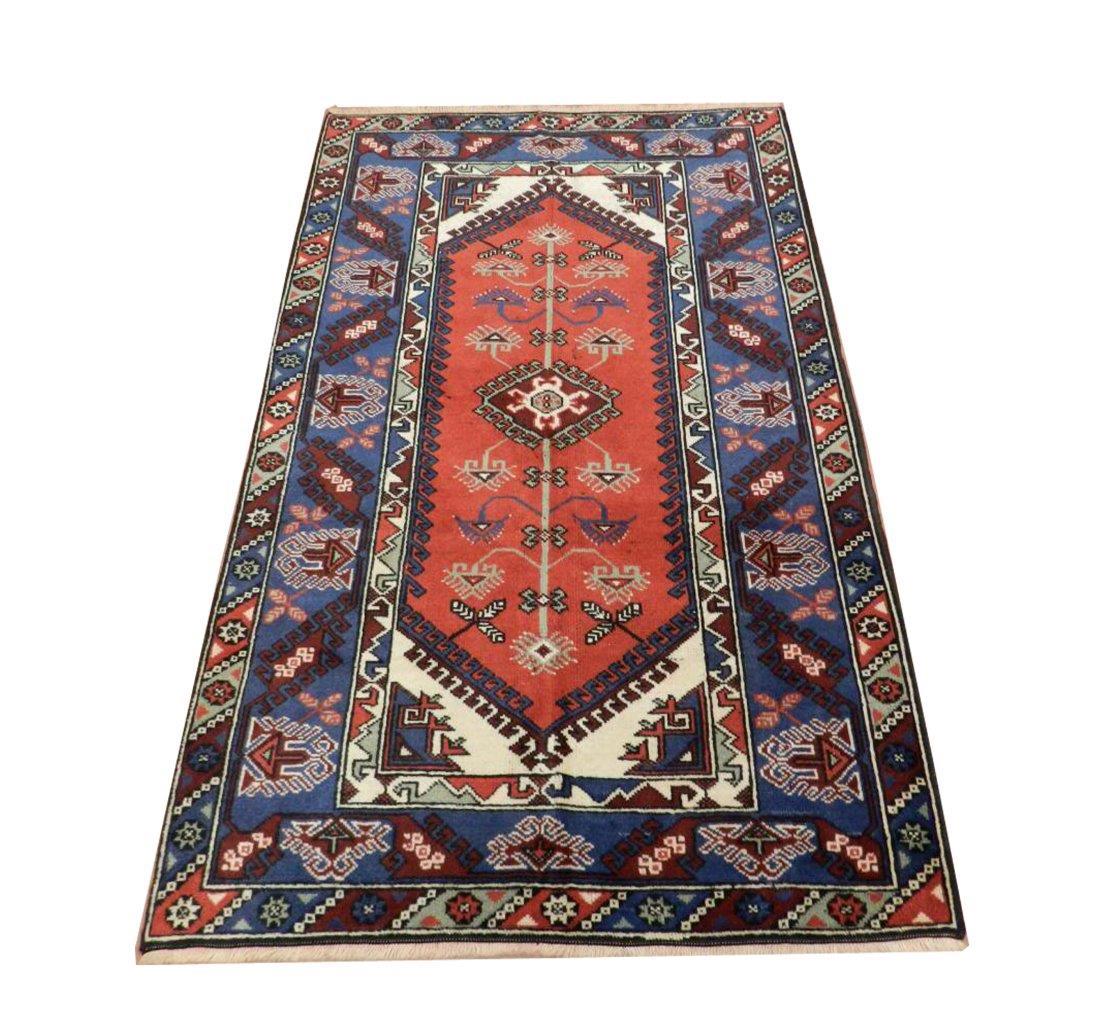
Döşemealtı Handwoven Carpet is a type of carpet made from sheep’s wool and woven using the Turkish (Gördes) knot, based on a traditional handweaving practice that has been sustained for centuries in the Döşemealtı district of Antalya province. These carpets are registered with a geographical indication mark and are characterized by prominent geometric and stylized motifs, colors derived from natural root dyes, and a local loom structure.
Döşemealtı El Halısı (AA)
The Döşemealtı handwoven carpet is a registered carpet product developed by the Teke nomads who settled in the region after the 12th century, distinguished by a unique geographical production link and registered under geographical indication mark number 796 on 8 July 2021. The application was submitted on 27 August 2020 by the Döşemealtı Municipality. The product category is classified as “carpets and kilims,” and the type of geographical indication is designated as a geographical indication mark.
The Döşemealtı handwoven carpet is woven on frame looms using a wool warp and weft system with the Turkish (Gördes) knot. The Turkish knot is applied by wrapping the weft thread twice around two adjacent warp threads and pulling the ends through the space between them. This technique allows motifs to be defined more clearly and geometrically. The knot density of the carpet is measured by the number of knots per square centimeter or square decimeter. Previous applications showed a knot density of 3x4 or 4x4 knots per square centimeter, but this ratio has now decreased to 2x2.
The edge weave is knotless and executed in kilim style, measuring 1–1.5 cm in width and matching the ground color of the carpet. The kilim weave is woven to a thickness of 2–3 cm. The dimensions of the carpet are typically square-like in the form of a prayer rug; the smallest size is 71x120 cm and the largest is 143x196 cm.
The carpet designs are shaped by traditional motifs and symmetrical compositions, each motif reflecting a continuous symbolic order.
The designated types and dimensions are as follows:
The borders referred to as “su” in the motifs consist of various pattern sequences and are defined in local vernacular. These include names such as kocasu, nacaklı su, laleli su, öküz sidiği, and tutmaç suyu.
Döşemealtı El Halısı (AA)
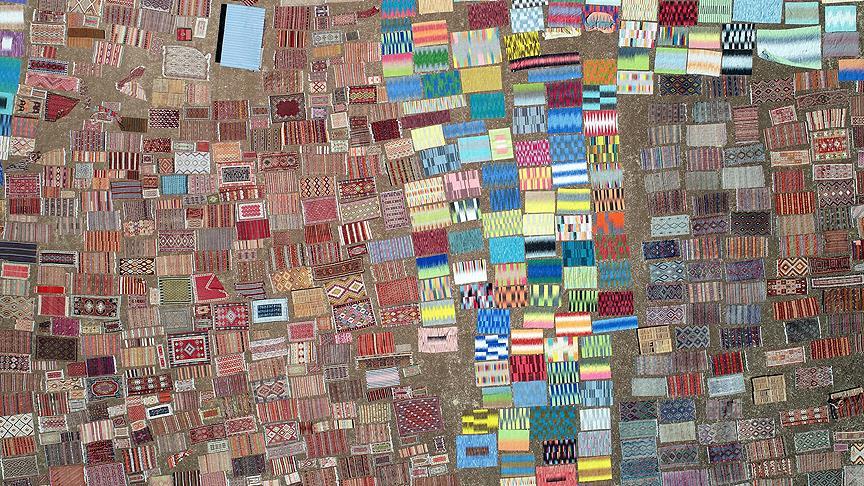
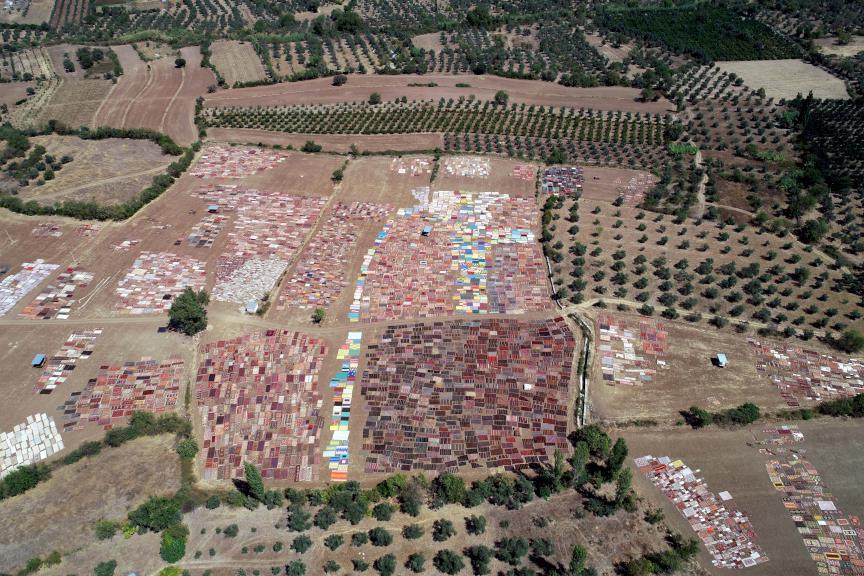
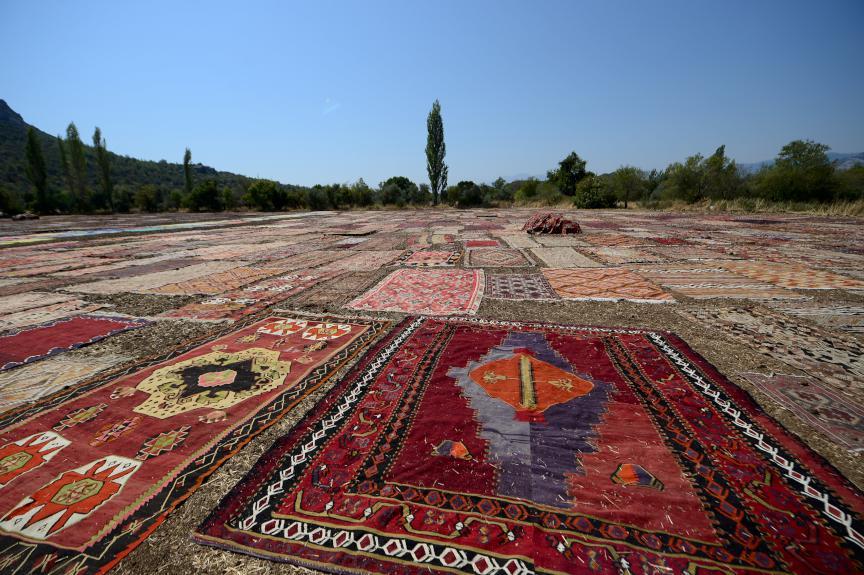
The carpets are produced in the neighborhoods of Camili, Ekşili, Ilıca, Killik, Karataş, Ahırtaş, Dereli, Karaveliler, Selimiye, and Kovanlık, all within the Döşemealtı district of Antalya province. These areas are also used for spreading the carpets after production to allow their colors to undergo tonal changes due to exposure to sunlight and humidity.
The designation “Döşemealtı handwoven carpet” and the geographical indication emblem must appear on the product itself or its packaging. In cases where this is not feasible, the designation and emblem must be displayed in a clearly visible location within the production facility.
Monitoring activities are carried out by a monitoring board composed of at least one representative each from the Döşemealtı Municipality and the Döşemealtı District Public Education Center, appointed under the coordination of the Döşemealtı Municipality and possessing expertise in the product. Monitoring is conducted annually; frequency may be increased in cases of complaints or as deemed necessary.
Monitoring criteria are as follows:
The monitoring board may seek support from experts or service providers in public or private institutions when necessary. The registering authority is responsible for initiating legal procedures to protect the rights associated with the geographical indication.
Döşemealtı El Halısı (AA)
Anadolu Ajansı. “Antalya’daki Halı Tarlalarının Görsel Şöleni.” Anadolu Ajansı, September 17, 2018. Accessed June 15, 2025.https://www.aa.com.tr/tr/turkiye/antalyadaki-hali-tarlalarinin-gorsel-soleni/1248609
Turk Patent and Trademark Office. "Coğrafi İşaretler – Döşemealtı El Halısı." Accessed June 15, 2025.https://ci.turkpatent.gov.tr/cografi-isaretler/detay/2492
Turkish Patent and Trademark Office. *Döşemealtı El Halısı Mahreç İşareti Tescil Belgesi ve Teknik Şartnamesi*. Accessed June 15, 2025.https://ci.turkpatent.gov.tr/Files/GeographicalSigns/67f61582-2620-4c71-87d3-96d550d6331d.pdf.

Döşemealtı El Halısı
Registration Number | 796 | ||||||||
|---|---|---|---|---|---|---|---|---|---|
Registration Date | 08.07.2021 | ||||||||
Application Number | C2020/246 | ||||||||
Application Date | 27.08.2020 | ||||||||
Name of the Geographical Indication | Döşemealtı El Halısı | ||||||||
Product / Product Group | Halı / Halılar ve Kilimler | ||||||||
Type of Geographical Indication | Mahreç İşareti | ||||||||
Applicant / Registrant | Döşemealtı Belediyesi | ||||||||
Address of the Registrant | Yeniköy Mah. Atatürk Cad. No:521 Döşemealtı ANTALYA | ||||||||
Geographical Boundary | Antalya İli Döşemealtı İlçesi | ||||||||
No Discussion Added Yet
Start discussion for "Döşemealtı El Halısı" article
Structural and Technical Definition
Motifs and Design Variety
Production Area and Geographical Link
Usage Format
Monitoring