This article was automatically translated from the original Turkish version.
Istanbul stands before all those who wish to see it in all its charm, despite its crowds noise, haste and chaos. Is there another city in the world that houses so many different worlds within itself? A mystery. Walking within the walls means encountering the living traces of the empires that once ruled Istanbul. One of the oldest routes that can be followed for this purpose is MeseDivanyolu.
During the Roman Empire, our fellow citizens called this route “MeseDivanyoluNeither emperors nor viziers walk this road anymore. Yet the most important street of a city that served as capital to three empires remains filled with their traces. On this journey we will follow the opposite direction of the viziers’ processions. Our starting point is Beyazıt SquareÇarşıkapı neighborhood, parallel to the tram line.
At the entrance of Divanyolu, now called Yeniçeriler CaddesiKoca Sinan Pasha ComplexMerzifonlu Kara Mustafa Pasha ComplexÇorlulu Ali Pasha Complex
In their time, these buildings were centers of scholarly activity. Unfortunately, in the courtyard of the Çorlulu Ali Pasha Medrese
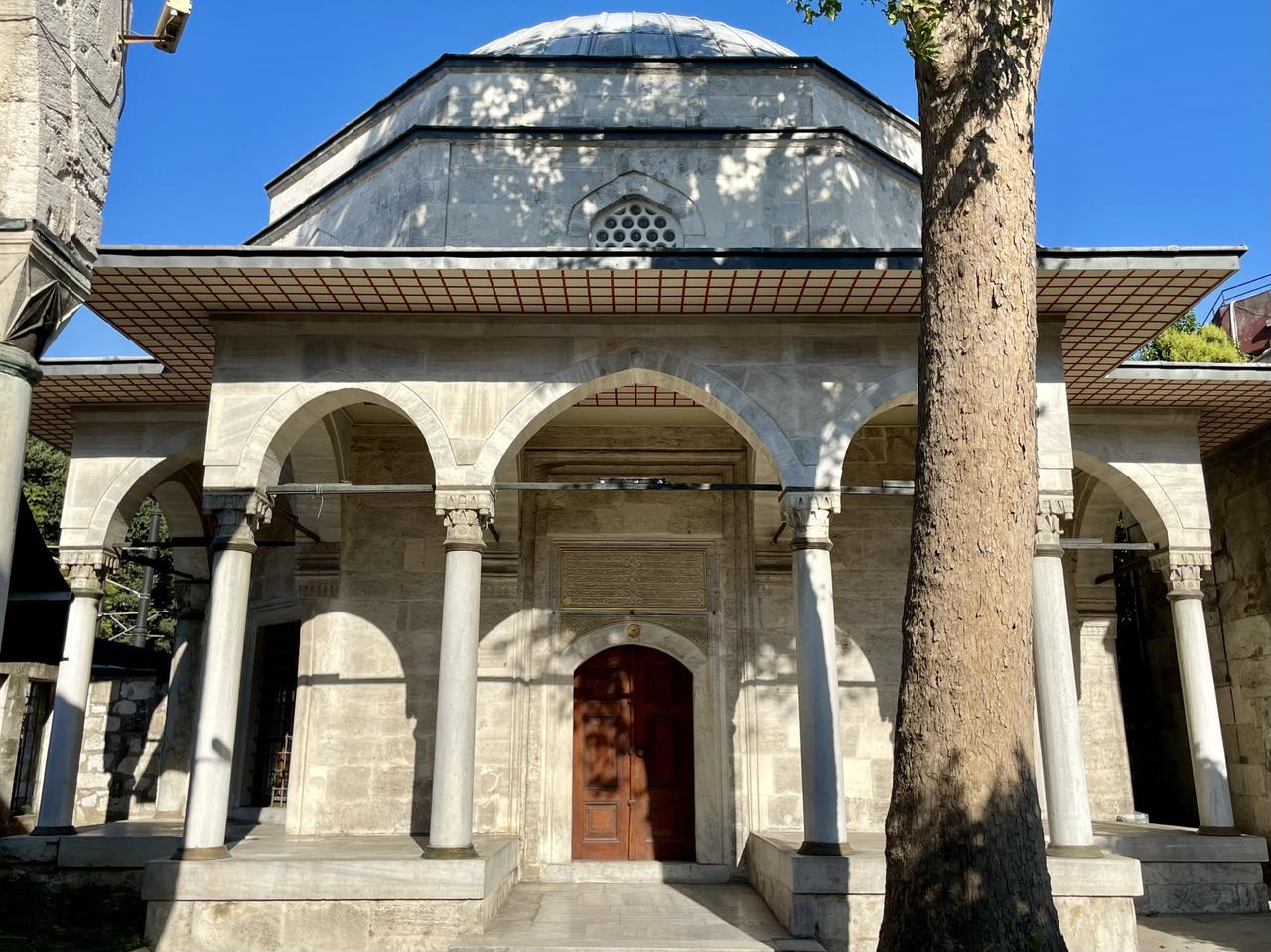
Merzifonlu Kara Mustafa Pasha Dersane Mescidi (Photo: Neriman Sena Külünk)
We continue walking along the tram line toward Çemberlitaş. We are again at a point where different centuries intersect. On the right side of the road, we see the building where Pierre LotiGazi Atik Ali Pasha Mosque【1】
As we leave the mosque, we face the magnificent monument left by the city’s founder: the Column of ConstantineÇemberlitaşÇemberlitaş
Gazi Atik Ali Pasha Mosque and Çemberlitaş (Photo: Neriman Sena Külünk)
Beyond the column, the street’s name becomes Divan Yolu CaddesiNuruosmaniye MosqueKöprülü Complex“My actions are in keeping with what the Köprülü would have approved; I am certain their souls would be pleased!”【2】
We continue walking along the street. Opposite the Köprülü Mehmed Pasha Mosque stands the Press MuseumTomb of Mahmud IITürk Ocağı
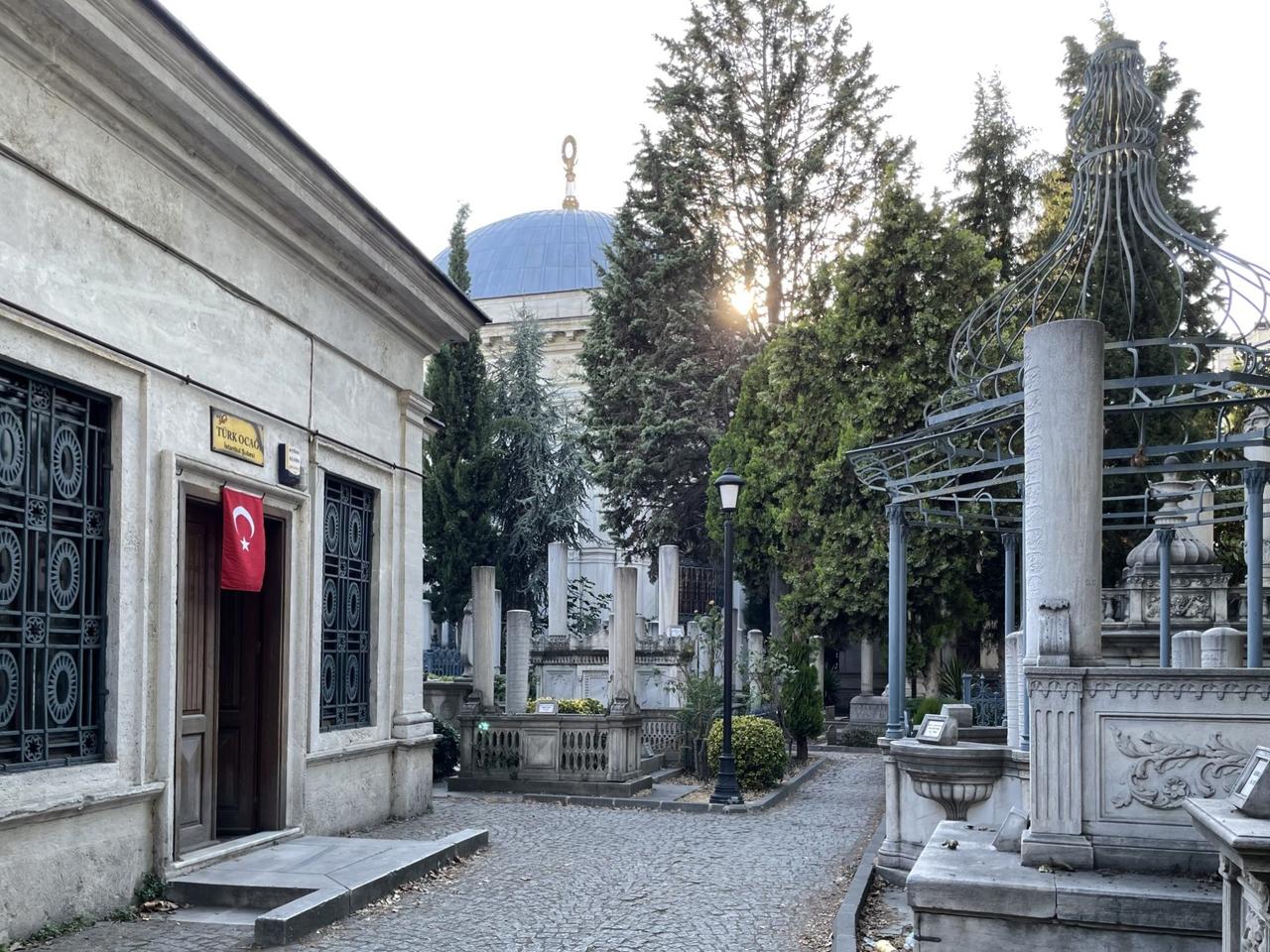
Türk Ocağı and Mahmud II Tomb (Photo: Neriman Sena Külünk)
Sultan Abdülhamid II made efforts during the construction of the Hejaz Railway to minimize noise near the Prophet’s tomb in Medina. Today we witness the same sensitivity at the tram line passing directly in front of his own tomb. In a 2018 project by the Istanbul Metropolitan Municipality, the tracks directly before the tomb were replaced and the entire infrastructure was renewed. As one walks along the street, it is immediately noticeable that trams operate far more quietly at Çemberlitaş station than at other stops.【3】
We need to walk a little further to reach our next stop. At the point opposite the Sultanahmet tram station stands the Firuz Ağa Mosque
When we cross to the other side of the mosque, we encounter the Cevrî Kalfa School
Alongside the fascinating story of its benefactor, the school’s inscription has its own remarkable history. After the adoption of the new Turkish alphabet in 1927, one of the school’s teachers began chiseling the inscription using the old script; fortunately, the work was halted before the entire inscription was removed.【4】
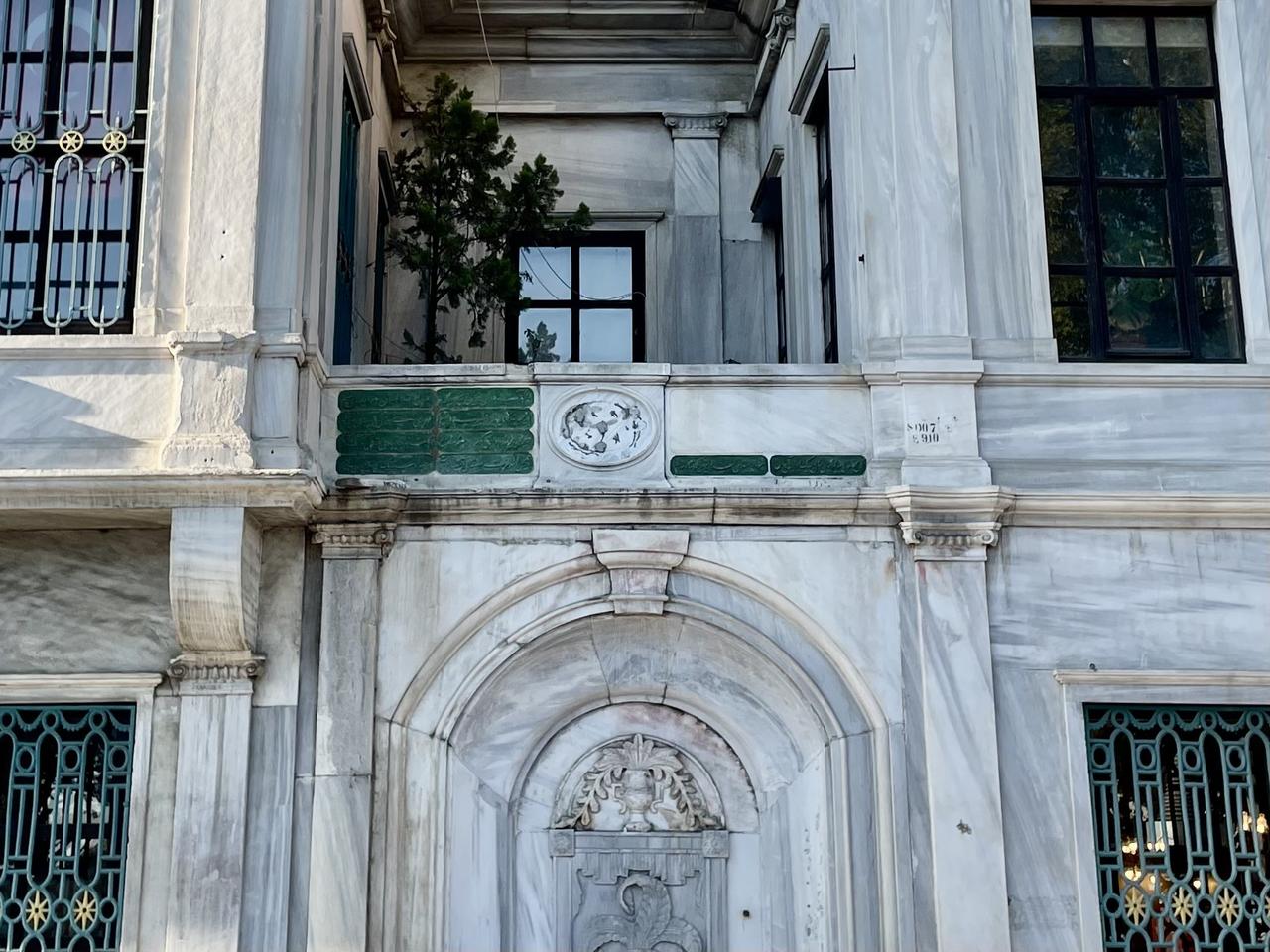
Partially Removed Inscription of the Cevrî Kalfa School (Photo: Neriman Sena Külünk)
Our journey is nearing its end. As we leave the school and walk parallel to the tram line, we reach a corner leading to the Yerebatan Sarnıcı, where we encounter an ancient monument from the Roman Empire: the Milion Stone
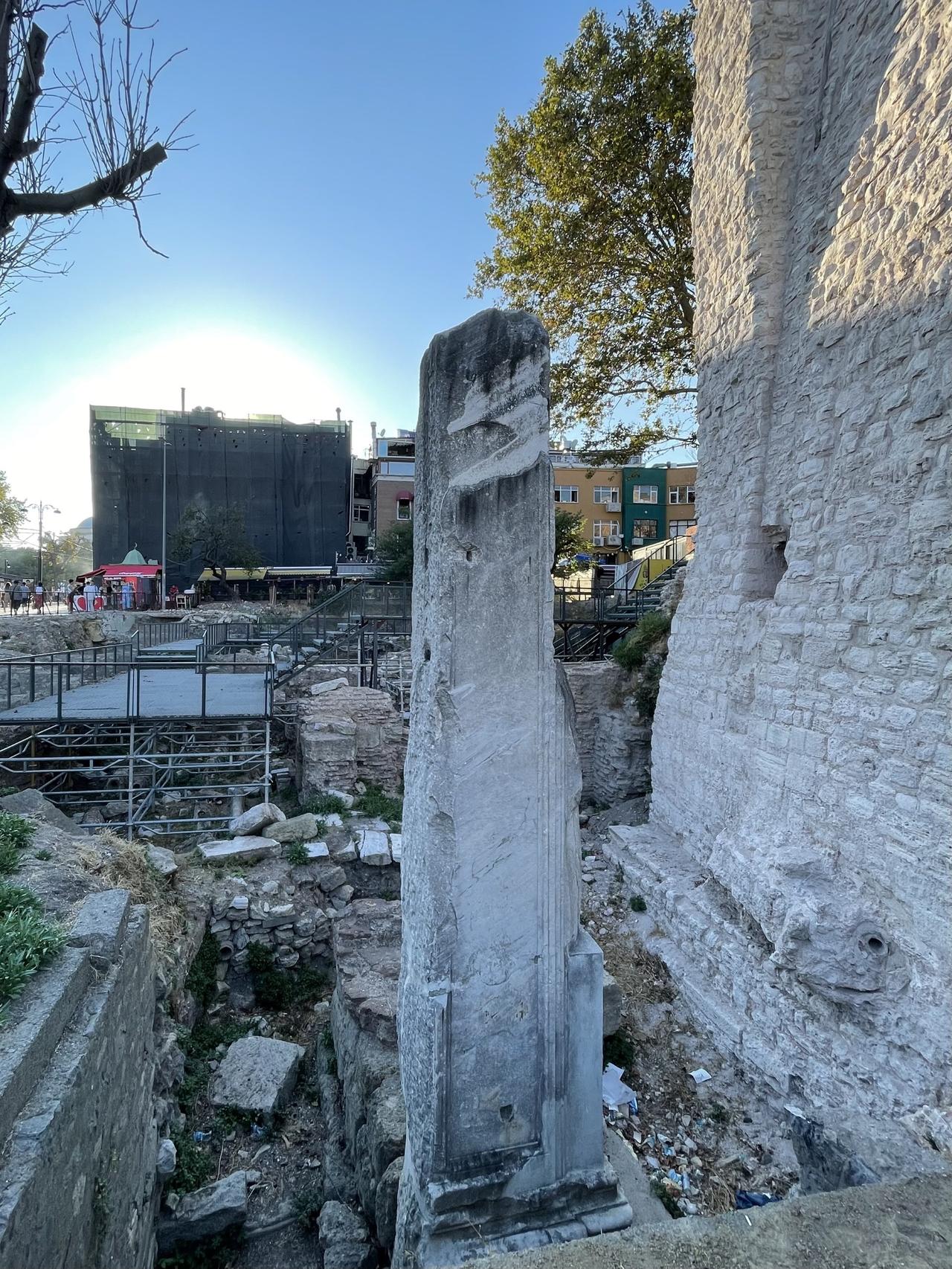
Milion Stone (Photo: Neriman Sena Külünk)
We can complete the route we have followed without stopping in just ten minutes. If we were to pause at every significant point to study its history, we would need more than a day to finish the journey. This street, bearing the traces of Rome, Byzantium, the Ottoman Empire, and finally the Republic of Türkiye, functions like a living metabolism. While it may be difficult to say it is currently at its brightest, tracing the legacy of its past glories remains possible.
Ayvazoğlu, Beşir. Divanyolu: Bir Caddenin Hikâyesi. İstanbul: Kapı Yayınları, 2018.
Ayverdi, Ekrem Hakkı. "Atikalipaşa Camii." In *İstanbul Ansiklopedisi*, edited by Reşad Ekrem Koçu, vol. 3:1281–1286. İstanbul: Reşad Ekrem Koçu ve Mehmet Ali Akbay İstanbul Ansiklopedisi ve Neşriyat Kollektif Şirketi, 1960. https://archive.org/details/istansiklopedisi_201912/I.%20A.%203.%20CILT/page/n70/mode/1up
Eyice, Semavi. "Cevrî Kalfa Mektebi." *Türkiye Diyanet Vakfı İslam Ansiklopedisi*, vol. 7: 461–462. İstanbul: TDV Yay., 1993. https://islamansiklopedisi.org.tr/cevri-kalfa-mektebi
Kaya, Önder. İstanbul Tarihi: İmparatorluklar Başkentinin 2500 Yıllık Tarihi. İstanbul: Kronik Kitap, 2024.
Koçu, Reşad Ekrem. "Divan Yolu." In *İstanbul Ansiklopedisi*, edited by Reşad Ekrem Koçu, Volume 9:4624-4626. İstanbul: Reşad Ekrem Koçu ve Mehmet Ali Akbay İstanbul Ansiklopedisi ve Neşriyat Kollektif Şirketi, 1968. https://archive.org/details/istansiklopedisi_201912/I.A.%209.%20CILT/page/n8/mode/1up
TRT Haber. "İstanbul'da Raylar Abdülhamid Han İçin Yenilendi." Accessed August 23, 2025. https://www.trthaber.com/haber/turkiye/istanbulda-raylar-abdulhamid-han-icin-yenilendi-367920.html
[1]
Ekrem Hakkı Ayverdi "Atikalipaşa Camii," İstanbul Ansiklopedisi içinde, ed. Reşad Ekrem Koçu (İstanbul: Reşad Ekrem Koçu ve Mehmet Ali Akbay İstanbul Ansiklopedisi ve Neşriyat Kollektif Şirketi, 1960) 3:1286. https://archive.org/details/istansiklopedisi_201912/I.%20A.%203.%20CILT/page/n70/mode/1up
[2]
Reşad Ekrem Koçu, "Divan Yolu," İstanbul Ansiklopedisi, ed. Reşad Ekrem Koçu (İstanbul: Reşad Ekrem Koçu ve Mehmet Ali Akbay İstanbul Ansiklopedisi ve Neşriyat Kollektif Şirketi, 1968), 9:4625. https://archive.org/details/istansiklopedisi_201912/I.A.%209.%20CILT/page/n8/mode/1up
[3]
TRT Haber, "İstanbul'da Raylar Abdülhamid Han İçin Yenilendi," TRT Haber, Erişim: 23.08.2025. https://www.trthaber.com/haber/turkiye/istanbulda-raylar-abdulhamid-han-icin-yenilendi-367920.html
[4]
Semavi Eyice, "Cevrî Kalfa Mektebi," Türkiye Diyanet Vakfı İslam Ansiklopedisi, c. 7, (İstanbul: TDV Yay., 1993): 461. https://islamansiklopedisi.org.tr/cevri-kalfa-mektebi