


This article was automatically translated from the original Turkish version.
The human digestive system is a complex structure responsible for the physical and chemical breakdown of food, its absorption, and the elimination of waste. The digestive system consists of a digestive tract approximately 8–9 meters long, extending from the mouth to the anus, along with accessory organs. The digestive tract includes the pharynx, esophagus, stomach, small intestine, and large intestine; the accessory organs are the teeth, tongue, salivary glands, liver, gallbladder, and pancreas. All these structures are controlled by the nervous system and hormones. The composition and structure of food directly influence the release of nutrients during digestion and their transport to target sites in the body. Therefore, understanding the mechanisms that affect the release of food components is of great importance for health.
The digestive process is a multi-scale combination of physical and chemical events involving ingestion, breakdown into suitable forms, absorption of basic nutrient units, transport to relevant organs, and excretion of residual waste. Mechanical digestion begins in the mouth through chewing. While the human jaw can exert a force of approximately 100–400 N, this force in the stomach varies between 0.2–2 N. During food breakdown, two main mechanisms come into play: fragmentation and erosion. Fragmentation dominates when mechanical forces exceed the internal cohesive forces holding the food matrix together; erosion prevails when they are smaller. Factors such as food structure, hardness, and softening by saliva and gastric secretions influence this process.
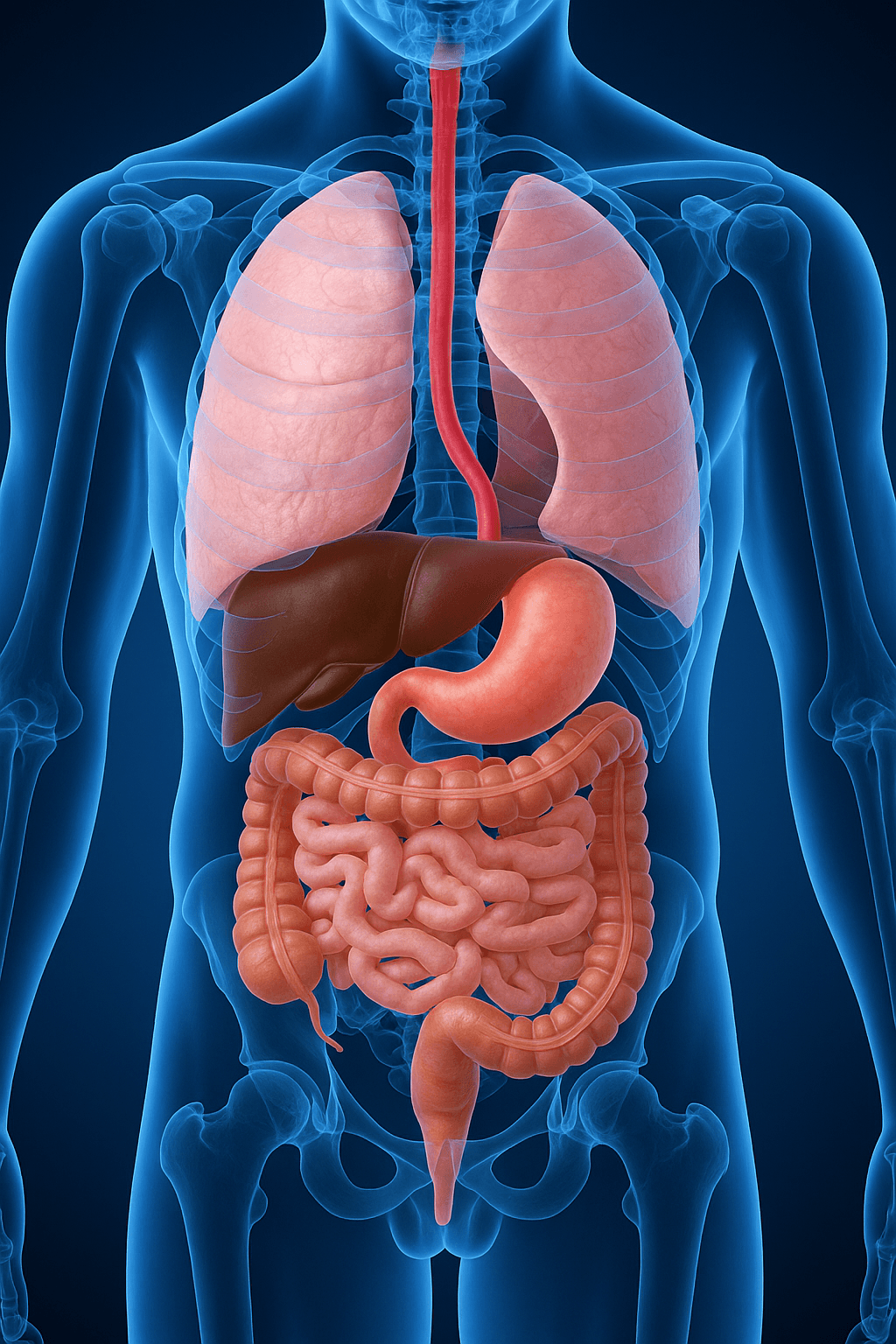
Accessory Organs (Generated by Artificial Intelligence)
Digestion begins in the mouth. Teeth, tongue, and salivary glands mechanically break down food, while enzymes in saliva—particularly amylase—initiate the chemical digestion of starch. The mouth chews food into smaller pieces, mixes it with saliva, and prepares it for swallowing. Mucus in saliva lubricates food, facilitating swallowing.
A muscular tube approximately 25 cm long and 1.5–2 cm in diameter, the esophagus transports the bolus to the stomach in 8–10 seconds via peristaltic contractions. Liquids move more rapidly due to gravity but must wait for the lower esophageal sphincter to relax before entering the stomach. The sphincter prevents gastric acid from refluxing into the esophagus.
The stomach is a J-shaped muscular sac that mechanically grinds food and initiates chemical digestion with gastric juice. It consists of three main regions: the fundus, corpus, and antrum. Muscle contractions mix the food, reducing particle size to below 1–2 mm and forming a semi-liquid mixture called chyme. When empty, its volume is 25–50 mL; after a meal, it expands to 1–1.5 L and can reach up to 4 L at maximum capacity. The pH ranges from 1–3 when fasting, 5.5–7 after eating, and 4–5 during emptying.
The small intestine, approximately 6–7 meters long, is the primary site of digestion and nutrient absorption. It consists of three segments: the duodenum, jejunum, and ileum. In the duodenum, pancreatic enzymes and bile continue the breakdown of food. The majority of digested nutrients are absorbed in the jejunum and ileum.
Approximately 150 cm long and 6 cm in diameter, the large intestine absorbs most of the water from chyme, reducing its volume from about 1.5–2 L to 150 mL. The dense microbiota residing in the large intestine ferments undigested dietary fibers, metabolizes bile salts and enzymes, and synthesizes vitamins such as niacin, B1, and K.【1】
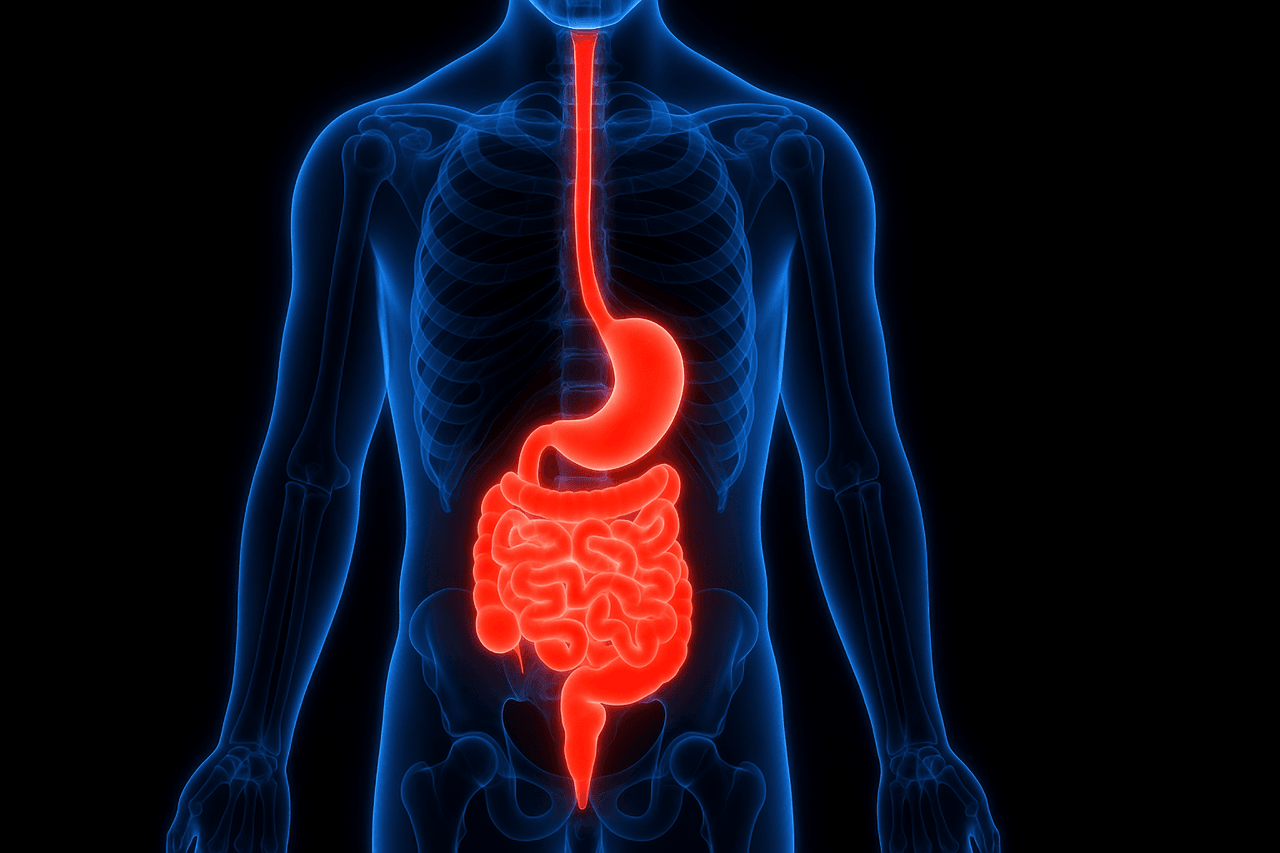
The Body’s Second Brain (Generated by Artificial Intelligence)
In humans and other mammals, the intestine hosts a diverse ecosystem of trillions of microorganisms, including primarily bacteria, as well as archaea, yeasts, helminth parasites, viruses, and protozoa. The bacterial gut microbiome is predominantly composed of Bacteroidetes and Firmicutes phyla, with Proteobacteria, Actinobacteria, Fusobacteria, and Verrucomicrobia present in lower proportions. The total weight of microbial cells is 1–2 kg, comparable to the weight of the human brain. Human gut colonization begins at birth; microorganisms transmitted from the mother through the birth canal play a critical role in shaping the individual’s lifelong microbial composition. The microbial composition during early development influences many aspects of the organism’s lifelong physiology, and stress responses, particularly during critical neurodevelopmental periods, can be shaped by the microbiota.【2】
The gut microbiota influences the gut-brain axis, which regulates energy and glucose homeostasis by sending hormonal and metabolite signals via enteroendocrine cells and vagal afferents. Microbial metabolites, particularly short-chain fatty acids and bile acids, play key roles in energy balance and glucose production. The gut-brain axis affects food intake, energy expenditure, and hepatic glucose production, and these processes can be therapeutically modulated through microbiota manipulation.【3】
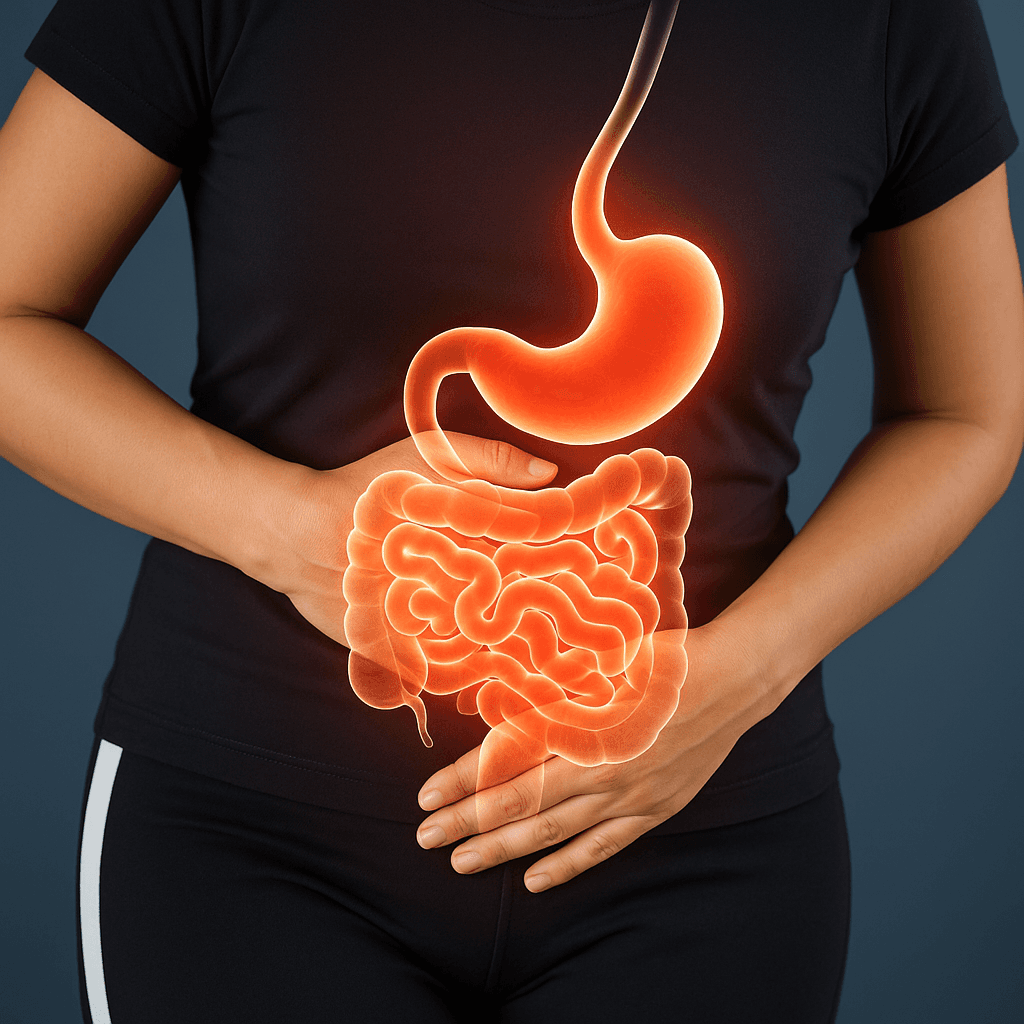
Digestive System Diseases (Generated by Artificial Intelligence)
The gut microbiota plays a central role in regulating the organism’s stress responses and stress-related behaviors. Microbiota composition can shape anxiety- and depression-like behaviors by influencing hypothalamic-pituitary-adrenal axis activity, neurotransmitter levels, and neuroplasticity. Studies using germ-free mouse models and microbiota depletion via antibiotics demonstrate that microbiota deficiency or alteration can increase stress responses and impair brain development and function. Probiotic and prebiotic interventions can reduce stress-induced behavioral changes and preserve the structural and functional integrity of brain regions via the microbiota.【4】
The gut microbiota and the gut-brain axis play roles in regulating energy and glucose homeostasis. Signals transmitted from the gut to the brain via enteroendocrine cells and vagal afferents can influence food intake, energy expenditure, and hepatic glucose production. Microbial metabolites, especially short-chain fatty acids and bile acids, perform essential functions in metabolic regulation. Disruptions in gut-brain communication have been observed in obese and diabetic patients, and surgical and pharmacological treatments exert part of their effects through partial reorganization of this axis. Microbiota manipulation through dietary, probiotic, prebiotic, and genetic engineering approaches holds therapeutic potential for modulating energy and glucose balance.【5】
Foster, Jane A., Linda Rinaman, and John F. Cryan. “Stress & the Gut-Brain Axis: Regulation by the Microbiome.” Neurobiology of Stress 7, (2017): 124-136.https://www.sciencedirect.com/science/article/pii/S2352289516300509?via%3Dihub
Sensoy, Ilkay. “A Review on the Food Digestion in the Digestive Tract and the Used In Vitro Models.” *Current Research in Food Science* 4, (2021): 308–319.https://www.sciencedirect.com/science/article/pii/S2665927121000307?via%3Dihub
Wachsmuth, Hallie R., Savanna N. Weninger, and Frank A. Duca. “Role of the Gut–Brain Axis in Energy and Glucose Metabolism.” *Experimental & Molecular Medicine* 54, no. 4 (2022): 377–392.https://www.nature.com/articles/s12276-021-00677-w
[1]
Ilkay Sensoy. “A Review on the Food Digestion in the Digestive Tract and the Used In Vitro Models.” Current Research in Food Science 4, (2021): 308–319. https://www.sciencedirect.com/science/article/pii/S2665927121000307?via%3Dihub
[2]
Jane A. Foster., Linda Rinaman ve John F. Cryan. “Stress & the Gut-Brain Axis: Regulation by the Microbiome.” Neurobiology of Stress 7, (2017): 124-136. https://www.sciencedirect.com/science/article/pii/S2352289516300509?via%3Dihub
[3]
Hallie R. Wachsmuth., Savanna N. Weninger ve Frank A. Duca. “Role of the Gut–Brain Axis in Energy and Glucose Metabolism.” Experimental & Molecular Medicine 54, no. 4. (2022): 377–392. https://www.nature.com/articles/s12276-021-00677-w
[4]
Jane A. Foster., Linda Rinaman ve John F. Cryan. “Stress & the Gut-Brain Axis: Regulation by the Microbiome.” Neurobiology of Stress 7, (2017): 124-136. https://www.sciencedirect.com/science/article/pii/S2352289516300509?via%3Dihub
[5]
Hallie R. Wachsmuth., Savanna N. Weninger ve Frank A. Duca. “Role of the Gut–Brain Axis in Energy and Glucose Metabolism.” Experimental & Molecular Medicine 54, no. 4. (2022): 377–392. https://www.nature.com/articles/s12276-021-00677-w

Digestive Process and Mechanical Breakdown
Digestive Organs
Mouth
Esophagus
Stomach
Small Intestine
Large Intestine
Gut Microbiota and the Digestive System
Microbiota, the Gut-Brain Axis, and Metabolic Regulation
Microbiome and Stress Effects
Microbiome, the Gut-Brain Axis, and Metabolic Diseases